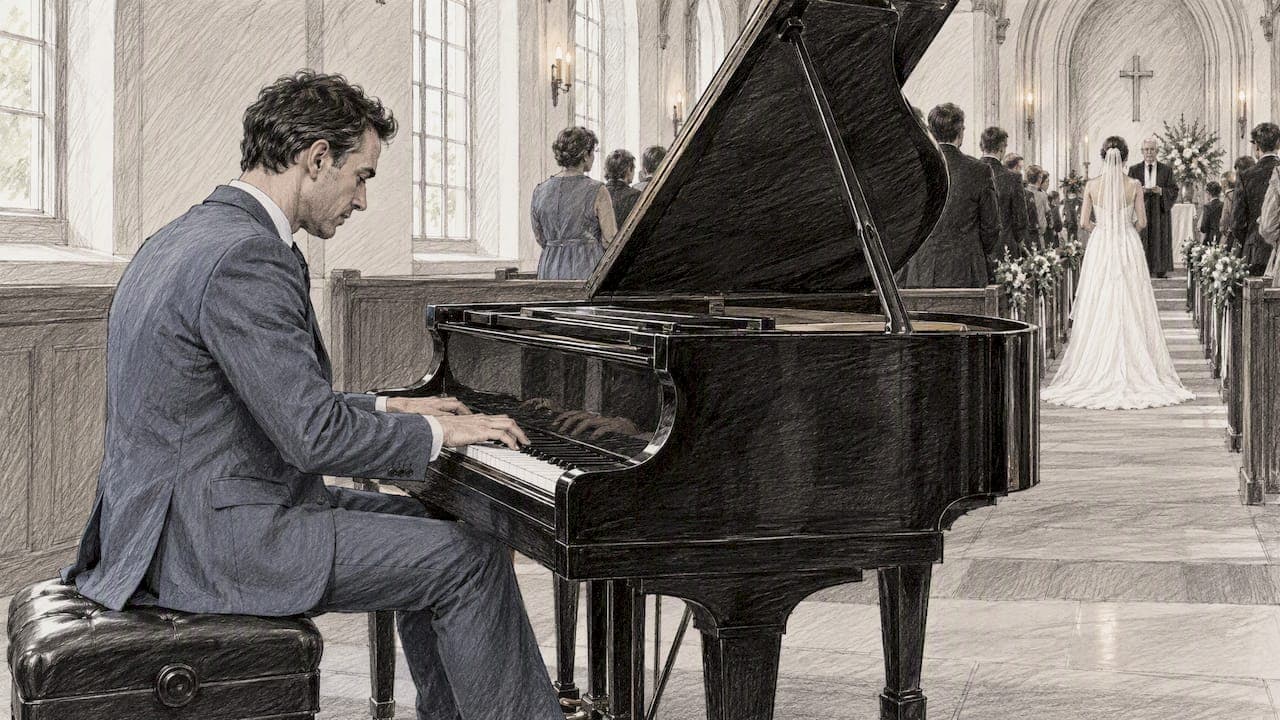
Solo piano is one of the simplest, most versatile ways to give your ceremony an elegant, live musical atmosphere. Most ceremonies only need four to six carefully chosen pieces to cover arrival, processional, signing, and recessional. A skilled pianist brings live cueing, dynamic control, and a repertoire wide enough to match any mood you want.
TL;DR:
- Set processional music at 66 to 76 BPM, then rehearse the aisle length, walking steps, pauses, and entrance order with the pianist.
- Confirm the venue piano’s condition early; if it is unsuitable or unavailable, budget for a digital piano or rental and clarify who handles it.
- Choose recognizable classics for entrances and quieter signing music, but send the pianist the exact recording or arrangement because not every pop song has a published transcription.
- Ceremony coverage typically costs $300 to $600 in the U.S.; ceremony plus cocktail hour runs about $500 to $1,000, with metro areas often costing more.
Table of Contents
- Where solo piano fits best in your ceremony
- Curated setlists: solo-piano song choices by moment
- Timing, tempo, and cueing: getting the walk right
- What it costs to hire a solo pianist
- A working musician's checklist for ceremony day
- Why we favor live piano over a playlist
- Book a solo pianist for your ceremony
- FAQ
- Sources
Where solo piano fits best in your ceremony
A single pianist can carry your entire ceremony from the first guest's arrival in the final recessional note, and knowing the structure helps you order the right pieces instead of guessing.
- Prelude and guest arrival: soft, continuous music while seats fill, usually the longest stretch of the afternoon.
- Processional(s): separate entrances for the wedding party, parents, and the couple, each able to use its own piece or a repeated theme.
- Unity or signing moment: a quiet, intimate interlude while the couple signs a license or completes a ritual.
- Recessional: an upbeat send-off as the couple and wedding party exit.
A pianist can shorten a piece by cutting to a later section or stretch it by repeating a verse, which matters when an entrance takes longer than planned. Multiple entrances are easy to manage too, since one musician can shift from a slow processional theme into a brighter variation for the couple without any handoff.
Venue piano quality varies a lot. Some spaces have a house grand, others only a worn upright or no piano at all, so confirm what is available early and plan for a digital piano or rental if nothing suitable is on site.
Curated setlists: solo-piano song choices by moment
A pianist you hire can work from a setlist like this one, adjusting keys, tempo, and length to fit your aisle and timeline.
- Prelude (6 to 10 minutes of guest arrival music): mix two or three classical pieces with a couple of soft instrumental covers of contemporary songs, so the mood feels warm without pulling attention.
- Processional: Pachelbel's Canon in D remains a dependable choice for its steady, measured pace, and Wagner's Bridal Chorus is another frequently requested option. Jeremiah Clarke's Trumpet Voluntary transcribes beautifully to piano and carries a stately, trumpet-like brightness that suits a formal entrance.
- Signing or ritual moment: choose something quieter and more intimate, such as Liszt's Liebesträum or a gentle Arioso, both of which sit comfortably under conversation and paperwork without competing for attention. A softly played instrumental cover of a favorite modern song works well here too.
- Recessional: Mendelssohn's Wedding March brings a triumphant, celebratory close, and a lively piano arrangement of a well-known pop song can send the couple out on a more personal, upbeat note.
Curated piano wedding song lists consistently point to this same core repertoire: Canon in D, Bridal Chorus, Liebesträum, Arioso, and piano transcriptions of modern favorites, because they translate well to a single instrument and remain recognizable to guests.
A few notes worth flagging to your pianist are:
- Confirm whether a specific recording or arrangement style you love is licensed and available, since not every pop song has a published piano transcription.
- Share the exact version you have in mind (movie soundtrack, acoustic cover, original radio cut) so the arrangement matches what you picture rather than a generic interpretation.
For a longer list organized by wedding party role, our guide to processional songs by role breaks down options for parents, attendants, and the couple separately.
Timing, tempo, and cueing: getting the walk right
Processional tempo usually falls between 66 and 76 BPM, slow enough for a measured, dignified walk without dragging. To translate that into steps, count your average pace during rehearsal (most brides take roughly 12 to 18 steps across a typical 20 to 25 foot aisle) and work backward with your pianist to pick a phrase length in measures that matches.
Attendants rarely walk at identical speeds, and the bride often pauses partway down the aisle for a photo or a breath. A pianist handles this by extending a phrase, repeating a passage, or holding a chord until the next cue rather than plowing through the music on a fixed clock. That flexibility is one of the clearest advantages live piano has over a recorded playlist.
Before the day, run a short rehearsal checklist: confirm aisle length, count actual walking steps, note where any pause will happen, and tell your pianist who enters when. Our piano wedding songs guide covers BPM ranges and rehearsal methods in more detail if you want to go deeper before the big day.

Pro Tip: Ask your pianist to use a held chord or a quiet vocal cue for the final few steps before you reach the altar, so your entrance ends on the beat no matter how the walk actually goes.
What it costs to hire a solo pianist

Ceremony-only coverage from a solo pianist in the U.S. typically runs $300 to $600, and adding cocktail-hour performance usually brings the total to roughly $500 to $1,000. Major metro areas tend to be more expensive for both types of coverage.
Several factors push the price up:
- Travel distance to the venue, especially outside a pianist's usual service area.
- Piano rental or transport when the venue has no suitable instrument on site.
- Custom arrangements of a specific song you want reharmonized or personalized.
- Extra rehearsal time beyond a standard run-through.
On timing, booking a solo pianist can work within 3 to 6 months in many cases, but reserving 9 to 12 months ahead is wise for peak season dates or in-demand performers. Before signing anything, confirm start and end times, the exact setlist, any scheduled breaks, who is responsible for the instrument, and the cancellation policy. Our booking logistics guide walks through contract details and coordination steps in full, and our cost breakdown compares pricing across different ceremony musician types.
A working musician's checklist for ceremony day
Before any ceremony, a pianist worth hiring confirms six things: the venue piano's condition, the finalized setlist, the processional step count, a direct contact for the coordinator or officiant, dedicated rehearsal time, and a backup plan if the instrument or venue changes last minute.
Reharmonizing a pop song for solo piano is a common request. Taking a familiar processional melody and voicing it with jazz-tinged extended chords keeps the tune recognizable to guests while giving it a warmer, more personal color than a straight transcription.
A ceremony musician's job isn't just playing the right notes. It's reading the room, adjusting on the fly, and making sure the music and the moment land together.
For couples planning their own prelude playlist, our prelude song checklist offers an 8 to 12 song starting point built around guest arrival timing. If you're also mapping the ceremony against your full event schedule, this ceremony timeline guide offers sample timelines that show where music fits alongside readings and officiant remarks.
Why we favor live piano over a playlist
A recording cannot see the bride pause, sense an attendant walking slower than rehearsed, or stretch a phrase until the last guest is seated. A live pianist adjusts in real time, holding a chord, repeating a passage, or shifting volume as the room actually unfolds. That flexibility solves practical problems, like a flower girl who freezes halfway down the aisle, not just an aesthetic preference for live sound. A trained pianist can also quietly cue the officiant or wedding party when the music signals it's time to begin, something no playlist can do.
— Alex
Book a solo pianist for your ceremony
We build every solo piano set around your ceremony's actual structure and pacing, not a generic playlist, with custom arrangements for the songs that matter most to you.
What we offer for ceremonies includes:
- Solo piano coverage for prelude, processional, signing, and recessional moments.
- Custom arrangements of modern songs reharmonized to still sound familiar.
- Combined ceremony and cocktail-hour packages for continuous live music through the afternoon.
Our Wedding Ceremony Music page has details on packages starting from $3,000, along with sample video performances. Reach out through that page to request a sample setlist or check available dates for your wedding.
FAQ
How much does it cost to hire a pianist for a wedding ceremony?
Ceremony-only solo piano coverage in the U.S. typically costs $300 to $600, with ceremony plus cocktail-hour packages running roughly $500 to $1,000. Major metro areas and custom arrangements tend to push prices toward the higher end of those ranges.
What is that one piano song played at weddings?
Several pieces fit that description, but Pachelbel's Canon in D and Wagner's Bridal Chorus are the two most frequently requested solo-piano processional songs. Both work well because their steady, measured pace matches a traditional walking tempo.
What did Princess Diana walk down the aisle to?
Princess Diana's 1981 processional used Jeremiah Clarke's Trumpet Voluntary, not Pachelbel's Canon in D as many assume. That piece helped popularize baroque trumpet-style processionals, which still transcribe well for solo piano today.
What are some good songs to play on the piano for a wedding?
Classic choices include Canon in D, Bridal Chorus, Liszt's Liebesträum, and an Arioso for quieter moments, alongside piano arrangements of contemporary favorite songs. A good setlist usually mixes two or three classical pieces with one or two personalized modern covers.
How far in advance should we book a solo pianist?
Booking a solo pianist 3 to 6 months ahead works in many cases, though reserving 9 to 12 months out is safer for peak wedding season or in-demand performers. Earlier booking also gives more time to finalize custom arrangements and rehearse timing.
Sources
- How Charles and Diana chose the music for their wedding — Classical Music
- How much does wedding ceremony music cost? (2026 guide) - Paperlust
- The 44 Best Piano Wedding Songs and Music — The Knot