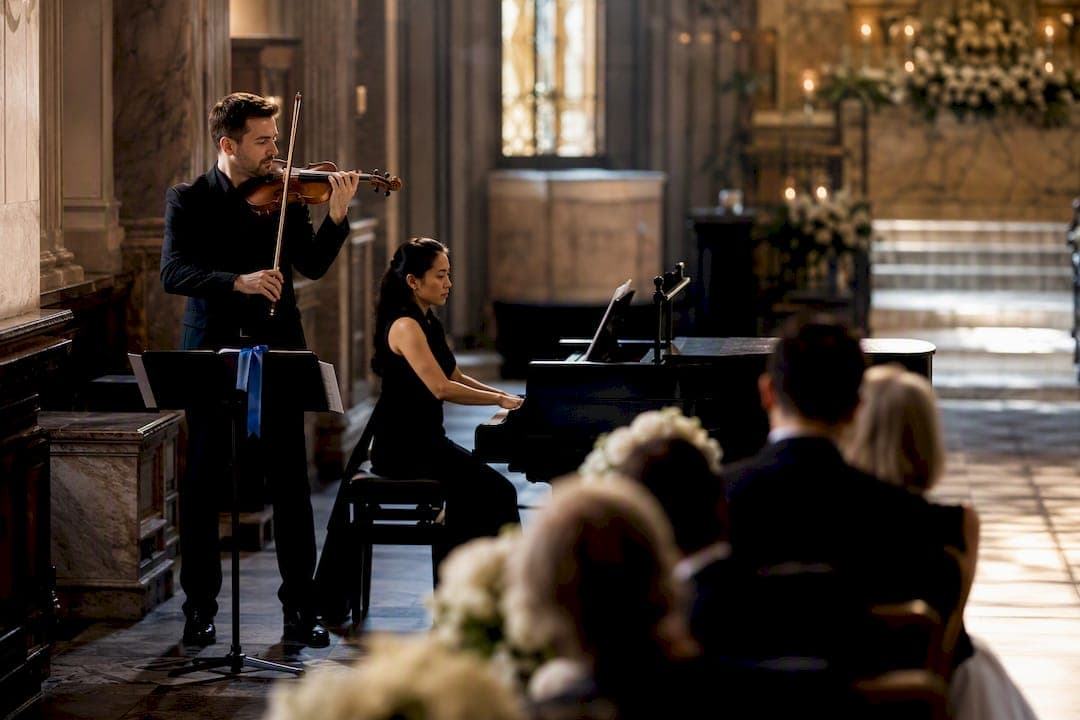
For a full, cinematic ceremony sound, book a piano and violin duo. Choose solo piano for understated elegance in a small or acoustically live room, and solo violin when you want a bright, singing melody that cuts through an outdoor space. The right pick depends on your venue size, your budget, and how much harmonic depth you want under the melody.
TL;DR:
- A duo setup with a portable grand shell is ideal for outdoor or large venues, while solo piano suits small, acoustically live spaces.
- Repertoire length and style should match each ceremony moment, with processional pieces around 76-84 BPM and recessional lively tunes.
- Outdoor sites require amplification and contingency plans for weather, with setup times typically lasting 45 to 90 minutes.
- Pricing varies based on travel, rehearsal, custom arrangements, and extension needs, making itemized quotes crucial for comparison.
- Experienced wedding musicians adjust pacing in real-time, ensuring the music flows naturally despite unpredictable ceremony timing.
Table of Contents
- Piano And Violin Wedding Music: A Quick Decision Checklist
- Repertoire Guide: Piano And Violin Songs For Every Ceremony Moment
- Setting Up Piano And Violin At Your Venue
- What Piano And Violin Wedding Musicians Typically Cost
- How To Interview And Brief Your Piano Or Violin Musicians
- What Years Of Wedding Ceremonies Have Taught Me About Timing
- Booking A Piano, Violin, Or Duo Through Alex Levin Music
- Sources
Piano And Violin Wedding Music: A Quick Decision Checklist
The fastest way to choose is to match the instrument to your room, not your Pinterest board. A grand piano fills a stone church with warmth, but it's furniture, it doesn't travel to a lawn ceremony without serious help. A violin travels anywhere, needs no power, and still projects over a breeze.
Think through these four filters before you call anyone:
- Venue footprint: small chapel or intimate ballroom favors piano's natural resonance; an outdoor lawn or large tent favors violin's carrying tone or a mic'd duo.
- Emotional tone: violin reads as bright and vocal, almost like a second voice singing the melody; piano gives full harmonic support and can carry a ceremony solo; a duo layers both for a fuller, more orchestral feel.
- Budget tradeoffs: solo bookings cost less and set up faster; a duo costs more but covers ceremony, cocktail hour, and dinner with one contract instead of two.
- Photography and cueing: experienced musicians watch the coordinator and adjust pacing on the fly, so your photographer gets a natural walk instead of a rushed one.
Wedding music for piano and violin works best when the instrumentation matches the room's acoustics, not just the couple's taste.
Pro Tip: If your ceremony and reception are in different rooms, ask whether the same musicians can play both spaces. Moving a duo from ceremony to cocktail hour usually costs less than hiring two separate acts.
Repertoire Guide: Piano And Violin Songs For Every Ceremony Moment
Every ceremony has five musical windows, and each one calls for a different tempo and mood. Here's how experienced piano and violin duos typically map repertoire to those moments.
- Prelude and seating. Soft, ambient classical works. This is where guests settle in, so tempo and volume should stay low and unobtrusive.
- Processional (bridal party). Faster-moving pieces around 76 to 84 beats per minute keep the walk brisk without feeling rushed.
- Processional (bride or main entrance). Canon in D and the Bridal Chorus remain the two most requested pieces for this moment, typically slowed to a stately 60 to 66 BPM. Hal Leonard's Wedding Music for Classical Players collection bundles both alongside Ave Maria in a single violin and piano arrangement, which is one reason it's a go-to for musicians building a ceremony set.
- Unity ceremony or signing. This is where lyrical, slower pieces shine. Ave Maria remains the standard, and film themes arranged for violin and piano have become common alternatives. Some arrangements, like Married Life from Up, rescored for violin and piano, are marked andante around 50 BPM, slow enough to underscore vows without rushing them.
- Recessional. Energy jumps here. Upbeat classical closers or pop songs reworked for violin and piano send guests out smiling, not shuffling.
For cocktail hour and dinner, contemporary arrangements that sit quietly under conversation work better than ceremony showpieces. Musicnotes' downloadable violin and piano arrangements, including "Here Comes the Bride," give musicians a reliable, affordable way to fill out a set list beyond the standards. If you want to hear how pieces sit together before committing, a curated wedding album covering Canon in D, the Wedding March, and similar staples is worth a preview listen. For a deeper dive into processional timing specifically, see this breakdown of piano wedding songs and their BPM ranges, or browse a full processional list organized by bridal party role.
Setting Up Piano And Violin At Your Venue
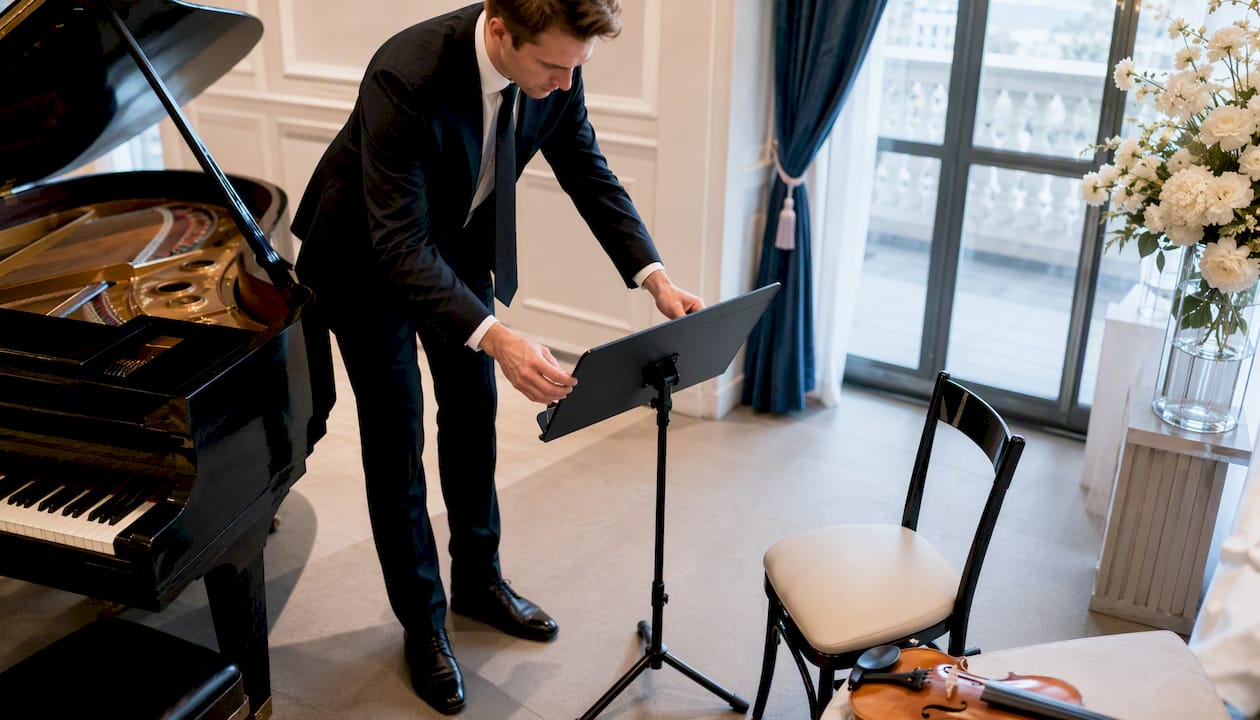
A violin needs nothing but a chair and a few feet of floor. A piano is a different problem entirely. Venues without a house piano require either a portable stage piano or, for higher-end bookings, a portable baby-grand shell, which some duo providers use specifically to bring a traditional look to venues that don't own one. Duo ensembles that supply their own portable grand shells illustrate how common this setup has become for ceremony and cocktail packages alike.
Ask your musicians directly whether the venue needs amplification. Outdoor ceremonies almost always need a mic on the violin and a pickup or powered keyboard for the piano, since wind and open air eat acoustic volume fast.
- Confirm arrival time: most duos need 45 to 90 minutes for setup and a sound check.
- Ask about power access for outdoor sites, extension cords and outlets matter more than people expect.
- Have a rain contingency plan discussed in writing, not just verbally, before the week of the wedding.
Pro Tip: Walk your musicians through the ceremony site (or send photos) at least two weeks out. A flat lawn looks fine in pictures but can be murder for a piano dolly.
What Piano And Violin Wedding Musicians Typically Cost
Pricing varies by market and experience, but couples should expect solo pianists and solo violinists to run lower than a duo, while a piano and violin duo commands a premium for covering more ceremony time with fuller sound. Several factors push a quote up or down beyond the base rate.
- Travel distance: venues far from a musician's home base often add a travel fee.
- Rehearsal time: a dedicated run-through beyond the day-of soundcheck usually costs extra.
- Custom arrangements: turning a pop song or film theme into a violin and piano arrangement takes real work, reharmonizing the piano part and transposing the melody into a comfortable violin range, and that labor shows up in the price.
- Overtime: ceremonies that run long or receptions that extend past the contracted hours typically bill in 15 or 30 minute increments.
- Licensing: some custom pop arrangements carry a small licensing or sheet-music cost on top of the performance fee.
Ask for an itemized quote so you can compare apples to apples between a solo booking and a duo package.
How To Interview And Brief Your Piano Or Violin Musicians
Treat this like hiring any vendor who has one shot to get it right.
- Ask about wedding-specific experience. A classically trained musician isn't automatically a wedding musician. Ask how many ceremonies they've played and request sample recordings.
- Clarify rehearsal and cancellation policies before signing anything.
- Build a performance brief with exact timing, your chosen processional speed, cue signals for the coordinator, preferred keys for any vocal moments, and links to sample recordings you love.
- Watch for red flags: no written contract, no audio samples, or hesitation to commit to specific timing are all reasons to keep looking.
Pro Tip: Send your musicians a two-song reference list, one they know and one they'd need to learn, before booking. Their response time tells you almost everything about how they'll handle your day.
What Years Of Wedding Ceremonies Have Taught Me About Timing
The single biggest mistake couples make isn't picking the wrong instrument, it's assuming a metronome should run the ceremony. A processional that sounds perfect at a fixed tempo in rehearsal falls apart the moment a flower child stops to wave at grandma. Musicians who play weddings regularly rehearse variable-length cues specifically so they can stretch four extra bars or repeat a phrase without anyone noticing a seam.
Bespoke arrangements get requested constantly, film themes rescored for violin and piano, a couple's favorite song reworked into something that sounds intentional rather than like a cover band. That's harder to arrange well than people assume, which is why it's worth asking a musician for a sample before you commit to a custom piece. Related reading on how musicians actually handle these requests lives in this guide to wedding musicians and song requests.
— Alex
Booking A Piano, Violin, Or Duo Through Alex Levin Music
One point of contact for ceremony music simplifies the booking process, offering sample recordings and a written contract before a note gets played. That means you hear the arrangement before your ceremony, not after.
A booking conversation typically starts with your venue details, your must-play list, and your processional timing, then moves into a contract that locks in arrival time, setup needs, and repertoire. Musicians who play weddings regularly also know how to adapt a set live, matching pace to a walk down the aisle the way experienced live performers routinely adjust song length and pacing rather than sticking to a rigid track. Browse ceremony music options to see how ensembles are structured, then reach out with your date to check availability and get a quote.
Sources
Preview arrangements through Hal Leonard's ceremony collection, Musicnotes' single-piece downloads, and ScoreExchange's processional listings.
- Piano & Violin Duo for Weddings & Events | Sorelli Ensemble