
Wedding musicians handle requests through a structured system of pre-event planning, real-time filtering, and professional judgment that balances guest enthusiasm with the couple's vision. This process, known in the industry as request management, is far more deliberate than most couples realize. Understanding how wedding musicians handle requests helps you set up the right systems before the big day, communicate clearly with your guests, and trust your musicians to keep the dance floor alive all night long.
How wedding musicians handle requests before the event
The most effective request management happens weeks before the first song plays. Professional musicians set a submission deadline 7 days before the wedding. That window gives them time to review every request against the couple's preferences, check for conflicts, and build a working set that feels intentional rather than improvised.
The foundation of this process is two lists: a "Must Play" list and a private "Do Not Play" list. The "Must Play" list covers songs with emotional weight, like the first dance, parent dances, and any tracks tied to specific moments. The "Do Not Play" list is equally important. A private "Do Not Play" list curated by the couple prevents conflicts and protects the intended vibe. Sharing it only between the couple and the musicians is best practice. Posting it publicly or sharing it with guests creates unnecessary friction.
Couples can collect guest requests through several channels: wedding websites, RSVP cards, and digital apps. Platforms like Rekwest and VibeQueue let guests submit and upvote songs before the event. That upvoting feature is genuinely useful. It shows musicians which songs have broad appeal versus which ones reflect one guest's personal taste.
- Include a short note on your RSVP card or wedding website explaining that requests are suggestions, not guarantees
- Set a clear submission deadline and communicate it to guests
- Use a digital platform to centralize all requests in one place
- Share your "Do Not Play" list only with your musicians, not with guests
- Review the final request pool with your band or DJ at least one week out
Pro Tip: When writing your invitation wording, phrases like "We'd love to hear your song ideas" work better than "Request a song." The first sets the right expectation. Couples should communicate clearly in invitations that requests are suggestions, not guarantees.
Couples who engage musicians early and share comprehensive event and guest information consistently enjoy smoother music request handling on the night. The pre-event conversation is where most problems get solved before they start.
How do live musicians manage requests during the event?
Real-time request management is where professional musicians earn their fee. The challenge is not just playing the right songs. It is playing them in the right order, at the right moment, without losing the room's energy.
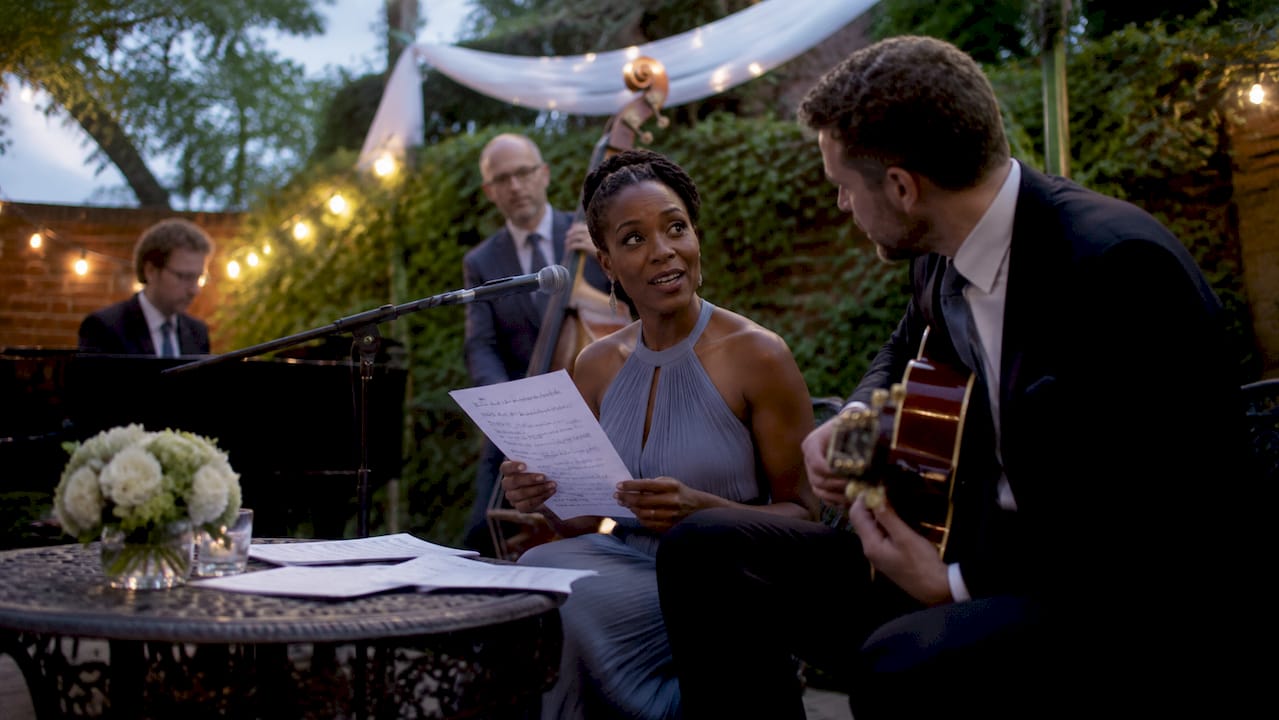
Digital tools like apps or QR-coded platforms enable organized collection and review of song requests without disrupting performance flow. Guests submit requests from their phones. Musicians review them quietly between songs. No one is shouting over the music or sliding paper slips onto the stage. That alone removes a significant source of disruption at receptions.
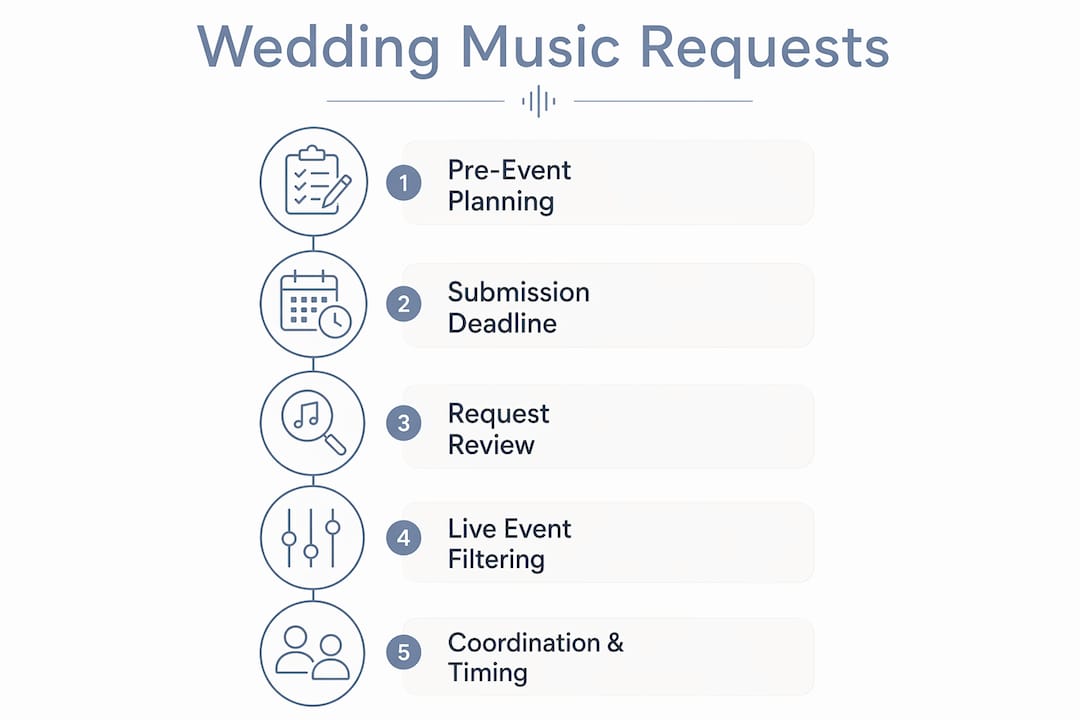
When a request comes in that does not fit the moment, professional musicians use specific language to manage expectations without creating awkwardness. Phrases like "I'll see if I can fit it in later" acknowledge the request without committing to it. This matters because professional musicians filter requests tactfully to maintain sequencing and event energy, sometimes declining songs politely to preserve the dance floor momentum.
Here is how a professional musician typically processes a live request:
- Receive the request through a digital platform or a brief conversation
- Check whether the song fits the current energy level of the room
- Cross-reference against the couple's "Do Not Play" list
- Assess whether the band can perform it well or whether the DJ has a clean version
- Decide on placement: now, later in the set, or a polite decline
- Communicate the decision to the guest if needed
Pro Tip: Ask your musicians before the wedding how they prefer to receive live requests. Some bands designate one member as the point of contact for requests. Knowing this in advance prevents guests from interrupting the wrong person mid-performance.
Coordination with event planners is another layer of this process. Musicians coordinate timing with event planners on speeches, cake cutting, and set structure to keep music flow intact even when schedules shift. A song request that arrives right before a toast needs to wait. A professional musician knows that without being told.
Djs vs. live bands: who handles requests more flexibly?
The difference between how a DJ and a live band handle requests is significant. Understanding it helps you choose the right option for your event and set realistic expectations.
| Factor | DJ | Live Band |
|---|---|---|
| Song flexibility | Can play almost any song instantly | Limited to rehearsed repertoire |
| Request response time | Immediate, within one track | May require set adjustment or decline |
| "Do Not Play" enforcement | Easy to filter digitally | Requires pre-event briefing |
| Energy reading | Translates vague feedback quickly | Uses sequencing and arrangement |
| Request volume handled | High, uses requests as a vibe guide | Lower, prioritizes set flow |
DJs generally have greater flexibility to adjust music instantly based on guest input, while live bands rely more on pre-planned sets and arrangements. That is not a weakness of live bands. It is a structural difference in how they create energy. A band builds momentum through arrangement, dynamics, and performance. A DJ builds it through selection and mixing.
The numbers reflect this difference. DJs often play around 10–20% of requested songs to maintain flow and energy, using the rest as a guide to gauge crowd preferences. That means even with a DJ, most requests serve as data points rather than confirmed plays. Live bands work with an even tighter filter, since playing an unrehearsed song poorly is worse than not playing it at all.
DJs excel in translating vague guest feedback into immediate musical changes, while live bands prioritize set sequencing to sustain the party's energy. Both approaches work. The right choice depends on your guest list, your venue, and the atmosphere you want to create. You can explore the band vs. DJ decision in more detail before you book.
How couples and planners can set musicians up for success
The couples who have the smoothest music experiences are not the ones who leave everything to the musicians. They are the ones who do the prep work upfront and communicate clearly. Here is what that looks like in practice.
- Appoint a point of contact. Designate one person, either a planner or a trusted guest, to handle on-the-night music decisions. Musicians should not be fielding questions from multiple people during the reception.
- Share your full event timeline. Give your musicians the schedule for speeches, cake cutting, and any other programmed moments. This lets them plan set breaks and request windows around those anchors.
- Be specific about your "Do Not Play" list. Generic instructions like "nothing too loud" are hard to act on. Name specific songs or artists you want avoided.
- Choose the right digital platform. Apps like Rekwest or VibeQueue let guests submit requests before and during the event. Using digital request systems reduces lost paper slips and shouted requests, improving efficiency while allowing quiet vetting of unsuitable songs.
- Tell your guests how requests work. A short note in your program or on a table card explaining that requests are welcome but subject to the musicians' judgment prevents frustration later.
- Respect professional boundaries. Musicians are not jukeboxes. Asking your band to learn a song they have never rehearsed the night before the wedding is a recipe for a poor performance. Check your wedding music planning approach early to avoid common mistakes.
Transparency with guests about how requests are handled reduces frustration and keeps the atmosphere positive even when requests are denied. Setting that expectation in advance is one of the highest-value things you can do before the wedding.
Key takeaways
Effective wedding music request management requires pre-event planning, digital tools, and professional judgment to balance guest input with the couple's vision and event flow.
| Point | Details |
|---|---|
| Start planning early | Set a 7-day submission deadline and share "Must Play" and "Do Not Play" lists with musicians in advance. |
| Use digital request tools | Apps like Rekwest and VibeQueue centralize requests and let musicians filter them without disrupting the performance. |
| DJs and bands differ | DJs offer instant flexibility; live bands use sequencing and arrangement to build energy with a tighter request filter. |
| Appoint a point of contact | One designated person for on-the-night decisions prevents musicians from being pulled in multiple directions. |
| Set guest expectations early | Invitation wording and event programs should clarify that requests are suggestions, not guaranteed plays. |
What i've learned about requests after years on the stage
The biggest misconception couples bring to the planning process is that more requests equal a better party. It does not work that way. The best receptions I have played were the ones where the couple trusted the musicians to read the room, not the ones where every guest had a guaranteed slot.
Distinguishing between hearing a request and using a request is the core skill. When a guest asks for a song, I hear it. Whether I use it depends on where we are in the night, what the dance floor looks like, and whether it fits the next three songs I have planned. That judgment call is what separates a professional from a playlist.
Digital tools have genuinely changed how I work. Having requests come through an app instead of someone tapping me on the shoulder mid-song means I can review them thoughtfully rather than reactively. The quality of decisions goes up when you are not making them under social pressure.
The couples who get the most out of their musicians are the ones who ask the right questions before booking. Questions like "How do you handle requests you cannot play?" and "What is your process for the 'Do Not Play' list?" tell you a lot about a musician's professionalism. You can find more of those questions in this guide on what to ask your wedding band before you sign anything.
Open communication before the event saves everyone stress on the night. That is not a platitude. It is the single most consistent pattern I have seen across hundreds of weddings.
— Alex
How Alexlevinmusic handles your wedding music requests
Planning a wedding in Philadelphia, New York, or beyond means you need musicians who treat request management as a professional discipline, not an afterthought. Alexlevinmusic brings that discipline to every event, whether you book a jazz trio, a string quartet, a full band, or a DJ.
Every booking at Alexlevinmusic starts with a detailed planning conversation covering your "Must Play" list, your "Do Not Play" list, your event timeline, and your guest profile. That groundwork is what makes the night feel effortless. If you want to understand why live musicians consistently outperform a static playlist, the answer starts with what makes live music special. When you are ready to talk specifics, browse the full wedding music services and reach out for a personalized consultation.
FAQ
How far in advance should i submit song requests to my musicians?
The standard is at least 7 days before the wedding. That window gives musicians time to review requests against your "Do Not Play" list and build a working set.
Will my wedding band play every song i request?
Not necessarily. Live bands work from a rehearsed repertoire and prioritize set sequencing over fulfilling every request. Expect your most important songs to be honored, with other requests used as guidance.
What is a "do not play" list and should i share it with guests?
A "Do Not Play" list is a private list of songs or artists you want excluded from your reception. Share it only with your musicians, not with guests, to avoid creating conflict or hurt feelings.
How do digital request apps improve the wedding music experience?
Apps like Rekwest and VibeQueue let guests submit and upvote songs before and during the event. Musicians can review and filter requests quietly without interrupting their performance.
Do djs take more requests than live bands at weddings?
Yes, generally. DJs can access almost any song instantly and typically use requests as a crowd-reading tool, playing roughly 10–20% of what is submitted. Live bands work with a tighter filter based on their rehearsed repertoire and set structure.