
A resident musician venue is one that provides an in-house or regularly scheduled musician available for private events — ceremonies, cocktail hours, receptions, and corporate functions, without requiring you to source outside talent. The bottom line for planners: accept the venue's resident musician when convenience, consistent ambiance, and cost savings matter most. Hire outside artists when your event demands a specific ensemble size, specialized repertoire, or a named act the venue cannot provide. Alexlevinmusic operates as both a specialist provider and a preferred partner for venues that want a reliable, polished resident musician program.
Key Takeaways
A resident musician venue provides an in-house or regularly scheduled musician for private events, and whether to use that musician or hire outside depends on ensemble size, repertoire, and event scale.
| Point | Details |
|---|---|
| Definition of the arrangement | A resident musician venue offers an in-house or contracted musician available for ceremonies, cocktail hours, receptions, and corporate functions. |
| Contract non-negotiables | Confirm set times, cancellation terms, equipment responsibilities, and music licensing before signing anything. |
| Fee structure | Fees range from flat per-event rates for soloists to monthly salaries for employed hotel residents; budget a 10–15% buffer above the quoted fee. |
| When to hire outside | Supplement or replace the resident when ensemble size, specialized repertoire, or simultaneous multi-room coverage exceeds their capacity. |
| Alexlevinmusic option | Alexlevinmusic provides solo piano, jazz trios, string quartets, and hybrid DJ-plus-live formats for venues and private events in Philadelphia, New York, and beyond. |
Table of Contents
- What is a resident musician venue, and who actually uses one?
- Resident musician roles, schedules, and employment models
- Contract items and booking checklist every planner must confirm
- How resident musician fees are structured
- Sound, staging, and on-site logistics
- How to coordinate with a resident musician before and during the event
- When the venue's resident musician is not the right fit
- Sample brief and contract clauses you can use now
- What resident musicians actually need from you
- Alexlevinmusic: resident musician services for venues and private events
- Sources
What is a resident musician venue, and who actually uses one?
Hotels, restaurants, private clubs, wedding venues, corporate event spaces, and destination resorts are the most common settings; building an audience through regular live exposure at such residencies complements strategies to grow local followings and how playlists build loyal audiences. The arrangement suits any host who needs live music without the overhead of a full talent search for every event.
Typical hirers and use cases:
- Hotels programming lobby ambiance, lounge sets, and private dining rooms
- Wedding venues offering in-house ceremony or cocktail-hour musicians as part of their packages
- Restaurants and private clubs scheduling weekly or weekend live music for recurring guests
- Corporate event spaces that host frequent client dinners, galas, or networking receptions
- Resort planners managing daily entertainment across multiple venue spaces
Hospitality job listings confirm that resident musicians are expected to pivot between ambient sets, private-event setlists, and guest requests — versatility is the defining skill. The arrangement works best for recurring events, hospitality-driven guest experiences, and private events that want live music without a large production budget. Understanding why professional musicians matter at live events helps clarify the value before you commit to any arrangement.
Resident musician roles, schedules, and employment models
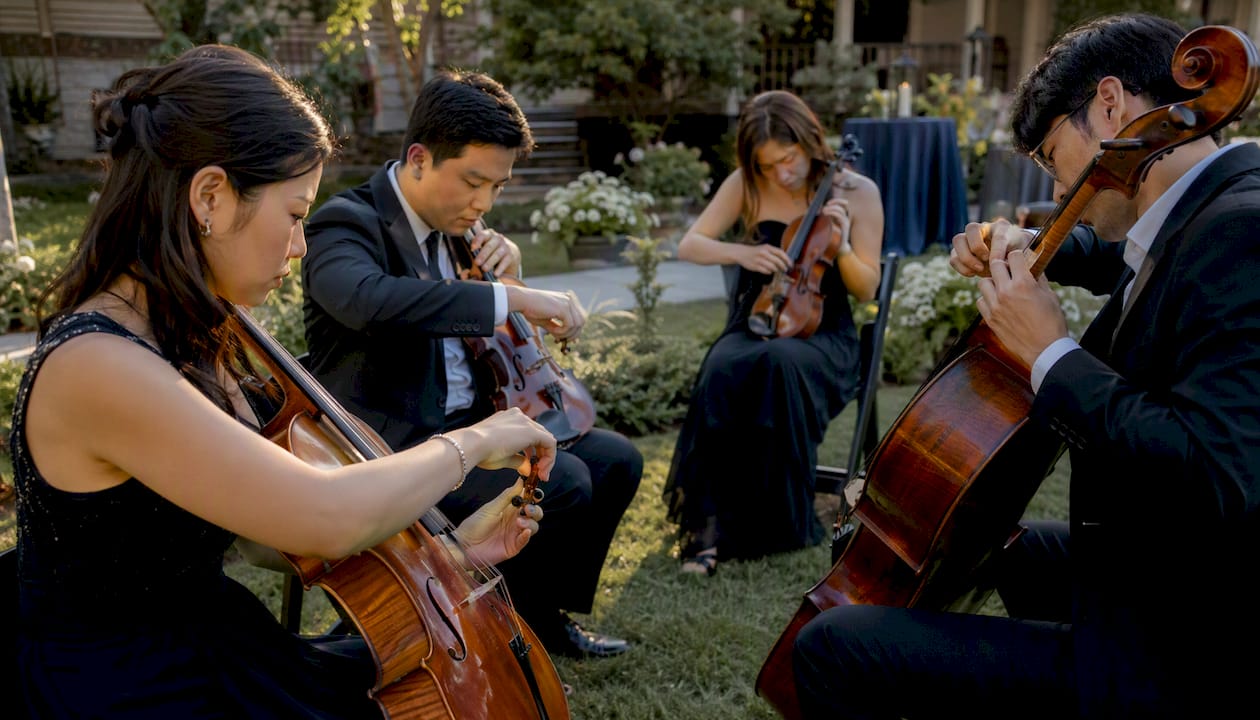
The role varies widely. A solo pianist covering a hotel lobby, a roaming acoustic duo working a cocktail hour, a string quartet for a ceremony, and a hybrid DJ-plus-live setup for a reception are all forms of resident musician work. Hotel listings commonly require versatility across piano, guitar, violin, and vocals, with the ability to adapt style from daytime ambient to evening private-event performance.
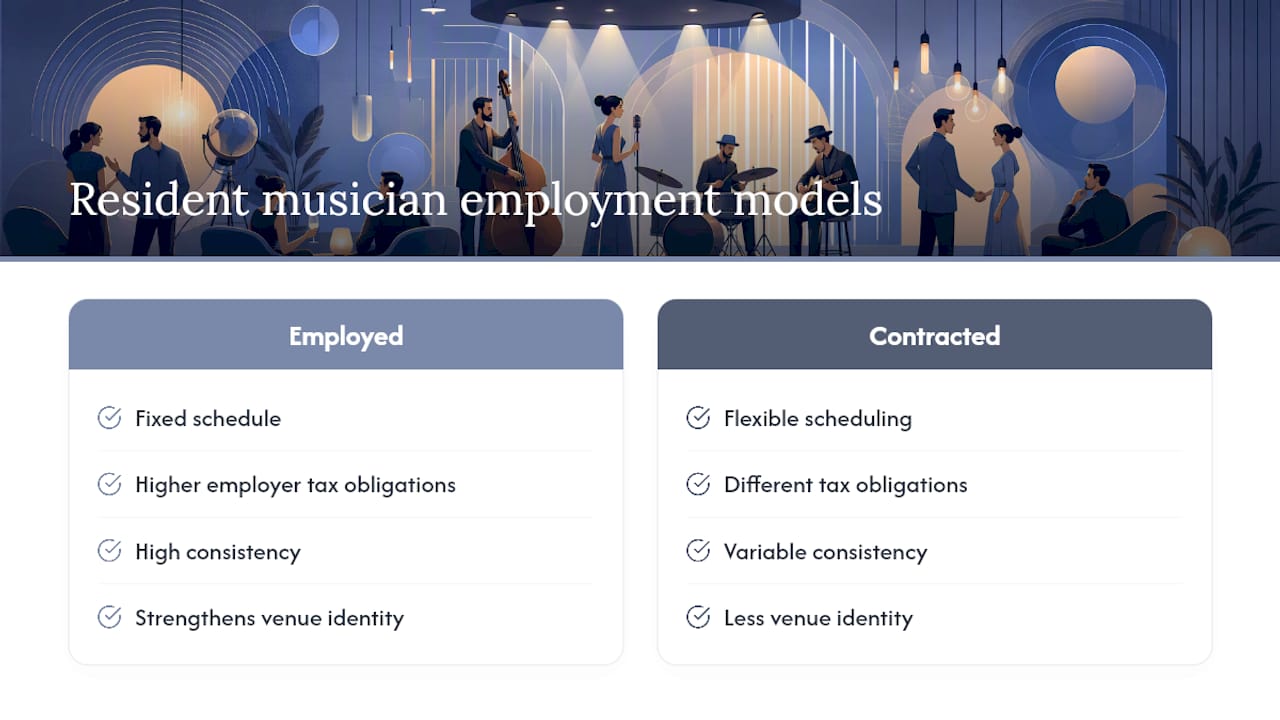
On the employment side, the choice between hiring a musician as a salaried employee versus contracting them on a per-event or recurring basis shapes everything from tax obligations to scheduling flexibility. Industry commentary on contracting versus employing makes the trade-off clear: employed residents deliver consistency and strengthen venue identity, while contracted arrangements give programming flexibility and lower fixed costs. Seasonal residencies, common at resorts, often include weekly multi-set schedules and supplemental coverage for private bookings.
Pro Tip: Ask specifically whether the musician has hospitality experience — not just performance experience. A musician who knows how to read a room, adjust volume for a dinner conversation, and engage guests without interrupting them is worth more than a technically superior player who treats every set like a concert.
Contract items and booking checklist every planner must confirm
Before relying on a venue's resident musician for your event, get the following in writing.
Core contract checklist:
- Performance window: exact start and end times, with overtime rates specified
- Set structure: number of sets, length of each, and scheduled break times
- Call time and load-in/load-out: when the musician arrives, where they load in, and who grants access
- Compensation: total fee, deposit amount and due date, final payment timing, and gratuity policy
- Cancellation terms: notice period required by both parties, refund schedule, and force majeure language
- Replacement clause: who provides a substitute performer if the resident musician is unavailable
- Equipment responsibilities: who supplies PA, monitors, microphone stands, DI boxes, and whether a sound technician is included
- Music licensing: confirm whether the venue holds active ASCAP and BMI blanket licenses covering live performance, or whether the musician is responsible
The live band booking guide stresses matching the act to audience, venue size, and running order — not treating any musician as a default fill. Apply that same logic when reviewing a resident musician contract.
Pro Tip: Send a one-page summary email after signing that restates call time, set times, load-in location, and your on-site contact's phone number. Misread contracts cause most day-of conflicts — a plain-language recap prevents them.
How resident musician fees are structured
Fee models vary by arrangement type:
- Flat per-event fee: most common for contracted resident musicians covering a single event; solo pianists typically range from a few hundred dollars for a short set to over a thousand for a full evening
- Hourly or per-set rates: used when event length is uncertain; clarify whether travel and setup time are billed separately
- Monthly or seasonal salary: applies to employed residents at hotels and resorts; includes benefits in some cases, such as housing or meals at destination properties
- Revenue-share or tips-included formats: less common, but used in restaurant settings where the musician supplements income through guest gratuities
Ensemble size drives cost more than almost any other variable. A solo pianist costs less than a jazz trio; a string quartet costs more than both. Peak-season rates, special song learning fees, and travel outside the venue's market all add to the base.
Sound, staging, and on-site logistics
Getting the technical details right before the event day prevents the most common friction.
Quick-reference: ensemble size, stage footprint, and PA needs
| Ensemble | Minimum stage footprint | Typical PA requirement |
|---|---|---|
| Solo piano (acoustic) | 6 ft × 6 ft | None or small monitor |
| Solo piano (digital) or solo guitar | 6 ft × 6 ft | Small PA or venue system |
| Duo (piano + vocals) | 8 ft × 8 ft | Small PA, monitor speakers |
| Jazz trio | 10 ft × 12 ft | Mid-size PA, 3–4 monitors |
| String quartet | 10 ft × 10 ft | None (acoustic) or light reinforcement |
| Hybrid DJ + live | 12 ft × 16 ft | Full PA, subwoofer, 4+ monitors |
Logistics checklist:
- Confirm load-in window (at least 60–90 minutes before guests arrive)
- Verify parking or loading dock access for instrument cases
- Identify the on-site AV or site manager contact for the musician
- Schedule a sound check before doors open, not during cocktail hour
- Designate quiet zones for ceremonies where volume must stay below a set level
- Clarify who cues the musician for announcements, toasts, and first-dance transitions
Corporate event booking guidance notes that roaming formats work well for networking receptions, while stage-based ensembles suit seated dinners and galas. Match the staging plan to the event phase, not just the room.
How to coordinate with a resident musician before and during the event
Share your running order as early as possible. Booking professionals recommend providing full program details so the musician can calibrate volume, transitions, and stings to each moment. A vague "ceremony at 5 PM" is not enough; the musician needs to know when the processional starts, what song plays, and who cues them.
Pre-event communication checklist:
- Send the full running order with times at least two weeks out
- Confirm specific songs for ceremony processional, recessional, first dance, and any cultural traditions
- List songs or genres to avoid
- Specify how guest requests will be handled (accepted, declined, or filtered through a coordinator)
- Confirm who the musician's on-site point of contact is during the event
- Agree on how transitions between sets and announcements will be cued (hand signal, earpiece, text)
For events moving from background dinner music to dancing, the resource on seamless music planning for private events walks through how to structure those transitions without dead air or abrupt shifts.
When the venue's resident musician is not the right fit
Some events simply outgrow what a single resident musician can deliver.
Hire outside artists when:
- Your event needs an ensemble larger than the resident musician performs with
- The repertoire requires a specialist (a mariachi group, a brass band, a classical string octet)
- Multiple simultaneous spaces need live music and the resident only covers one
- Your brand or client requires a specific named act or celebrity performer
- The resident's schedule conflicts with your event timing and no substitute is offered
- The after-party energy level exceeds what the resident's format can sustain
Practical alternatives include augmenting the resident with session players for specific sets, contracting a separate band for the after-party, or booking a ceremony specialist while keeping the resident for cocktail hour. The live band booking guide frames this well: match the act to the event's specific needs rather than defaulting to whatever is already on-site.
Sample brief and contract clauses you can use now
Sample musician brief (fill in your details):
- Event date and venue address
- Call time / load-in time / performance start and end
- Run-of-show highlights (ceremony, cocktail hour, dinner, dancing)
- Audience profile (age range, cultural background, formality level)
- On-site contact name and mobile number
Copy-ready contract clauses:
- Performance window: "Musician agrees to perform from [START] to [END], with breaks not to exceed [X] minutes per hour."
- Overtime: "Additional performance time beyond the contracted window is billed at $[X] per 30-minute increment, approved in writing by the client."
- Replacement artist: "If the named musician is unable to perform, a substitute of equivalent experience will be provided at no additional cost, subject to client approval."
- Cancellation: "Cancellation by client more than [X] days prior to the event date forfeits the deposit. Cancellation within [X] days forfeits [X]% of the total fee."
- Equipment: "Venue/client provides [PA system / sound technician / stage riser]. Musician provides [instrument / cables / personal monitor]."
Rider checklist: dedicated 20-amp power circuit, secure storage for instrument cases, parking or load-in access, bottled water and a meal for events exceeding three hours, and a quiet warm-up space if available. For a deeper look at building a recurring program, the guide on how to curate a resident musician venue program covers contract basics and rider recommendations in detail.
What resident musicians actually need from you
The friction points that derail resident musician arrangements are almost always logistical, not musical. Unclear set times, a meal that arrives during the performance, and inadequate sound reinforcement are the three most common complaints from working musicians. None of them require a large budget to fix.
From a working musician's perspective, the events that go smoothly share a few traits: a named on-site contact who is reachable by phone, a confirmed sound check before guests arrive, and a written timeline that accounts for the musician's setup and breakdown. Payment on the agreed date, without follow-up, builds the kind of trust that makes a musician go the extra mile on the day.
Employing or regularly contracting a resident musician strengthens venue branding and repeat-guest loyalty because the act becomes part of the venue's identity. That only works when the venue treats the musician as a professional partner, not a background fixture.
Pro Tip: Consistent mic placement matters more than most planners realize. If the musician sets up in the same spot every week, the sound tech already knows the room's behavior at that position. Moving the setup even a few feet can introduce feedback or dead spots that eat into sound-check time.
Alexlevinmusic: resident musician services for venues and private events
Alexlevinmusic offers the full range of formats a resident musician venue needs: solo piano, jazz trios, string quartets, and hybrid DJ-plus-live ensembles, all customizable to your event's theme and guest profile. For corporate hosts, the corporate event entertainment page outlines available packages and the booking process. Wedding couples evaluating resident versus external musicians will find the reception music service page useful for comparing ensemble options and understanding what each format delivers.
The team handles contracts, rider coordination, and day-of logistics so planners spend less time managing details and more time with their guests. To discuss a venue residency program or a single-event booking, reach out directly through alexlevinmusic.com to request availability and a quote.
Sources
- How to Hire a Band for a Corporate Event (2026 Guide) - FixTheMusic
- Striking the right chord to enrich an experience: contracting vs. employing live musicians | RK Blueprints — The #1 Creative Technology Solutions Consultancy in New York City