
Running a regular live-music series is practical for almost any venue once you nail three things: a clear concept, reliable artists under simple contracts, and basic systems for sound, permits, and promotion. Start this week by defining your concept and cadence, reaching out to three local acts, and calling your performing rights organization (ASCAP, BMI, or SESAC) to sort licensing before your first show.
Must-have documents before you book anyone:
- One-page performance contract (dates, times, payment, cancellation terms)
- Basic tech rider signed by the artist
- Event liability insurance certificate
Table of Contents
- How do you host live music at a venue regularly?
- How do you recruit artists and write contracts that actually hold?
- What does your physical setup need to look like?
- How do you promote a recurring series and grow repeat attendance?
- What are the operational and legal basics you cannot skip?
- How do you measure whether the series is working?
- What does a 12-week launch plan look like?
- Why hire professional live musicians for a recurring series?
- Key Takeaways
- What performers actually need from you
- Alexlevinmusic handles the booking so you can focus on the room
- Useful resources for venue operators and event planners
How do you host live music at a venue regularly?
The answer starts with concept before calendar. Venues that build a recurring series around a focused identity — acoustic cocktail sets on Thursdays, late-night jazz on Fridays, a curated listening-room format on the first Sunday of the month — consistently outperform venues that book random acts and hope for the best.
Match genre and energy to your venue brand and your existing customer. A 60-seat wine bar and a 200-seat restaurant call for completely different formats. Acoustic or jazz trios work in intimate rooms where conversation still matters; full bands need separation from the kitchen and a proper PA.
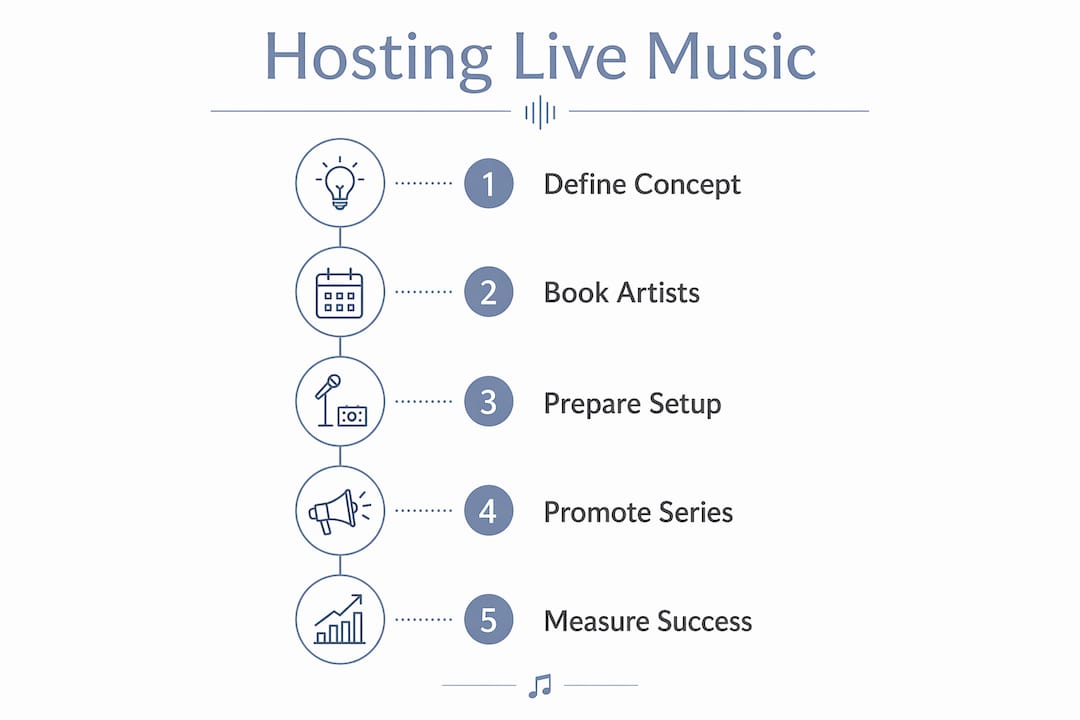
On cadence: weekly builds habit fastest but demands more booking bandwidth. Monthly reduces pressure but makes it harder to build momentum. A biweekly schedule (every other week) is a practical starting point for most venues. Set your success criteria before you launch: a target headcount, a minimum cover conversion rate, and an average order value lift on show nights. Without those numbers, you cannot tell whether the series is working.
Pro Tip: For a first series, pick one format and stick with it for at least eight weeks before changing anything. Discovery nights (open mics, double-bills with short sets) build community faster; single headliners drive higher per-ticket revenue. Choose based on whether your goal is audience growth or immediate revenue.
How do you recruit artists and write contracts that actually hold?
Source artists from local music schools, collective pages, and platforms like ARTEEST for curated discovery. For planners who want a proven supplier with clear deliverables and professional-grade ensembles, Alexlevinmusic offers jazz trios, string quartets, solo piano, and hybrid DJ/live options already matched to event formats.
On deal structure: start with flat fees until you understand demand. A flat fee limits your downside when attendance is unpredictable. Once a night proves itself, move to a guarantee plus a bonus tied to cover revenue.
A one-page contract should cover:
- Performance date, set times, and soundcheck window
- Payment amount, deposit percentage, and payment timing
- Tech rider (inputs, monitors, power requirements)
- Cancellation terms for both parties
- Promotional requirements: artist must share the event on social media, provide a hi-res photo, and deliver a 20–30 second promo video
- Merch and tips policy
Require promotional assets upfront: brochure copy that sells the show, a studio or selfie video clip, and a commitment to post on their social calendar. This is not optional — it is a contractual deliverable.
Pro Tip: Send the contract with a deposit invoice at the same time. Artists who receive both together sign and pay faster, which locks the date and signals mutual commitment.
What does your physical setup need to look like?
Keep the stage off primary service paths — away from kitchen flow and server lanes. Sightlines matter: most guests should see the performer without turning their chair. Plan power access before you book anyone; a dedicated circuit for the PA prevents mid-set breaker trips.
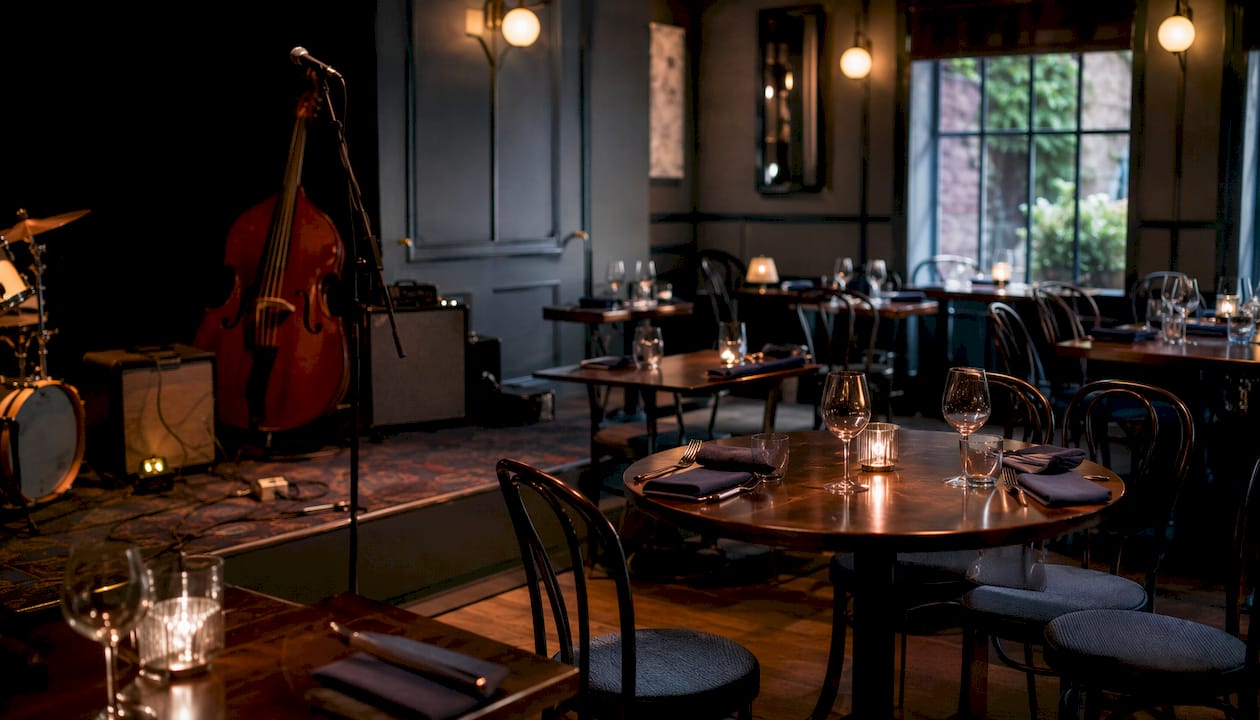
For intimate rooms under 150 seats, a minimal rig works: two main speakers, one floor monitor, two vocal mics, a DI box, and a small mixer. A 200–500W PA is sufficient for most acoustic and jazz formats.
Sound level discipline is where most venues fail. Set PA gain to roughly 50% and calibrate during soundcheck using the loudest part of the set. A free dB meter app on your phone gives you a real-time read; agree on a maximum level with the artist before the show starts.
Arrive early, set staging and lighting before the artist walks in, and greet them with a hospitality setup ready. That first impression sets the tone for the entire show and signals that you run a professional operation.
Day-of staff roles:
- Front-of-house host: manages door, covers, and reservations
- Sound operator: runs the board and monitors levels throughout
- Stage manager: coordinates load-in, soundcheck timing, and set transitions
- Bar lead: manages service flow and pre-sold combo fulfillment
A one-page run-of-show distributed to all four roles before doors open eliminates most on-night confusion. For a deeper look at day-of coordination, the flawless music experience guide from Alexlevinmusic covers the full arc from load-in to encore.
How do you promote a recurring series and grow repeat attendance?
Promotion works best when the venue and artist split responsibilities clearly. The venue owns the email list, the event page, and paid ads. The artist owns their own social posts, their fan list, and any cross-promotion with other musicians.
Promotion timeline:
- 3 weeks out: announce the date with artist photo and bio copy; open reservations
- 2 weeks out: post the artist's promo video clip (20–30 seconds) across venue channels; artist shares simultaneously
- 1 week out: email your list with a reservation or ticket link; run a small geo-targeted ad if budget allows
- 48 hours out: boost the artist's best-performing post; send a reminder to anyone who reserved
Assets to collect from every artist before the show:
- Event image (hi-res, horizontal format for social and email)
- Bio copy, 100 words or fewer, written to sell the show
- 20–30 second video clip (studio or selfie format)
- Confirmation of their social posts and event page shares
Pre-sell meal-plus-ticket combos. Pairing a show special with a ticket increases average order value and reduces bar congestion during sets. Priority seating for pre-buyers also drives early sales.
Pro Tip: Create a short-form video template (same frame, same intro card, different artist each week) and reuse it every show. Consistency builds brand recognition faster than one-off creative.
What are the operational and legal basics you cannot skip?
Pricing, licensing, and insurance are not optional details. Get them wrong once and they can shut down your series.
Operational checklist:
- Contact ASCAP, BMI, or SESAC before your first show. PROs now offer short-term and app-based setlist reporting options, so ask about the right license tier for your format.
- Check your city or county for a public entertainment permit; requirements vary by jurisdiction.
- Review your noise ordinance curfew. Most residential-adjacent venues face a 10 PM or 11 PM cutoff.
- Carry event liability insurance. Your general commercial policy may not cover live performances — confirm with your broker.
- Collect a deposit (typically 25–50% of the artist fee) at contract signing; pay the balance on the night of the show or within 48 hours.
| Pricing model | Best for | Risk level |
|---|---|---|
| Flat artist fee | New series, unknown demand | Low |
| Cover charge (door) | Established draw, walk-in traffic | Medium |
| Guarantee + bonus | Proven series with predictable attendance | Medium |
| Net-revenue share | High-trust, long-term artist relationships | Variable |
Pro Tip: Use a ticketing tool that captures email addresses at checkout. Every pre-sold ticket is a future marketing contact, and that list compounds in value with every show.
How do you measure whether the series is working?
Track five numbers after every show: attendance, cover conversion rate (covers sold vs. doors opened), average order value on show nights versus non-show nights, repeat-visitor rate (emails collected from returning guests), and artist ROI (revenue generated relative to artist cost).
Review operational signals weekly. Make strategy changes monthly. Quarterly, decide whether to adjust pricing, change cadence, or swap formats.
Simple tests to run in the first quarter:
- Pricing: raise or lower the cover by $5 and measure conversion rate change
- Format: swap a single headliner night for a double-bill and compare attendance and AOV
- Promo channel: test email-only promotion against email plus paid social and compare pre-sales
Read results over at least three consecutive shows before drawing conclusions. One outlier night (a holiday weekend, a weather event) will skew any single-show read.
What does a 12-week launch plan look like?
| Week | Deliverable | Owner |
|---|---|---|
| 1–2 | Define concept, format, cadence; set KPI targets | Venue manager |
| 2–3 | Artist outreach; shortlist 3–5 acts | Booking lead |
| 3–4 | Sign contracts; collect deposits and promo assets | Booking lead |
| 4–5 | Permit applications; PRO license confirmation; insurance check | Operations |
| 5–6 | Promo asset review; build event pages; open reservations | Marketing |
| 6 | Email announcement; artist social posts go live | Marketing + Artist |
| 8 | Pre-sell combos; run geo-targeted ads | Marketing |
| 8 | Dry run: full soundcheck, staff run-of-show walkthrough | All staff |
| — | Show 1 | All |
| 10–12 | Shows 2–3; track KPIs; debrief after each show | All |
Budget checkpoints to plan for:
- Artist guarantees (your largest variable cost — start flat)
- PA rental or purchase (one-time or per-show depending on your setup)
- PRO licensing fees (annual or per-show depending on license type)
- Promotional spend (small geo-targeted ads, boosted posts)
- Permits and insurance (confirm costs with local authorities and your broker)
Numbered steps for your first 30 days:
- Write a one-paragraph concept statement: genre, vibe, target customer, cadence
- Contact three local acts with a brief pitch and proposed date
- Call your PRO (ASCAP, BMI, or SESAC) and confirm your license type
- Pull your city's entertainment permit requirements
- Draft your one-page contract template before you need it
Why hire professional live musicians for a recurring series?
The difference between a one-off show and a series that runs for years usually comes down to artist reliability and operational consistency. Professional musicians arrive on time, bring their own gear when specified, and understand that promotion is part of the job.
Live music works best when the performer and the venue are genuine partners — sharing promotion, respecting each other's logistics, and showing up prepared. That partnership is what turns a single good night into a series guests plan their calendar around.
Alexlevinmusic provides exactly that kind of partnership for recurring series. The offering covers artist matching (jazz trios, string quartets, solo piano, hybrid DJ/live ensembles), clear contracts with defined deliverables, on-site technical coordination, and promotional asset support. Video samples of live performances are available on the site so planners can evaluate fit before committing. For planners weighing the value of live versus recorded music, the case for live music over a playlist is made in detail on the Alexlevinmusic site.
Outsourcing booking to a professional supplier shifts artist-reliability risk off the venue. If a performer cancels, the supplier handles the replacement. That accountability is worth more than the margin you might save booking direct.
Pro Tip: Ask any prospective supplier for a sample contract and a list of their standard promotional deliverables before you sign. A professional operation has both ready.
Key Takeaways
A recurring live-music series succeeds when concept, contracts, and operations are locked before the first show, not after.
| Point | Details |
|---|---|
| Define concept first | Match genre and energy to your venue brand before booking any artist. |
| Start with flat fees | Use flat artist fees until attendance patterns are predictable, then move to guarantee plus bonus. |
| Contracts require promo deliverables | Require a hi-res photo, bio copy, and a 20–30 second video from every artist at signing. |
| Contact your PRO early | Call ASCAP, BMI, or SESAC before your first show to confirm your license type and reporting method. |
| Alexlevinmusic as your booking partner | Alexlevinmusic handles artist matching, contracts, tech coordination, and promo assets for recurring series. |
What performers actually need from you
Performers talk. A venue that communicates clearly, sets up before the artist arrives, and pays on time gets recommended to other musicians. One that runs late, skips the soundcheck, or pays in cash three weeks later does not get a second call.
Clear arrival times and a simple hospitality setup (water, a place to store gear, a point of contact) cost almost nothing and change the dynamic entirely. When venues invest in matching the right musician to the room and treat that artist as a partner, the artist reciprocates with stronger promotion and a better set.
The practical note on testimonials and credentials: ask your first few artists for a short written review after the show. That social proof, posted on your event page and shared in your email list, does more for your next show than any paid ad.
Alexlevinmusic handles the booking so you can focus on the room
Running a recurring live-music series means managing artist outreach, contracts, sound logistics, and promotion simultaneously. Alexlevinmusic takes the booking and coordination work off your plate. The service covers artist matching across jazz trios, string quartets, solo piano, and hybrid DJ/live formats; contract drafting with defined promotional deliverables; on-site technical coordination; and promo asset delivery so your marketing team has what it needs before the show is announced.
Pricing is structured per event, with packages designed for both one-off bookings and recurring series. For planners running corporate events or private venue nights, the starting point is a consultation to match format and ensemble to your specific room and audience. Contact Alexlevinmusic to check availability for your dates and get a custom quote.
Useful resources for venue operators and event planners
Licensing and legal:
- ASCAP — public performance licensing, short-term and annual options
- BMI — licensing for public performances, venue-specific tiers
- SESAC — smaller PRO with direct licensing for qualifying venues
Planning and booking guidance:
- Berklee Online: How to Book, Plan, and Promote a Live Concert — covers venue selection, artist outreach, and promotion fundamentals
- How to Plan a Music Experience That Resonates — audience-curation and program design for event planners
- Alexlevinmusic services page — full ensemble options and booking contact
Recommended next steps:
- Call your PRO this week and confirm your license before booking any artist
- Schedule a test show within 60 days using the 12-week plan above
- Collect artist promo assets at contract signing, not the week of the show