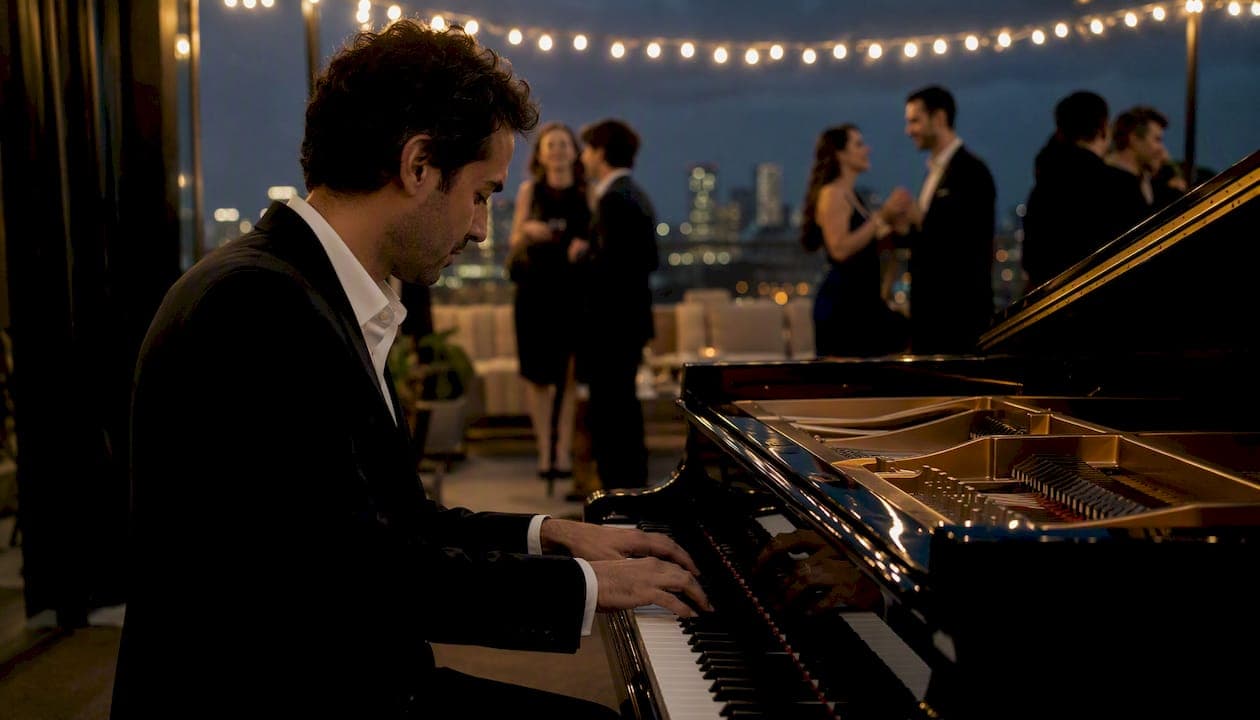
A jazz standard is a song that has stuck around long enough, and been played by enough musicians, that everyone in the room already knows it. Tunes like "Autumn Leaves," "Body and Soul," and "Summertime" qualify because they're widely known, performed, and recorded across generations of players, not because a committee voted them in. There's no single official list. What counts as a standard shifts a little depending on who you ask and what decade they came up in, but the core idea holds: these are songs solid enough to build an arrangement on and open enough to improvise over.
That matters more than it sounds like it should. When a saxophonist who's never met a pianist can call "All the Things You Are" on a bandstand and the whole group falls into step within four bars, that's a standard doing its job. It functions as a shared musical language. Journalist and bassist Christian McBride has pointed out that a tune earns that status through repetition. Enough people record it, enough singers cover it, and enough musicians play it at jam sessions until it becomes common ground.
Key Takeaways
A jazz standard earns its status through decades of recordings, covers, and bandstand use, not through any official designation, and that shared repertoire is what lets musicians improvise together with no rehearsal.
| Point | Details |
|---|---|
| Definition | A standard is widely known, performed, and recorded, and it's used as the basis for arrangements and improvisation. |
| Status is earned, not assigned | Influential recordings, vocal covers, and fake-book inclusion push songs into the repertoire over time. |
| Origins are varied | Standards come from Broadway, Tin Pan Alley, folk and blues traditions, and original jazz compositions. |
| Structure enables improvisation | Predictable forms like 32-bar AABA and 12-bar blues let musicians who've never met play together confidently. |
| Start small as a beginner | Learn four to six accessible tunes like "Autumn Leaves" and "Blue Monk" before tackling harder-changing songs. |
If you're planning an event and want a set built entirely around this kind of repertoire, explore ensemble and soloist options suited to your venue and guest list.
Table of Contents
- What Makes a Song a Jazz Standard?
- How Does a Song Become a Jazz Standard?
- Where Do Jazz Standards Come From? A Short History
- Ten Jazz Standards Every Beginner Should Know
- How Musicians Actually Use Standards on the Bandstand
- How to Start Learning Jazz Standards as a Beginner
- Where Jazz Standards Fit Into Live Event Programming
- A Note From Alex
- Frequently Asked Questions
- Sources
What Makes a Song a Jazz Standard?
Not every good song becomes a standard, and plenty of forgettable ones have. What separates the tunes that last from the ones that fade is a mix of musical structure and cultural momentum.
Here's what tends to show up in songs that earn the label:
- Durability. The song has been played and recorded steadily over a long period, not just during its initial run of popularity.
- Harmonic richness. The chord changes offer enough variety and movement to give improvisers something interesting to work with, without being so complicated that nobody wants to touch it.
- Clear, singable melody. A strong melodic line, one that works whether it's sung, played on trumpet, or comped through on guitar, helps a tune spread.
- A recognizable form. Most standards fall into predictable structures, like 32-bar AABA or a 12-bar blues, which makes them easier to learn and easier to jam on with strangers.
- Broad performance history. Multiple well-known artists across different eras have recorded or performed it, reinforcing its place in the repertoire.
- Presence in fake books. If a tune shows up in the Real Book or similar lead-sheet collections, that's a strong signal it's already accepted as core repertoire.
- Cross-genre origin. Standards come from all over: the Great American Songbook, Broadway musicals, Tin Pan Alley pop tunes, folk and blues traditions, and original jazz compositions.
- Educational adoption. Music schools and jam session culture treat certain songs as required listening and playing, which keeps them circulating among new generations of players.
Pro Tip: When you're trying to spot why a song became a standard, listen for repeated or sequential chord changes, patterns like ii-V-I that show up again and again within the tune. Those recurring shapes give improvisers a familiar road map, which is exactly why musicians gravitate toward certain songs over others with equally pretty melodies.
How Does a Song Become a Jazz Standard?
No song is born a standard. It has to earn that status, usually through a combination of a landmark recording, heavy vocal coverage, and word-of-mouth adoption among working musicians.
The clearest example is "Body and Soul." It was already a popular tune in the early 1930s, but Coleman Hawkins' 1939 recording transformed it into something else entirely. Hawkins barely stated the melody and instead built an extended improvisation over the chord changes, and that recording became so influential that it more or less defined how jazz musicians would treat the song from then on. One recording, released at the right moment, cemented a tune's place in the canon for good.
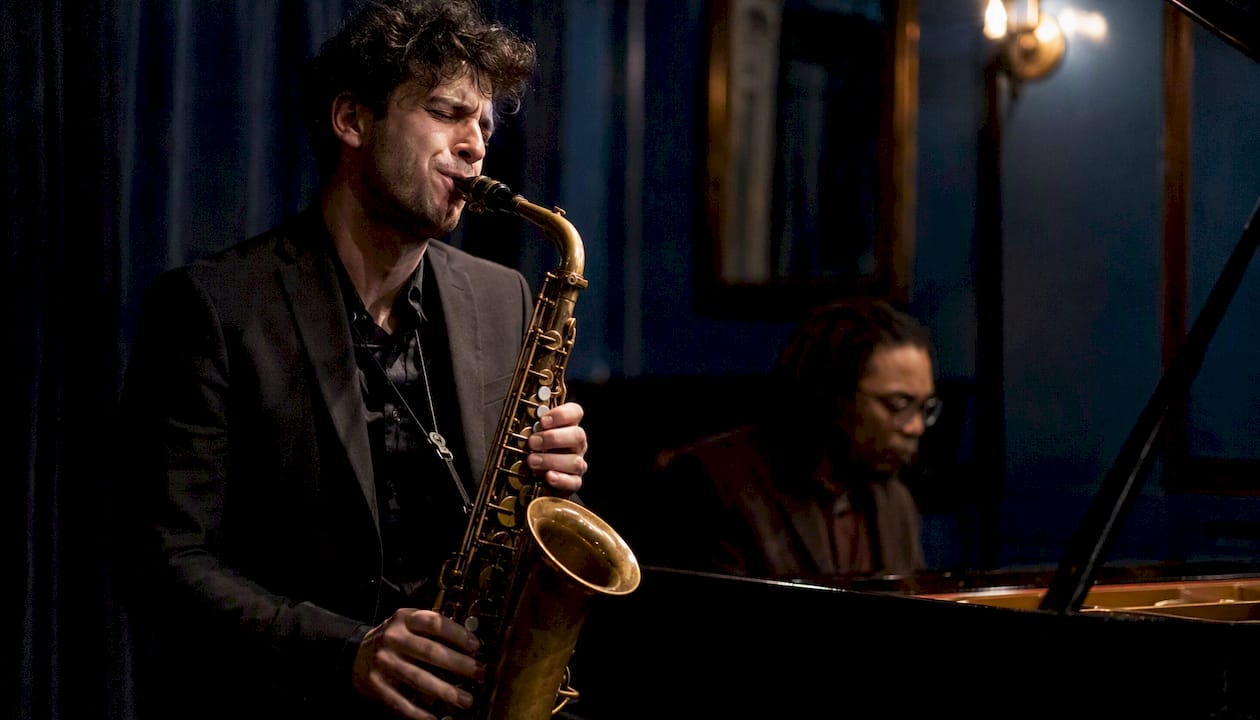
Vocal covers do similar work, just more gradually. When well-known vocalists recorded a song, audiences connected with the lyric and emotional delivery in ways instrumental jazz alone doesn't always achieve. That audience connection helps push a tune from "jazz musicians like this" to "everybody knows this," which is a meaningfully bigger jump.
Here's roughly how the process tends to unfold:
- A song debuts in a Broadway show, film, or as a pop single, written by a Tin Pan Alley songwriter.
- A jazz musician records an influential instrumental version, often reworking the harmony or the phrasing.
- A well-known vocalist covers it, exposing the song to a wider audience beyond jazz listeners.
- The tune gets published in fake books, giving working musicians easy access to the melody and chords.
- It becomes a jam session staple, requested often enough that younger musicians learn it as a matter of professional necessity.
Christian McBride has described the process bluntly: the more people who record a song, and the more prominent the vocalists who take it on, the better its odds of becoming a standard. It's less about any single "correct" version and more about how many musicians and singers decide the song is worth returning to, generation after generation.
That community-driven process explains why some genuinely great songs never became standards, while others with simpler melodies did. The ones that stuck were the ones musicians kept choosing to play.
Where Do Jazz Standards Come From? A Short History
Most standards trace back to a fairly narrow window of American songwriting, though the repertoire has kept growing well past that original burst.
The heaviest concentration of standard-worthy material came out of the period between 1929 and 1940, when Broadway shows and Hollywood musicals were churning out songs faster than almost any other era in American pop music. Jazz musicians heard these tunes, recognized good chord changes when they heard them, and started adapting them for improvisation almost immediately.
| Period | What happened | Example tunes |
|---|---|---|
| 1929–1940 | Tin Pan Alley and early Broadway produce pop songs that jazz musicians begin adapting | "Body and Soul," early Gershwin tunes |
| Late 1930s–1940s | Broadway and film musicals peak; swing-era bands popularize many songs | "All the Things You Are," "Summertime" |
| — | Bebop musicians write new melodies over existing chord changes, creating "contrafacts" | "So What," "Blue Monk" |
| — | Jazz composers write original tunes that become standards in their own right | "Take the 'A' Train," "My Funny Valentine" |
| 1970s–present | A small number of modern jazz and pop-adjacent tunes reach standard status through wide adoption | "Birdland" |
During the bebop era, musicians wrote new melodies over the chord progressions of existing pop songs, creating fresh material known as contrafacts. These reworked tunes, known as contrafacts, sometimes had a practical motive: writing new material over old changes let musicians avoid paying royalties on the original song while still working with familiar harmonic territory. Some of those contrafacts became standards in their own right, independent of the songs they borrowed from.
Modern additions to the repertoire are rare but not extinct. Weather Report's "Birdland," released in the late 1970s, is among the few tunes from outside the classic era to achieve genuine standard status, partly through instrumental popularity and partly through vocal arrangements that introduced it to a wider audience.
Ten Jazz Standards Every Beginner Should Know
If you're building your first mental list of jazz standards, start here. These songs show up constantly on bandstands, in fake books, and in jam sessions, and each one illustrates a different reason songs make the cut.
- "Autumn Leaves" — Originally a French song ("Les Feuilles Mortes") with English lyrics added later, its simple, mostly stepwise chord progression makes it one of the first standards most jazz students learn to improvise over.
- "All the Things You Are" — A Jerome Kern composition from a 1939 Broadway show, prized by musicians for its constantly shifting key centers, which make it a serious workout in harmonic navigation.
- "Body and Soul" — Popularized as a standard through Coleman Hawkins' landmark 1939 recording; listen for how little of the actual melody he plays.
- "Summertime" — George Gershwin's aria from Porgy and Bess, built on a haunting minor blues feel that has attracted covers from nearly every major jazz vocalist.
- "My Funny Valentine" — A Rodgers and Hart show tune whose melancholy melody and minor key harmony have made it a favorite for ballad interpretation, notably by Chet Baker.
- "Take the 'A' Train" — Written by Billy Strayhorn for the Duke Ellington Orchestra, this became the band's signature tune and a staple of the swing-era repertoire.
- "So What" — A Miles Davis original from Kind of Blue, built almost entirely on two chords, that introduced modal improvisation to a mainstream jazz audience.
- "All of Me" — A 1931 Tin Pan Alley pop tune with a simple, singable melody that made it an easy entry point for vocalists and instrumentalists alike.
- "Blue Monk" — Thelonious Monk's 12-bar blues, deceptively simple on paper but full of the angular phrasing that made Monk's compositional voice so distinct.
- "Birdland" — Written by Joe Zawinul for Weather Report, one of the few post-1970s tunes to reach true standard status, thanks partly to Manhattan Transfer's popular vocal arrangement.
Each of these appears constantly in the Great American Songbook and jazz repertoire conversation, and knowing even five or six of them gives you real footing in a jam session or a listening session.
How Musicians Actually Use Standards on the Bandstand
Walk into a jazz club and you'll almost never see a full musical score on the stands. Instead, players usually work from a lead sheet, a simplified page showing just the melody, the chord symbols, and the basic form of the song. Everything else, the exact voicings, the rhythm, the improvised lines, gets filled in live.
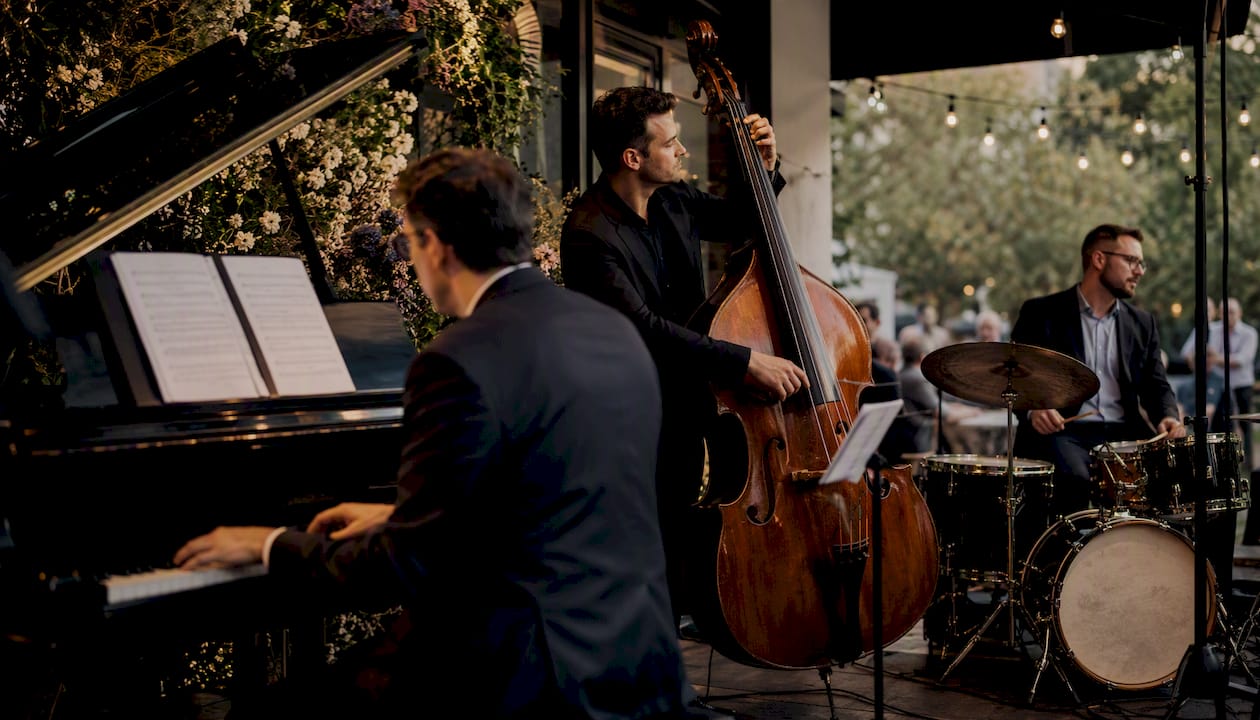
That minimal notation only works because the form of standards is predictable. Most follow a head, solo, head structure: the band plays the melody (the "head"), takes turns improvising over the chord changes, then returns to the melody to close the tune. A common form underneath all this is the 32-bar AABA structure, four eight-bar sections where the first, second, and fourth sections repeat a melody (A) and the third section introduces a contrasting idea (the bridge, or B). The 12-bar blues is another frequent shape, especially for tunes like "Blue Monk."
On top of that basic form, working musicians layer in a set of common techniques:
- Reharmonization, substituting different chords under the same melody to add color or surprise.
- Chord substitution, swapping in related chords (like a tritone substitution) to create smoother voice leading.
- Modal improvisation, playing over scales rather than fast-moving chord changes, a technique "So What" essentially introduced to the jazz mainstream.
- Trading fours, where soloists exchange four-bar phrases back and forth, often between a horn player and the drummer.
- Contrafacts, writing a new melody entirely over an existing standard's chord progression, a bebop-era habit that still shows up in modern jazz education.
That shared vocabulary is exactly why a quartet that's never rehearsed together can still put on a tight, confident set. Everyone already knows the map.
How to Start Learning Jazz Standards as a Beginner
You don't need to know a hundred standards before you start playing them. You need a handful, learned well, and a practice routine that builds real fluency instead of just memorization.
Here's a practical way to approach your first few tunes:
- Learn the melody by ear first, before you even look at the chords. This trains your ear and helps the tune stick.
- Learn the basic chord changes, focusing on where the harmony moves rather than memorizing exact voicings right away.
- Practice comping, playing the chords in rhythm, so you internalize the song's form and feel.
- Learn one simple solo, either transcribed from a recording or built from just a few notes of the chord scale, rather than trying to improvise freely on day one.
- Play along with a metronome or backing track to lock in your sense of time before you try it with other musicians.
For your first tunes, lean toward songs with simpler, more repetitive changes. "Autumn Leaves," "Blue Monk," "All of Me," and "So What" are usually easier starting points than something like "All the Things You Are," which moves through key centers fast enough to challenge experienced players. Give yourself a few weeks per tune: one week just on melody and listening, one week on chords, one week on comping, and a final week putting it together with a backing track or a friend.
Listening matters just as much as practicing. Spend time with the Coleman Hawkins "Body and Soul" recording, Miles Davis's Kind of Blue for "So What," and a handful of vocal versions of "Summertime" to hear how different artists treat the same songs.
Where Jazz Standards Fit Into Live Event Programming
At Alexlevinmusic, standards are the backbone of nearly every set we build for weddings, corporate events, and private parties. They're dependable in a way original material simply can't be. A trio can play "My Funny Valentine" at a quiet dinner hour and shift into a swinging "Take the 'A' Train" for a livelier reception moment, all without changing the band or bringing in new charts.
The same repertoire flexes across ensemble sizes, too. A solo pianist can play "Autumn Leaves" as a sparse, reflective cocktail-hour piece, while a full quartet can turn the same tune into an up-tempo swing number with a walking bass line and trading solos. That kind of range comes directly from the harmonic and structural flexibility built into the standard repertoire itself, not from having a bigger song list.
Practically speaking, here's how that plays out on a typical event:
- Cocktail hour often calls for softer, ballad-leaning standards like "Body and Soul" or "My Funny Valentine," played with a lighter touch.
- Dinner service tends to favor mid-tempo, unobtrusive tunes, songs guests recognize without needing to actively listen.
- Later in the evening, upbeat standards like "Take the 'A' Train" or blues-based tunes give the band room to stretch out and energize the room.
- Corporate events often benefit from a slightly more restrained, sophisticated set built around Great American Songbook staples that read as polished without feeling stiff.
If you're planning an event and want a set built around this kind of repertoire, our ensembles and soloists page breaks down trio, quartet, and solo piano configurations, each built with standards as the foundation and customized around the mood you want.
A Note From Alex
I've played "Autumn Leaves" more times than I could possibly count, and it never plays the same way twice. That's the part about standards that took me years to really appreciate: the song isn't the performance, it's the starting point for one. A cocktail hour set built around familiar standards gives guests something recognizable to settle into, while still leaving room for the band to shape each night around the specific energy of the room. If you want to hear how that sounds in practice, or you're planning an event and want a set built around this repertoire, reach out and we'll talk through what fits your occasion.
Frequently Asked Questions
What is a jazz standard, in simple terms? A jazz standard is a song that's become part of the shared jazz repertoire because it's been widely recorded, performed, and adapted for improvisation over many years, not because any organization officially certified it.
How many jazz standards are there? There's no fixed number. Estimates based on fake books and reference collections put commonly played standards somewhere in the hundreds, but the repertoire keeps shifting as new tunes gain traction and older ones fade from regular rotation.
What's the easiest jazz standard to learn first? "Autumn Leaves" is usually the first recommendation because its chord changes move in clear, logical patterns that are easy to hear and predict, which makes improvising over it more approachable for beginners.
Do jazz standards have lyrics? Many do, since a large share originated as Broadway or Tin Pan Alley songs written with vocalists in mind. Others, like "So What" or "Blue Monk," were composed as instrumental jazz pieces from the start.
Can a modern song become a jazz standard? It's rare but not impossible. "Birdland," written in the late 1970s, is one of the few post-classic-era tunes to reach genuine standard status, largely through widespread instrumental and vocal adoption.
Why do jazz musicians rely on standards instead of writing new material for every gig? Standards give musicians who've never played together a common structure to fall back on instantly. A lead sheet with melody and chord symbols is often all a band needs to deliver a polished, cohesive set.
Sources
- Jazz Standards overview
- Jazz standard — Wikipedia
- What Makes A Jazz Standard? — NPR
- What makes a jazz standard? — KPBS