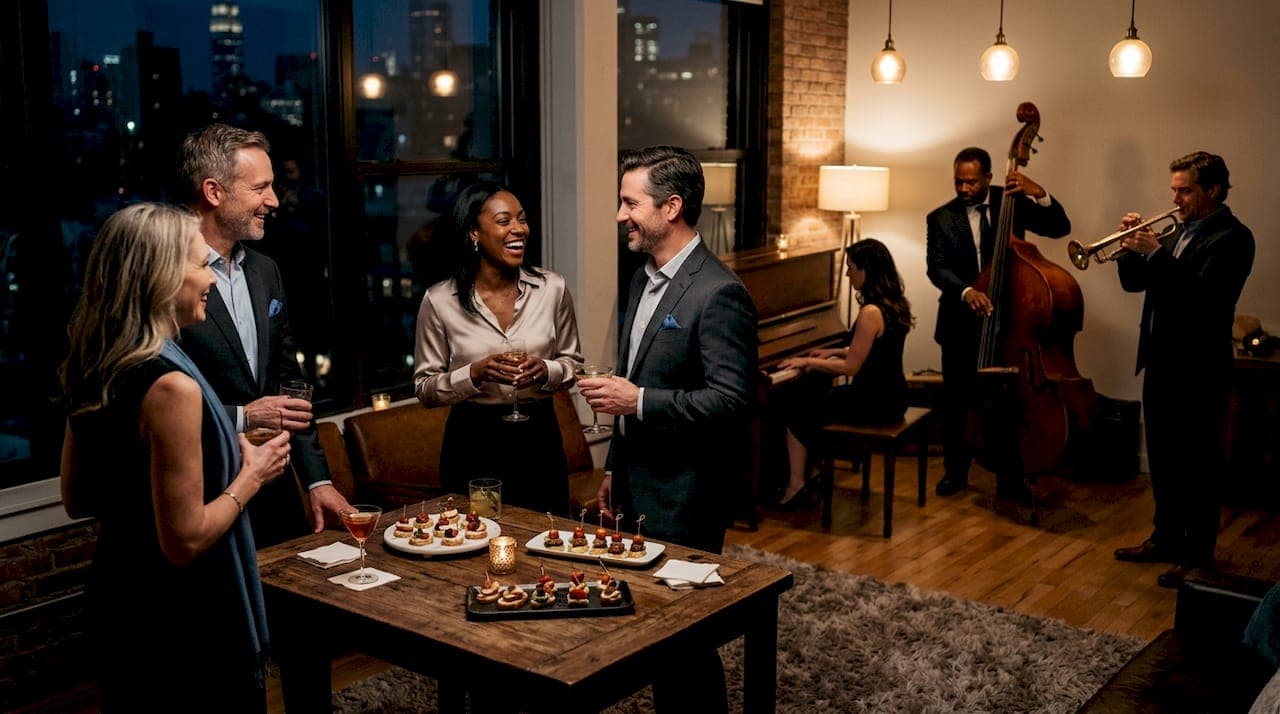
Live cocktail jazz is defined as professionally performed jazz music played at a conversational volume to enhance the social atmosphere of a private event. The best cocktail jazz private gathering tips center on three decisions: ensemble size, music style, and event flow. Get those three right, and the music works invisibly, making guests feel welcome and relaxed without ever demanding their attention. Alexlevinmusic specializes in exactly this kind of calibrated live entertainment for private parties, corporate events, and celebrations across Philadelphia, New York, and beyond.
What are the best cocktail jazz private gathering tips for your event?
The single most important decision you make as a host is matching your band size to your venue and guest count. A 3 or 4-piece jazz band is the most versatile size for private gatherings, balancing full sound with enough space for conversation. That balance matters because guests at cocktail events talk. Music that overpowers conversation kills the social energy you are trying to create.
Venue acoustics influence ensemble size more than guest count does. A trio can overwhelm a small reverberant room, while a quartet can sound thin in a large open venue without amplification. The practical fix is a pre-event conversation with your band leader about the room's dimensions, ceiling height, and surface materials. Hard floors and bare walls reflect sound; carpets and drapes absorb it.
| Ensemble size | Best for | Typical guest count |
|---|---|---|
| Solo piano or duo | Intimate home gatherings | Under 40 guests |
| Jazz trio | Mid-size private parties | 40–80 guests |
| Jazz quartet | Larger private events | 80–150 guests |
| 6 or 7-piece band | High-profile or dance-focused events | 150+ guests |
A split lineup is worth considering for longer events. A duo works well during the reception or welcome phase, when guests are still arriving and the room feels sparse. You bring in the full quartet or quintet once the room fills for dinner. This approach also manages your budget without sacrificing atmosphere.
Pro Tip: Ask your band leader to walk the venue space before the event and identify the best placement for the ensemble. Positioning musicians in a corner or against a soft wall reduces unwanted echo and keeps the sound even across the room.
How do you select jazz styles and playlists for a cocktail gathering?
Classic jazz is the universal standard for cocktail hour music because it is sophisticated without being intrusive. Standards from the Great American Songbook, Miles Davis-era modal jazz, and the cool jazz of the 1950s and 1960s all work because they carry enough musical interest to reward listeners without demanding attention. Classic jazz's improvisational nature prevents repetition over an extended cocktail hour, which is a genuine practical advantage over a looping playlist.
Hosts who want a distinct event identity can personalize the sound without losing sophistication. The most effective options include:
- Bossa nova: Warm, rhythmically gentle, and ideal for outdoor or garden settings. Think João Gilberto and Stan Getz.
- Acoustic pop covers: Familiar melodies played in a jazz arrangement give guests a moment of pleasant recognition without feeling like a wedding DJ.
- Soul and R&B jazz: Adds warmth and energy, particularly effective for evening events or when you want the room to feel more celebratory.
- Swing: Higher energy than cool jazz; works well if you want guests to feel animated or if dancing is a possibility later in the evening.
Tempo and volume are as important as genre. Successful hosts curate setlists matched to specific event phases rather than playing one consistent mood for three hours. A slower, quieter set during the first 30 minutes lets guests settle in. A slightly brighter tempo during the main cocktail hour keeps energy up. Pulling back again during dinner service lets conversation take over.
Pro Tip: Give your band leader three or four reference tracks that capture the mood you want. A Spotify link or a short playlist is more useful than a genre label. Musicians can match a feeling much more precisely when they hear a concrete example.
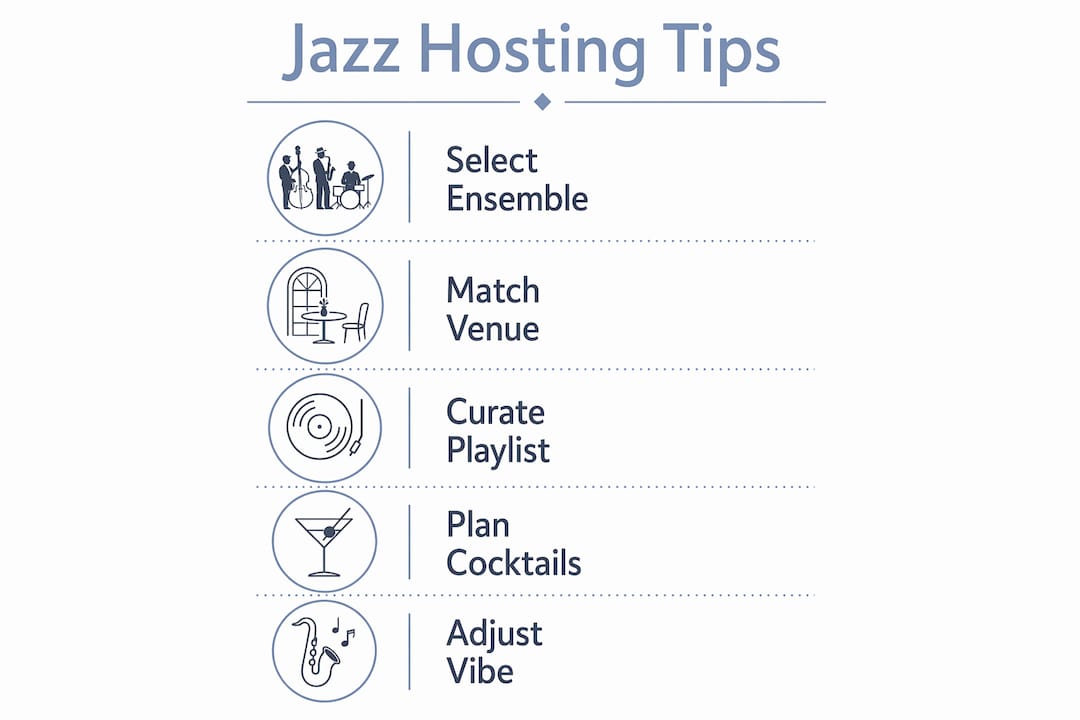
How should you plan cocktails, appetizers, and event flow around live jazz?
Food and drink planning directly affects how guests experience the music. A guest who is hungry or searching for a drink is not relaxed, and an unrelaxed guest does not absorb the atmosphere you have created. Plan for 8–12 appetizer pieces per guest at a 2 to 3-hour cocktail party, with a mix of cold bites, hot bites, and a grazing station.
A practical food structure for a jazz cocktail event:
- Cold bites (3–4 options): Smoked salmon blinis, bruschetta, or caprese skewers. These can be passed by servers during the first 45 minutes.
- Hot bites (2–3 options): Mini crab cakes, stuffed mushrooms, or lamb lollipops. Introduce these once the room is full and the band is in full swing.
- Grazing station: A charcuterie board or cheese station gives guests a reason to move around the room, which improves circulation and keeps the energy from stagnating in one corner.
Drink planning follows a similar logic. A good balance of alcohol, non-alcoholic options, and plenty of ice supports guest comfort and event flow. Non-alcoholic drinks should be crafted with the same care as the signature cocktails and clearly labeled. A signature cocktail tied to a theme also simplifies decisions for décor and music. Planning around a theme improves the overall guest experience because every element reinforces the same mood.
Scheduling matters as much as the menu. A useful timeline for a 3-hour jazz cocktail event looks like this:
- 0:00–0:30: Guests arrive; band plays softly; servers pass cold bites and welcome drinks.
- 0:30–1:30: Room fills; band lifts tempo slightly; hot bites circulate; grazing station opens.
- 1:30–2:30: Peak social hour; band plays its most engaging set; signature cocktails featured.
- 2:30–3:00: Wind-down; band returns to quieter, slower material; coffee and dessert bites appear.
Mood lighting follows the same arc. Dimmer, warmer light during the first phase creates intimacy. You can brighten slightly during the peak hour and then soften again at the close. The music and the lighting should move together.
How do you execute and adjust the jazz vibe during the event?
Live cocktail hour music requires dynamic volume and tempo adjustment based on guest energy. A band that plays at one fixed volume and tempo for three hours is not performing. It is just making noise. The difference between a good live jazz experience and a great one is a band leader who reads the room and responds.
Communicate with your band leader before the event starts. Agree on a simple signal system so you can request adjustments without interrupting the performance. A raised hand for "louder," a flat palm for "softer," and a circular motion for "wrap up the set" covers most situations. This kind of pre-event coordination is a core part of overcoming event planning stress when working with live musicians.
Watch for these signs during the event and act on them:
- Guests leaning in to hear each other: The music is too loud. Signal the band to pull back.
- Conversations dying out and guests looking around: The energy is flat. Signal the band to lift the tempo.
- Guests gravitating toward the musicians: The band is connecting well. Let them continue without interruption.
- Awkward silence between songs: The band needs shorter transitions. Mention this at the next break.
Common pitfalls are predictable and avoidable. Music that starts too loud never recovers because guests raise their voices to compensate, which forces the band to raise its volume, which creates a feedback loop of noise. Start quiet and build. The musicians should lower volume for quiet conversation and raise tempo to invigorate a stagnant room, not the other way around. Also, avoid scheduling a band break during the peak social hour. Breaks belong at the transitions between event phases, not in the middle of the most energetic part of the evening.
Pro Tip: Brief your band leader on the guest profile before the event. A room full of jazz enthusiasts can handle more adventurous material. A mixed crowd of non-musicians responds better to recognizable standards. This single piece of information shapes the entire setlist.
Key takeaways
A successful cocktail jazz gathering depends on matching ensemble size to the venue, curating music by phase, and staying responsive to guest energy throughout the event.
| Point | Details |
|---|---|
| Match ensemble to venue | Acoustics matter more than guest count; a trio can overwhelm a small reverberant room. |
| Curate music by event phase | Use slower tempos for arrival and wind-down; lift energy during the peak social hour. |
| Plan food in structured rounds | Aim for 8–12 appetizer pieces per guest, introduced in cold, hot, and grazing station phases. |
| Communicate with your band leader | Agree on simple signals before the event so you can adjust volume and tempo in real time. |
| Personalize the sound | Classic jazz is the baseline; bossa nova, soul, or acoustic pop covers add a distinct identity. |
What I've learned from years of playing private jazz events
The most common mistake hosts make is treating the band like a sound system. They set the volume at the start and forget about it. Live jazz is a conversation between the musicians and the room. The best events I have played were the ones where the host stayed engaged, checked in at breaks, and gave us real feedback. That collaboration produces something a playlist never can.
I have also noticed that hosts underestimate the power of a single musical choice. Playing a bossa nova version of a song the guest of honor loves, at exactly the right moment, changes the entire emotional register of the room. That is not something you can plan in a spreadsheet. It comes from knowing your guests and briefing your musicians well. The right musician for your event is one who listens as much as they play.
Flexibility is the most underrated quality in live event music. Setlists are plans, not contracts. The best band leaders I know treat every event as a living thing that changes as the night develops. Give your musicians permission to follow the room, and they will give your guests an experience worth remembering.
— Alex
Live jazz for your private gathering, from Alexlevinmusic
Alexlevinmusic provides live jazz entertainment for private cocktail gatherings, with ensembles ranging from solo piano and jazz duos to full quartets and beyond. Every booking includes a pre-event consultation to match the ensemble size, style, and setlist to your venue and guest profile.
Alexlevinmusic serves hosts across Philadelphia, New York, and surrounding areas, with a track record of private parties, corporate receptions, and intimate celebrations. If you want musicians who read the room and adjust in real time, the event planning resources and booking details are available on the Alexlevinmusic website.
FAQ
What size jazz band works best for a private cocktail party?
A 3 or 4-piece jazz band is the most versatile choice for most private gatherings, balancing full sound with space for conversation. A duo suits intimate events under 40 guests, while a 6 or 7-piece ensemble fits larger, dance-focused events.
What jazz style is best for a cocktail hour?
Classic jazz standards are the most reliable choice because they are sophisticated and unobtrusive. Hosts can personalize with bossa nova, acoustic pop covers, or soul jazz while keeping the tempo relaxed.
How much food should I plan for a cocktail jazz party?
Plan for 8–12 appetizer pieces per guest at a 2 to 3-hour event, structured as 3–4 cold bites, 2–3 hot bites, and one grazing station such as a charcuterie board.
How do I keep the music from being too loud at a cocktail party?
Start the band at a low volume and build gradually. Agree on a simple signal system with your band leader before the event so you can request adjustments without interrupting the performance.
Does live jazz make a real difference compared to a playlist?
Live music fills the space naturally without dominating the event and creates a warmer atmosphere than a recorded playlist. It also responds to the room in real time, which a playlist cannot do.