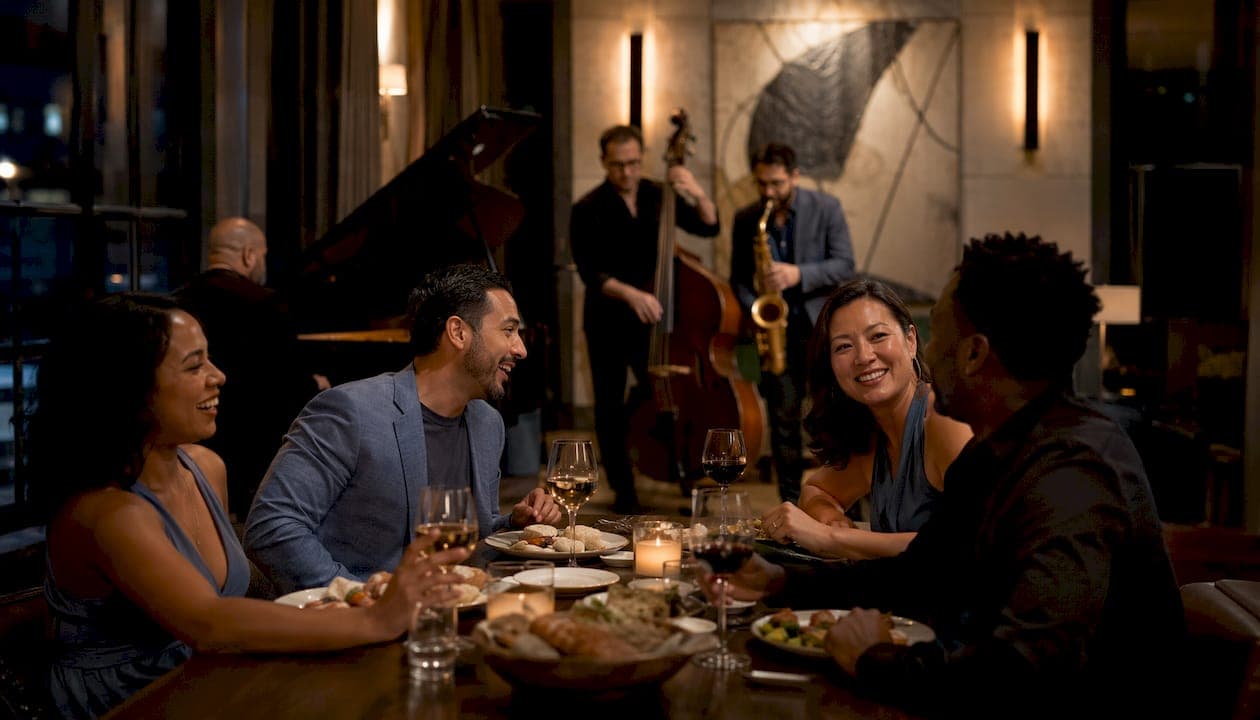
Live jazz is the single best sonic choice for a dinner gathering, and the research backs it up. Meridian Chapters explains that guests who hear jazz unconsciously inherit the genre's cultural associations, shifting their perception of the entire event toward sophistication before the first course arrives. Alex Levin Music has built a practice around exactly this effect, helping hosts in Philadelphia, New York, and beyond translate that research into real, memorable evenings.
Three mechanisms explain why it works so reliably:
- Cultural signal. Jazz carries decades of association with adult refinement. It shapes guest expectations the moment they walk in.
- Conversation-friendly dynamics. Instrumental jazz at moderate tempos provides a comfortable pace that encourages guests to linger and order more without feeling rushed.
- Multi-sensory memory. The Food Summit reports that live performances root experiences more deeply in memory than recorded music by engaging sight, sound, and social interaction simultaneously.
TL;DR: Book live jazz for your dinner and guests will stay longer, talk more freely, and remember the night.
Table of Contents
- Why does live jazz work so well at dinner?
- What practical benefits does live jazz deliver for hosts?
- Which jazz format fits your room and event?
- When should you schedule live jazz during the evening?
- What logistics and costs should you plan for?
- How do you brief musicians before the event?
- Quick tips to make the live jazz feel effortless
- Key Takeaways
- What hosts often get wrong about dinner jazz
- Live jazz for your next dinner, handled from start to finish
Why does live jazz work so well at dinner?
Jazz's fit for dining isn't accidental. The genre's musical properties align almost perfectly with what a dinner gathering needs: moderate tempo, melodic improvisation, and instrumental texture that fills a room without crowding it.
Meridian Chapters describes jazz as creating a third-space experience where guests feel they are participating in something rather than simply attending. That shift matters. When a room feels like an experience, guests relax, conversation opens up, and the evening gains a quality no playlist can replicate.
The social-lubricant effect is equally concrete. The Food Summit notes that live performances reduce awkwardness in early-stage social situations by giving guests a shared focal point. On a first date, at a corporate dinner where colleagues don't know each other well, or at a milestone celebration with mixed friend groups, that shared focal point does real work. It fills silences without demanding attention.
Pro Tip: Cool jazz, not smooth jazz, is the practitioner's choice for fine dining. Cool jazz's spacious arrangements provide warmth without competing with conversation, while smooth jazz's polished production can feel intrusive at close range.
What practical benefits does live jazz deliver for hosts?
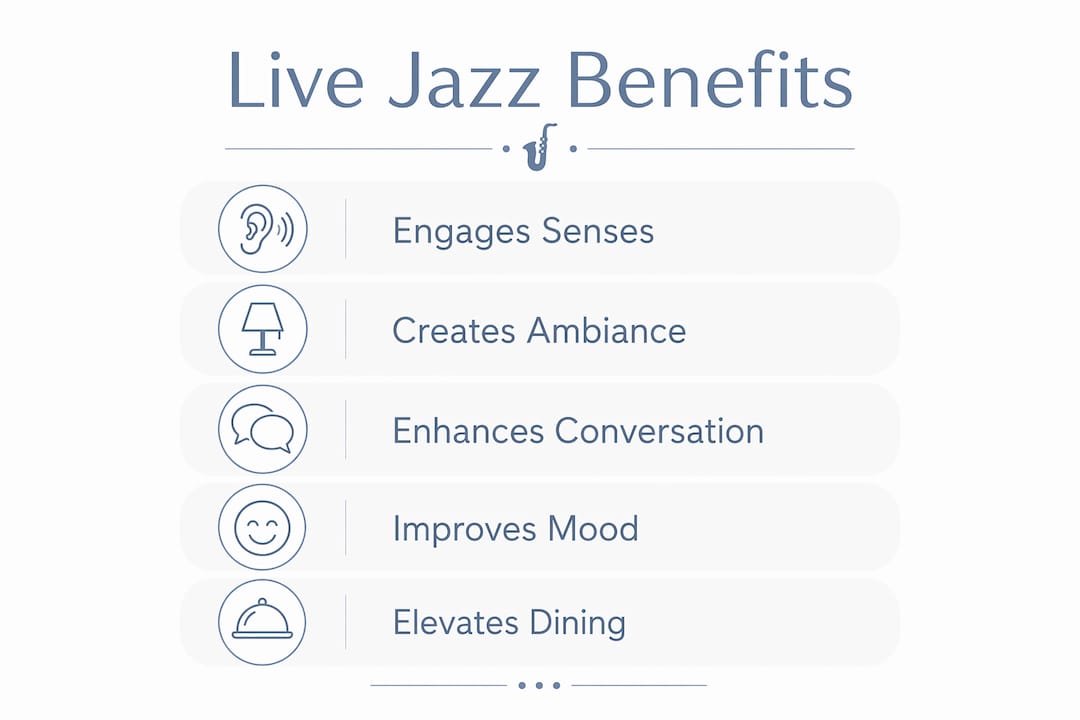
The benefits split cleanly between what hosts gain and what guests feel.
For hosts, live jazz:
- Paces the meal naturally. Musicians read the room and adjust tempo as courses progress.
- Increases drink and dessert orders. Slower music correlates with guests lingering, which raises per-table spend.
- Differentiates the event. Venues that add regular jazz nights report rises in repeat attendance and average spend.
- Generates organic social sharing. Guests photograph and post live performances, giving the event a reach beyond the room.
For guests, the experience is harder to quantify but easy to feel. Live music engages multiple senses at once, which is why live performances create more durable memories than recorded music. A corporate dinner becomes a relationship-building moment. A birthday dinner becomes the one people reference for years.
Three quick use cases: a romantic dinner for two benefits from the intimacy of a solo pianist; a small corporate dinner of 12–20 guests gains warmth and professionalism from a jazz trio; a milestone celebration with 30+ guests calls for a quartet or small combo that can shift energy between courses.
Which jazz format fits your room and event?
The right format depends on room size, guest count, and the energy you want.
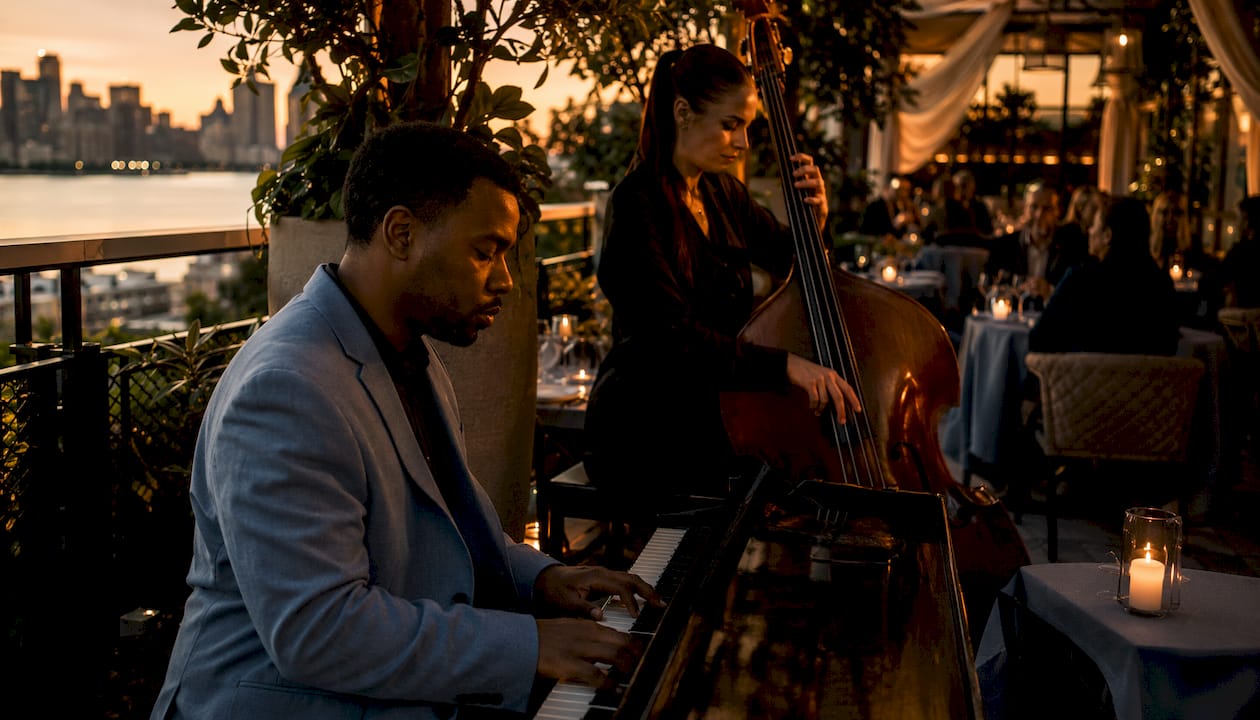
- Solo piano. Best for intimate rooms under 30 guests. Warm, focused, and easy to manage acoustically. Lowest setup footprint and cost.
- Piano and bass duo. A duo provides better conversational volume in small venues than larger ensembles, contrary to the assumption that more musicians equal more presence. The interplay between two players adds texture without adding volume.
- Jazz trio (piano, bass, drums). The standard for private dinners of 20–50 guests. Richer sound, more dynamic range, and enough presence to fill a mid-size dining room without a PA system.
- Quartet or small combo. Suited to larger rooms or events where music is a feature, not just background. Adds a horn or guitar for color. Requires more stage space and usually a PA.
- String quartet. Elegant and visually striking. Works well for formal dinners or events where the aesthetic skews classical. Less improvisation, more structured repertoire.
On vocalists: a singer adds warmth and personality but raises the volume and draws more attention. Save vocals for cocktail hour or a post-dinner feature set. During courses, instrumental keeps conversation primary. For guidance on choosing the right ensemble for your specific event, the format decision is worth spending time on before you book.
Pro Tip: For a dinner where conversation is the point, a duo is often the smartest choice. Bigger isn't better when the room is small.
When should you schedule live jazz during the evening?
Timing shapes the entire experience. Here's a practical framework:
| Phase | Recommended Energy | Volume Level | Notes |
|---|---|---|---|
| Arrival / cocktail | Upbeat, welcoming | Moderate | Sets tone; guests are standing and mingling |
| Starter course | Relaxed, conversational | Low-moderate | Music recedes; conversation leads |
| Main course | Steady, warm | Low | Longest phase; tempo slows slightly |
| Dessert / coffee | Slightly lifted | Low-moderate | A subtle energy shift signals the evening's peak |
| Post-dinner | Feature moment or wind-down | Host's choice | Optional short spotlight set or gentle close |
For a romantic dinner, lean toward ballads and bossa nova during the main course, with a slightly warmer feel at dessert. For a small corporate reception, cool jazz standards through dinner, with a brief feature set after dessert if the group is staying. For a celebratory birthday, the musicians can acknowledge the moment with a short, tasteful nod to the guest of honor between courses.
Set lengths typically run 45–50 minutes on, 15 minutes off. Signal the band for tempo or volume shifts with a simple pre-agreed word or gesture with the bandleader. Music pairing works like wine pairing: lighter moods for starters, deeper textures for mains.
What logistics and costs should you plan for?
Top decisions to lock in early: ensemble size, PA and sound needs, stage footprint, power access, load-in time, and any venue permits for amplified music.
Venue checklist:
- Stage or performance area dimensions (minimum 8×8 ft for a trio)
- Available power outlets near the performance area
- Soundcheck window (30–45 minutes before guests arrive)
- Table layout and sightlines so music reaches the room evenly
- Noise ordinances or building rules on amplified sound
Typical U.S. cost ranges for private dinners vary by market, ensemble size, travel, and date. Solo pianists generally run less than a duo; a trio costs more than a duo; a quartet or combo is the highest tier for dinner-scale events. Peak dates (holidays, weekends in spring and fall) and travel outside the artist's home market add to the base rate. Licensing for cover songs is typically the musician's responsibility, but confirm this in writing.
Contract must-haves: performance start and end times, setup and breakdown windows, payment terms and deposit amount, cancellation policy, and any technical rider requirements.
Pro Tip: Always confirm who supplies the PA. A professional musician often brings their own for small rooms, but larger venues may require the house system. Clarifying this in advance prevents the most common day-of friction.
How do you brief musicians before the event?
Every musician needs five things from you before they confirm the booking:
- Guest count and room layout
- Full event timeline (arrival, courses, any toasts or speeches)
- Volume expectations and any noise constraints
- Style preferences or repertoire notes (e.g., "no uptempo bebop," "guests skew 60+")
- Dress code and any special requests (a song for a toast, a birthday acknowledgment)
A simple email template to send when booking:
Requesting video samples and testimonials before booking is standard practice and gives you a clear picture of the musician's style and professionalism. The science behind music's role as a social connector is worth understanding before you finalize your brief, too.
Quick tips to make the live jazz feel effortless
- Dim the lights slightly before the musicians start. Lighting and music work together to set mood.
- Place the musicians where guests can see them without craning their necks. Sightlines matter.
- Brief your service staff on the performance schedule so they don't clear plates during a quiet musical moment.
- Do a volume check 10 minutes into the first set. Walk to the far end of the room and confirm you can still hold a normal conversation.
- For mixed-age groups, cool jazz standards are the safest common ground. Avoid niche subgenres that might alienate half the table.
- Let the bandleader know about any toasts or speeches in advance so they can fade gracefully and re-enter cleanly.
- For dinner-to-dancing transitions, brief the musicians on the shift point so the energy builds naturally rather than jumping abruptly.
Pro Tip: Ask the bandleader to watch the room, not just the music stand. A good jazz musician reads the energy of a dinner and adjusts without being asked. If you've briefed them well, you shouldn't need to intervene at all.
Key Takeaways
Live jazz suits dinner gatherings because its tempo, instrumentation, and cultural weight work together to slow the pace, deepen conversation, and make the evening genuinely memorable.
| Point | Details |
|---|---|
| Cultural signal works immediately | Guests unconsciously associate jazz with sophistication, shifting event perception before the first course. |
| Tempo drives guest behavior | Slower jazz correlates with longer stays and higher per-table spend. |
| Format should match room size | A duo or trio fits most private dinners; a quartet suits larger rooms or feature-moment events. |
| Brief musicians in writing | Share timeline, volume expectations, and repertoire notes before the event to avoid day-of surprises. |
| Alexlevinmusic for turnkey booking | Alex Levin Music offers solo, duo, trio, and quartet options with customized set lists for Philadelphia and New York events. |
What hosts often get wrong about dinner jazz
Most hosts focus on genre and forget dynamics. They book a jazz trio, feel good about the decision, and then never brief the musicians on volume, timeline, or the fact that Aunt Carol gives a 10-minute toast at 8:15. The musicians play through it. The toast gets swallowed by a piano solo. Nobody's happy.
The research is clear that live jazz creates a better dining experience than recorded music. But "live jazz" is not a monolithic thing. A loud quartet in a 20-person dining room is worse than a well-placed duo. An uptempo bebop set during the main course fights conversation instead of supporting it. The format, the volume, and the briefing matter as much as the genre choice itself.
There's also a tendency to treat the musicians as furniture. The best dinner jazz happens when the bandleader is treated as a collaborator: given real information about the evening, trusted to read the room, and given a clear signal for key moments. That's the difference between music that disappears into the background and music that makes the night.
Live jazz for your next dinner, handled from start to finish
Alexlevinmusic takes the guesswork out of booking live jazz for private dinners. Whether you need a solo pianist for an intimate dinner for 12 or a full jazz trio for a corporate reception, Alex Levin Music offers customized ensemble options with set lists tailored to your event's mood, timeline, and guest profile.
Every booking includes pre-event consultation, professional sound management, and the kind of room-reading that only comes from years of performing in dining settings across Philadelphia and New York. You get a musician who treats your dinner as a collaboration, not a gig. Check availability and book your live jazz experience for your next event.