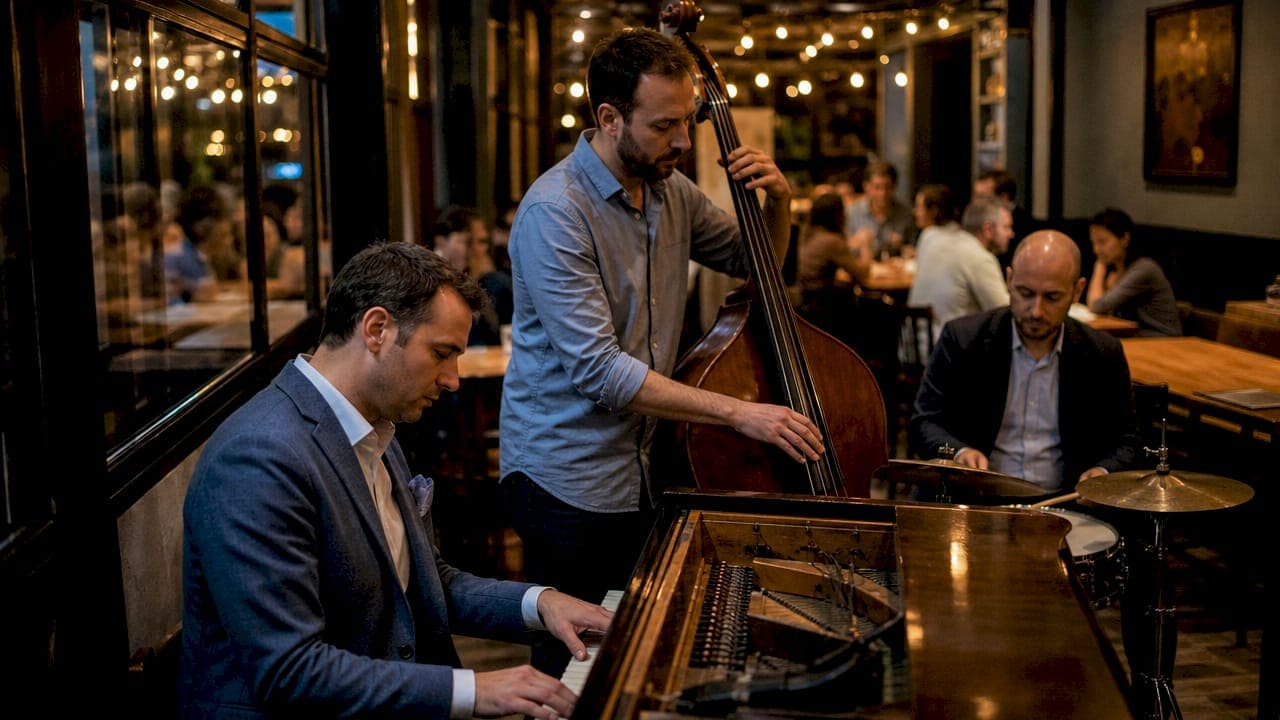
Jazz trios are the ideal live music format for restaurants seeking to build an elegant, conversation-friendly atmosphere that keeps guests at the table longer. The combination of controlled volume, slower musical tempo, and jazz's deep cultural association with sophistication makes the format uniquely suited to dining environments. Restaurant managers who understand why jazz trios suit restaurant venues gain a real operational advantage: guests linger, spend more, and leave with a stronger impression of the brand. Alexlevinmusic works with restaurant clients across Philadelphia, New York, and beyond to deliver exactly this kind of refined live experience.
Why jazz trios suit restaurant venues: tempo, volume, and dining behavior
The single most important factor in live music for restaurants is volume control. A jazz trio, typically piano, bass, and drums or guitar, produces naturally moderate sound levels that fill a room without overwhelming conversation. Jazz as background music supports dialogue without stressing diners, which is the exact acoustic environment a restaurant needs during service.
Tempo matters just as much as volume. Slower-tempo music like jazz extends guest stay durations and increases table revenue through more orders and higher per-person spending. That is not a minor effect. A table that stays 20 minutes longer orders another round of drinks, considers dessert, and leaves a larger tip.
Compared to faster genres, jazz trios hold a clear advantage in dining contexts. Classical and jazz music increase willingness to pay premium prices and slow the dining pace compared to faster genres. Pop playlists or uptempo electronic music push guests toward faster eating and earlier departures. Jazz trios do the opposite.
- Moderate volume keeps conversation comfortable at every table
- Slower tempos encourage relaxed, extended meals
- Live performance signals quality in a way a playlist cannot replicate
- The acoustic footprint of a trio fits rooms of nearly any size
Pro Tip: Set the trio's volume so guests at the farthest table can hear the music clearly but still speak at a normal conversational level. Test this before service begins, not during it.
How jazz's cultural image raises perceived restaurant quality
Jazz carries a specific cultural signal that very few other music genres can match in a dining context. Jazz signals that a space values sophistication and invites guests to relax and enjoy without rushing. Guests read that signal instantly, and it shapes how they perceive everything else: the menu pricing, the service quality, the décor.
This perception directly affects spending behavior. Guests exposed to live jazz are willing to pay premium prices due to the perceived sophistication of the environment. A restaurant that books a jazz trio is not just adding entertainment. It is repositioning the entire dining experience in the guest's mind.
The cultural associations of jazz also skew toward adult, intellectual sophistication. That demographic tends to have higher disposable income and a stronger appreciation for curated experiences. Booking a jazz trio is, in effect, a targeted signal to exactly the guests most likely to spend well and return.
Not every jazz style delivers this effect equally. The sub-genre matters significantly:
- Cool jazz (Miles Davis, Bill Evans style): calm, melodic, ideal for fine dining and upscale casual
- Bebop: fast, complex, and mentally engaging in a way that can distract rather than relax
- Experimental or avant-garde jazz: unpredictable and potentially alienating for guests unfamiliar with the form
- Smooth jazz: accessible and inoffensive, though it carries less cultural prestige than cool jazz
Choosing the wrong jazz sub-genre can alienate diners. The selection made during booking is critical, not an afterthought. Cool jazz is the safest and most effective choice for the majority of restaurant environments.
Pro Tip: When briefing a trio, name specific artists whose style you want to reference. "Play like the Bill Evans Trio" gives a musician far more useful direction than "keep it classy."
What are the practical advantages of a trio over larger ensembles?
Space is the first constraint every restaurant manager faces when considering live music. A jazz trio needs a footprint of roughly 8 by 8 feet, which fits comfortably in a corner of most dining rooms without displacing revenue-generating tables. A six-piece band or a vocal group with a full PA system requires significantly more floor space, more setup time, and more technical support.
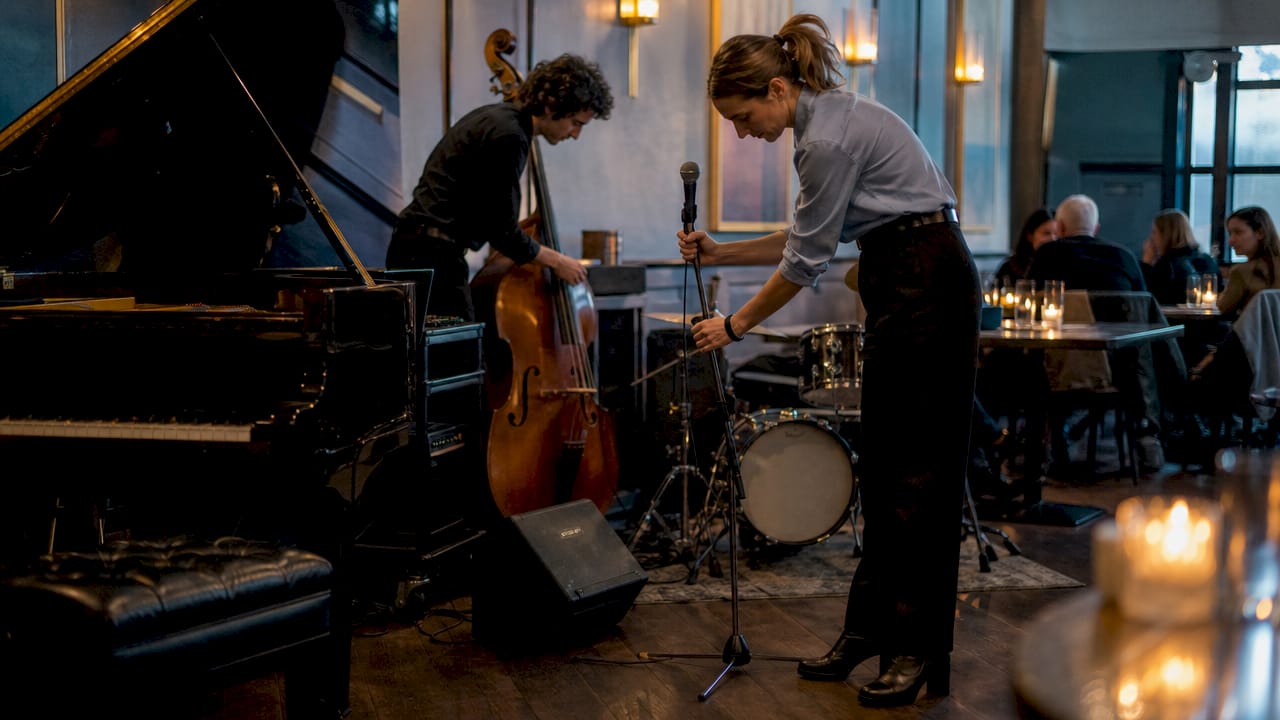
Jazz trios fit limited space, cost less than larger ensembles, and maintain acoustic clarity for a conversation-friendly atmosphere. That cost efficiency is real. Hiring three professional musicians instead of six or eight keeps the entertainment budget manageable while delivering a high-quality experience.
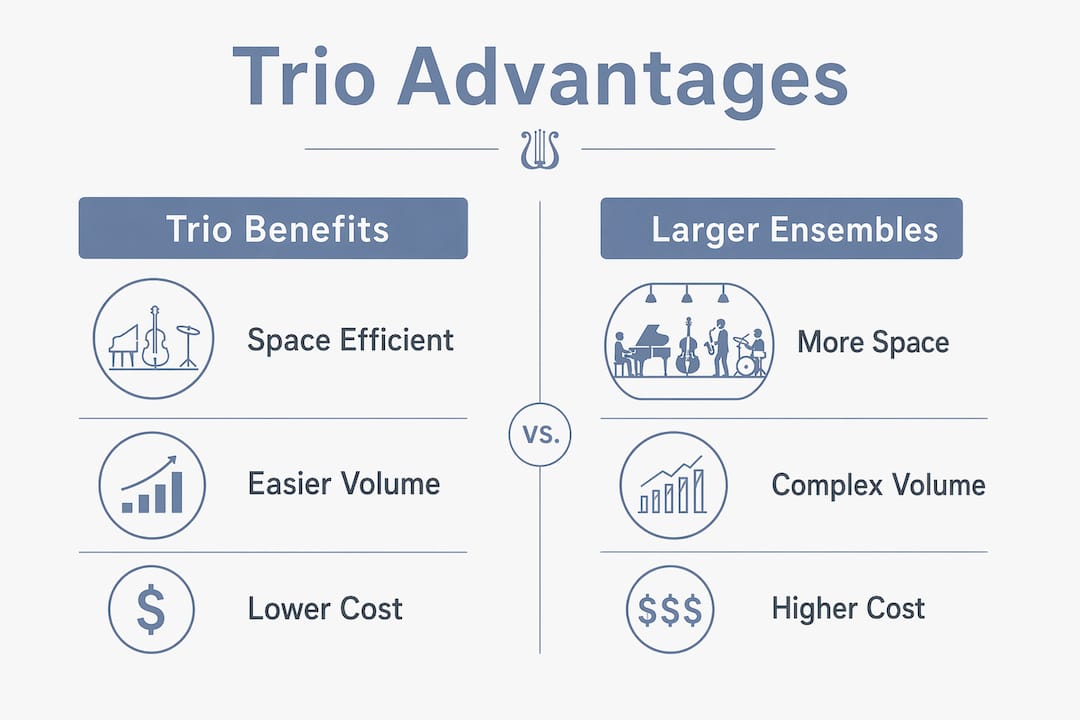
Volume management is also far simpler with a trio. Jazz trios' smaller size ensures easier management of dynamics and less intrusion on conversations compared to vocal ensembles or larger groups. A vocalist with a microphone and a PA system introduces a new layer of complexity: feedback risk, volume spikes, and the tendency for amplified vocals to dominate a room in ways that feel intrusive rather than ambient.
| Live music format | Space needed | Volume control | Conversation impact | Cost relative to trio |
|---|---|---|---|---|
| Jazz trio | Small | High | Minimal intrusion | Baseline |
| Jazz quartet or quintet | Medium | Moderate | Moderate intrusion | Higher |
| Vocal group with PA | Medium to large | Low | High intrusion | Higher |
| Full band | Large | Low | Significant intrusion | Much higher |
| Solo piano | Very small | High | Minimal intrusion | Lower |
Solo piano is the only format that rivals a trio for space efficiency and volume control. The trade-off is that a trio produces a richer, more dynamic sound that fills a room more naturally and sustains guest interest over a longer service period. For guidance on how live entertainment shapes venue atmosphere, hospitality professionals consistently point to ensemble formats as the most effective balance of presence and restraint.
How do you select and integrate a jazz trio into your restaurant?
The booking process is where most restaurant managers make avoidable mistakes. Specifying only "jazz trio" without further detail leaves too much to chance. A well-integrated jazz trio experience requires deliberate choices at every stage.
-
Define the sub-genre first. Tell the booking agent or musician you want cool jazz or contemporary jazz standards. Name reference artists. This single step eliminates most mismatches between the music and your dining environment.
-
Align the schedule with your service flow. Live music works best when it matches the energy of the dining phase. A trio playing during the early dinner rush creates one atmosphere; the same trio playing during a quieter late-evening service creates another. Aligning music genre and tempo with time of day, room capacity, and brand supports service goals effectively.
-
Set a volume agreement before the first note. Agree on a maximum volume level with the musicians before service begins. Walk the room during soundcheck and confirm that conversation is comfortable at every table, not just the ones nearest the performance area.
-
Match the trio to your brand identity. A fine dining restaurant with a French-inspired menu pairs naturally with a piano-bass-drums trio playing Parisian jazz standards. A contemporary American bistro might lean toward a guitar-bass-drums configuration with a more modern repertoire. The right jazz ensemble selection reflects the restaurant's identity, not just a generic "live music" checkbox.
-
Plan the physical setup carefully. Position the trio so the sound projects across the room evenly. Avoid placing musicians directly against a hard wall, which creates unwanted acoustic reflections. A corner position with the musicians facing the dining room typically produces the best sound distribution.
-
Brief your front-of-house staff. Servers should know the performance schedule so they can time table turns and manage guest expectations. A well-briefed team treats the trio as part of the service experience, not a separate event happening in the corner. For a deeper look at music planning for dining events, coordinating music with service phases is the most overlooked step in the entire process.
Key Takeaways
Jazz trios suit restaurant venues because their controlled volume, slower tempo, and cultural associations with sophistication directly extend guest stay duration, increase spending, and raise perceived dining quality.
| Point | Details |
|---|---|
| Tempo drives revenue | Slower jazz tempos extend guest stays and increase orders per table. |
| Volume control is non-negotiable | A trio's natural dynamics keep conversation comfortable without amplification issues. |
| Sub-genre selection matters | Cool jazz outperforms bebop or experimental styles in most dining environments. |
| Trios fit any restaurant footprint | A trio needs roughly 8 by 8 feet, far less than any larger ensemble format. |
| Music must match the brand | Specify artist references and style at booking to align the trio with your restaurant's identity. |
What I've learned from placing jazz trios in dining rooms
I've watched the same scene play out dozens of times. A restaurant owner books a jazz trio expecting it to "add atmosphere," and then is surprised when guests start commenting on the music specifically, not just the food. That reaction tells you something important: a well-chosen trio does not disappear into the background. It becomes part of the memory guests carry out the door.
The most common mistake I see is treating volume as the musician's problem to solve in the moment. Volume is a pre-service agreement, not a real-time negotiation. The second most common mistake is booking a trio without specifying the style, then being surprised when the musicians play something too energetic or too obscure for the room. Both problems are entirely preventable with a 10-minute conversation before the booking is confirmed.
Jazz trios have stayed relevant in dining rooms for decades because the format solves a specific problem that no playlist can: it signals live human presence without demanding the guest's full attention. That balance is genuinely difficult to achieve with any other format. The trio remains the most reliable way to add cultural ambiance in dining without disrupting the experience that brought guests there in the first place.
— Alex
Live jazz trio bookings for your restaurant, done right
Booking a jazz trio that fits your restaurant's brand and service flow takes more than a quick search. It takes experience with musicians, knowledge of jazz sub-genres, and a clear process for matching the performance to your venue's specific needs.
Alexlevinmusic specializes in exactly this kind of placement. From Philadelphia to New York and beyond, the team works with restaurant owners and managers to select the right ensemble, agree on style and volume parameters, and deliver a performance that enhances the dining experience from the first note. Whether you need a weekly residency or a one-night booking, professional jazz trio services are available for venues of every size and style. For a clear picture of what live music delivers that a playlist never can, the difference becomes obvious the first time guests ask who is playing.
FAQ
Why do jazz trios work better than playlists in restaurants?
Live jazz trios signal human presence and cultural sophistication in a way recorded music cannot replicate. Guests exposed to live jazz stay longer and spend more than those in playlist-only environments.
What jazz sub-genre is best for a restaurant setting?
Cool jazz is the most effective choice for the majority of dining environments. Experimental or high-energy jazz can alienate guests unfamiliar with the style and disrupt the relaxed atmosphere a restaurant needs.
How much space does a jazz trio need in a restaurant?
A standard jazz trio requires a footprint of roughly 8 by 8 feet. Trios fit limited restaurant spaces far more easily than larger bands or vocal groups with full PA systems.
How does live jazz music affect guest spending?
Slower-tempo live jazz encourages guests to linger, which leads to additional orders and higher per-table revenue. Classical and jazz music both increase willingness to pay premium prices compared to faster music genres.
How do I brief a jazz trio before a restaurant performance?
Name specific artist references when booking, agree on a maximum volume level before soundcheck, and align the performance schedule with your service phases. Hospitality strategists treat music as a functional tool for shaping guest experience, not a decorative addition.