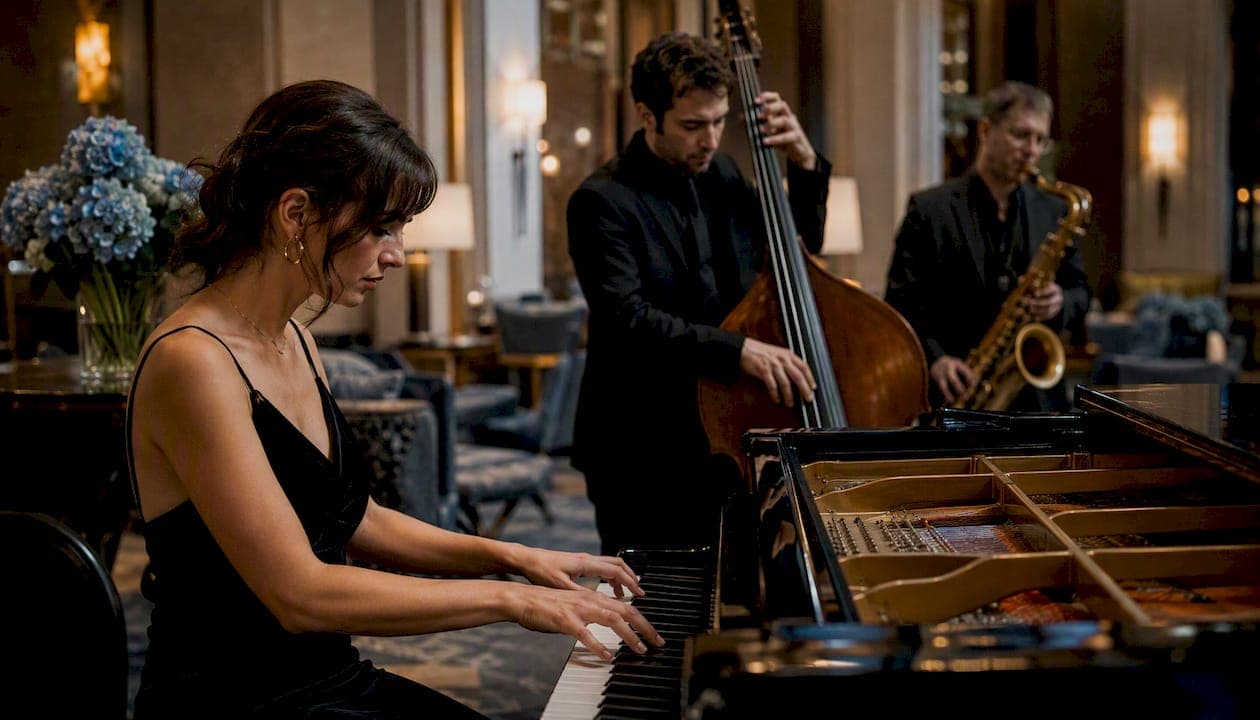
Weekly jazz trio sets, solo piano brunch residencies, and short lobby DJ hours are the highest-value recurring entertainment options for hotel lobbies. A residency is simply a recurring booking at a single venue on a fixed cadence, and hotel lobbies are among the most natural homes for this model. Hotels get consistency; performers get a reliable slot and an audience to build.
Here are the top formats, each tied to a concrete outcome:
- Weekly jazz trio (Thursday–Saturday evenings): Drives F&B spend during cocktail hour and signals brand sophistication to arriving guests.
- Solo piano brunch residency (weekend mornings): Low volume, high ambiance, strong fit for lifestyle and boutique properties.
- Lobby DJ hour (Friday evenings): Energizes the transition from check-in to dinner; pairs well with a bar promotion.
- String quartet cocktail sets (seasonal or monthly): Ideal for luxury properties and special-occasion positioning.
- Singer-songwriter acoustic residency (weeknights): Builds local community draw and repeat visits from neighborhood guests.
- Micro-concert or live podcast night (monthly): Scalable to ticketed format; recorded sets become marketing content.
Alexlevinmusic offers residency-ready ensembles across all these formats, from jazz trios and solo piano to DJ and hybrid packages.
Table of Contents
- What are the top recurring entertainment formats for hotel lobbies?
- How do you choose the right residency format for your lobby?
- What does a smooth lobby residency operation actually require?
- What music licensing do U.S. hotels need for live performances?
- What should you pay for a recurring lobby residency?
- How do you promote a residency and measure whether it's working?
- Ready-to-use templates for pitching and contracting a residency
- Alexlevinmusic: residency-ready ensembles for hotel lobbies
- Key Takeaways
- What hotels should actually expect from a residency partner
- Useful sources and references
What are the top recurring entertainment formats for hotel lobbies?
The table below maps each format to the operational dimensions that matter most for a booking decision.
| Format | Best for (daypart/audience) | Pay model | Space & sound | Audience size | Volume | Brand fit | Cadence |
|---|---|---|---|---|---|---|---|
| Jazz trio | Evening, business/leisure guests | Flat weekly fee | 10×10 ft, small PA | 20–60 | Low-medium | Upscale, boutique | Weekly |
| Solo piano | Brunch, check-in, all-day | Per-set fee | Piano or keyboard, no PA | 10–60 | Low | Lifestyle, luxury | Weekly |
| Lobby DJ hour | Friday/Saturday evening | Flat fee or rev share | DJ booth, small system | 10–60 | Medium | Contemporary, lifestyle | Weekly |
| String quartet | Cocktail hour, seasonal events | Per-set or flat | 12×12 ft, acoustic | 20–60 | Low-medium | Luxury, formal | Monthly/seasonal |
| Acoustic singer-songwriter | Weeknight, local draw | Per-set fee | Small stage, single mic | 10–30 | Low | Indie, boutique | Weekly/biweekly |
| Micro-concert/live podcast | Evening, curated audience | Ticket split or flat | 15×15 ft, full PA, recording rig | 10–60 | Medium | Cultural, lifestyle | Monthly |
Hotel SLO programs live music three nights a week, treating it as a cultural anchor rather than an amenity. The result is measurable F&B traffic and genuine local engagement. That model works because the programming is curated to the brand, not just booked to fill a slot.
Micro-show formats (20–60 minutes, audiences of 10–60) are worth flagging separately. They scale to ticketed events, and recorded sets become social clips, email content, and sponsorship assets. That multiplier effect is what separates a smart residency from a one-off booking.
How do you choose the right residency format for your lobby?
Pick the format that matches your peak guest flow, brand promise, and F&B goals. Everything else is secondary.
Screening checklist:
- What is your lobby's peak daypart, and does the format's volume work for that crowd?
- Does the format fit your brand (jazz for upscale, acoustic for boutique, DJ for contemporary)?
- What F&B uplift do you need to justify the booking fee?
- Can your FOH team handle load-in and setup without pulling staff from service?
- Are sightlines and ADA access clear for the proposed stage footprint?
Questions to ask performers before booking:
- Can you provide proof of liability insurance and a sample contract?
- Do you hold ASCAP, BMI, or SESAC coverage, or does the venue need to confirm its own blanket license?
- What is your cancellation and substitute policy?
- Can you provide audience-building metrics from previous residencies?
Red flags to watch for:
- No proof of insurance or vague indemnity language
- Inconsistent attendance history at prior residencies
- A rider with requirements your space cannot meet
- No fixed cadence proposal (open-ended "whenever" bookings rarely stick)
The Musicians' Union guidance notes that hotel residencies favor performers who are adaptable and guest-interactive. Screen for that quality directly: ask how they handle a slow night or a noisy lobby.
What does a smooth lobby residency operation actually require?
Consistent production standards separate a residency that builds revenue from one that creates complaints. Get these right before the first show.
Technical and staging checklist:
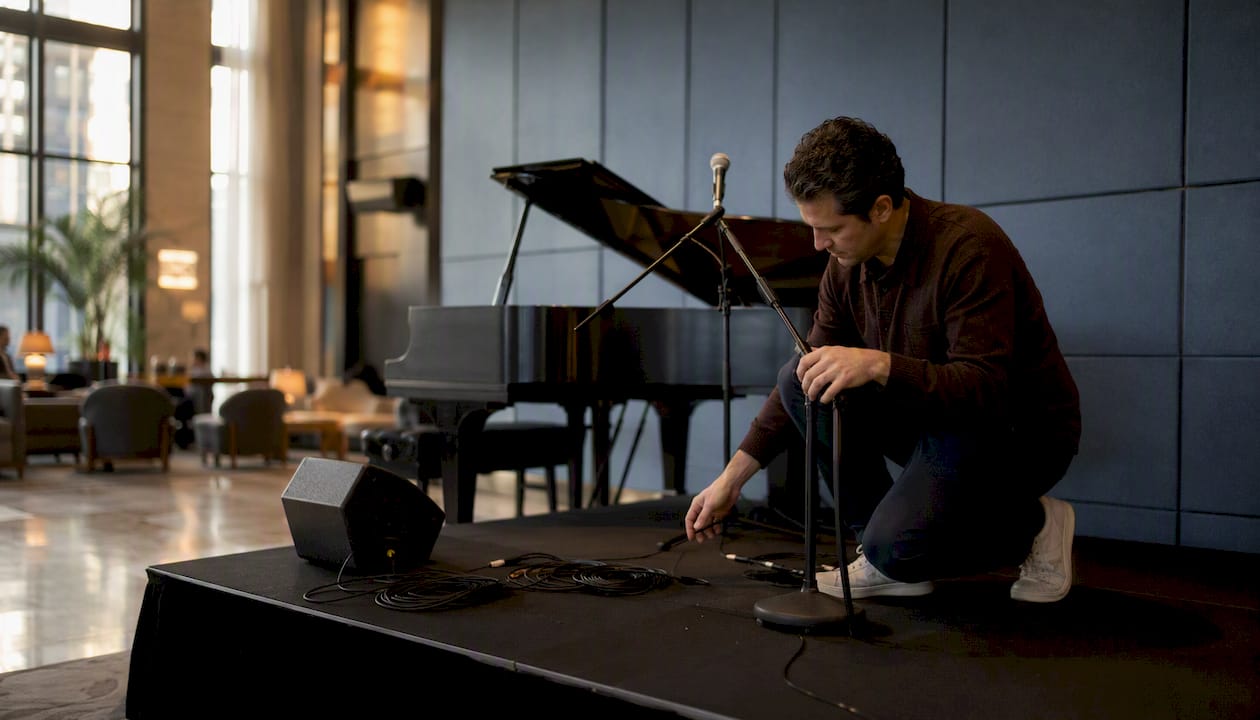
- Stage footprint marked with tape before load-in (confirm with performer in advance)
- PA system sized for the room, not the performer's preference (low-volume mixing is the goal)
- Dedicated power circuit, not a shared outlet near the bar
- Load-in window confirmed at least 90 minutes before doors
- Storage for cases and equipment that does not block egress
- Clear sightlines from the bar and seating areas to the performance zone
- ADA-compliant path to and around the stage
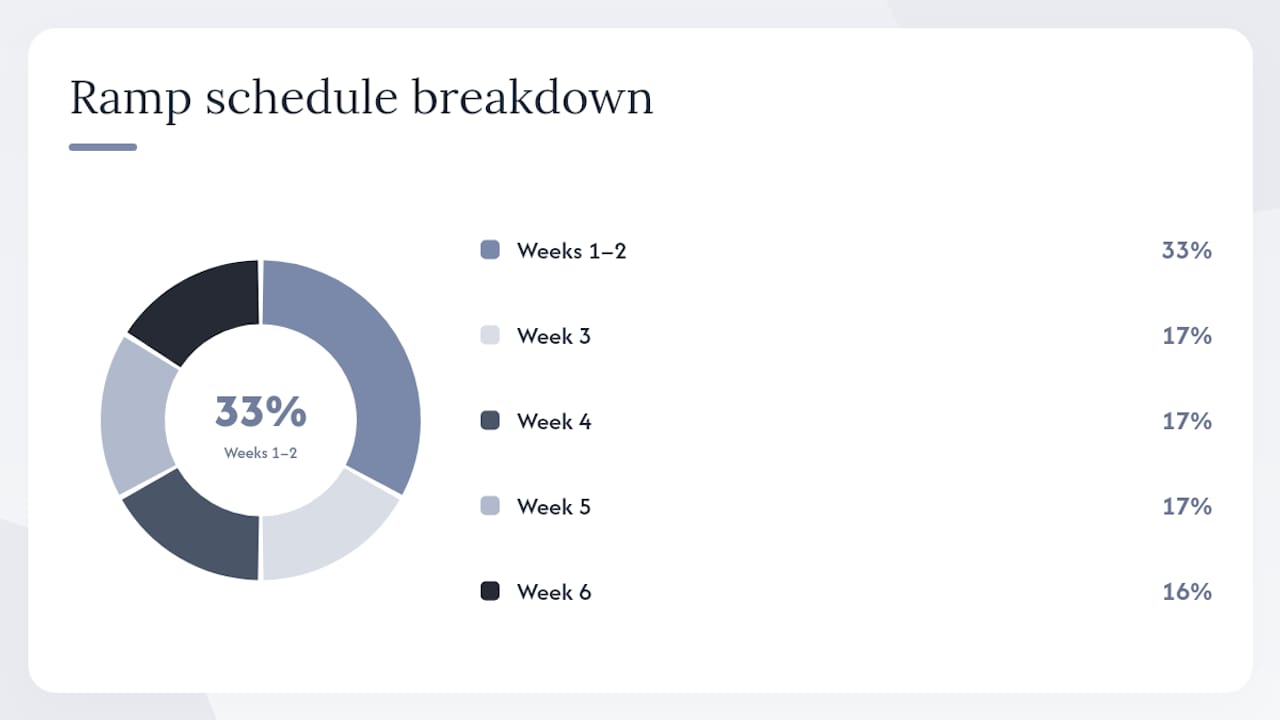
Six-week ramp to first show:
- Weeks 1–2: Confirm format, negotiate contract, sign insurance documentation
- Week 3: Site walk with performer, finalize stage placement and power
- Week 4: Promote via in-stay messaging, email, and social
- Week 5: Dry run or sound check with FOH staff present
- Week 6: First show, collect F&B data and guest feedback
Pro Tip: Place the PA speakers at ear height and angle them slightly away from the bar. Guests can hear the music clearly without raising their voices to order. That one adjustment is the difference between "nice atmosphere" and "too loud."
For a full production coordination guide, the booking-to-encore checklist from Alexlevinmusic covers load-in, sound, and staffing in detail.
What music licensing do U.S. hotels need for live performances?
Hotels must hold public performance licenses from ASCAP, BMI, and SESAC before hosting any live music. These blanket licenses cover the public performance of songs in those PROs' catalogs. Most hotels already carry them; confirm with your GM or legal team before the first show.
Venue action items:
- Verify existing ASCAP, BMI, and SESAC license status with your finance or legal department
- Request performer contracts that include a clause assigning or licensing any original compositions performed
- Obtain proof of performer liability insurance naming the hotel as an additional insured
- If you plan to record and distribute sets (social, podcast, streaming), add mechanical and sync license language to the performer contract. Blanket PRO licenses do not cover recording and distribution.
When recording changes the picture:
A recorded lobby set posted to YouTube or used in a podcast requires sync clearance for any covered song. Work with a music attorney or use a service like Songfile (Harry Fox Agency) for mechanical licenses on specific recordings.
Sector data: Concert spend grew year-on-year in a recent CGA LIVE sector analysis, with venues that program consistently seeing the strongest long-term revenue gains. The business case for a licensed, recurring program is well-supported.
What should you pay for a recurring lobby residency?
Three pay models cover most situations:
| Pay model | Risk profile | Hotel upside | Best for |
|---|---|---|---|
| Flat weekly fee | Low (predictable cost) | F&B uplift is pure margin | Established formats, proven performers |
| Per-set fee + hospitality | Medium | Flexible, easy to pause | Pilot programs, new formats |
| Revenue share / ticket split | Low upfront | Scales with attendance | Ticketed micro-concerts, monthly events |
Typical fee ranges (U.S. market):
- Solo pianist or acoustic act: $200–$500 per set in smaller markets; $400–$900 in major metros
- Jazz trio: $600–$1,200 per evening in smaller markets; $1,000–$2,500 in New York, Los Angeles, Chicago
- String quartet: $800–$2,000 per set depending on market and duration
- DJ/hybrid: $500–$1,500 per evening
Essential contract clauses: schedule and cadence, cancellation notice (minimum 14 days), exclusivity radius (optional), recording rights, rider specifications, insurance and indemnity, force majeure.
Pro Tip: Offer a 4-week pilot at a 15–20% discount in exchange for the performer promoting the residency to their own audience. You get a lower-risk trial; they get a built-in incentive to fill the room.
How do you promote a residency and measure whether it's working?
Prioritize repeatable local channels and a 6–12 week KPI review cadence. One-off promotion does not build the habit loop that makes a residency valuable.
Promotion checklist:
- In-stay messaging (app notification, room card, lobby signage)
- Email to loyalty members and local subscribers
- Short social clips from each set (30–60 seconds, tagged with performer)
- Local event listings (Eventbrite, local city guides, Google Events)
- Partnerships with nearby businesses for cross-promotion
KPIs to track:
- F&B revenue per cover during show hours vs. baseline
- Bar covers during the performance window
- Social reach and saves on performance clips
- Loyalty program signups attributed to event nights
- Midweek occupancy delta (for weeknight residencies)
6–12 week evaluation plan:
- Weeks 1–4: Collect baseline F&B data and social metrics; adjust promotion mix.
- Weeks 5–8: Assess cover rate and loyalty signups; decide whether to extend or adjust cadence.
- Weeks 9–12: Full KPI review. Scale (add a night), pause, or change format based on data.
Recording sets and repurposing them as social content extends the value of every show. For ideas on elevating the guest experience through programming, Alexlevinmusic's blog covers the guest journey in detail.
Ready-to-use templates for pitching and contracting a residency
Standardized templates speed approvals and give performers the clarity they need to commit.
Pitch email outline:
- Who: Your name, title, and property
- What: Format you are proposing (e.g., weekly jazz trio, Thursday evenings)
- When: Proposed start date and cadence
- Why: Brief note on guest profile and F&B goals
- Ask: Request a 15-minute call and a sample set list or demo link
Residency proposal skeleton:
- Property name, contact, and venue description
- Proposed format, cadence, and duration (e.g., 8-week pilot)
- Compensation model and payment terms
- Technical rider summary (stage size, power, PA)
- Recording and promotion rights
- Cancellation and substitution policy
- Insurance requirements
Rider checklist:
- Stage dimensions and surface type
- Power: dedicated 20-amp circuit
- PA: house system or performer-supplied
- Monitoring: in-ear or wedge
- Hospitality: water, one meal or equivalent
- Load-in time and parking
For a complete venue-side curation guide, including submission forms and scheduling templates, the resident musician program guide from Alexlevinmusic is a practical starting point.
Alexlevinmusic: residency-ready ensembles for hotel lobbies
Alexlevinmusic offers every format covered in this guide: jazz trios, solo piano, string quartets, and DJ/hybrid ensembles built for hotel and corporate environments. Every booking comes with video and audio demos, a guestbook of client testimonials, and full insurance and contract documentation ready to go. There is no back-and-forth on rider basics or licensing questions.
For hotels evaluating a jazz residency specifically, the ensemble selection guide walks through format fit, room size, and ambiance considerations in detail. To discuss a pilot program or review demo recordings, contact Alexlevinmusic directly through the services page.
Key Takeaways
A weekly jazz trio or solo piano residency, properly licensed and promoted, is the fastest path to measurable F&B uplift and stronger lobby ambiance.
| Point | Details |
|---|---|
| Match format to daypart | Jazz trio for evenings, solo piano for brunch, DJ hour for Friday transitions. |
| Confirm PRO licensing first | Verify ASCAP, BMI, and SESAC coverage before the first show; add recording rights if you plan to distribute sets. |
| Use a 6-week ramp | Contract, site walk, promotion, sound check, first show, then KPI review at weeks 6 and 12. |
| Track F&B uplift as the primary KPI | Measure bar covers and revenue per cover during show hours against your baseline. |
| Alexlevinmusic for residency bookings | Jazz trios, solo piano, string quartets, and DJ/hybrid ensembles available with full demo, insurance, and contract documentation. |
What hotels should actually expect from a residency partner
The conversation around hotel entertainment tends to focus on formats and fees. What gets less attention is the partnership dynamic, and that is where most residencies succeed or fail.
A performer who treats a residency as a gig is a liability. One who treats it as a partnership shows up early, adapts to a noisy lobby without complaint, and actively promotes the show to their own audience. That distinction matters more than the format you choose.
Hotels, for their part, need to hold up their end: a confirmed slot, a production-ready space, and fair compensation paid on time. When both sides operate that way, the residency builds its own momentum. Regulars start showing up. The bar team knows to staff up. The GM stops worrying about it.
The formats in this guide work. The templates reduce friction. But the residency lives or dies on whether the hotel and the performer actually trust each other. Start with a short pilot, set clear expectations in writing, and treat the first four weeks as a mutual audition.
If you want to talk through a pilot agreement or hear what a lobby jazz set actually sounds like in a hotel environment, reach out to Alexlevinmusic for a live demo.
Useful sources and references
- How to Get Residency Gigs at Bars and Venues in 2026 | Tools 4 Music Blog | Tools 4 Music 2026
- Hotels Are Finding Their Sound—and Hotel SLO, Is Leading the Movement
- In-Room Concerts & Live Podcast Nights for Hotels
- Functions & Residencies | Advice for Bands & Musicians | The MU
- How live music boosts pub sales, dwell time and weekly revenue according to new data
- Alex Levin Music
- How to Curate a Resident Musician Venue Program