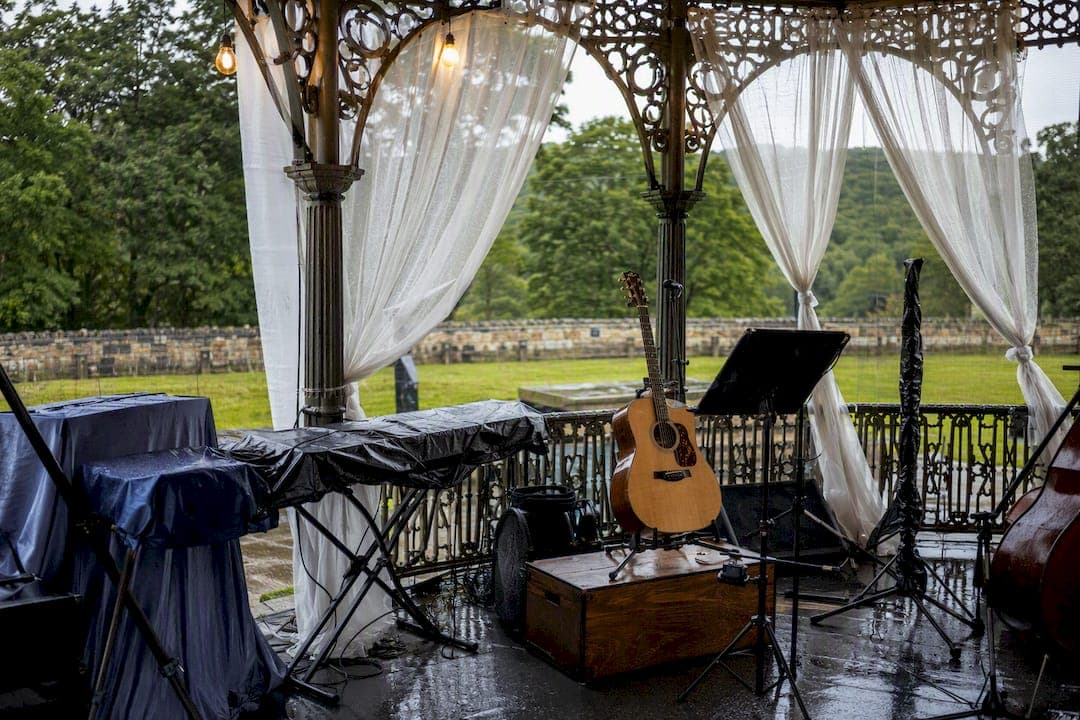
The venue manager, planner, or host holds final authority on activating the rain plan, and that person should confirm the sheltered performance area, whether it's an indoor room, tented staging area, or covered terrace, before signing any outdoor contract. Everything else follows from that one decision. The rest of this guide gives you the checklist, timeline, and vendor language to put it into action.
TL;DR:
- A final decision on activating the rain plan must be made by the venue manager or host at least 6 to 72 hours before the event, based on forecast updates.
- A covered performance space should be reserved and confirmed in writing well in advance, with clear roles assigned for weather contingencies.
- Musicians require a level, sheltered stage with protected power and waterproof instrument covers to perform safely and effectively in rain.
- Vendor contracts should include explicit rain contingency clauses, equipment responsibilities, and cancellation or postponement terms to ensure enforceability.
- A detailed, pre-rehearsed emergency plan, including quick setup, clear communication, and safety measures, minimizes stress and enhances responsiveness during weather changes.
Table of Contents
- What Should Be in Your Rain Plan for Musicians?
- When Should You Make the Rain Call? (72/48/24/6 Hour Timeline)
- How Do You Set Up Musicians Safely When It Rains?
- What Should Be in Your Vendor Contract for Weather?
- What Should You Text Guests and Vendors on a Rainy Day?
- Why Trust This Rain Planning Guide?
- Should You Cover Seating or Adjust Drainage for Rain?
- How Do You Handle Postponement or Cancellation?
- What Safety Steps Protect Performers in Wet Conditions?
- What Most Rain Plans Get Wrong
- Book Alexlevinmusic: How We Handle Rain-Ready Performances
- Sources
What Should Be in Your Rain Plan for Musicians?
A working rain plan for musicians starts with a reserved covered space, not a hope that the sky cooperates. Musicians can't perform safely with exposed instruments and live electronics sitting in the rain, so the backup location has to be locked in before the forecast gets scary, not scrambled together the morning of. Here's the priority order for getting it done:
- Reserve the covered performance area. Confirm an indoor backup, a tent with sidewalls, or a covered terrace, and get it in writing with the venue or rental company.
- Protect power and electronics. Use GFCI-protected outlets, add surge protectors, and route every cable up off wet ground.
- Set a stable, sheltered stage. A riser or platform keeps musicians off soaked grass and gives them a level surface to actually play on.
- Assign roles before the day arrives. Name a weather captain, a vendor liaison, a musician point person, and a spotter who can physically help move gear.
- Stage short-term mitigation gear. Umbrellas for guests, waterproof instrument covers, and tarps for amps and cases should be within arm's reach, not in a truck three blocks away.
Musicians generally prefer a simple move into a ready shelter over an elaborate on-the-fly PA reconfiguration, so build your checklist around speed, not improvisation.
When Should You Make the Rain Call? (72/48/24/6 Hour Timeline)
The strongest rain plans use defined checkpoints tied to a single decision-maker, according to guidance from Sortra's outdoor venue rain backup guide. Waiting until the morning of the event to decide is how planners end up making rushed calls with half the vendors already unreachable.
- 72 hours out: Review forecast trends and confirm your tent or indoor hold is still active with the vendor.
- 48 hours out: If the forecast hasn't improved, stage the tent, including sidewalls and flooring, so it's ready to deploy.
- 24 hours out: Confirm staging logistics with musicians and other vendors, and send the final brief.
- 6 to 8 hours before the event: Make the final call based on live radar, wind speed, and any lightning advisories.
Whatever thresholds you set, confirm every decision in writing, a text thread works fine, so musicians and vendors aren't relying on secondhand relay. Earlier decisions give musicians, photographers, and caterers more room to adapt, according to JAM Duo's guidance for outdoor ceremony musicians.
How Do You Set Up Musicians Safely When It Rains?
Getting a band or soloist moved and playing under cover isn't complicated, but it does take planning around three things: power, surface, and instrument protection.
Electrical safety comes first. Insist on GFCI-protected outlets for any outdoor or tented setup, keep extension cords elevated and covered rather than snaking across wet grass, and bring in a licensed electrician if you're running temporary power for a larger ensemble. This isn't optional. Exposed electronics and rain are a genuine hazard, not just an inconvenience, since musicians can't perform with instruments and amplifiers sitting in standing water or under an unprotected canopy.
Stage requirements matter more than people expect, as detailed in this practical guide to outdoor stage setup for public events. A level surface, a canopy or solid roof, and a raised riser when the ground is soggy all make the difference between a band that sounds tight and one that's distracted by gear sliding around. Give the shelter enough depth that instruments and electronics stay dry even when wind is driving rain sideways.
Instrument protection should be part of the standard kit: waterproof covers, elevated stands instead of cases on the ground, quick-dry towels, and sealed storage for anything not currently being played.
When you do need to move the setup, minimize PA reorientation. Reposition speakers to a sheltered spot and make simple mic placement adjustments rather than rebuilding the whole sound system from scratch. For a small ensemble like a trio or quartet, plan for 20 to 60 minutes to relocate and get resettled indoors. Build that buffer into your ceremony or reception timeline now, not as an afterthought later. For a deeper look at how weather affects sound quality outdoors, see this guide to outdoor wedding live music logistics.
Pro Tip: Ask your musicians ahead of time exactly how much space they need indoors, including room for a piano or full drum kit, so your backup location isn't a surprise fit on the day.
What Should Be in Your Vendor Contract for Weather?
A rain plan only works if it's enforceable, and that means putting it in writing before the event, not negotiating it in a downpour.
- Write a formal rain contingency clause into every vendor contract, specifying the defined backup space, the tent hold policy (including deposit and cancellation terms), and who pays for last-minute setup changes.
- Spell out equipment responsibilities clearly: who provides waterproofing, who supplies power, and how much lead time each vendor needs to execute a weather move.
- Understand your insurance basics. Weather-related postponement coverage differs from named-storm coverage, and most policies come with timing requirements, so buy early rather than the week before your event. Tent rentals themselves typically run $500 to $1,500 depending on size and extras like sidewalls, flooring, or climate control, and that's a cost worth budgeting into your contract conversations from the start.
- Outline cancellation and rescheduling terms, including deposit protections, any vendor fee waivers, and a written approval process for last-minute moves.
- Name a single point of contact in the contract itself, with written activation steps everyone can reference under pressure.
Reserve tents and backup spaces early. Rental companies routinely sell out during peak wedding and event months, according to The Knot's outdoor wedding planning guide, so treat the tent as part of your primary plan, not a backup you'll sort out later.
What Should You Text Guests and Vendors on a Rainy Day?
Nobody wants to be drafting a guest text while checking the radar with fifteen minutes to go, so write these ahead of time.
- 48 hours out: "Weather's looking uncertain for [date]. We have a covered plan in place, more details soon."
- 24 hours out: "Confirming our rain plan is active. [Location/instructions] if you're headed our way, plan accordingly."
- Day-of: "We're moving to [specific location]. Doors/ceremony starts at [time]. Parking is at [location]."
Your vendor briefing sheet should include final arrival windows, load-in locations, equipment storage spots, and a printed list of point-of-contact phone numbers, because cell service at outdoor venues is unreliable exactly when you need it most.
Pack a day-of rain kit: umbrellas, clear tarps, floor runners, absorbent towels, gaffer tape, zip ties, non-slip mats, battery-powered lights, and that printed vendor contact list. A prepacked kit and a rehearsed plan cut down on the scramble considerably, since one of the more consistent findings in event contingency planning is that walk-throughs catch weak points a written plan alone misses. If guests need to move between an outdoor ceremony site and an indoor reception space, set up umbrella stations and clear signage so nobody's guessing which direction to walk.
Why Trust This Rain Planning Guide?
Alexlevinmusic books live ensembles, including jazz trios, string quartets, solo piano, and DJ services, for weddings and corporate events across Philadelphia, New York, and beyond, and rain logistics come up on a regular basis in that work. Performance videos and booking details are available directly on Alexlevinmusic, alongside blog resources covering outdoor logistics and musician briefings for planners building their own contingency documents.
Alexlevinmusic can act as a direct vendor for these situations, coordinating with electricians, advising on tent placement for sound and sightlines, and reconfiguring a setup quickly when conditions change. That kind of rapid reconfiguration only works when it's planned in advance, which is the entire premise behind treating musicians as a core logistics item rather than a detail you handle after the caterer and the florist.
Should You Cover Seating or Adjust Drainage for Rain?
Guest comfort during a weather move isn't just about staying dry, it's about keeping the event functional. Wet chairs and pooling water near the performance area create both a mess and a safety hazard, so build these into your rain plan alongside the musician logistics.
Seating protection should be part of your tent order from the start. If chairs are set up outdoors ahead of time, plastic covers or a quick tarp-and-remove system keeps seats usable even after a sudden shower. For any tented space, request flooring or matting as part of the rental, since bare ground under a tent turns to mud fast and creates a slip risk for both guests and musicians moving equipment.
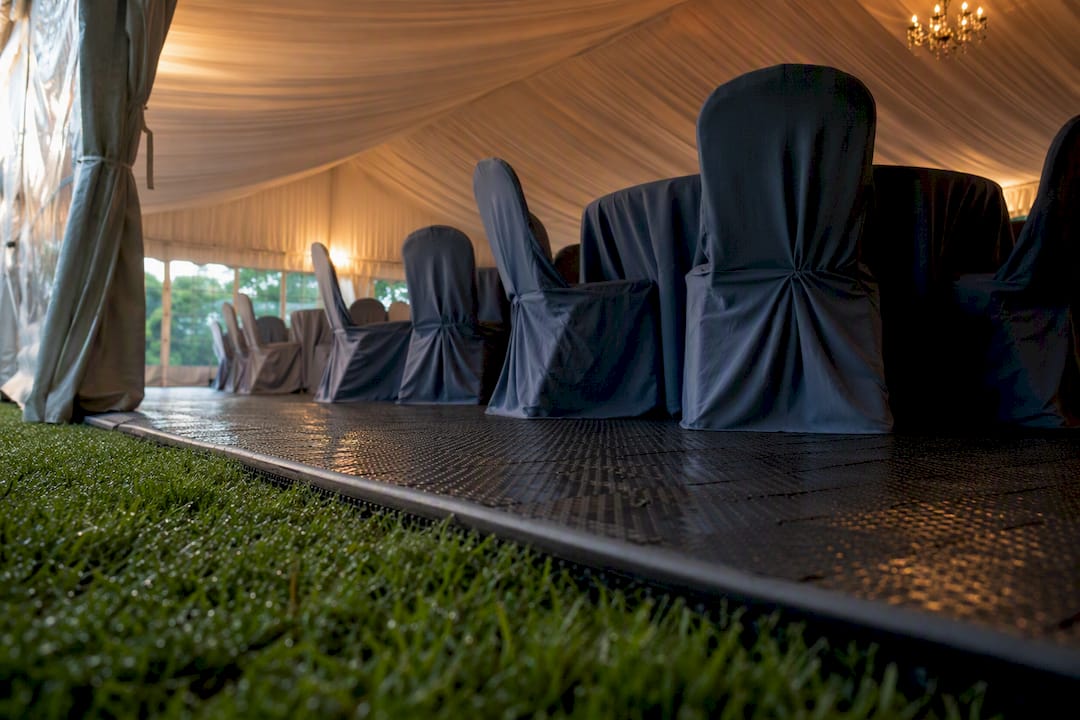
Drainage matters more than most hosts think about until it's a problem. Check whether your outdoor site has any natural slope or low points where water pools, and avoid placing the performance area or guest seating in those spots. A practical rain-ready floor plan accounts for guest flow, vendor access, and storage for dry items, not just a roof overhead.
If your event runs into cooler or wetter conditions, consider blankets or portable heaters for guest areas, similar to how The Knot recommends preparing for temperature swings at outdoor events generally. A comfortable, dry audience also means a more attentive one, which matters when you've paid for live music that deserves to be heard, not tuned out by people focused on wet shoes.
How Do You Handle Postponement or Cancellation?
Rain doesn't always mean moving indoors. Sometimes it means delaying the start time or, in rare cases, rescheduling entirely, and your communication strategy needs to cover both scenarios clearly.
Set your postponement threshold in the same contract conversation where you define your rain triggers. If lightning advisories or severe wind make outdoor staging unsafe even under a tent, know in advance how long you're willing to delay before shifting the performance indoors or cutting a set short. Musicians need this decision early since sound checks and instrument setup take real time, and a 20 to 60 minute buffer for relocating a small ensemble only works if the call comes with enough lead time to execute it.
For full cancellation, your vendor contracts should already specify deposit protections and fee waiver terms, so this isn't a conversation you're having for the first time on the phone with a stressed vendor. Communicate any postponement or cancellation to guests through the same channels you set up for weather updates: text, a wedding website update, or a day-of coordinator relaying information at the venue. Keep the message factual and specific: what changed, what the new plan is, and where people should go. Vague updates create more phone calls and more confusion, right when your team has the least bandwidth to answer them.
What Safety Steps Protect Performers in Wet Conditions?
Musicians and crew face real physical risks in wet weather that go beyond ruined instruments, and your rain plan should address performer safety directly, not just gear protection.
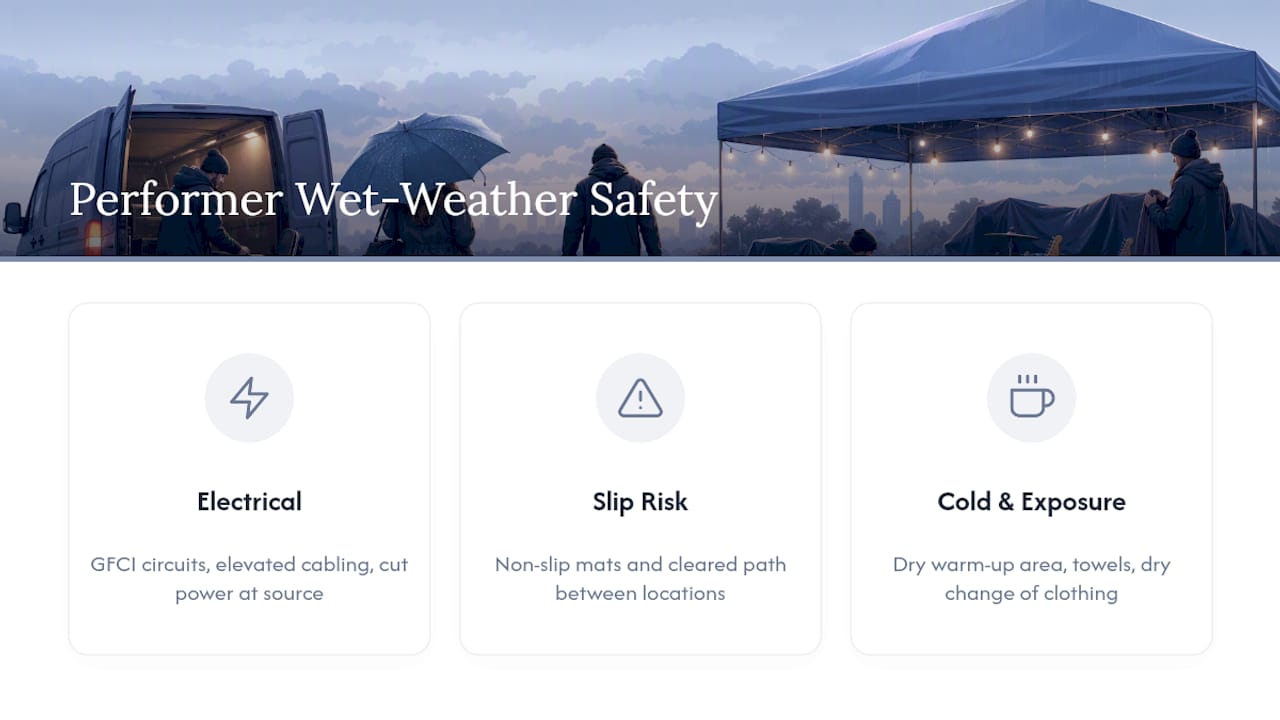
Electrical hazards top the list. Wet hands, wet cables, and standing water near amplifiers or mixing boards create a genuine shock risk, which is exactly why GFCI-protected circuits and elevated cabling aren't optional extras, they're baseline safety requirements for any outdoor or tented performance. If a downpour hits mid-set, crew should know in advance to cut power at the source rather than unplugging individual devices by hand.
Slip and fall risk rises fast on wet risers, cables, or grass, particularly for musicians carrying instruments while moving locations. Non-slip mats near the stage and a clear, cleared path between the original and backup locations reduce that risk meaningfully.
Cold and exposure deserve attention too, especially for evening events or cooler seasons. Crew moving gear in the rain for an extended period benefit from a dry space to warm up and towels on hand, and performers shouldn't be expected to play a full set in soaked clothing if a dry change of shirt or jacket is reasonably available backstage. None of this requires elaborate planning, just the same kind of advance thinking that goes into the rest of your rain plan for musicians.
What Most Rain Plans Get Wrong
Most rain contingency advice treats musicians as one line item in a broader weather plan, somewhere after the cake and before the photo booth. That's backwards. A band or soloist has more moving parts, literally, than almost any other outdoor vendor: instruments, amplification, cables, and a physical setup that takes real time to relocate. Treat that setup as a primary planning input, not a footnote.
The conventional advice to "have a backup tent" isn't wrong, but it's incomplete. A tent without GFCI power, without a level floor, and without a clear 20 to 60 minute buffer in the schedule is just a drier place to have the same problems. What actually works is naming one decision-maker, setting real trigger thresholds instead of vague "if it looks bad" language, and rehearsing the move once before the event, even informally.
If there's one thing hosts consistently underestimate, it's how much a written, vendor-confirmed plan reduces stress on the actual day. The plan doesn't prevent rain. It prevents the scramble.
— Alex
Book Alexlevinmusic: How We Handle Rain-Ready Performances
Alexlevinmusic builds rain contingencies into the booking conversation from the start, not as a last-minute add-on when a forecast turns ugly. That means tent-ready setups, indoor alternate options, and quick-change logistics discussed alongside your ceremony timeline and reception flow, so nobody's improvising sound placement in a downpour.

Every ensemble, from a solo pianist to a full jazz trio, comes with a clear understanding of what a covered or indoor backup space needs to look like for that specific instrumentation. Ready to check availability for your date? Visit the Alexlevinmusic services page to see ensemble options, watch performance videos, and start a booking conversation that accounts for weather from day one.
Sources
- How to plan an outdoor venue rain backup — Sortra
- Wedding weather backup plans — WeddingClever
- Outdoor wedding planning guide — The Knot