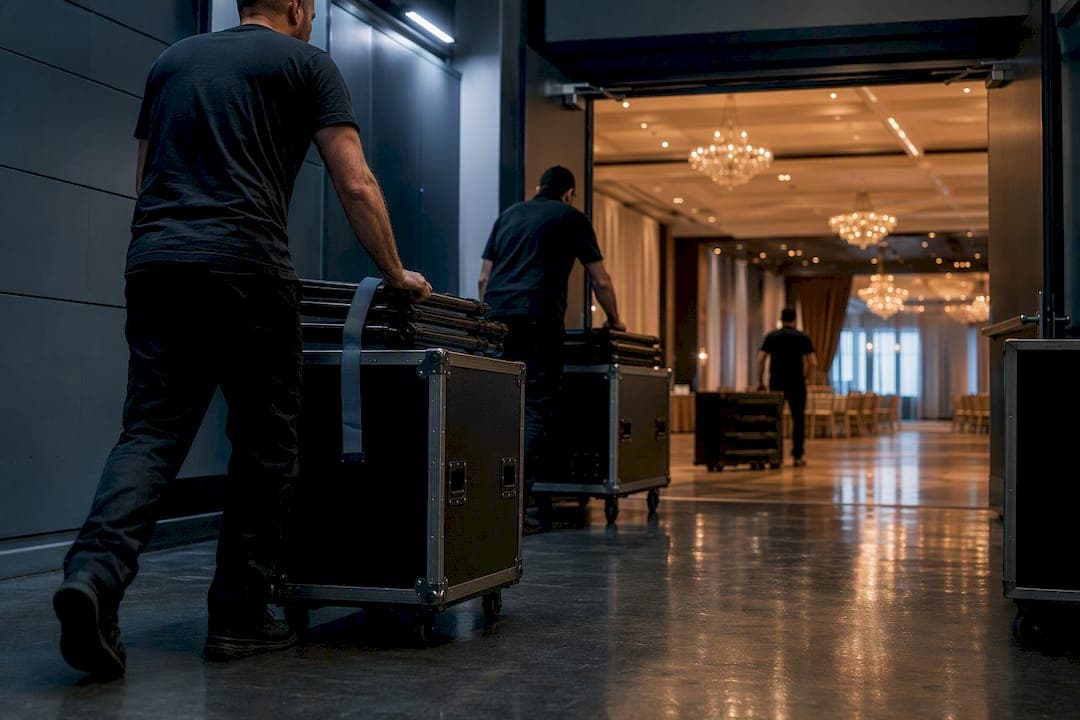
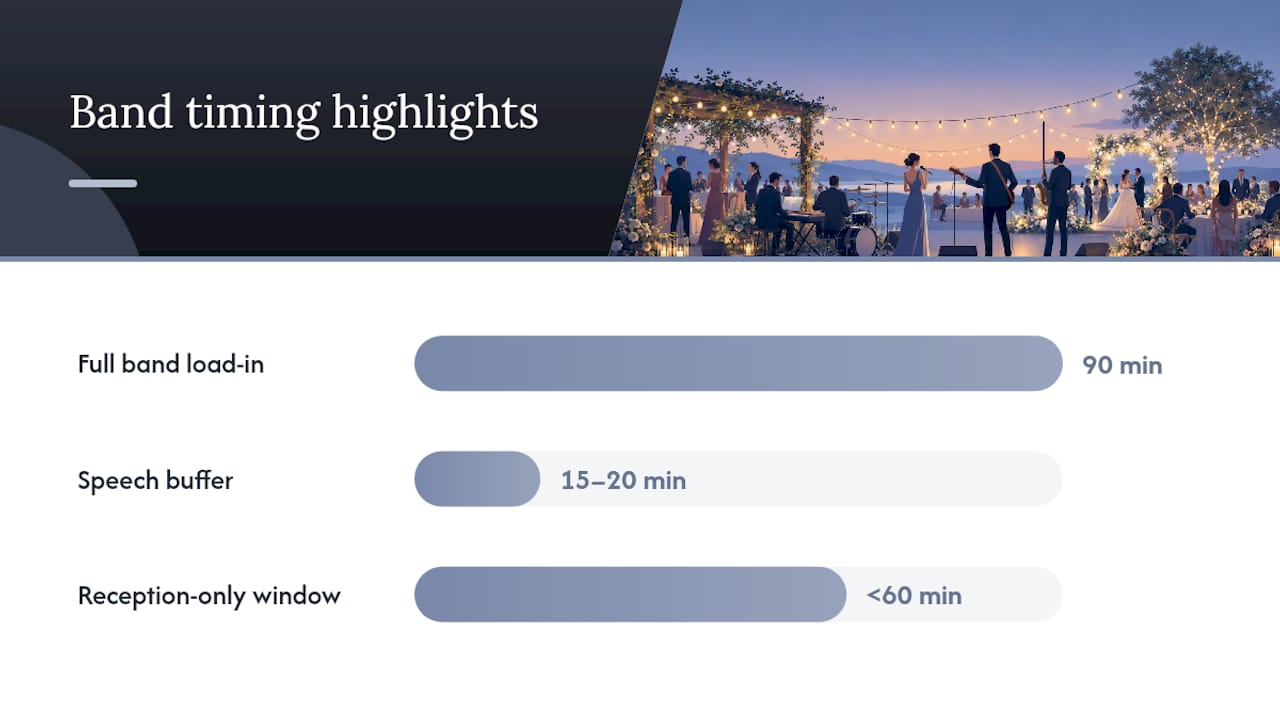
Plan for 60 to 120 minutes of load-in and setup, plus 15 to 45 minutes for soundcheck, with 90 minutes as the safe default when you're not sure which end of the range your band falls on. Build in another 15 to 20 minutes of buffer around speeches and set breaks, since those almost always run long. Get this block confirmed with your band and venue before you finalize any other vendor timing.
TL;DR:
- A typical band requires at least 90 minutes of load-in, setup, and soundcheck, with larger groups needing up to two hours or more.
- Venue access issues, such as stairs or long carries, can extend setup time by 10 to 30 percent, affecting the overall schedule.
- Confirming whether the band uses in-ear monitors or wedges early can save 20 to 40 minutes during soundcheck and prevent delays.
- Scheduling set breaks during dinner and adding a 15 to 20 minute buffer around speeches helps maintain the timeline during the event.
- Building the band’s setup and soundcheck into your wedding timeline ensures smoother coordination and minimizes last-minute surprises.
Table of Contents
- Wedding Band Setup Time: What Happens During Load-In and Soundcheck
- What Makes Setup Faster or Slower?
- Building the Band Into Your Wedding Day Timeline
- How to Trim the Setup Window Without Cutting Corners
- Venue and Technical Checklist for Band Setup
- How Alex Levin Music Plans Load-In and Soundcheck
- What Actually Goes Wrong on Wedding Days
- Book a Band That Handles the Timing for You
- Sources
- FAQ
Wedding Band Setup Time: What Happens During Load-In and Soundcheck
That 60 to 120 minute window isn't one activity, it's four or five overlapping ones, and knowing what each covers helps you explain delays to a venue coordinator who's never worked with a live band before.
Load-in and equipment placement takes 20 to 60 minutes depending on how far the truck parks from the stage and how many hands are unloading. A quartet carrying gear 30 feet from a curb-side van moves fast. A seven-piece band hauling a drum kit, horns, and a PA system up a service elevator and down a hallway does not. Professional wedding bands commonly request 60 to 90 minutes for load-in, setup, and soundcheck, and larger acts often ask for 90 to 120 minutes.
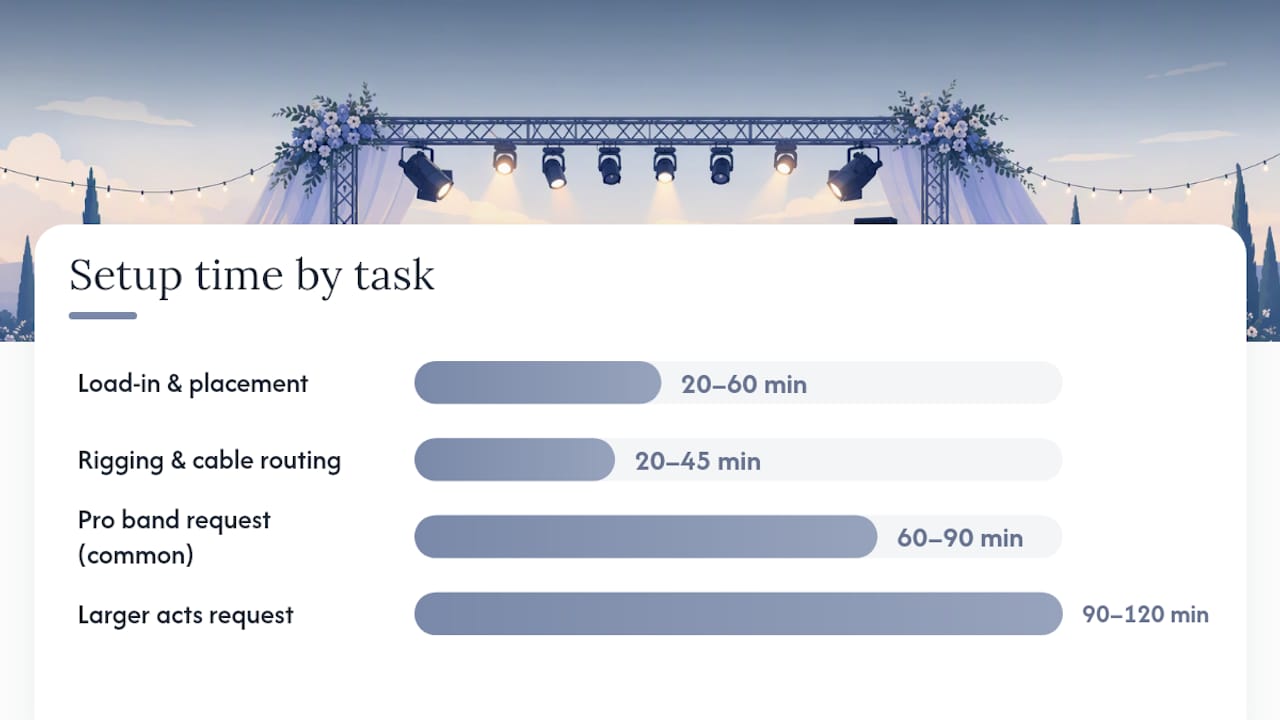
Rigging and cable routing adds another 20 to 45 minutes for a medium-sized band. This is the unglamorous part: running snake cables from the stage to the mixing position, taping down cords so nobody trips in heels, positioning monitors, and getting the PA hung or stacked correctly.
Line check versus full soundcheck is where a lot of couples get confused. A line check confirms every microphone and instrument is technically live and sending signal. It's fast, often 10 to 15 minutes, but it doesn't tune anything. A full soundcheck goes further: the engineer balances the mix, sets monitor levels for each musician, and rings out feedback frequencies before a single guest walks in. Skipping that step is why some receptions start with a screech from the monitors or a vocal that's buried under the horn section. Full soundchecks are fundamentally an engineering process, not a volume knob, and rushing one shows.
Set structure matters here too. Most bands play in one of a few standard patterns:
- Two 60-minute sets with a break
- Three 40-minute sets with two breaks
- 45-minute sets with 15 to 20 minute breaks between them
Bands commonly recommend scheduling those breaks during dinner service so the room never sits in silence waiting for music to resume. Soundcheck happens before any of these sets begin, ideally finished well before your first guest arrives.
What Makes Setup Faster or Slower?
Band size is the biggest variable, but it's not the only one. A duo or trio with minimal gear can often be stage-ready in 45 to 60 minutes flat. A full ensemble with horns, multiple vocalists, and a drum riser regularly needs 90 minutes or more, sometimes pushing past two hours.
A few other factors swing the timeline more than couples expect:
- In-ear monitors cut down on speaker feedback checks but require more setup on the tech side, since each musician needs a working wireless pack.
- Floor wedges go down faster physically, but they demand more time ringing out feedback because they're pointed straight at open microphones.
- Venue access problems (stairs with no elevator, a long carry from parking, a loading dock that's locked until a certain hour) can add 10 to 30 percent to total setup time, and that's before anyone plugs in a cable.
- Shared stages at venues hosting back-to-back events, or elaborate floral and lighting installs that block the load-in path, require extra coordination time that rarely shows up in the initial quote.
- Horn sections and multi-vocalist lineups typically need a stage footprint of roughly 9 to 12 square meters, which takes longer to fill and wire than a compact trio setup.
Pro Tip: Ask your band point-blank whether they're running in-ears or wedges before you lock your ceremony start time. That one detail changes whether soundcheck needs 20 minutes or 40, and it's the kind of thing that gets missed until the band's already unloading.
Venues with tight production schedules or shared staging sometimes bring in outside coordination help; if your venue works this way, understanding basic live event production and show direction can clarify who's actually responsible for stage timing on the day.
Building the Band Into Your Wedding Day Timeline
The single most common scheduling mistake is treating the band as an afterthought instead of an anchor point. Build your timeline around their load-in window, not the other way around, and the rest of the day falls into place with far less friction.
Here's a sample timeline for a 4:00 PM ceremony with a live band covering ceremony through reception:
| Time | Activity |
|---|---|
| 1:30 PM | Band load-in begins (90 minutes before ceremony) |
| 2:15 PM | Rigging and line check for ceremony mics complete |
| 3:45 PM | Ceremony instruments and vocalist in position |
| 4:00 PM | Ceremony begins |
| 4:30 PM | Cocktail hour set starts (trio or quartet configuration) |
| 5:30 PM | Full band completes soundcheck for reception PA |
| 6:00 PM | Reception begins, first set |
| — | Break for dinner service and toasts |
| — | Second set begins, first dance |
| 9:45 PM | Final set ends |
For an evening-first schedule with a 6:00 PM ceremony, many couples opt for a "silent setup" where the band's crew completes load-in and full soundcheck during the afternoon, hours before any guest arrives, then the musicians step away and return closer to showtime. This avoids any visible gear or noise during photos and guest arrival.
A few rules keep this from falling apart on the day:
- Give full bands at least 90 minutes of dedicated load-in time, not shared with another vendor's setup.
- Place any set break during dinner service, never during a lull with nothing else happening.
- Add a 15 to 20 minute buffer around speeches, since toasts almost always run longer than planned.
- Confirm the venue's noise curfew in writing before you finalize your last set time.
If the band is only covering reception (with a separate ceremony musician or a playlist for cocktail hour), you can shrink their on-site window considerably, sometimes to under an hour if the venue allows early access. A hybrid DJ and live band setup also smooths this transition, since the DJ can fill gaps while the band finishes technical checks.
How to Trim the Setup Window Without Cutting Corners
Couples working with tight venue access windows or back-to-back event schedules have real options for shrinking that setup block, though each comes with a trade-off worth understanding upfront.
Early load-in means the band arrives well before the contracted window, often hours ahead, to beat other vendors to the space or avoid guest overlap. Bands typically charge for this, either an hourly early-arrival fee or a flat surcharge, since it usually means paying crew for extra hours outside the standard booking window.
Staggered setup is a middle-ground option. One or two crew members arrive early to handle the heavy rigging, running cables, hanging the PA, and positioning gear, while the rest of the band arrives closer to showtime for a focused line check. This can save money compared to paying the full band for early arrival, while still getting the bulk of the physical work done ahead of time.
A quick line check is genuinely fine in low-stakes situations: a short outdoor ceremony with minimal amplification, or a rehearsal-adjacent moment where the room isn't full of guests yet. It is not a substitute for a full soundcheck once dinner and dancing are on the line, where mix balance and feedback control actually matter to guest experience.
Ask your band these questions early so nothing about pricing or timing surprises you later:
- What's included in your standard load-in window, and what triggers an early-arrival fee?
- Do you recommend a full soundcheck or a line check for our ceremony volume level?
- How many crew members handle setup, and can any of them start early separately from the full lineup?
Venue and Technical Checklist for Band Setup
A short checklist sent to your venue two weeks out prevents almost every day-of surprise. Confirm these items directly with both your band and your venue coordinator, ideally in writing.
Stage footprint scales with ensemble size. Soloists and duos require minimal space, quartets a modest platform, and full bands with horns or multiple vocalists require a significantly larger stage area to work comfortably without crowding.
Power is where most day-of scrambles happen. Confirm dedicated circuits near the stage, ideally on breakers rated to handle a full PA system and lighting without tripping mid-reception, and ask whether the venue has a generator backup for outdoor or tented events.
Access needs to be scheduled, not assumed. Confirm parking location relative to the stage, whether staff will help carry gear, and whether the path involves stairs or an elevator, since access constraints can add real time to load-in that a printed timeline never accounts for.
Final day-of confirmations worth locking down:
- A private space for the band to store cases and change before performing
- A clear policy on hot meals or drinks for the crew during long events
- Final cue sheet delivered to the band two weeks before the wedding, not the morning of
Noise and volume balance aren't just about guest comfort. The CDC's guidance on noise exposure is part of why a proper soundcheck, not just a volume check, protects both guests and musicians over a multi-hour event. A detailed venue sound checklist walks through exactly what to confirm during a site visit.
How Alex Levin Music Plans Load-In and Soundcheck
Every booking gets a timing block built around the same four phases, refined over years of load-ins at venues ranging from converted lofts to formal ballrooms. The structure rarely changes even when the room does.
- Load-in: crew arrives, unloads, and positions gear based on the confirmed stage footprint
- Rigging: cables run, PA positioned, monitors placed according to whether the lineup uses in-ears or wedges
- Line check: every input confirmed live before the detailed work begins
- Full soundcheck: mix balanced, monitors set per musician, feedback frequencies rung out
A cue sheet gets built alongside this, listing who calls each transition (processional start, first dance cue, last song) and who's tracking time against the reception schedule. That sheet gets finalized and sent two weeks before the date, matching the same lead time recommended across the industry for final cue sheet and vendor confirmations. A copy-paste soundcheck timing schedule breaks this down further for anyone building their own version from scratch.
What Actually Goes Wrong on Wedding Days
Every band has stories about the schedule falling apart, and it's almost never the setup itself. It's the ceremony that runs 20 minutes long, or the photo session that eats into cocktail hour, and suddenly the soundcheck window that looked generous on paper is gone.
The overrun almost always traces back to speeches or photos, not the band. A best man's toast that was supposed to take two minutes takes seven, and now the first dance cue is scrambling to catch up.
The single rule that fixes most of this: designate one person, a coordinator, a maid of honor, whoever, as the band's day-of liaison. That person manages cues and vendor access so the band leader isn't chasing down a stressed couple mid-reception to ask when to start the first dance. Sixty to ninety minutes before guests arrive, that liaison should do one final check: confirm the load-in window held and that power is live at the stage. Small thing, but it catches problems while there's still time to fix them.
— Alex
Book a Band That Handles the Timing for You
Alex Levin Music builds the load-in, soundcheck, and cue schedule into every booking, so you're not the one troubleshooting a delayed setup an hour before guests arrive.

Instead of coordinating separate vendors for ceremony music, cocktail hour, and reception, you get one band and one timeline. Ceremony music, cocktail hour sets, and reception performances come with timing templates, with detailed load-in windows and cue sheets confirmed ahead of the date; current pricing is available on the client’s website. If your reception needs seamless transitions between live sets and recorded music, the DJ and hybrid music option keeps the dance floor moving without a gap. Reach out through the reception music page to check availability for your date and get a timeline built around your actual ceremony start time.
Sources
Timing figures in this guide draw from Tailored Entertainment's setup and soundcheck guidance, Bands for Hire's set-length breakdown, and Cap City Band's editable timeline template. For a deeper look at scheduling reception transitions, see Alex Levin Music's reception music checklist.
- PMC article on sound/noise and hearing (example authoritative source)
- CDC: Understanding noise and hearing loss
FAQ
What Is the 50/20/30 Rule for Weddings?
It's a budgeting guideline suggesting a significant portion of your wedding budget go toward venue and catering, a smaller portion toward attire and photography, and the rest toward everything else, including music. It's a rough starting point, not a fixed formula. Live music costs vary widely depending on ensemble size and hours booked.
What Is the 30/5 Minute Rule for Weddings?
This refers to keeping formal moments, like speeches or toasts, capped around 5 minutes each, with no more than 30 minutes total dedicated to speeches across the reception. Bands build set breaks around this window, which is why confirming your speech timing with your band in advance matters for keeping the schedule on track.
Is 4 Hours Too Short for a Wedding Reception?
Four hours can work, but it's tight once you account for load-in, dinner service, speeches, and dancing. With a live band, you'd want load-in to happen before the reception window starts, so the full four hours can go toward eating, toasts, and music rather than technical setup.
How Long Before My Wedding Should I Book My Wedding Band?
Most couples book their band six to twelve months out, especially for peak season dates, though this varies by market and band availability. It's similar to the backward-planning approach used for ordering wedding rings, where earlier booking gives more flexibility and avoids rushed decisions closer to the date.