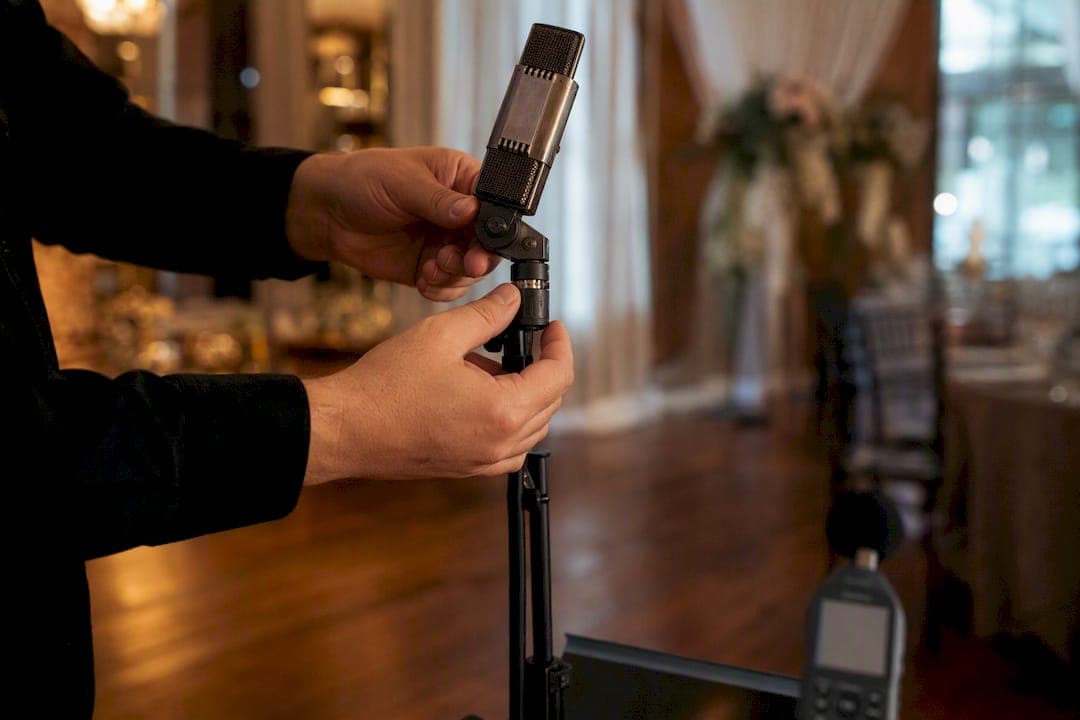
Bring this checklist to every NYC venue walk-through: acoustics, noise rules, equipment, power, a realistic sound test, and vendor commitments, all verified before you sign. Test the room with a clap and a raised voice, ask about decibel limits and cut-off times in writing, confirm what house gear exists versus what you're renting, and check circuit count before you fall in love with the chandeliers. A venue that can't answer these questions on the spot is telling you something important.
TL;DR:
- Most venues in NYC require confirming decibel limits and cutoff times in writing to avoid unexpected noise violations or restrictions during your event.
- Conduct a sound test by recording a clap and speech at the venue to identify echo or dead zones, revealing potential acoustic issues before signing a contract.
- Verify the venue's existing equipment, technician availability, and power capacity during the walk-through to prevent costly surprises when using or renting AV gear.
- Ensure your microphone choice and placement will provide clear audio coverage for the ceremony, outdoor or indoor, and test wind or background noise conditions beforehand.
- Understand the venue’s specific rules on outside gear, and ask detailed vendor questions about operation, backup equipment, and overtime or fine policies to avoid on-day confusion.
Table of Contents
- How do you check acoustics during a venue walk-through?
- What noise restrictions and permits apply to NYC venues?
- What mic setup covers the ceremony space properly?
- How do you balance dance-floor energy with dinner conversation?
- What equipment should a venue's house system include?
- What should you check about power and cable access?
- How do you run a realistic sound test before booking?
- What vendor questions expose hidden AV problems?
- Printable walk-through checklist to bring with you
- NYC-specific tips from real gigs
- Coordinating live music and sound setup for your NYC wedding
- Sources
How do you check acoustics during a venue walk-through?
Look up before you look anywhere else. Ceiling height and shape dictate how sound travels and where bass piles up in corners; a 30-foot loft ceiling with exposed brick and steel beams behaves nothing like a carpeted ballroom with drapery. Glass walls, tile floors, and bare brick all bounce sound and create echo that swallows spoken vows. Carpet, drapery, and upholstered furniture absorb it.
Run two quick tests on-site:
- Clap test: stand center-room and clap once, sharply. A long, ringing tail means heavy reverberation.
- Speech test: have someone talk at normal volume from where the officiant will stand while you listen from the back row.
Write down what you hear, because verbal impressions fade by the time you're negotiating a contract. If the room echoes, ask the venue or your audio rental vendor about temporary fixes: portable sound panels, pipe-and-drape, or even a strategically placed rug.
Pro Tip: Bring a phone and record 15 seconds of the clap and speech test. Reviewing that recording later, away from the excitement of touring a beautiful room, is often the moment couples realize a space needs help.
What noise restrictions and permits apply to NYC venues?
New York venues vary wildly on this, and assumptions cost couples real money. Some rooftop and outdoor spaces enforce decibel limits tied to city noise codes; others have hard cutoff times regardless of your contract end time.
Ask these questions directly and get the answers in writing:
- What is the decibel limit, and at what time does amplified sound have to stop?
- Has the venue hosted amplified weddings before, and who typically pulls the sound permit?
- For outdoor events, does the space fall under Parks Department jurisdiction, and does staff know the process, or will you need to?
- Are there neighboring residences or businesses that have complained before?
Push for permit and curfew language to be added to your venue contract, not just mentioned during the tour. An experienced NYC rental or AV team has usually navigated these rules dozens of times and can flag problems your venue coordinator might not think to mention.
What mic setup covers the ceremony space properly?
The ceremony is the one moment guests can't afford to miss audio for, so test coverage the same way guests will experience it.
- Stand where your officiant will stand and speak at a normal conversational volume while someone walks to the back row and any balcony or overflow seating to confirm they can hear clearly.
- Choose the right mic for the setup: lavalier mics work well for officiants who move or turn their head, handheld mics suit a fixed reading podium, and podium mics make sense for a stationary lectern. Ask for a backup mic on standby regardless of which you choose. Battery failures happen mid-ceremony more often than anyone likes to admit.
- For outdoor ceremonies, check wind exposure at the exact spot vows will happen, confirm battery backups are charged and available, and make sure speakers are aimed at the seating area, not scattered toward open lawn where sound just disappears. Our outdoor wedding logistics guide covers wind and placement issues specific to open-air ceremonies in more depth.
How do you balance dance-floor energy with dinner conversation?
Reception sound has one job most couples underestimate: it has to do two different things in the same room. Dinner needs conversational volume; the dance floor needs energy. Getting speaker placement wrong means either muddy bass bleeding into cocktail hour or a dance floor that feels lifeless.
Position main speakers to cover the dance floor directly, and keep subwoofers away from corners where bass builds up and turns muddy. If dining and dancing share a room, ask whether the sound system supports zone control so dinner-hour volume can sit lower than after-dinner dancing.
- Confirm stage footprint for a live band: most acts need a clear 6 to 8 foot area minimum.
- Ask about floor load limits if risers or a raised stage are involved.
- Check monitor placement so musicians can hear themselves without feeding back into guest mics.
Pro Tip: If your band or DJ is bringing outside gear, have them walk the room with you. A musician can usually spot a bad speaker angle in about ten seconds, long before it becomes a wedding-day problem.
What equipment should a venue's house system include?
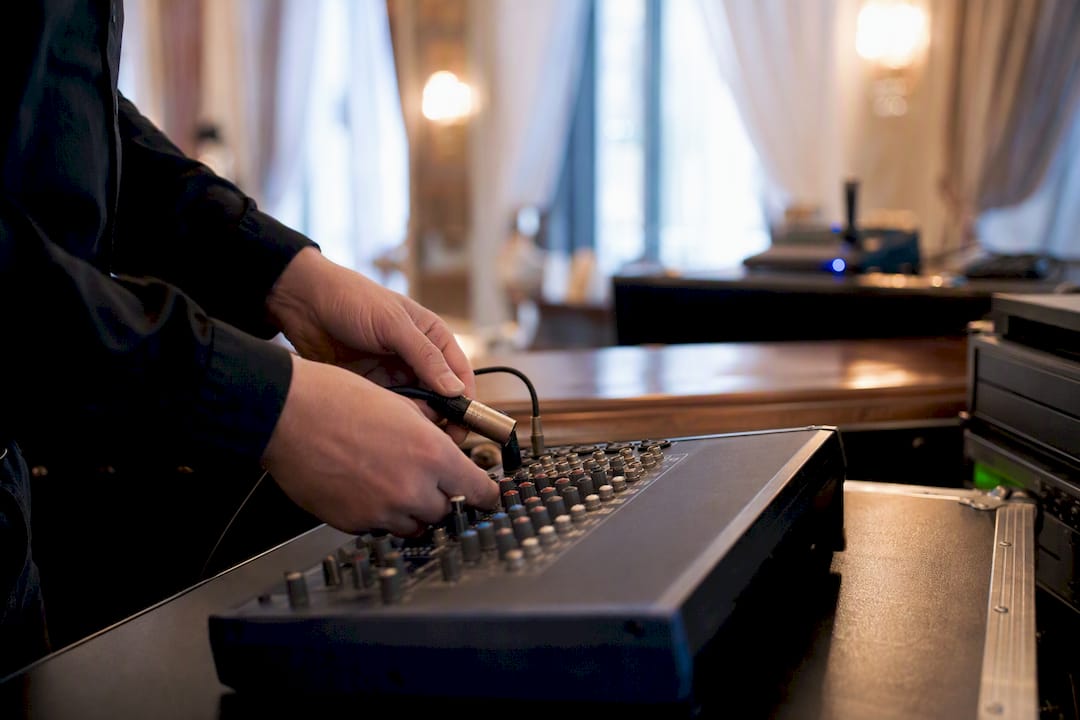
Before you decide what to rent, find out exactly what's already there. Ask for a walkthrough of the house system itself: powered speakers, a mixer, wireless microphones, mic stands, cables, and DI boxes for connecting instruments or laptops.
- How often is the equipment tested or maintained?
- Is a technician on-site during events, or does the couple's vendor operate everything?
- Can outside DJs or bands plug directly into the house system, or does the venue require its own operator?
Small venues sometimes rely on retail-grade Bluetooth speakers meant for backyard parties rather than professional PA gear, which works fine for an intimate gathering under 50 guests but falls short for a room with 150 people and a live band. If the house system looks thin, local NYC audio rental providers can supply professional gear along with a technician, which solves the coverage problem in one call.
What should you check about power and cable access?
Sound systems trip breakers more often than any other AV failure, and it's entirely preventable with two minutes of checking during your walk-through.
- Count dedicated circuits near the ceremony and reception areas, and ask where the breaker panel is located.
- For larger bands or elaborate lighting rigs, ask whether a generator will be needed and who arranges it.
- Confirm which cable paths are allowed and whether the venue requires cable ramps or gaffer tape over cords in walkways.
- Document power draw locations in writing so your vendor's rider matches what the venue actually provides.
How do you run a realistic sound test before booking?
Don't take a venue's word for it. Run an actual test with the same type of gear you'll use on the wedding day.
- Speak at normal ceremony volume from the spot your officiant will stand, and confirm projected speech reaches the back row without straining.
- Play a representative playlist, ideally something with vocals, bass, and a wide dynamic range, through the actual speakers being considered.
- Walk the entire room, including corners, alcoves, and any raised or lowered sections, listening for dead zones, echo, or volume drop-off.
- Record pass or fail on each critical item: ceremony speech clarity, reception music coverage, and dance floor volume without bleed into dining areas.
This exact approach, using the same microphone style and playlist you'll actually use, is the single most reliable way to catch problems before signing anything. A checklist on paper can't tell you a room echoes. A live test can.
What vendor questions expose hidden AV problems?
Some of the most expensive wedding-day surprises trace back to a question nobody asked during the walk-through.
- Who physically operates the sound system on the wedding day, and is a technician included in the venue fee?
- Can your outside DJ or band connect to the house system, or do they need to bring everything themselves?
- Are there overtime fees if the reception runs past the contracted time, and who absorbs fines for noise violations?
Ask these specific vendor questions before signing, and insist that sound check time, technician presence, and fine responsibility appear in the written contract, not just a verbal assurance. A venue that can't answer whether it has backup microphones or where the breaker panel is located is a genuine warning sign. Vague answers on power and equipment tend to predict vague accountability on the wedding day. Our guide on questions to ask before booking a wedding band covers musician-specific versions of these same questions.
Printable walk-through checklist to bring with you
Screenshot this or print it before your next tour.
| Ceremony checks | Reception & logistics checks |
|---|---|
| Officiant mic tested, pass/fail | House speakers confirmed, pass/fail |
| Backup mic available | Dedicated circuits counted |
| Back-row audibility confirmed | Cable paths and floor protection allowed |
| Outdoor wind/battery check (if applicable) | Decibel limit and cutoff time recorded |
| Vendor answer: technician included? | Vendor answer: outside gear allowed? |
Leave space next to each row to jot the staff member's name and the date you asked. Our wedding reception music checklist expands this into a full reception planning timeline if you want more detail beyond the walk-through itself.
NYC-specific tips from real gigs
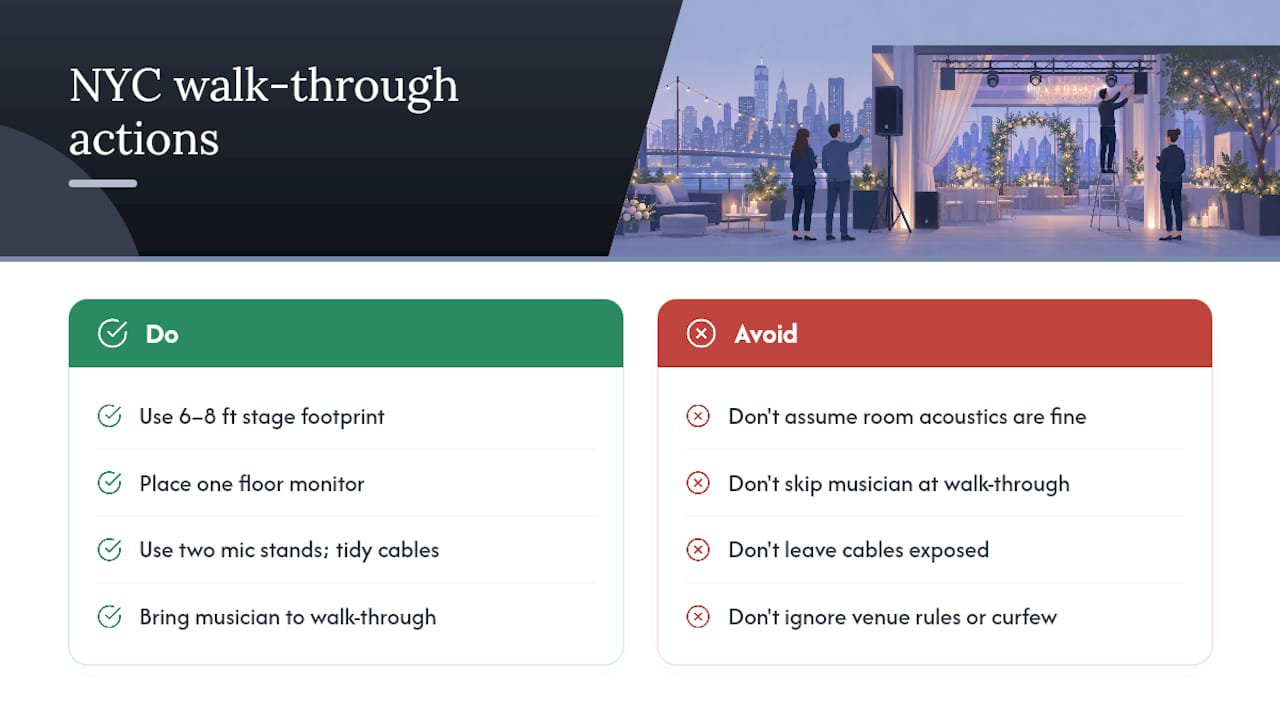
Working weddings across New York City and the surrounding area, the surprises are rarely about the music itself. They're about the room. A loft with gorgeous exposed beams often has zero curtains to soften reflections. A rooftop with a stunning skyline view sometimes has a hard 10 p.m. sound cutoff nobody mentioned during the tour.
The fix is almost always simple: a stage footprint of 6 to 8 feet, one floor monitor, two mic stands positioned to avoid cable clutter. When a musician attends the walk-through alongside the couple, small adjustments, like moving the stage six feet or adding a rug to kill reflections, prevent much bigger problems on the actual day. Our NYC event page has more on venues we've worked in across the five boroughs.
— Alex
Coordinating live music and sound setup for your NYC wedding
Alex Levin Music works venue walk-throughs alongside couples specifically to catch the acoustic and power issues this checklist covers, before they become wedding-day scrambles. A consultation typically includes reviewing your ceremony and reception spaces, recommending mic setups for vows and readings, and coordinating stage footprint and power needs directly with venue staff so nothing gets left to guesswork on-site.

Whether you need a jazz trio for cocktail hour, a string quartet for the ceremony, or a full band that can handle both speeches and a packed dance floor, having musicians who already understand NYC venue quirks saves you a dozen back-and-forth emails. Browse live music and DJ packages for weddings across New York City, or reach out to schedule a consultation and get your venue's acoustic questions answered before you sign anything.