
Wedding venue music restrictions are rules venues enforce about when amplified music must stop, how loud it can be, and what types of sound setups are permitted, all to comply with legal noise limits and protect venue licenses. Ignoring these rules before you book creates real problems on the day itself: a DJ cut off mid-song, a band told to pack up early, or a venue facing a licensing penalty. The good news is that every restriction is manageable once you know what to ask. This guide covers the most critical music restriction factors couples and wedding planners need to understand before signing a venue contract.
1. What wedding venue music restrictions actually cover
Wedding venue music restrictions fall into three categories: timing, volume, and equipment. Timing rules set a hard stop for amplified music, often earlier than the event end time. Volume rules cap how loud the sound can be, measured in decibels. Equipment rules govern what instruments, speakers, or setups are permitted indoors versus outdoors.
Many venues require amplified music to stop by a specific time that precedes guest departure, and impose bass limits, sound limiters, and rules requiring doors and windows to stay closed during performances. This matters because a venue's premises license is a legal document. Violating its conditions puts the venue's operating license at risk, which is why staff enforce these rules without exception.
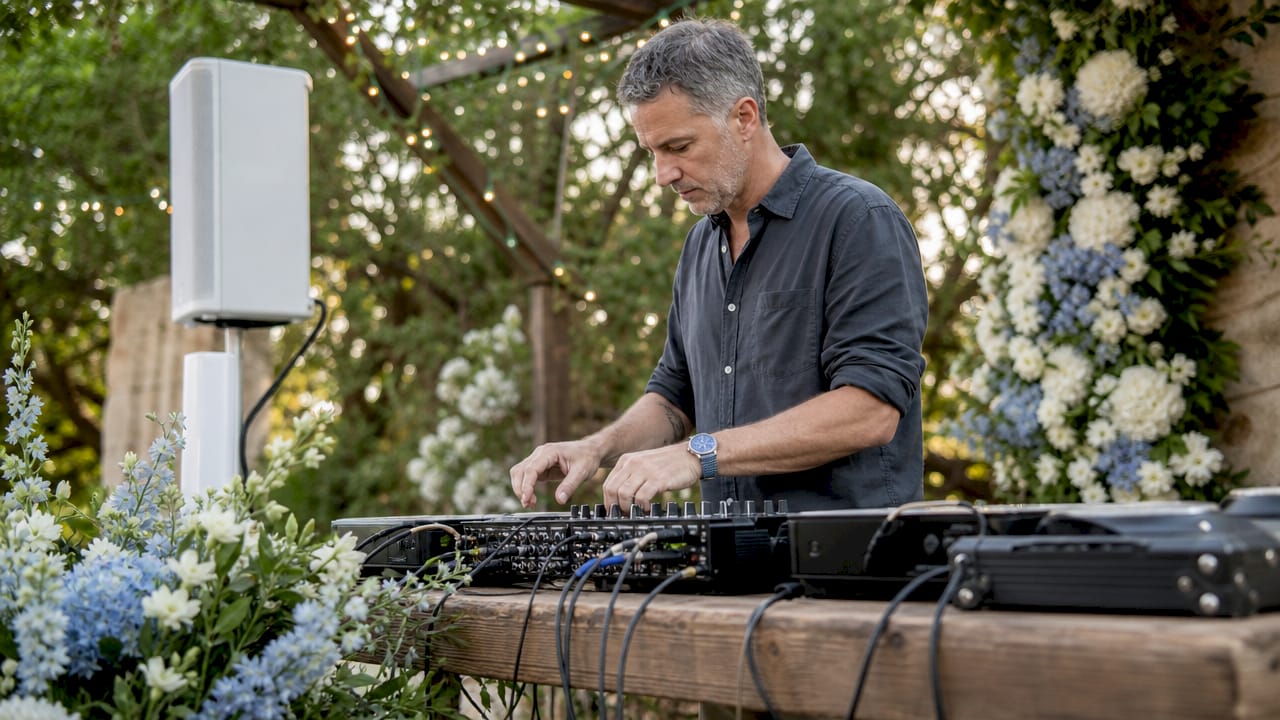
Understanding all three categories before you book prevents the most common and costly wedding day surprises.
2. Common music stop times and noise curfews
Noise curfews at wedding venues typically fall between 9 pm and midnight, depending on the venue's location, local ordinances, and the specific conditions attached to its license. Urban venues surrounded by residential buildings tend to have earlier cutoffs than rural properties.
The critical detail most couples miss: the music stop time and the guest departure time are not the same. A venue may allow guests until midnight but require amplified music to end at 10 pm. That two-hour gap catches couples off guard when they have not read the contract carefully. Outdoor music setups face even stricter caps, and some venues prohibit outdoor amplified sound entirely after 8 pm.
Pro Tip: Ask the venue for the exact amplified music stop time in writing, separate from the event end time. Treat these as two different numbers in your planning timeline.
3. How sound limiters work and why they matter
A sound limiter is a device installed by a venue that monitors decibel levels in real time and cuts power to the sound system if the music exceeds a set threshold. Typical sound limiter settings range from 90 to 100 dB, and settings below 90 dB often require performers to adapt with acoustic instruments or significantly reduced setups.
When a limiter triggers, it cuts power to the entire PA system instantly. This means a band can be mid-chorus and the room goes silent. The limiter resets after a short delay, but repeated triggers disrupt the performance and frustrate guests. Communicating the exact limiter threshold to your DJ or band before the event is not optional. It is the single most important technical detail they need to prepare properly.
| Limiter threshold | Practical effect on music |
|---|---|
| 95 to 100 dB | Full band and DJ setups generally workable with care |
| 85 to 94 dB | Drums may need electronic kit; brass and bass guitar require monitoring |
| Below 85 dB | Acoustic instruments, string quartets, or solo piano are safest choices |
4. How local noise ordinances shape venue music policies
Local government noise ordinances set the legal ceiling that venues must stay under, and venues translate those laws into their own internal music policies. EPA Victoria classifies music noise during night periods as more strictly regulated due to sleep disturbance risks, with assessment going beyond simple volume to consider intrusive frequency components.
This frequency-weighted approach means bass-heavy music is penalized more heavily than treble-heavy music at the same overall decibel level. A DJ playing deep house at 88 dB may trigger a complaint while a string quartet at the same level does not. The same music volume that is acceptable at 7 pm can be non-compliant at 10 pm under night-period rules. Scheduling peak music sets earlier and building a quieter ramp-down toward the end of the evening is the most reliable way to stay compliant.
"Noise compliance at venues is dynamic. Licensing reviews can impose significantly stricter conditions suddenly, so planners should treat current restrictions as potentially subject to change." — Froyle Park license review
Enforcement consequences are real. Failure to abate unreasonable noise under Victoria's Environment Protection Act can result in penalties up to 600 penalty units and police action. That legal exposure is exactly why venues enforce their internal policies so strictly.
5. Real-world enforcement: what happens when venues ignore restrictions
In 2026, a UK venue was banned from using brass bands outdoors after a court upheld noise complaints from neighbors, including conditions requiring speaker door closures and prohibiting outdoor brass instruments entirely. This is not an isolated case.
One UK venue received 49 new licence conditions after a three-day licensing review hearing triggered by resident complaints. Those conditions covered amplified music hours, guest caps, and speaker placement rules. Any couple who had booked that venue before the review faced a very different event than the one they planned. Checking whether a venue has faced recent licensing reviews or complaints is a step most couples skip entirely, and it is one worth taking.
6. Questions to ask every venue before you book
A structured checklist before booking prevents the most common music-related surprises on your wedding day. Asking targeted questions upfront improves compliance and smooth operations significantly.
- What is the exact amplified music stop time, and is it different from the event end time?
- Does the venue have a sound limiter, and what is the decibel threshold it is set to?
- Who controls the limiter, and who is responsible if it triggers during a performance?
- Are external DJs and live bands permitted, or must you use the venue's preferred suppliers?
- Are any instruments prohibited, such as drums, brass, or outdoor speakers?
- Does the venue hold the required music performance licenses, or does the couple need to arrange them?
- Are there options to extend music hours, and what is the process and cost for requesting that?
Pro Tip: Get every answer to these questions in writing as part of your venue contract. A verbal assurance from a sales coordinator carries no weight if a different staff member is on duty the night of your wedding.
You can also review questions to ask your wedding band to cross-reference what the venue allows against what your performers need.
7. How restrictions shape your entertainment choices
Wedding venue music restrictions directly determine which entertainment formats are viable for your event. A venue with a 95 dB limiter and an 11 pm music stop can accommodate a full jazz trio, a DJ, or a small band without major compromises. A venue with an 80 dB limit and a 9:30 pm cutoff requires a fundamentally different approach.
Under tighter restrictions, acoustic formats perform best. String quartets, solo piano, and acoustic guitar duos operate comfortably within low-limiter environments and carry no risk of triggering a power cutoff. Live music adapts to venue sound limiters in ways that a pre-recorded playlist simply cannot. A skilled live performer reads the room and adjusts volume in real time. A DJ with a limiter-aware setup can also manage levels precisely, but only if they know the threshold before they arrive.
The practical planning rule: schedule your highest-energy music sets for the first half of the evening, and plan a deliberate cool-down in the final hour. This approach satisfies guests who want to dance and keeps you well inside the venue's noise compliance window. Reviewing common wedding music planning mistakes before finalizing your entertainment timeline can save you from the most predictable errors.
Key takeaways
Wedding venue music restrictions are non-negotiable legal conditions, and understanding stop times, decibel limits, and sound limiter thresholds before booking is the only way to plan compliant, memorable entertainment.
| Point | Details |
|---|---|
| Music stop time vs. event end time | These are two different times. Confirm both in writing before signing any contract. |
| Sound limiter threshold | Know the exact dB setting and share it with your DJ or band before the event. |
| Night-period noise rules | Bass-heavy music at night triggers stricter compliance thresholds than daytime performances. |
| Enforcement is real | Venues can lose licenses or face court-imposed bans on specific instruments after complaints. |
| Acoustic formats as backup | String quartets and solo piano work well under low-limiter or early-curfew conditions. |
What I've learned from years of playing restricted venues
After performing at hundreds of weddings across Philadelphia, New York, and beyond, the pattern I see most often is couples who were told "we're flexible" by a venue coordinator, then discovered on the wedding day that flexible meant nothing once the sound limiter kicked in at 9:45 pm.
The venues are not the villains here. They are protecting a license that took years and significant legal cost to obtain. What I tell every couple I work with: treat the venue's music restrictions as fixed constraints, not starting points for negotiation. Build your entertainment plan around what the venue actually allows, not what you hope they will permit.
The couples who have the best experiences are the ones who share the venue's restriction details with me weeks before the event. I can adjust the setlist, choose the right instrumentation, and coordinate with the venue's sound engineer so there are no surprises. A written event schedule that includes the music stop time, limiter threshold, and any instrument restrictions is the single document that prevents 90% of the conflicts I have seen at restricted venues.
One more thing: restrictions often push couples toward more creative entertainment choices. A venue that prohibits loud amplified music after 9 pm is a perfect setting for an intimate jazz trio during dinner and cocktails, with the dance floor energy front-loaded earlier in the evening. Some of the most memorable weddings I have played were shaped entirely by the venue's restrictions.
— Alex
Book entertainment that works within your venue's rules
Alexlevinmusic specializes in performing at venues with strict sound policies across Philadelphia, New York, and the surrounding region. Every ensemble, from jazz trios and string quartets to solo piano and DJ services, is selected and prepared with your venue's specific restrictions in mind. The team coordinates directly with venue staff and sound engineers before the event, so limiter thresholds, music stop times, and equipment requirements are handled well in advance. Explore the full range of wedding reception music options, or visit the services page to find the right format for your venue's requirements and your vision for the day.
FAQ
What is a sound limiter at a wedding venue?
A sound limiter is a device that monitors decibel levels and cuts power to the sound system if music exceeds a set threshold. Settings typically range from 90 to 100 dB, and anything below 90 dB usually requires acoustic or low-volume performance setups.
Can a venue legally stop music before the event ends?
Yes. Venues operate under premises licenses that include specific conditions on amplified music stop times, and these conditions are legally enforceable. The music stop time is often earlier than the guest departure time and is non-negotiable once set in the license.
Do outdoor weddings have stricter music rules?
Outdoor music setups face stricter noise restrictions than indoor performances at most venues, and some venues prohibit outdoor amplified sound entirely after a set time. Local noise ordinances apply directly to outdoor sound, with night-period rules imposing tighter decibel limits.
Who is responsible for music licensing at a wedding venue?
Most venues hold the required music performance licenses, such as PPL and PRS licenses in the UK, as part of their premises license conditions. Confirm this directly with your venue before booking, as the responsibility and coverage vary by location and venue type.
What happens if music restrictions are violated at a wedding?
Venues that violate noise conditions risk licensing reviews, court-imposed restrictions, and financial penalties. In practical terms, this means staff will cut the music immediately to protect the venue's license, regardless of where the evening stands on your timeline.
Recommended
- Wedding Music Planning Mistakes | Alex Levin Music | NYC
- 5 Common Music Planning Mistakes Couples Make — and How to Avoid Them | Alex Levin Music | Live Wedding Music New York | Live Jazz Music New York
- Questions to Ask Before Booking Your Wedding Band — and What Their Answers Should Tell You | Alex Levin Music | Wedding Music New York | Wedding Music Philadelphia