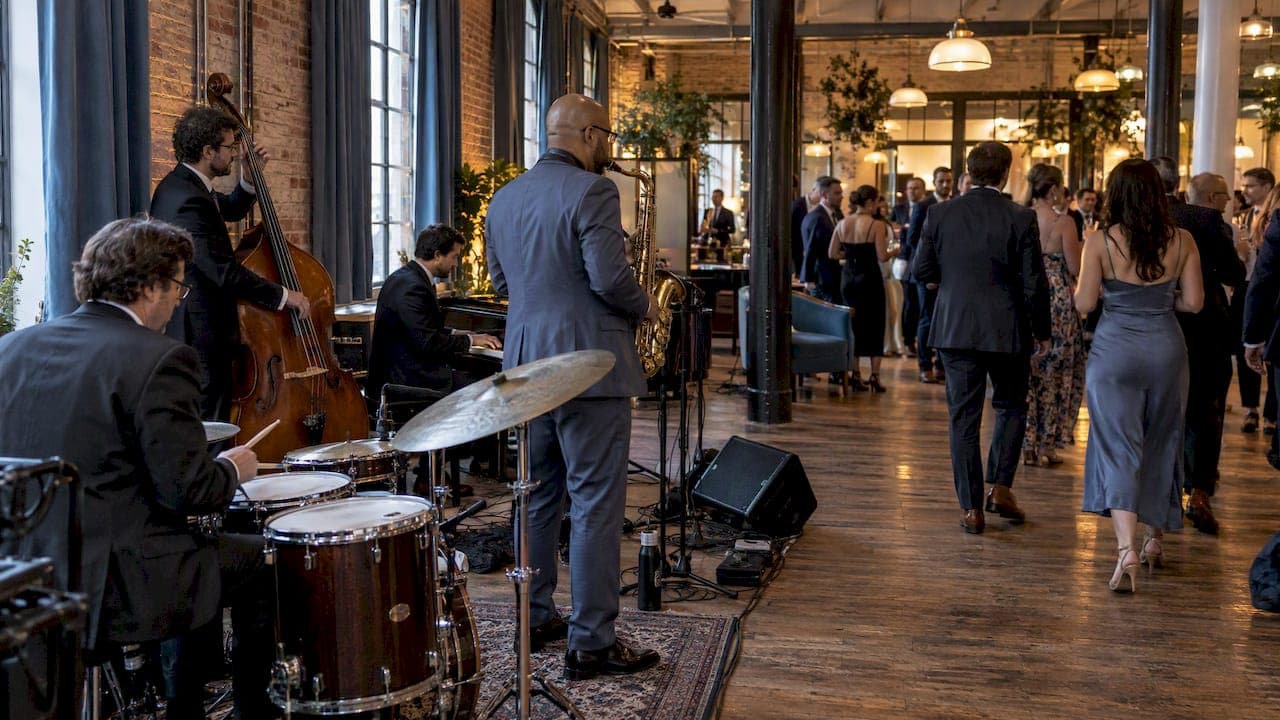
For large, dance-first after-parties a live band is usually the stronger choice, while small, intimate late-night gatherings often get better value from a DJ or a curated playlist. Expect live bands to cost more and need more lead time to book, with DJs and hybrid setups offering more flexibility on budget. The rest of this guide breaks down costs, timing, and exactly how to choose.
TL;DR:
- Live bands are recommended only for large, high-energy after-parties with more than 80 to 100 guests, where visual impact and sound projection are crucial.
- Costs for live wedding bands in 2026 typically range from $2,000 for small acts to over $10,000 for large ensembles, influenced by size, travel, and season.
- The biggest factor in a successful after-party is planning the transition; a poorly executed changeover can cause energy loss regardless of the band’s quality.
- Booking a band early, ideally six months in advance, and including clear timing for setup, teardown, and cues can prevent last-minute issues and save money.
- Coordinating music and logistics with your planner and vendors through a shared timeline ensures smooth transitions and maintains guest engagement after the reception.
Table of Contents
- Live band, DJ, playlist, or hybrid: which fits your after-party?
- When does hiring a live after-party band actually pay off?
- What does a live after-party band cost in 2026?
- How do you keep the after-party energy alive once the reception ends?
- How do you vet and book the right after-party band?
- What musicians who play after-parties want you to know
- What should your after-party setlist actually sound like?
- How do you coordinate your band with your planner and other vendors?
- How do you keep guests engaged once the after-party starts?
- What lighting and ambiance work best with a live band?
- The part of after-party planning most couples get wrong
- How we can help with your after-party music
- FAQ
- Sources
Live band, DJ, playlist, or hybrid: which fits your after-party?
Each option solves a different problem, and the right pick depends on your guest count, the vibe you want, and how much you're willing to spend on entertainment after the main event is officially over.
A live band brings visual energy and a sense of occasion that recorded music cannot replicate. Guests watch musicians perform, which naturally draws people to the dance floor and sustains excitement for longer stretches. The tradeoff is cost and setup time: bands typically need 30 to 60 minutes to load in and sound-check, and they charge more per hour than a DJ.
A DJ reads the room in real time, shifting tempo and genre based on how the crowd responds. For intimate after-parties under roughly 40 guests, a curated playlist on quality speakers can work just as well and costs almost nothing extra. For dance-focused events of any size, a DJ or live act is the better call because a DJ transitions energy in ways a static playlist cannot.
A hybrid setup, often a short live set followed by a DJ or playlist, lets couples capture live energy early in the night while controlling costs and performer fatigue later on.
Here's how the main options stack up by scenario:
- Under 40 guests, low-key vibe: a curated playlist or solo musician usually suffices.
- 40 to 120 guests, moderate dancing: a DJ or small 3 to 4-piece band fits best.
- 120+ guests, high-energy dance floor: a full live band, or a band-to-DJ hybrid, holds the crowd longest.
- Budget-conscious couples wanting live energy: book a short live set, then transition to a pre-built playlist.
Our live band versus DJ comparison walks through these tradeoffs in more detail if you're still deciding between the two.
When does hiring a live after-party band actually pay off?
A few concrete signals tell you whether the extra cost of a live band is justified, or whether you'd be paying for something your guests won't notice.
- Your guest count clears 80 to 100 people. Below that, a DJ or playlist usually delivers comparable energy at a fraction of the cost; above it, a band's visual presence and sound projection matter more.
- You want a genre-specific feel, like swing, Motown, or funk, that depends on live instrumentation and vocal harmonies rather than a recorded track.
- Your venue has an open floor or stage area that makes a band a visual focal point, not just background noise.
- Your reception musicians are already booked and available to continue, which can save on a second load-in and travel fee.
- You're hosting a standalone after-party at a separate venue where a DJ setup alone might feel thin for the room.
If none of these apply, a DJ or hybrid setup likely gives you more value for the same budget. If your reception band is willing to extend into the after-party, ask about it early. Our reception music page covers typical reception ensemble sizes and how continuity into a later set usually works.
What does a live after-party band cost in 2026?
Cost is the single biggest factor separating a live band from a DJ, and it scales fast with band size.
Live wedding bands average around $4,000 to $4,500 nationally in 2026, with a realistic range from about $2,000 for small acts to $10,000 or more for large ensembles, according to Paperlust's 2026 wedding band cost guide. A typical 4 to 7-piece reception band often falls between $3,000 and $8,000, per CostWhale's wedding band cost data. That range reflects just how much band size and instrumentation swing the final bill.
The biggest cost drivers are:
- Band size: a duo or trio costs far less than a 6 to 8 piece ensemble with horns or a full rhythm section.
- Travel distance: musicians traveling outside their home market typically add mileage or lodging fees.
- Sound equipment and engineering: a dedicated PA and sound engineer add a line item most couples don't anticipate.
- Overtime: extending a band's set past the contracted end time is billed at a premium hourly rate.
- Date and season: peak wedding months and Saturday dates command higher rates than off-peak Friday or Sunday bookings.
To control costs without losing live energy, consider a smaller ensemble, a limited-hours booking (a 90-minute live set instead of a full night), a Friday or Sunday date, or a hybrid approach where a DJ handles the bulk of the night and a band plays only the peak hour.
How do you keep the after-party energy alive once the reception ends?
The biggest risk to any after-party isn't the music choice, it's the dead air between the reception ending and the after-party starting.
Planners consistently point to a 20 to 40 minute gap as the moment most after-parties lose momentum, as guests wander off while vendors tear down and reset. According to The Aisle Wedding Directory's after-party planning guide, assigning a continuity person and pre-queuing music during that gap is one of the simplest ways to prevent the crowd from thinning out.
A few logistics choices make or break that transition:
- Assign one person, a coordinator, a friend, or your DJ, to run music continuously during setup and teardown.
- Pre-queue a 30 to 40 minute playlist that bridges the reception's last song and the after-party's first set.
- Set a clear finish time, commonly 2 a.m. or 3 a.m., which gives the night shape and keeps performance costs predictable.
- Confirm transportation in advance if guests are moving to a new venue, since a 20-minute shuttle wait can undo all the momentum you built.
- Check whether your venue requires a separate buyout for after-party hours, especially if the main event space has a hard cutoff.
Pro Tip: Book your after-party venue or buyout at least six weeks out where possible, and give your band or DJ a final briefing one week before the event so there are no surprises on song list or timing.
How do you vet and book the right after-party band?
A good band on a demo reel can still be the wrong fit if the contract leaves gaps. Use this as a starting checklist.
- Ask about setup and breakdown time. Most bands need 30 to 60 minutes on each end, which affects your venue's buyout window.
- Confirm PA and engineering. Find out whether a sound engineer is included or billed separately, especially for larger venues.
- Clarify overtime rates in writing. Know the exact per-hour cost if your night runs long before you need it.
- Ask what's included versus extra. Vendor meals, travel fees, and learning a special request song can all carry separate charges.
- Check the travel radius. Bands based outside a certain mileage often add a travel fee that isn't obvious from the quoted price.
Before signing, confirm these contract items directly:
- Cancellation and rescheduling terms
- Liability insurance (often required by venues)
- Overtime rate, stated as a dollar figure per hour, not a vague "additional fee"
- Gratuity expectations, if any
- Fees for learning a custom or non-standard song
When you brief the band, give them a sample top-20 song list, your preferred tempo and genre direction, and a short do-not-play list. That one document prevents more miscommunication than any contract clause.
What musicians who play after-parties want you to know
Having played both reception sets and the after-party hours that follow, a few patterns show up again and again that generic planning guides tend to skip.
The most useful negotiation happens at booking, not the week before the wedding. Ask about overtime rates and continuity options when you first sign, not when the night is already running long. Bands plan their stamina and set lists differently when they know in advance they're playing a longer night.
For intimate, conversation-friendly after-parties, a duo or trio keeps the room warm without overpowering a smaller space. For a dance-heavy crowd, a 4 to 6 piece band with a rhythm section and at least one horn or strong lead vocal carries a room far better than a trio stretched past its natural range.
A band that knows it's playing an after-party set plans differently than one booked only for a reception, in pacing, song choice, and stamina.
— Alex
What should your after-party setlist actually sound like?
Reception music and after-party music solve different problems, and treating them the same is one of the most common planning mistakes.
Editors covering after-party etiquette consistently advise shifting tempo or genre rather than replaying the reception set, since the late-night crowd wants something with more edge than cocktail-hour standards or first-dance ballads. A later, smaller crowd tends to respond better to higher-energy, danceable tracks: funk, Motown, current pop remixes, or genre-specific sets like swing or soul, depending on your crowd's taste.
A practical approach is to build a top-20 list split into two halves: the first ten songs ease guests from reception energy into dance-floor energy, and the second ten lean into peak-hour, high-tempo tracks once the floor is full. Save any sentimental or slow songs for the reception, not the after-party, where momentum matters more than sentiment.
If your band or DJ offers to learn a specific request, confirm whether that carries an extra fee, since custom arrangements are one of the most commonly missed line items in after-party contracts.
How do you coordinate your band with your planner and other vendors?
An after-party band rarely operates in isolation. Catering, venue staff, transportation, and lighting crews all need to sync with the same timeline, or the transition stalls.
Share your after-party timeline with your planner and band at the same time, not sequentially, so everyone works from one document. That timeline should flag the exact minute reception music ends, when teardown begins, and when the after-party's first song starts. If you're moving venues, your transportation vendor needs that same timeline to time shuttle departures against the band's own setup window.

Give your planner a single point of contact on the band's side, typically a bandleader or manager, so last-minute changes don't get lost between multiple people. If catering or bar service continues into the after-party, confirm with your venue whether sound levels or stage placement need to shift to accommodate staff movement.
The goal is one shared document and one point of contact on each side, not a string of separate conversations that can drift out of sync on the night itself.
How do you keep guests engaged once the after-party starts?
A great band can still lose a room if nobody invites guests onto the floor or signals that the party has shifted gears.
Have your band or DJ announce the transition clearly, a short "the after-party starts now" moment resets the room's energy and tells guests this is a new phase, not a continuation of dinner. Many bands build in a few audience-interaction moments, like calling out song requests or inviting guests to join a sing-along chorus, which works especially well with genre-specific sets like swing or soul.
Keep the dance floor visually inviting: good lighting, enough space, and a clear sightline to the band pulls people in instinctively. If your crowd skews toward conversation over dancing, consider a lounge-adjacent setup where the band plays nearby rather than isolating dancers in a separate room.
Simple cues work best: a bandleader who makes eye contact, calls a name, or dedicates a song to the newlyweds does more to pull reluctant guests onto the floor than any amount of volume.
What lighting and ambiance work best with a live band?
Sound carries the night, but lighting shapes how guests experience it, and a few adjustments make a real difference.
Warm, low lighting with a focused spot on the band creates a visual anchor that draws guests toward the music, while uplighting around the room keeps the space feeling intentional rather than dim. Avoid harsh overhead lighting on the dance floor itself, since it tends to flatten energy and make guests self-conscious about dancing.

If your venue allows it, string lighting or simple uplighting around the band's setup adds atmosphere without the cost of a full production lighting package. For outdoor or marquee venues, confirm with your planner whether the venue's own lighting needs supplementing, since after-party hours often run past daylight and into a darker, more intimate setting than your reception enjoyed.
Coordinate lighting cues with your band's set transitions where possible, dimming slightly for a slow number and brightening for a high-energy run, since that kind of pacing reinforces the mood shift your music is already creating.
The part of after-party planning most couples get wrong
Most after-party advice focuses on the music choice itself: band versus DJ versus playlist. That's the easy decision. The harder, more consequential choice is what happens in the 20 to 40 minutes between the reception ending and the after-party starting, and most couples don't plan for it at all.
A mediocre band with a tight transition plan will outperform a great band that leaves guests standing around during changeover. Lead time matters more than most couples assume too: booking a band five or six months out often means better rates and more availability than scrambling two months before the date.
If you take one thing from this guide, prioritize the transition and the finish time before you obsess over genre or band size. Those two logistics decisions shape the night's energy more than any single song choice will.
— Alex
How we can help with your after-party music
Live ensembles and hybrid DJ setups can be booked specifically for the transition from reception to after-party, so the momentum built earlier in the night doesn't stall during changeover. Whether you want an intimate jazz trio for a smaller late-night gathering or a fuller band-to-DJ hybrid for a high-energy crowd, ensemble size and set list can be tailored to your guest count and venue.
- Ceremony, cocktail hour, and reception music that can extend naturally into your after-party set.
- DJ & hybrid setups for couples who want live energy early and flexibility later in the night.
- Sample performance videos on our site so you can hear the sound before booking.
Reception sets often continue directly into after-party hours, which can sometimes avoid a second load-in fee. Our reception music page and DJ & hybrid music page outline what's included, and our cocktail hour music page covers earlier-event options if you're planning music for the full day. Reaching out to providers can help you figure out the right ensemble for your night.
FAQ
What do you call a party after a wedding?
It's commonly called an "after-party," a separate, often more casual celebration that follows the formal reception. Many couples treat it as its own event with a distinct music style and timeline rather than a simple extension of the reception, per Coastal Virginia Magazine's coverage of after-party planning.
What are the top wedding songs?
Top wedding song lists vary by source and change over time, and no single ranking is definitive. Rather than chasing a specific top three, most planning guides recommend building a set that shifts from reception favorites to higher-energy, danceable tracks once the after-party begins, as covered earlier in this guide.
How much do bands usually charge for weddings?
Live wedding bands average around $4,000 to $4,500 nationally in 2026, with a typical range from about $2,000 for small acts to $10,000 or more for large ensembles, according to Paperlust's cost guide. Band size, travel distance, and overtime are the biggest factors pushing a quote toward the higher end of that range.
What is the 30-5 rule for weddings?
This isn't a standardized or widely sourced wedding planning rule, so definitions of it vary and no authoritative source confirms a single meaning. If you've seen it referenced for timeline or budget planning, it's worth asking the original source directly what they mean rather than treating it as an industry standard.
Should I keep my reception band for the after-party?
If your reception musicians are available and willing, continuing with the same band can save on a second load-in fee and travel cost. It's worth asking at the booking stage, since not every band contracts for extended hours or late-night overtime rates.
Sources
- Wedding after-party planning: how to get it right - The Aisle Wedding Directory
- Wedding after-party ideas: complete planning guide (2026) | Pix Wedding
- How much does a wedding band cost? (2026 guide) - Paperlust
- A guide to wedding after-party planning and etiquette | Vogue