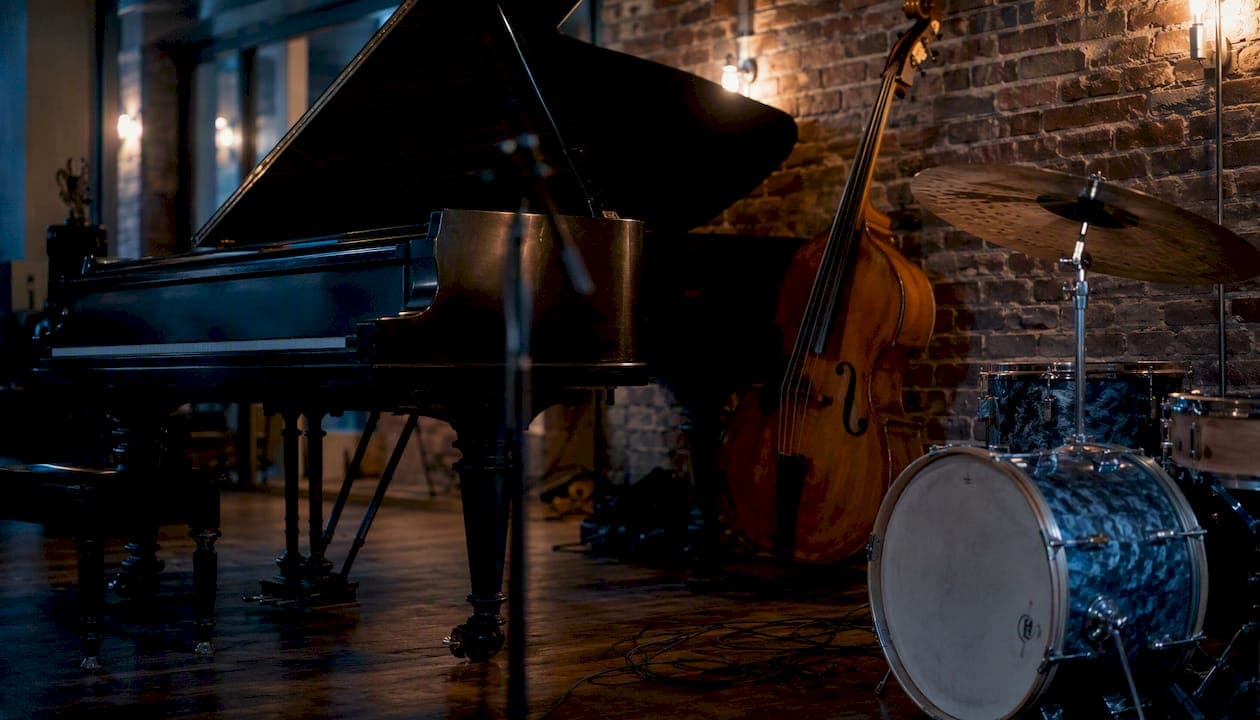
The standard jazz trio pairs piano (or another keyboard), double bass, and drums. That is the lineup you will hear most often at weddings, listening rooms, and hotel bars alike. Beyond it, a handful of variants get regular work: the organ trio, which swaps piano for a Hammond B-3 and uses its bass pedals in place of an upright; the guitar-led trio, built around guitar, bass, and drums; the horn-led trio, where a saxophone or trumpet takes the melody chair instead of a chordal instrument; and piano/guitar/bass, a drummerless format built for quiet rooms. The sections ahead break down what each instrument actually does, how bands stage themselves for tight interaction, and how to match a lineup to your room.
Key Takeaways
The standard jazz trio lineup pairs piano, double bass, and drums, with organ, guitar-led, and horn-led variants swapping instruments to change sound, volume, and venue fit.
| Point | Details |
|---|---|
| Core lineup | Piano, double bass, and drums split harmony, bassline, and rhythm across three players. |
| Common variants | Organ trio, guitar-led trio, horn-led trio, and piano/guitar/bass each shift the sonic center. |
| Stage formation matters | Oscar Peterson and Bill Evans setups trade acoustic blend for eye contact, or the reverse. |
| Amplification scales with room size | Small rooms often need no amplification; larger venues require careful amp placement and gradual volume checks. |
| Match lineup to event | Alexlevinmusic configures trio instrumentation around room size, repertoire, and stage constraints for weddings and corporate events. |
Table of Contents
- What makes up the core piano trio in jazz trio instrumentation?
- How do trio instruments divide melody, harmony, and rhythm?
- What are the common jazz trio variants and when do bands use them?
- How do you choose the right trio lineup for your event?
- How do trios set up on stage for tight communication?
- What can famous jazz trios teach you about instrumentation?
- What tuning and setup does each trio instrument need?
- How should each instrument be amplified or miked at an event?
- Why the right jazz trio instrumentation shapes the whole event
- Book a jazz trio built around your event, not a generic set list
- Sources
What makes up the core piano trio in jazz trio instrumentation?
Piano, double bass, and drums split three jobs almost every song needs: harmony, low end, and time. The piano covers chords and melody at once, comping under a soloist with left-hand voicings while the right hand fills space or takes the lead. Many players switch between an acoustic grand, an upright, or a digital keyboard depending on the room. A keyboard travels easier and skips tuning problems entirely, but it rarely matches the dynamic range of a real piano in a listening room.
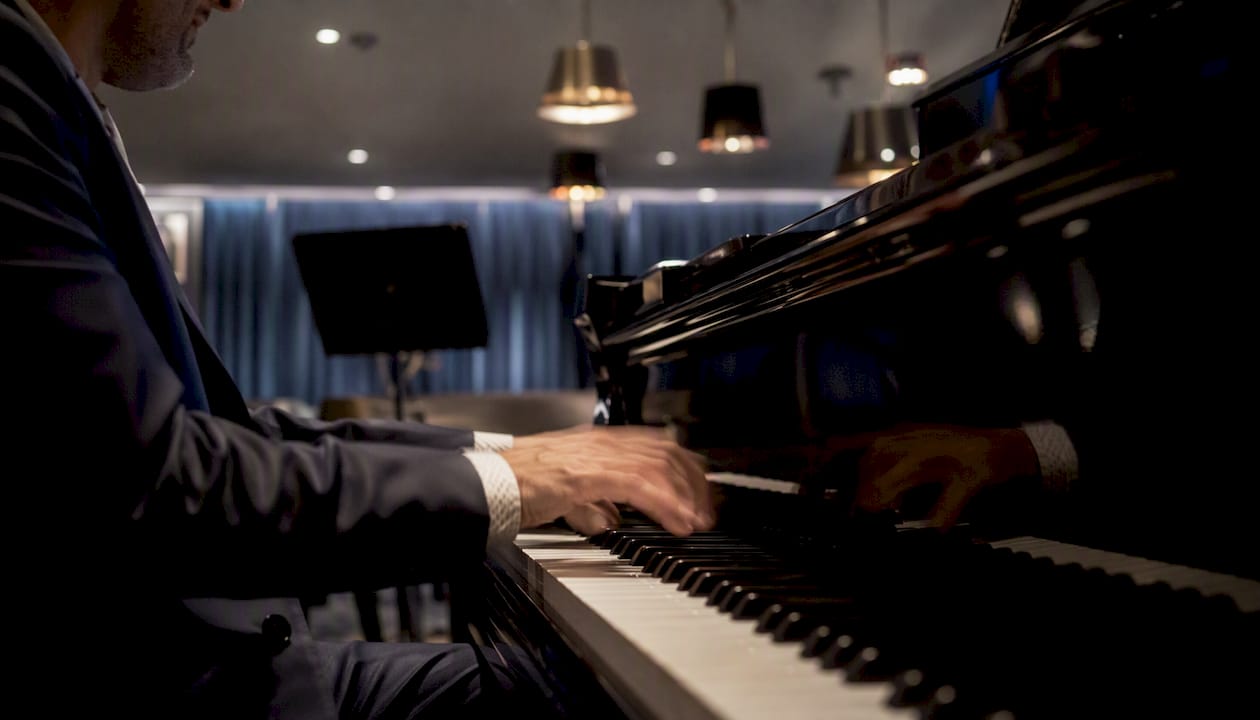
The double bass anchors everything. Its walking lines mark harmonic movement and pulse at once, which is why so much jazz composition assumes a bass player is quietly doing math in real time. Electric bass shows up often on louder gigs, funk-leaning sets, or stages too small for an upright's footprint. It projects more easily through a PA but loses some of the woody attack that defines classic swing.
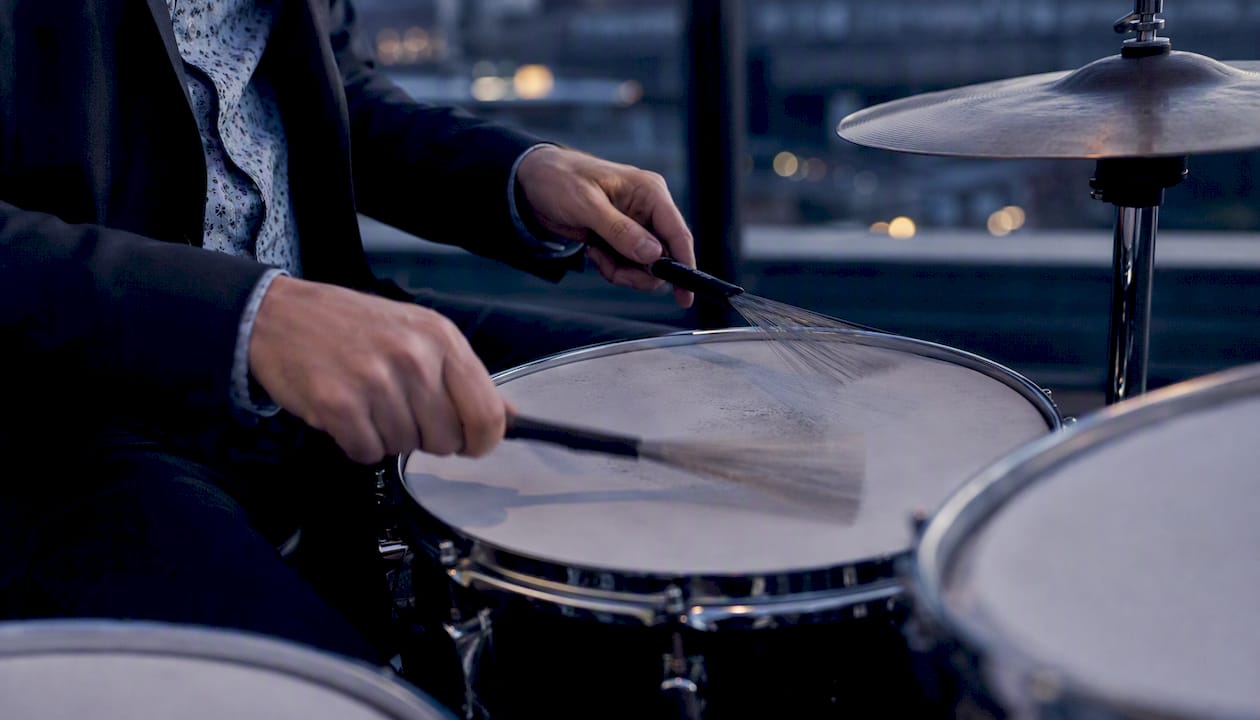
Drums supply timekeeping plus color: brushes on a ballad, ride-cymbal patterns on a swing tune, rimshots and hi-hat work that shade a solo without stepping on it. Small-group drummers typically favor a compact kit, often just kick, snare, ride, and hi-hat, sized to the room rather than the arena.
Pro Tip: For a cocktail hour or dinner set where volume needs to stay low, lean acoustic (upright bass, real piano) — it blends into conversation. For a dance-forward set or a larger hall, electric bass and a keyboard rig give you more control over volume without losing the groove.
How do trio instruments divide melody, harmony, and rhythm?
Every trio instrument juggles more than one job. Piano supplies harmony and can double as a second bass voice in left-hand voicings. Bass carries the bassline and doubles as a rhythmic partner to the drummer. Drums drive time but also shape dynamics, swelling under a bridge or dropping to a whisper behind a ballad melody. Melody, meanwhile, gets passed around: piano states the tune's head, then hands it to whoever solos next.
A typical tune moves through a few clear stages:
- The head — piano (or the lead instrument) states the melody once or twice through.
- Comping under solos — the rhythm section thins out to support whoever is improvising.
- Trading fours — soloists exchange four-bar phrases, often piano against drums, to build energy.
- Bass introductions — many standards open with a bassist alone, setting tempo and key before the band enters.
Pro Tip: Making room for a soloist is less about playing less and more about playing smarter. Simplify your comping rhythm, thin your voicings to two or three notes, and drop your volume a notch. That single adjustment does more for a soloist than laying out entirely.
What are the common jazz trio variants and when do bands use them?
Piano trios are the default, but plenty of working bands build around a different center of gravity, and the choice usually comes down to volume, repertoire, and room size.
The organ trio replaces piano with a Hammond B-3, and the organist plays basslines with the instrument's foot pedals or lower manual, which frees the third chair for guitar or saxophone. That setup fits funk, blues, and soul-jazz repertoire, and it demands a Leslie speaker cabinet and a bit more floor space and mic attention than a piano would.
Guitar-led trios (guitar, bass, drums) skip the chordal keyboard altogether and lean on the guitarist for both melody and harmony. They travel lighter, fit tighter stages, and often work well for cocktail-hour gigs where a piano isn't available on-site. A close cousin, the piano/guitar/bass trio, drops drums entirely for a quieter, more intimate texture, useful in small dining rooms or ceremony settings.
Horn-led trios put a saxophone or trumpet in the melody chair instead of piano or guitar, backed by bass and drums. These lean toward listening-room sets and featured-soloist moments rather than background music, since a horn without a chordal instrument behind it needs the room's attention.
Electric instrumentation, meaning electric bass, electric piano, or a Fender Rhodes, shows up when a band wants a soul-jazz or fusion edge. It raises the volume ceiling and changes the genre lane entirely.
Quick matching guide:
- Dining background: guitar-led or piano/guitar/bass, kept quiet and acoustic.
- Cocktail hour: classic piano trio, moderate volume, standards-heavy.
- Danceable sets: organ trio or electric rhythm section for groove and punch.
- Full listening sets: horn-led trio or piano trio, prioritizing dynamics over background function.
How do you choose the right trio lineup for your event?
Start with the room. A 40-guest reception in a hotel ballroom needs different instrumentation than a backyard ceremony or a 300-person gala. Ask these questions before booking:
- How large is the space, and is it carpeted, hard-floored, tented, or outdoors?
- Do you need background music guests can talk over, or a set people will actually watch?
- What repertoire matters most (standards, Latin, pop arrangements, holiday music)?
- What are your stage and power constraints, and how far will musicians need to travel gear?
Amplification needs scale with room size and lineup. An upright bass and acoustic piano can often go unamplified in a small room, while an organ trio or electric rhythm section usually needs a PA and a bit of sound-check time to blend properly, a detail worth reviewing with our guide to jazz trios in restaurant venues.
As a rule of thumb: pick a piano trio for weddings and upscale dinners, an organ trio for a bar or lounge vibe, and a guitar-led trio when stage space or budget is tight.
How do trios set up on stage for tight communication?
Two stage formations dominate piano-trio setups, and each trades off differently. In the Oscar Peterson (OP) setup, the pianist sits at an angle with their back partly to the audience, tucked close to bass and drums for maximum proximity. In the Bill Evans (BE) setup, the pianist faces the other two players directly, prioritizing eye contact over acoustic tightness, a tradeoff JazzTimes breaks down in detail. Neither is objectively better. OP favors blend; BE favors visual cueing.
Whatever the formation, musicians and educators agree that keeping instruments close enough to see and hear each other clearly is what makes trios responsive in real time, especially during unplanned tempo shifts or a sudden key change mid-tune.
A studio session captures this tradeoff well. Producers who've recorded trios live note that placing musicians close together for a live take captures more room interaction and spontaneity, while isolating instruments gives an engineer more control in the mix. Live gigs almost always favor the close, interactive arrangement.
Pro Tip: If an electric instrument is in the mix, angle the amp toward the player rather than the audience, and set volume with the full trio playing, not solo. It's the fastest way to avoid one instrument swallowing the other two mid-set.
What can famous jazz trios teach you about instrumentation?
- Bill Evans Trio: Built the template for interactive, conversational piano trios where bass and drums respond to the pianist in real time rather than just keeping time behind him.
- Oscar Peterson Trio: Prioritized virtuosic drive and tight ensemble blend, with the OP stage formation named after this group's approach.
- Vince Guaraldi Trio: Proved that a compact piano trio could carry an entire soundtrack (the Peanuts holiday specials), showing how far a simple lineup stretches.
- Small-group formats more broadly, from the Modern Jazz Quartet to Miles Davis's combos, show how swapping one instrument reshapes a group's whole identity.
If you're hiring a trio modeled on any of these, expect a group built around interaction and dynamics rather than a fixed set list played the same way twice.
What tuning and setup does each trio instrument need?
Piano is the one instrument a trio usually can't tune itself. A venue's grand or upright needs a technician's visit beforehand if it hasn't been touched recently, since temperature and humidity swings pull strings flat within days. Digital keyboards skip this problem but need a soundcheck to match their output level to the room.
Double bass gets tuned by ear or with a clip-on tuner before every set, and its four strings (E, A, D, G) drift more with temperature changes than most instruments, especially outdoors. Bassists traveling to a gig usually budget extra time for this alone.
Drums need less tuning in the pitch sense and more in the tension sense. Heads get adjusted for the room: tighter for a bright, cutting sound in a large hall, looser for a warmer tone in a small, absorptive space. Brushes replace sticks almost automatically once a set turns to ballads.
Organ trios add a wrinkle: the Hammond B-3 and its Leslie speaker cabinet need time to warm up and enough floor space to vent properly. Electric guitar and bass need a tuner check between sets, since string tension shifts under stage lights and travel.
None of this is exotic, but it explains why an experienced trio arrives 30 to 60 minutes before a set. Setup time is instrumentation time.
How should each instrument be amplified or miked at an event?
Room size decides almost everything here. In a small dining room or an intimate ceremony, acoustic piano and upright bass often need no amplification at all, just enough quiet from the crowd to carry naturally. Drummers in that setting typically switch to brushes and a smaller kit to stay in balance.
Larger rooms and outdoor events change the math entirely. Careful amp placement and gradual volume setting matter most for electric bass, electric piano, or guitar, since a rig set at soundcheck alone often reads too loud once a room fills with bodies that absorb sound. Placing amps slightly behind the player, angled inward rather than blasting straight at the audience, helps electric instruments sit inside the mix instead of on top of it.
Double bass in a mid-size venue usually gets a single mic or a pickup run through a small amp, just enough to compete with a drum kit and piano without losing its natural tone. Piano, if amplified, often takes a mic near the soundboard rather than a DI signal, which preserves more of its dynamic range.
Recording engineers take this further, often using a mix of ribbon and condenser microphones on piano, bass, and drums to capture both direct detail and room ambiance. A live event doesn't need that level of complexity, but the underlying goal is the same: balance without burying anyone in the mix.
Why the right jazz trio instrumentation shapes the whole event
Instrumentation isn't a cosmetic choice. It decides whether guests can hold a conversation during dinner or whether a room turns to watch a solo, and it decides how easily a trio can flex from quiet ceremony music into an energetic later set. I've seen how the difference between an organ trio and a piano trio changes a room's entire temperature within a single song. Explore sample performances on the Alexlevinmusic site to hear that difference for yourself.
Book a jazz trio built around your event, not a generic set list
Alexlevinmusic offers something a lot of event hosts don't realize they can ask for: a trio configured specifically around your room, your guest count, and your repertoire wishes, rather than a fixed act that plays the same setup everywhere.

That means a piano trio for a quiet ceremony, an organ-flavored group for a lounge-style reception, or a guitar-led trio when stage space is tight, all pulled from the same roster instead of forcing your event into someone else's default lineup. If a venue partner is coordinating logistics, resources like Lost and Found's venue hire guidance can help you plan the room itself while Alexlevinmusic handles the music. Visit the services page to see trio options for weddings, corporate events, and private parties, and reach out with your repertoire preferences, stage footprint, and amplification needs so the right lineup gets booked before your date fills up.
Sources
- Jazz trio — Wikipedia
- Set & setting in the combo room — Jazz Education Network
- OP vs. BE: Setting Up the Piano Trio — JazzTimes
- Jazz rhythm section setup - amplified instruments — Jazz Workshop Australia
- Recording a Jazz Trio Live at Salvation Studios — Produce Like A Pro
Listen for Bill Evans's Sunday at the Village Vanguard, Oscar Peterson's We Get Requests, and Vince Guaraldi's A Charlie Brown Christmas to hear these lineups in action.