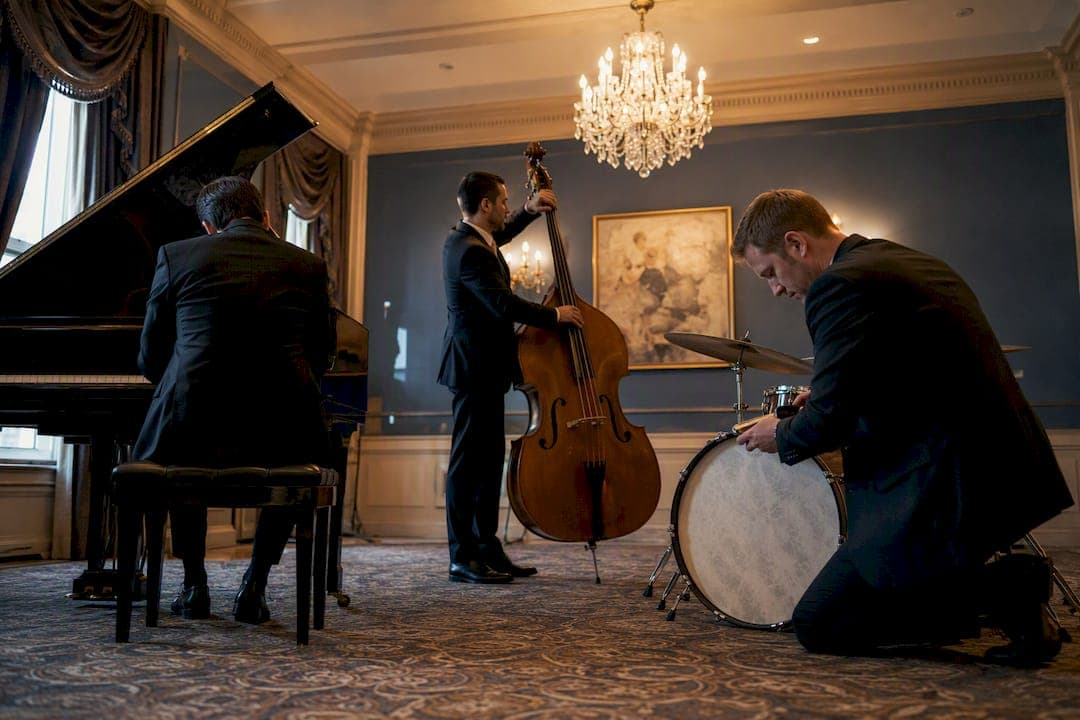
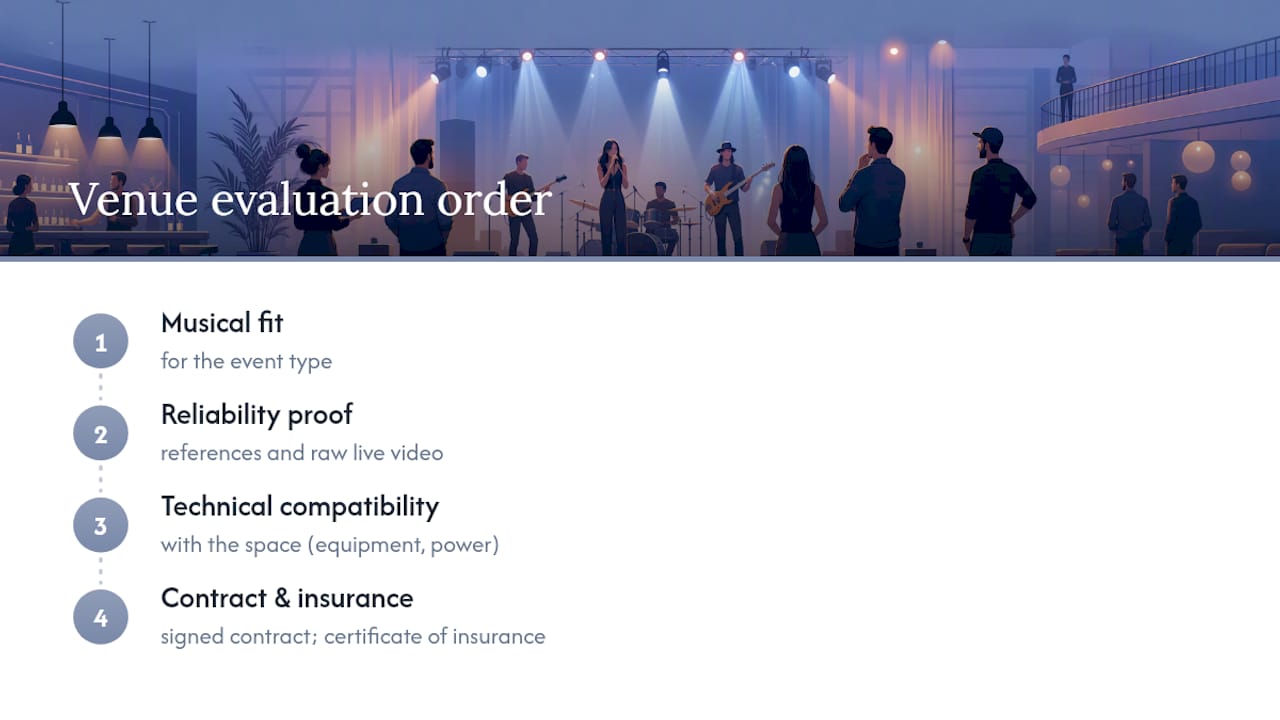
Venues and hosts judge live performers on four things: musical fit for the event, proven reliability, technical compatibility with the space, and clean paperwork. A trio that nails a jazz brief but shows up without a certificate of insurance or a technical rider isn't ready to book. These four checks decide most booking outcomes because they cover the three ways a performance can fail: wrong sound, unreliable people, or logistics nobody planned for.
- Musical fit: genre, energy, and pacing match the event
- Reliability: references, communication speed, backup plan
- Technical fit: power, stage space, soundcheck window (often 30 to 60 minutes)
- Paperwork: signed contract, deposit terms, proof of insurance (COI)
- Recent raw video, not just polished promo reels
- A clear, itemized price quote before you sign anything
Key Takeaways
Booking a reliable live performer comes down to verifying musical fit, checking references and raw footage, confirming technical logistics, and locking contract terms before paying a deposit.
| Point | Details |
|---|---|
| Demand raw footage | Ask for recent, unedited live video instead of polished promo reels to judge true performance energy. |
| Confirm technical needs early | Get a written technical rider covering power, stage size, and a 30 to 60 minute soundcheck window. |
| Lock paperwork before deposit | Require a signed contract with deposit, cancellation terms, and a COI on request. |
| Book with lead time | Reserve popular dates 8 to 14 months ahead; niche acts may need up to two years. |
| Alexlevinmusic provides documentation upfront | Alexlevinmusic supplies technical riders, insurance certificates, and recent raw clips as standard before booking. |
Table of Contents
- Quick Checklist: 8 Things to Verify at First Contact
- What Each Hiring Criterion Actually Means
- Logistics and Contract Items to Lock Down Before Signing
- When to Book and What Drives the Price
- How Alex Levin Music Reads a Brief
- Book a Vetted Performer Without the Guesswork
- Where to Go Next for Sample Media and Booking
- Frequently Asked Questions
- Sources
Quick Checklist: 8 Things to Verify at First Contact
Before you get deep into negotiations, run every candidate through this list. It takes ten minutes and eliminates most of the wrong fits fast.
- Availability — confirm the exact date and event window, not just "the weekend."
- Repertoire fit — ask for a set list matching your event type; reject vague answers.
- Sample footage — request recent, raw live video, not a three-year-old highlight reel.
- Insurance — a COI should be available on request, no excuses.
- Technical rider — ask for their equipment list and load-in requirements upfront.
- Set structure — confirm set lengths and break timing (60 to 90 minutes per set is standard).
- Backup plan — ask what happens if a member gets sick.
- Written quote — get an itemized price breakdown, not a round number.
Pro Tip: Ask for footage from an event similar to yours in size and formality. A wedding reception clip tells you little about how a group handles a corporate awards dinner.
What Each Hiring Criterion Actually Means
"Musical fit" gets used loosely, and it costs people bookings that look great on paper but feel wrong on the night. Here's what each criterion really measures, and how much weight to put on it depending on what segment of your event you're staffing.
Musical fit means genre alignment plus reading a room, not just knowing the right songs. A jazz trio that plays a beautiful ceremony processional might completely misjudge the energy needed for a reception dance floor. Weight this heaviest for ceremony and reception segments, where the wrong tone is impossible to fix mid event.
Repertoire depth is often oversold. A group that lists 400 songs isn't automatically better than one with 150. Pacing matters more than volume: how a group builds and releases energy across a set. Ask how they'd sequence cocktail hour into dinner into dancing, and listen for a plan rather than a song list.
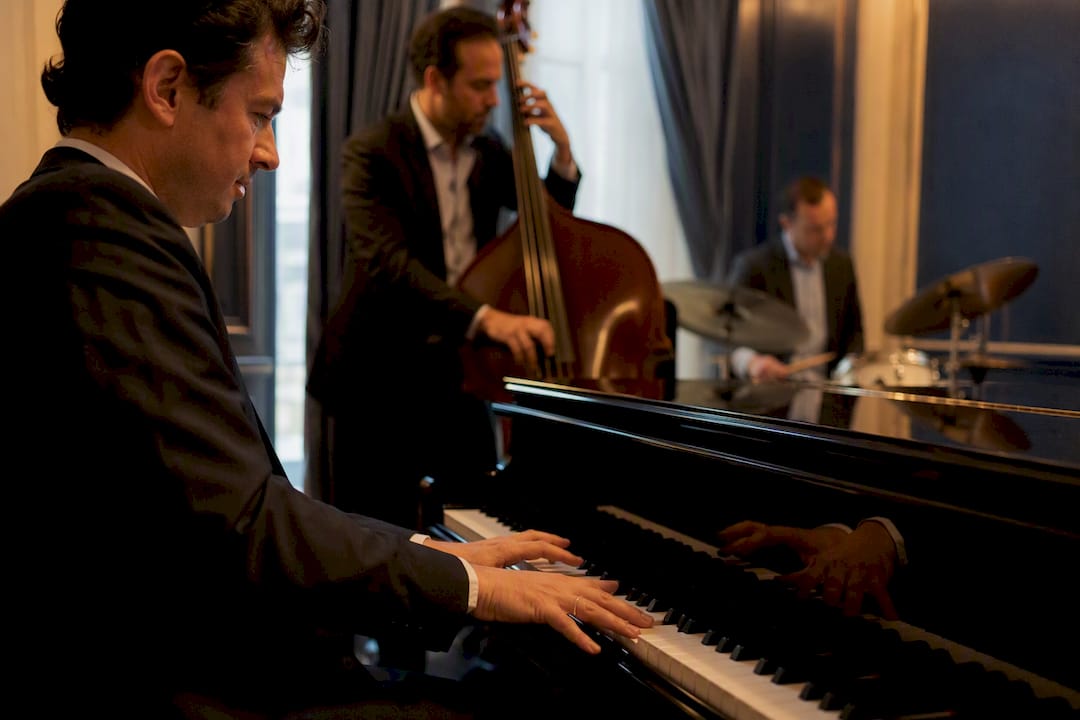
Experience with your event type carries different weight depending on format. A band excellent at weddings may struggle at a corporate awards show, because corporate formats often demand handling many short stage cues between speeches and award announcements, not long uninterrupted sets. If you're planning a gala, ask specifically about experience working with a showcaller.
Reliability and communication show up long before the event, in how fast someone answers an email and how clearly they answer specific questions. Vague answers to direct questions are the earliest warning sign you'll get.
Equipment and technical readiness matter more for outdoor and unconventional venues than for a well-equipped ballroom. A technical rider should list every power and space requirement in writing.
Cost should be evaluated last, not first, because a cheaper act that requires more of your own equipment or troubleshooting time often ends up costing more.
Statistic to plan around: PA installation typically takes two to three hours, with soundcheck adding another 30 to 60 minutes at full volume. Build that into your venue access schedule, not just the performance window.
One misunderstanding trips up a lot of first-time buyers: studio recordings are marketing, not evidence. A polished video tells you a group can sound good in a controlled environment. It tells you nothing about how they handle feedback, a drunk best man grabbing the mic, or a room that's louder than expected.
Logistics and Contract Items to Lock Down Before Signing
Confirm these details in writing before a deposit changes hands. Nail down noise limiters and power requirements early; many venues run decibel meters that will cut power mid-song if a limit is exceeded, and that's not a conversation you want happening during the first dance.
- Stage footprint and load-in route, including stairs or elevator access
- Power circuits available near the performance area
- Who provides the PA and who runs sound during the event
- Soundcheck timing, confirmed against the venue's own access schedule
On the contract side, confirm the deposit amount and due date, cancellation and postponement terms, overtime rates for lengthy events, documented backup musician arrangements, and provisions for meals or breaks on longer bookings.
| Item | What to Request | Acceptable Minimum |
|---|---|---|
| Technical rider | Full equipment and power list | Provided in writing before deposit |
| Insurance | Certificate of insurance (COI) | Available on request, no delay |
| Soundcheck window | Confirmed start time | 30 to 60 minutes at full volume |
| Cancellation terms | Written policy in contract | Specific dates and refund percentages |
| Backup plan | Named substitute or agency policy | Documented, not verbal only |
When to Book and What Drives the Price
Booking timing and pricing follow a predictable pattern once you know what to look for.
- Shortlist candidates 10 to 12 months out for a popular date.
- Confirm and pay a deposit as soon as you've verified references and paperwork.
- Lock final set details and the one-page brief 4 to 6 weeks before the event.
- Reconfirm logistics with the venue and performer one week out.
For high demand dates, book several months ahead; niche acts may require much earlier booking. Price mainly reflects ensemble size, travel distance, date popularity, set length, and whether you need custom arrangements or extra equipment rental. A vague, non-itemized quote is a red flag on its own. Ask for a line-item breakdown before comparing offers.
How Alex Levin Music Reads a Brief
When a brief lands on my desk, I look for the same four things this article covers: what the event actually needs musically, how firm the schedule is, what the venue's technical constraints are, and whether the client has thought through backup contingencies. A clear, specific brief gets a faster, more accurate quote every time.
My best advice to buyers: share a run-of-show with cue points listed separately, not folded into a paragraph. Confirm the venue's noise limiter value before we finalize the setlist. And ask for our documentation early. We keep a standard packet, technical rider, COI, and recent raw clips, ready to send the moment you ask.
Book a Vetted Performer Without the Guesswork
Alexlevinmusic already builds every booking around the four checks this article walks through. Every quote comes with a written technical rider, a certificate of insurance available on request, and a contract that spells out deposit and cancellation terms before you sign anything.
Ensembles range from solo piano and jazz trios to full string quartets and hybrid DJ setups, matched to your ceremony, cocktail hour, or reception rather than sold as one-size-fits-all packages. Corporate organizers planning a gala or awards dinner can see how sets get structured around speeches and cues on the corporate event entertainment page. Couples comparing ensemble types for a ceremony or reception can browse options directly on the soloists and ensembles page. Request a quote today and get an itemized breakdown along with sample video from a recent, comparable event, no vague promises, just documentation you can actually check.
Where to Go Next for Sample Media and Booking
These resources back the guidance above and give you a direct path to sample media and quotes.
- Questions to ask a wedding band before booking — raw footage evaluation and lead-time benchmarks.
- Choosing the right musician for your event style — matching genre and format to your event.
- From booking to encore — what a professional documentation packet includes.
Frequently Asked Questions
What do venues check first when evaluating a live performer? Musical fit for the event type, followed by proof of reliability like references and raw video, then technical compatibility with the space, and finally contract terms and insurance.
How far in advance should I book a live performer? Book 8 to 14 months ahead for popular dates; niche acts or highly specialized ensembles may require up to two years of lead time.
Should I trust a performer's promotional video? Treat polished promo videos as marketing. Ask specifically for raw, recent live footage to judge tempo stability, transitions, and crowd reading ability.
What paperwork should I require before paying a deposit? A signed contract with deposit and cancellation terms, a certificate of insurance, and a technical rider listing equipment and power needs.
How long does a typical soundcheck take? PA installation generally takes two to three hours, with a full soundcheck adding another 30 to 60 minutes at full volume.
Sources
Ask every candidate the same pointed questions, and pay attention to how directly they answer:
Raw live footage reveals things polished videos hide: tempo stability, how the group reads audience energy, how clean the transitions between songs are, and whether there's audible mic bleed or feedback. Watch specifically for how a group recovers from a flat moment. That's the real test, not how tight the first thirty seconds sound.
Red flags worth walking away from: no footage newer than a year or two, a lineup that changes between the video and the quote, references who sound vague or hesitant, and any resistance to providing a COI. None of these are dealbreakers in isolation, but two or more together mean you should keep shopping.