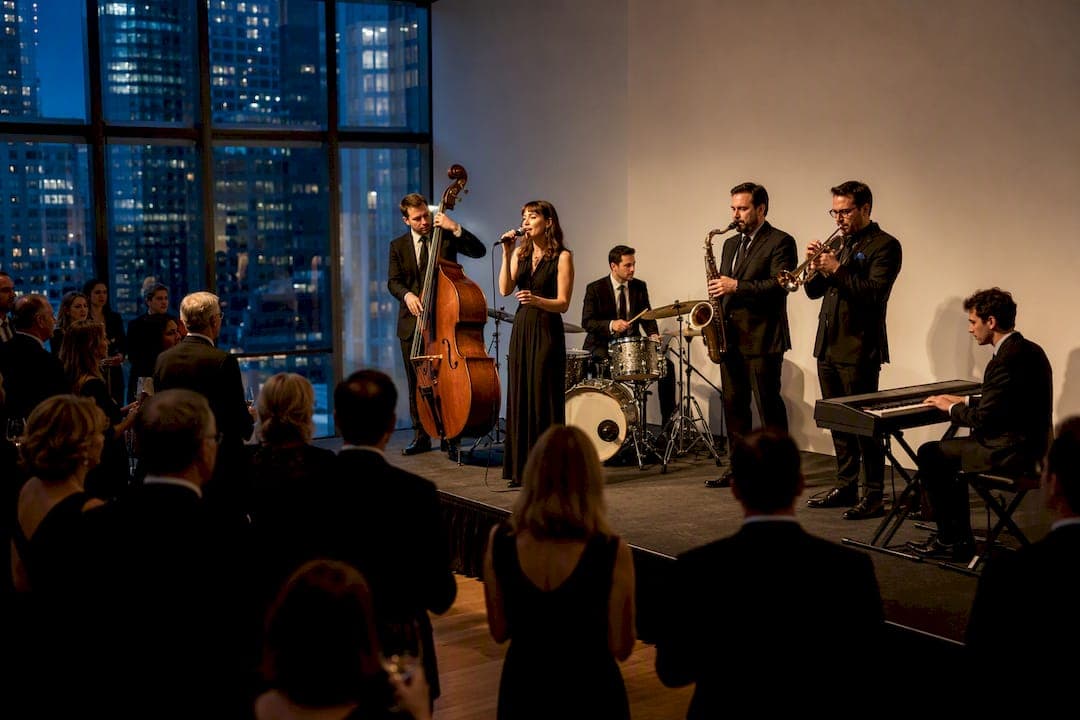
For about 150 guests, a 5 to 7 musician band is the practical sweet spot. A 5 to 6 piece delivers full sound with a refined presence for seated dinners and moderate dancing; a 7 to 9 piece with horns adds the party energy a bigger ballroom or high-energy crowd demands. The right pick depends on your room, your dance floor, and how loud you want the night to get.
TL;DR:
- A six-piece band is typically optimal for a 150-guest reception, providing a full sound without requiring excessive stage space or complicated logistics.
- For larger or high-energy events, a seven to nine-piece band with horns enhances dancefloor energy and offers more musical variety.
- Venue acoustics, stage size, dancefloor, and event vibe significantly influence whether a smaller or larger lineup will best suit the occasion.
- Additional musicians and horns add cost, requiring careful planning around travel, gear, and performance hours, with hybrid DJ options as cost-effective alternatives.
- Booking one versatile ensemble for ceremony, cocktail, and reception phases reduces costs and transition issues, while visual presence impacts guest perception more than raw size.
Table of Contents
- What Band Size Works Best for 150 Guests?
- How Do You Choose the Right Band Size for Your Event?
- What Instruments Should a 5 to 9 Piece Band Include?
- What Stage Setup and Sound Gear Does the Band Need?
- How Much Does a Live Band Cost for 150 Guests?
- Should Ceremony, Cocktail Hour, and Reception Use the Same Band?
- What Do Bands Wish Every Planner Knew?
- How Alex Levin Music Fits a 150-Guest Celebration
- Sources
What Band Size Works Best for 150 Guests?
Most professional wedding bands average around six musicians, and that number is not an accident. Six players give you a rhythm section, vocals, and enough harmonic texture to sound full in a room without a wall of extra staging. For a 150-guest reception, that's usually the starting point, not the ceiling.
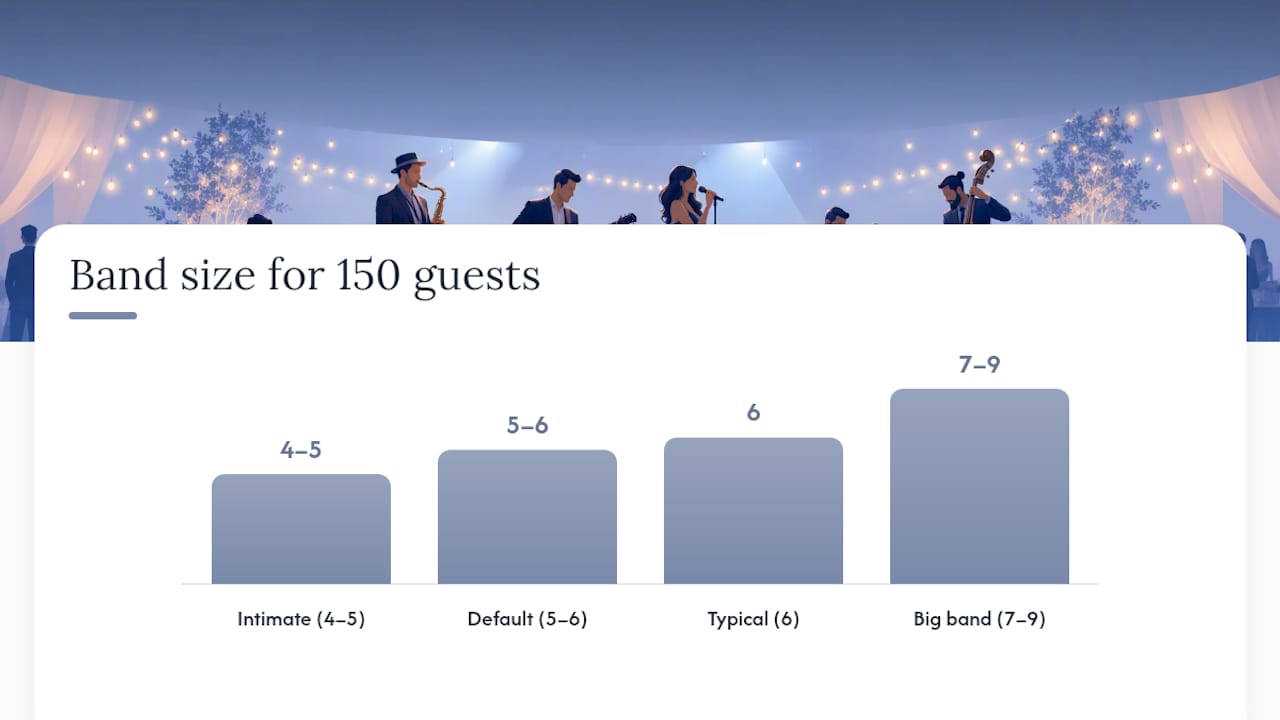
Industry guidance is consistent on the range: a 4 to 5 piece ensemble suits receptions of roughly 75 to 150 guests, while crowds pushing past that count often move to a 7 to 10 piece show band with brass and backup vocals for fuller energy. Other planning resources draw the line similarly, recommending a 5 to 6 piece for under 150 guests and at least a 7 piece once you cross into the 150 to 200 range.
Here's how that breaks down in practice:
- 4 to 5 piece: works for intimate, mostly-seated events where the room has a strong house sound system already in place.
- 5 to 6 piece: the default recommendation for 150 guests, balancing cost, stage footprint, and full-band sound.
- 7 to 9 piece: worth the upgrade for a ballroom, a multigenerational crowd that wants variety, or a couple set on horn-driven sets and a bigger dance-floor push.
If your guest list skews younger and dance-focused, lean toward the larger end. If it's a dinner-heavy, conversation-friendly night, the smaller lineup will carry the room just fine.
How Do You Choose the Right Band Size for Your Event?
Guest count sets the range, but five other factors narrow it down to the right number for your specific night.
- Venue acoustics. A room with hard floors, high ceilings, and minimal soft furnishing amplifies sound naturally, letting a smaller band read as full. A carpeted ballroom with heavy drapery absorbs energy, and you'll want more players to compensate.
- Stage footprint. Every added musician needs floor space, and horn players need elbow room to move. Tight stages favor leaner lineups.
- Dance-floor size. A packed dance floor pulls energy from a band; a large, half-full floor needs a bigger sound to fill it.
- Desired vibe. Background ambiance for cocktail conversation is a different job than driving a full dance floor for three hours. Match the lineup to the job.
- Budget and production complexity. More musicians means more travel costs, more stage gear, and often a longer load-in window.
Pro Tip: Walk the room before you book. If you can already picture where the horn section stands and where the dance floor starts, you've picked the right size.
Event-size guides consistently tie entertainment format to audience size and venue goals, and a 150-guest reception sits right at the tipping point where band size decisions actually matter.
What Instruments Should a 5 to 9 Piece Band Include?
Lineup composition changes the character of the night more than headcount alone. Here's what typically works at each size:
- 5-piece: vocals, guitar, keys, bass, and drums. This core rhythm section handles everything from jazz standards to modern pop covers, and it shines in rooms under 150 guests or for events where conversation matters as much as dancing.
- 6-piece: the 5-piece core plus a saxophone or a second vocalist. That extra voice fills out ballads and gives dance sets a sharper edge without adding much stage footprint.
- 7 to 9 piece: adds a horn section (trumpet, sax, sometimes trombone) and often a second lead vocalist. This is the show-band configuration for big rooms and high-energy crowds, built for a 150-plus guest reception that wants to feel like an event, not a background track.
Multi-genre flexibility matters more than raw size. A well-rehearsed 6-piece with strong vocal coverage often outperforms a bigger band with weaker singers.
What Stage Setup and Sound Gear Does the Band Need?
Confirm these details with your venue and your band well before the event:
- A 5 to 6 piece band typically needs a stage or clear floor area of roughly 12 by 8 feet; a 7 to 9 piece with horns needs closer to 16 by 12 feet, plus clearance for monitors.
- Smaller bands can often run through a strong in-house PA system; larger horn sections usually need dedicated reinforcement to avoid muddying the mix.
- Ask about load-in windows, mic stand counts, monitor needs, and any venue sound curfews well ahead of the wedding day.
- Loop in your venue coordinator and other vendors early so the band's setup time doesn't collide with catering or photography schedules.
Event producers who specialize in staging note that a band's visual presence directly affects guest attention and perceived value, so don't tuck a great band into a corner where nobody can see them play.
How Much Does a Live Band Cost for 150 Guests?
Pricing swings widely based on musician count, travel distance, and how many hours you book.
- Smaller ensembles (4 to 5 pieces) generally cost less than larger show bands, since you're paying fewer players and less production overhead.
- Bigger lineups (7 to 9 pieces) cost more, driven by additional musicians, gear transport, and often union or scale-based labor rates.
- Travel distance, total performance hours, and any specialty instrumentation (horns, extra vocalists) are the biggest line-item cost drivers.
Where the money actually goes: most quotes break down into musician fees, travel, sound gear rental, and hours booked. Ask your band to itemize each before you compare quotes side by side.
A hybrid DJ-plus-live model is one practical way to trim cost without losing the live-music feel. Full band for the first sets, DJ for the late-night stretch, is a common compromise that keeps the energy high while managing the budget.
Should Ceremony, Cocktail Hour, and Reception Use the Same Band?
Each phase of the day asks something different from your musicians, and planning for that upfront saves money and hassle.
- Ceremony: a reduced or acoustic lineup (often just piano, guitar, or a string duo) usually works fine, paired with a small standalone PA.
- Cocktail hour: background music calls for a lighter touch, whether that's a trio or a soloist, saving the full band's energy for later.
- Reception: this is where the full lineup earns its keep, with sets sequenced to build energy toward the dance floor.
Booking one flexible ensemble across all three moments, rather than swapping vendors, usually cuts changeover time and avoids paying separate setup fees. Some of the most memorable reception moments happen when the band transitions smoothly from dinner music into the first dance without a hard stop.
What Do Bands Wish Every Planner Knew?
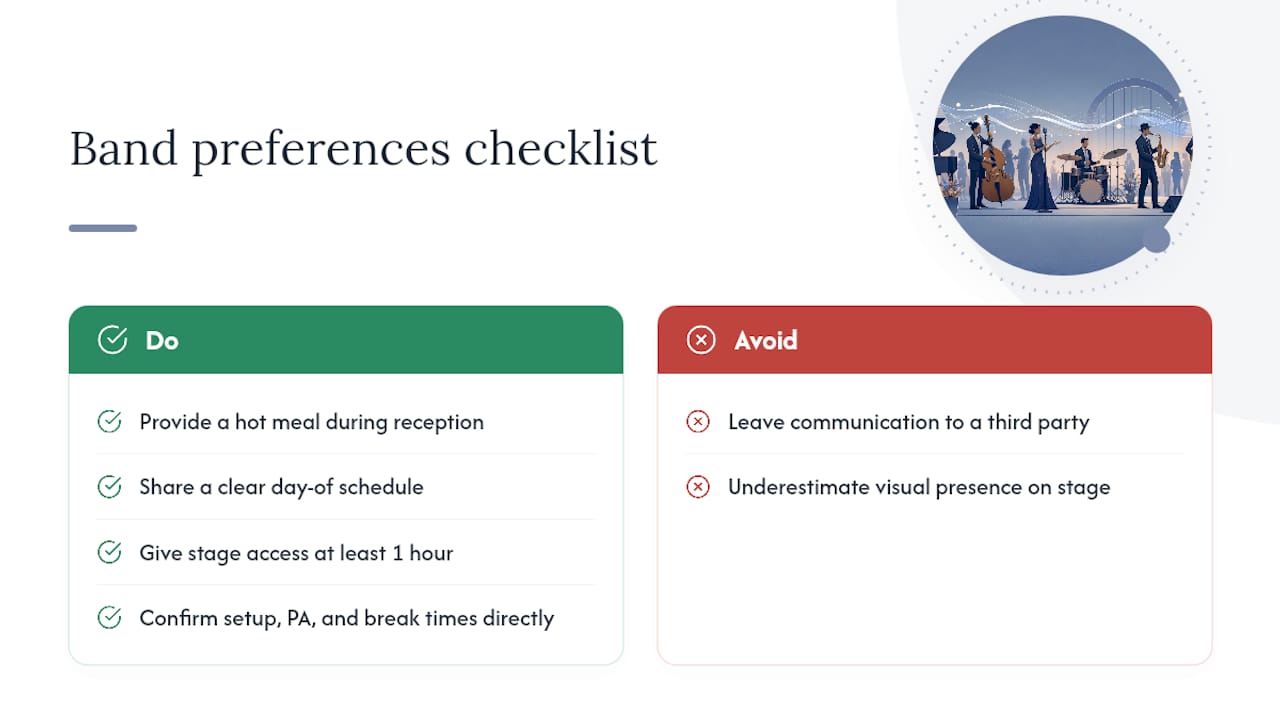
The biggest mistake planners make isn't picking the wrong size. It's underestimating how visual presence changes guest perception. A 3-piece can sound perfectly fine on a recording, but on a wide ballroom stage it can look sparse, and that visual gap affects how guests experience the whole night.
A short checklist most bands appreciate: a hot meal during the reception, a clear day-of schedule, and stage access at least an hour before doors open. Confirm setup time, PA responsibilities, and break schedules directly with the band, not through a third party, and you'll avoid the miscommunications that cause most day-of headaches.
— Alex
How Alex Levin Music Fits a 150-Guest Celebration
Alex Levin Music is the direct route to the exact lineup this guide recommends, without you having to vet stage plots or PA specs yourself. For a reception around 150 guests, the ensembles and soloists roster includes 5 and 6-piece jazz and swing configurations built for full-room sound, plus hybrid DJ-and-live setups if you want to stretch the night without adding musician fees.
Booking typically starts with a consultation about your venue, guest count, and desired vibe, followed by a quote that itemizes musicians, hours, and any sound equipment needed. Alex Levin Music coordinates load-in, stage requirements, and set timing directly with your venue and other vendors, so you are not the one relaying PA specs between parties. If you're planning a reception in this guest-count range, start by checking available dates and lineup options for your event.
Sources
- Find The Right Music & Band Size For Your Wedding! - Polka Dot Wedding
- Event entertainment ideas
- 21+ Party entertainment ideas for small to large events | fielddrive