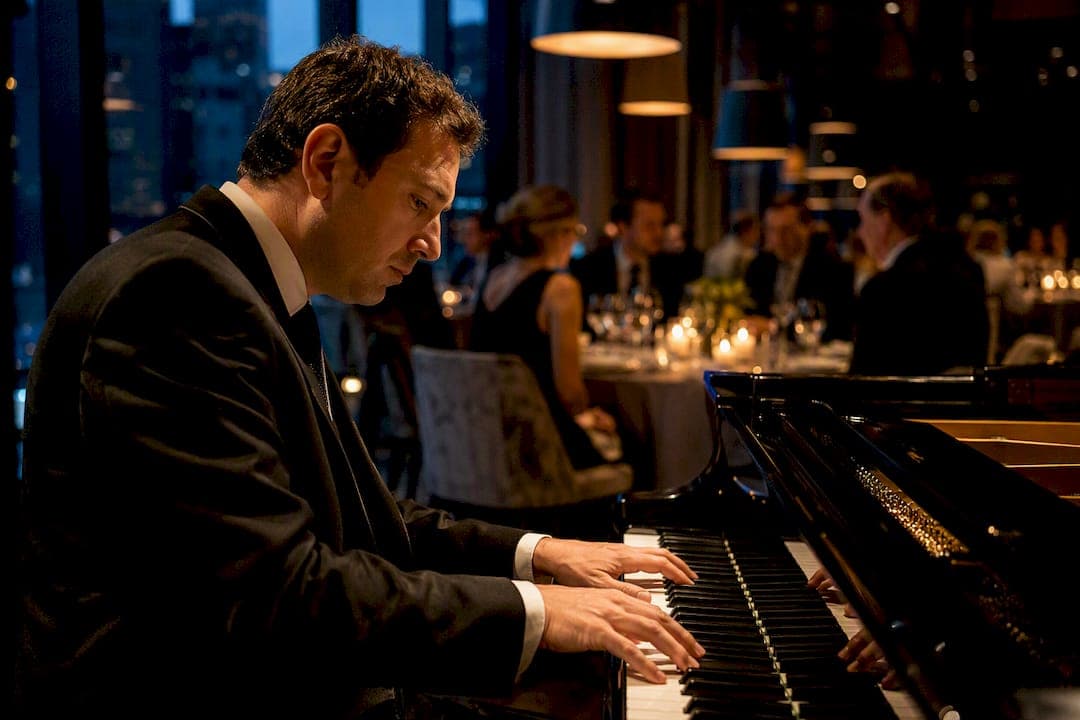
For a formal gala dinner, favor instrumental jazz and light classical interludes, and book a live solo pianist or small ensemble like a string quartet when the budget allows. A curated instrumental playlist is the best fallback. Either way, plan the soundtrack around four stages: arrival, cocktail hour, seated dinner, and toasts through dessert. That structure, more than any single song choice, is what makes a gala evening feel considered rather than accidental.
TL;DR:
- Instrumental jazz, classical, or light pop are best for creating a smooth transition through the four key stages of a gala evening.
- Maintaining consistent tempo and avoiding genre or mood jumps during music sets is crucial to keep the room's energy and flow intact.
- Coordinating cue points and transitions with organizers in advance prevents awkward overlaps or silence during speeches or formal toasts.
- A curated playlist should be filtered for lyrics and sequenced by tempo to preserve the event’s sophisticated atmosphere.
- Booking live musicians offers real-time energy adjustment, but a well-planned playlist or solo performer can suffice within budget or venue constraints.
Table of Contents
- Curated Gala Dinner Music Ideas for Every Stage of the Evening
- Which Music Style Fits Your Gala?
- Planning the Music Flow, Tempo, and Volume
- Building a Cohesive Dinner Playlist
- Sound and Staging Checklist for Live Music
- What Two Real Galas Taught Us About Music Choices
- What Most Planners Get Wrong About Gala Music
- Book Live Music for Your Next Gala
- Playlists and Posts Worth Bookmarking
- Sources
Curated Gala Dinner Music Ideas for Every Stage of the Evening
A gala runs through distinct emotional gears, and the music needs to shift with them. Below are three ready-to-use sets you can hand directly to a DJ or musician, or load straight into a streaming app.
Arrival and cocktail (60 to 75 minutes, 100 to 120 BPM): Bossa nova and upbeat instrumental jazz work best here, since guests are still standing, mingling, and forming first impressions. Think swing-inflected piano trios, light Latin jazz, and instrumental covers of familiar standards. Playlists like Dinner Party Essentials on Apple Music are built almost exactly for this window.
Seated dinner (60 to 90 minutes, 80 to 110 BPM): This is where the room needs to talk, not listen. Vocal jazz with soft phrasing, solo piano, or a string quartet playing understated classical pieces all keep energy low without going silent. Curators building dinner sets, including DJ KTWO's Jazzy Dinner Party, consistently hold this tempo range because it lets conversation carry the room instead of the music.
Dessert and transition (30 to 45 minutes, 100 to 130 BPM): Energy climbs slightly as speeches wrap and the evening loosens up. This is the moment for a few recognizable crowd-pleasers, the kind found on lists like 50 Songs on Every Event Planner's Playlist, often reworked as instrumental or acoustic versions so they still feel elegant.
- Use instrumental covers whenever a song's lyrics might clash with the mood, especially during dinner service.
- Stick to clean, radio-safe edits throughout. Even one stray line in an otherwise polished set stands out badly at a black-tie event.
- Avoid abrupt genre or tempo jumps between tracks. Consistency reads as intentional; randomness reads as an afterthought.
Pro Tip: Keep a "bridge" track ready between cocktail hour and dinner. A slow fade from upbeat jazz into something quieter signals the room to sit down without anyone needing to make an announcement.
Which Music Style Fits Your Gala?
Classical, instrumental jazz, and easy listening remain the three go-to formats for formal events, and each fits a different room size and mood.
- Instrumental jazz suits most galas of 80 to 300 guests. It is warm, familiar, and flexible enough to stretch from cocktail hour into dinner.
- Classical or string quartet fits smaller, more formal rooms, award ceremonies, or events with a philanthropic or academic tone.
- Bossa nova works well for warmer-weather galas or events with a Latin American or coastal theme.
- Lounge and instrumental pop suit younger or mixed-generation crowds who want something familiar but understated.
A small ensemble, trio or quartet, tends to strike the best balance between presence and restraint for formal dinners. A solo pianist works for tighter budgets or intimate rooms. A curated playlist is the right call when the budget is fixed, the venue is unpredictable acoustically, or the guest list is large enough that a live act would need amplification anyway.
Planning the Music Flow, Tempo, and Volume
Music at a gala is not a soundtrack running in the background. It is a cue system. Here is how the evening typically breaks down:
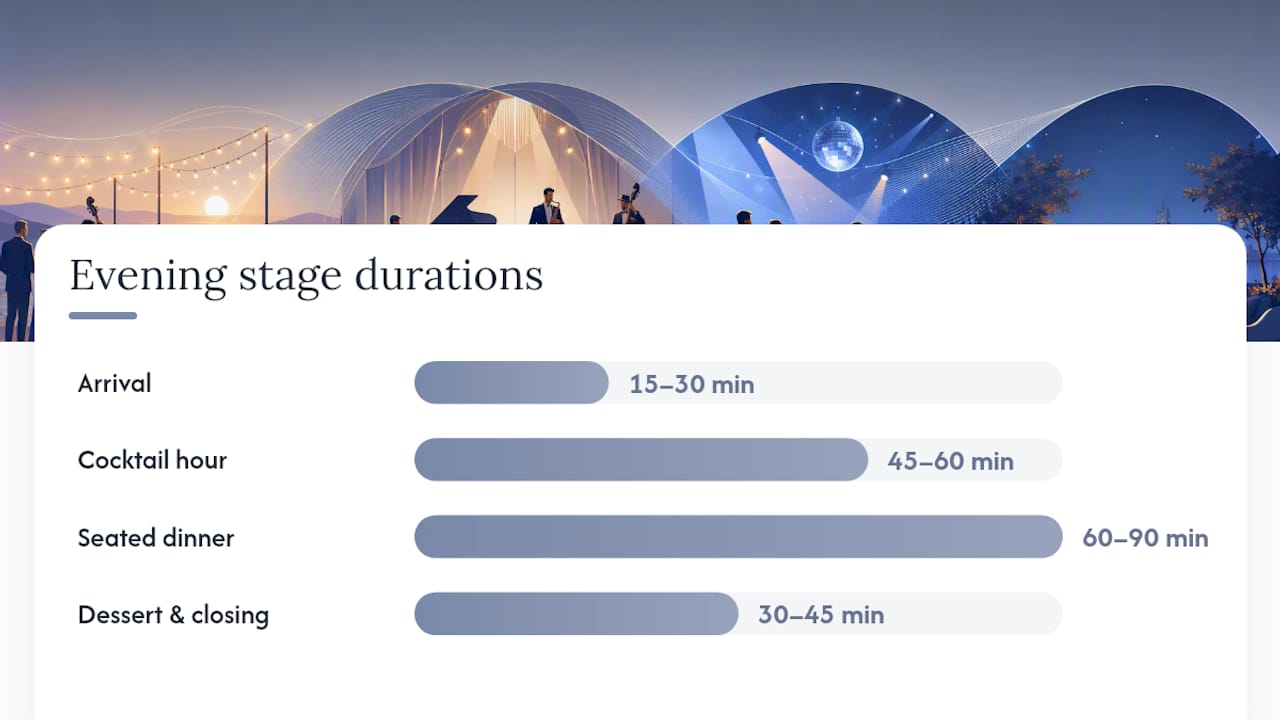
- Arrival (15 to 30 minutes): Upbeat but easy, volume moderate, welcoming guests without demanding attention.
- Cocktail hour (45 to 60 minutes): Slightly livelier, volume can rise since guests are standing and mixing.
- Seated dinner (60 to 90 minutes): Lowest energy and lowest volume of the night. This is where most planners get it wrong by leaving cocktail-hour volume running into dinner.
- Toasts and speeches: Music fades out completely, not just down. A lingering bed of sound under a microphone reads as sloppy, not ambient.
- Dessert and closing (30 to 45 minutes): Energy climbs back up as the formal program ends.
The toast transition is where most gala music plans fall apart. Musicians or a DJ need the run of speeches in advance, ideally with exact names and approximate timing, so they can cut music cleanly rather than guessing when to stop. Coordinating cue points ahead of time with the MC avoids the awkward overlap where a toast starts over a fading saxophone line.
Pro Tip: Give your band or DJ a printed run sheet, not just a verbal briefing. Verbal cues get lost in a loud room; a printed timeline does not.
Building a Cohesive Dinner Playlist
A strong dinner playlist is not a random collection of "nice" songs. It follows rules.
- Filter every track for lyric content. Even mild language or aggressive delivery breaks the mood at a formal dinner.
- Favor clean or instrumental edits over radio versions, since radio edits sometimes still carry suggestive content untouched.
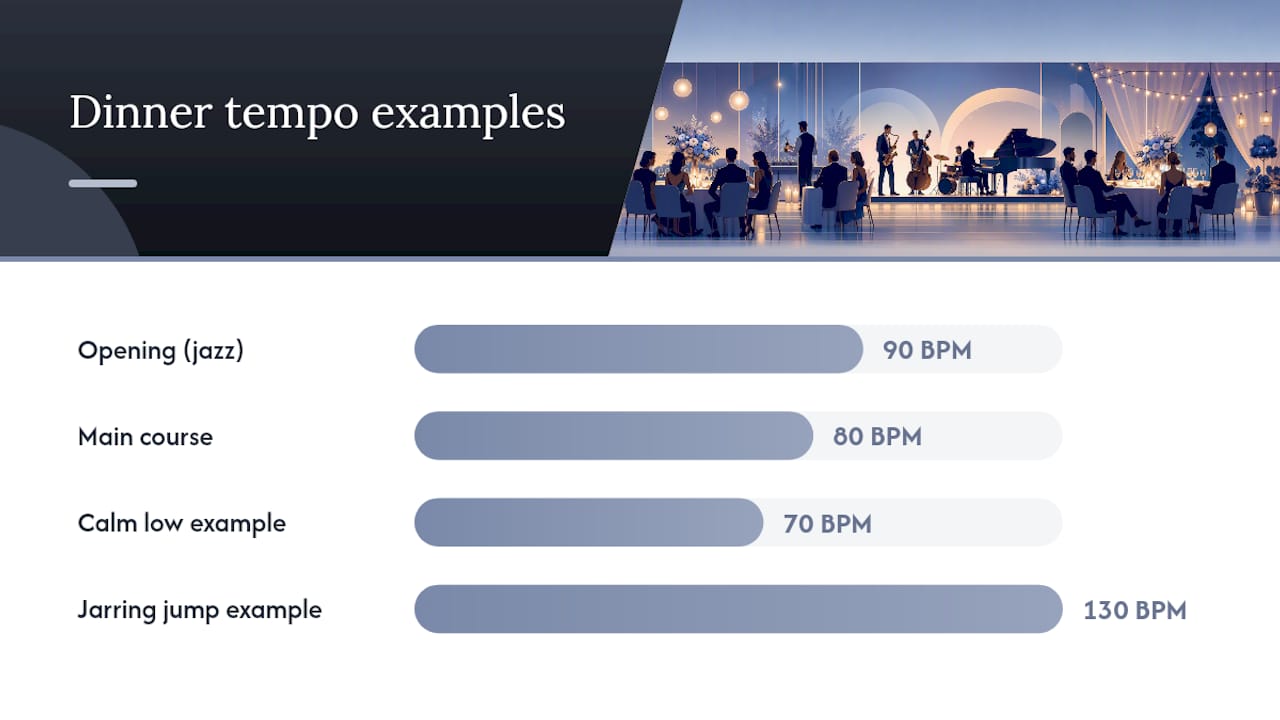
- Sequence by tempo, not by artist or mood alone. A jump from 70 BPM to 130 BPM mid-course feels jarring even if both songs are individually appropriate.
- Keep a short "do not play" list for the DJ. Certain songs, however popular, carry associations that do not belong at every gala (an obvious breakup anthem, anything tied to a competing brand or rival organization in the room).
A workable 75-minute dinner structure: open at 90 BPM with instrumental jazz, ease down to 80 BPM through the main course, and hold there until dessert service begins. Hand the DJ or bandleader this structure directly rather than a loose list of songs. Curated playlist creators build sets this way specifically because tempo consistency, not song selection alone, is what keeps a room calm.
Pro Tip: If you are using a playlist instead of live musicians, assign one person to monitor transitions during dinner. Auto-shuffle features occasionally throw a jarring track into an otherwise smooth set.
Sound and Staging Checklist for Live Music
Getting the technical details right matters as much as picking the right style.
- Confirm stage footprint early. A string quartet needs far less space than a jazz trio with a drum kit, and some venues restrict amplified sound entirely.
- Place speakers to cover the room evenly without aiming directly at dinner tables, which preserves conversation instead of drowning it out.
- Provide a wired microphone for toasts, tested during setup, not five minutes before the first speech.
- Confirm power access near the stage and check venue insurance or permit requirements if the space requires them.
- Build in a 10 to 15 minute buffer between the ensemble's sets so they can take breaks without leaving the room silent. A backup playlist covers this gap cleanly.
Coordinate this checklist with the venue and caterer, not just the performers. Timing slips happen more often because a course ran late than because a musician missed a cue.
What Two Real Galas Taught Us About Music Choices
A charity gala for 220 guests once ran a live jazz trio through cocktail hour and dinner, switching to a curated playlist only for the dessert transition. The trade-off paid off. Guests could hear each other over dinner while still getting a live moment for photos and donor recognition.
A corporate awards dinner for 90 people went the opposite direction: solo piano throughout, no breaks in live sound, since the intimate room made a full trio feel oversized. Both choices worked because they matched room size and formality, not because one format is inherently better. AlexLevinMusic keeps video samples and planning posts available for planners weighing exactly this kind of trade-off.
What Most Planners Get Wrong About Gala Music
The biggest mistake in gala planning is not the genre choice. It is treating music as decoration instead of pacing. Planners spend hours on menus and seating charts, then hand a Bluetooth speaker to whoever arrives first and hope it works out. Music sets the room's temperature more reliably than lighting does, and it does it faster than any centerpiece.
The conventional advice, "just pick something classy," undersells how much tempo and sequencing matter. Two elegant songs played back to back at mismatched tempos can feel more disruptive than one upbeat surprise. What actually works is treating the evening as a tempo curve with four or five checkpoints, not a static playlist on a loop.
If you take one thing from this, prioritize the toast transition over the genre debate. Guests forgive a slightly unfamiliar song. They do not forgive music stepping on a speech, or worse, dead silence where a cue should have been.
— Alex
Book Live Music for Your Next Gala
Hiring a live ensemble solves the exact problem most gala playlists cannot: someone in the room who can read energy and adjust in real time, instead of a fixed track order hoping the night cooperates. We offer solo piano, jazz trios, string quartets, and DJ-hybrid setups suitable for formal dinners, with formats that can be adjusted for your venue size and event tone.
Booking starts with viewing performance samples, checking availability for your date, and requesting a quote based on your guest count and room. Most formal events book six to twelve months out, though smaller ensembles sometimes have shorter lead times. For corporate galas specifically, the corporate event entertainment page walks through pricing structure and ensemble options, and the ensembles and soloists overview lets you compare formats side by side before requesting availability. If you are also managing guest logistics, a tool like Gatsby's guest list manager pairs well with music planning to keep RSVPs and seating on track. Start by checking your date's availability today.
Playlists and Posts Worth Bookmarking
- Dinner Party Essentials, Apple Music's curated dinner set.
- Gala Dinner Music, a Spotify collection built for formal dinners.
- Jazzy Dinner Party, DJ KTWO's vocal jazz mix.
- From Dinner to Dancing, a planning guide for evening transitions.
Sources
- The Best Types of Music for Corporate and Formal Events - AGNT • BLOG
- Dinner Party Essentials - Playlist - Apple Music
- Jazzy Dinner Party — Vocal Jazz Playlist | DJ KTWO
- 50 Songs on Every Event Planner's Playlist