
Live music corporate gala planning is the process of organizing live performances to enhance atmosphere, drive guest engagement, and reinforce brand identity at corporate gala events. The right entertainment is not an optional add-on. Entertainment is mission-critical for gala success, capable of masking logistical hiccups and keeping energy high from cocktail hour through the final toast. This guide gives corporate event planners a clear, step-by-step framework for selecting performers, managing logistics, and troubleshooting the inevitable surprises. Alexlevinmusic specializes in exactly this kind of work, serving planners across Philadelphia, New York, and beyond.
How to determine the best live music type for your corporate gala
Choosing the right format is the single most consequential decision in gala planning with music. Different music types suit different event styles: a formal orchestra signals elegance and prestige, a live band generates energy and movement, a soloist creates intimacy during dinner, and a DJ maximizes flexibility for mixed-demographic crowds.
The key variable is your audience. A gala for a financial services firm with senior executives calls for a different sound than an awards night for a creative agency. Knowing your guest profile, average age range, and cultural mix shapes every music decision that follows.

Your event theme matters just as much. A black-tie gala pairs naturally with jazz standards or a string quartet. A company anniversary celebration with a 1980s theme calls for a cover band with a broad catalog. Matching the music to the theme creates cohesion that guests feel even if they cannot name it.
Pro Tip: Ask your client to name three songs that represent their brand culture. The answers reveal more about the right musical direction than any brief document.
Here is a quick comparison to guide your format decision:
| Format | Best for | Trade-off |
|---|---|---|
| Jazz trio or quartet | Cocktail hour, dinner service | Lower volume, limited dance energy |
| Live band (4–8 pieces) | Main reception, dancing | Higher cost, more stage space needed |
| Solo pianist or vocalist | Intimate dinners, award ceremonies | Limited repertoire range |
| DJ or hybrid DJ/band | Mixed crowds, high-energy finales | Less prestige feel for formal events |
| String quartet | Formal receptions, ceremonies | Narrow genre range |
When you need to strike the right tone between formal and fun, a hybrid format works well. A jazz trio during dinner followed by a DJ set for dancing covers both registers without requiring two separate contracts.
What are the key requirements for live music at a corporate gala?
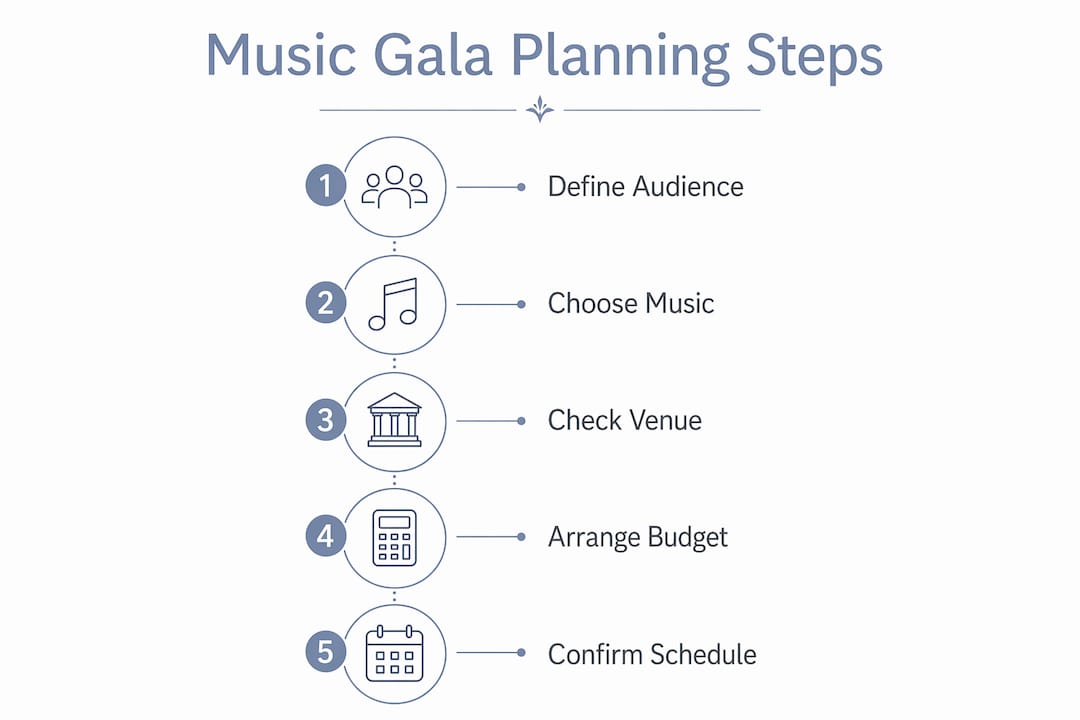
Logistics determine whether great music actually sounds great on the night. Venue acoustics and space are the first factors to assess. A ballroom with hard marble floors and high ceilings will amplify sound differently than a carpeted banquet hall, and that difference affects speaker placement, microphone choice, and overall mix.
Venue and technical requirements
Every live music setup needs a dedicated performance area, a power supply with adequate amperage, and a sound system scaled to the room. For a band of six or more musicians, a minimum stage footprint of roughly 16 by 20 feet is standard. Smaller ensembles like a jazz trio can work in tighter spaces, but they still need clear sightlines and separation from the dining area to avoid overwhelming conversation.
A professional audio engineer is not optional for live music at a gala. The engineer manages monitor mixes, controls front-of-house volume, and responds in real time when the room fills with guests and acoustics shift. Planners who skip this role consistently report volume complaints from both guests and performers.
Budget benchmarks
Budget planning for live music requires realistic numbers. Musician fees for corporate gigs typically run $300–$500 per musician for a full-day engagement. That means a six-piece band costs $1,800–$3,000 in musician fees alone, before adding sound equipment rental, the audio engineer, and travel costs.
Build a contingency line of at least 10–15% of your total entertainment budget. Unexpected needs like additional microphones, a last-minute rehearsal extension, or upgraded speaker arrays appear on almost every large gala.
Scheduling and timing
The event program drives the music schedule. Map out every transition: cocktail hour, guest seating, dinner courses, speeches, awards, and dancing. Each transition is a cue for the musicians. A clear run-of-show document shared with the band leader at least two weeks before the event prevents timing confusion on the night.
Here is a standard requirements overview for reference:
| Requirement | Standard benchmark |
|---|---|
| Stage size (full band) | 16 x 20 feet minimum |
| Musician fee per person | $300–$500 for full-day engagement |
| Sound engineer | 1 per event, mandatory for live bands |
| Setup and soundcheck time | 2–3 hours before doors open |
| Contingency budget | 10–15% of total entertainment budget |
How do you book and manage live music for a gala event?
Live music event organization follows a clear sequence. Start early. Entertainment experts recommend incorporating live music as a core planning element from the beginning, not as a late addition. Booking quality performers in major markets like New York or Philadelphia often requires a 3–6 month lead time for peak gala season dates.
Researching and vetting performers
- Define your brief first. Write down the event date, venue, expected guest count, preferred music style, and budget range before contacting any performer or agency. A vague inquiry wastes time for both sides.
- Review video samples. Audio recordings do not capture stage presence or crowd interaction. Watch live performance videos, ideally from corporate events rather than wedding receptions, since the energy and expectations differ.
- Check references from similar events. Ask specifically about punctuality, professionalism during setup, and how the performer handled unexpected changes on the night.
- Vet the full ensemble, not just the leader. A band is only as reliable as its least experienced member. Ask who performs if a musician cancels and what the substitution policy is.
Pro Tip: Request a 15-minute video call with the band leader before signing any contract. How they communicate in that call predicts how they will communicate on event day.
Contracting and communication
Clear contracts and early communication with performers reduce technical and timing problems significantly. Your contract should specify set times and total performance duration, setlist approval rights, sound equipment responsibilities, load-in and soundcheck windows, cancellation and substitution terms, and payment schedule.
Send a detailed technical rider to your venue coordinator and audio engineer at least three weeks out. The rider lists every input the band needs, from microphone channels to monitor sends. Surprises during soundcheck cost time and raise stress levels for everyone.
Contingency planning
Every gala needs a backup plan for the entertainment. If a performer cancels within 48 hours, you need a pre-approved substitute or a curated playlist ready to fill the gap. Confirm that your contract includes a force majeure clause and a clear cancellation fee structure. Planners who skip this step often face the worst-case scenario with no recourse.
What are the most common live music challenges at corporate galas?
Live music buffers event delays more effectively than any other entertainment format. When dinner service runs 20 minutes late or an AV transition stalls, a live jazz trio fills the silence naturally. Guests perceive the wait as atmosphere rather than a problem.
The most frequent challenges planners face include:
- Volume complaints. Guests near the stage find the music too loud; guests at the back find it too quiet. The fix is a professional audio engineer with a wireless measurement tool walking the room during soundcheck.
- Speech and award ceremony transitions. Live music must stop cleanly when a speaker takes the podium. Coordinate a clear cue system with the band leader, typically a hand signal from the event MC.
- Guest disengagement during long speech segments. Short live performances between presentations reset attention and re-energize the room. A 3-minute musical interlude between award categories works better than back-to-back speeches.
- Style mismatches mid-event. The cocktail hour crowd and the post-dinner dancing crowd often want different things. Plan a deliberate gear shift in the music program, and brief the band on the transition cue.
- Overtime creep. Galas routinely run long. Negotiate a clear overtime rate in the contract so the band can extend without a mid-event negotiation.
For a broader corporate entertainment checklist that covers entertainment beyond live music, reviewing a structured planning resource before your event helps catch gaps early.
"The best live music at a corporate gala feels invisible in the best possible way. Guests are energized, conversations flow, and the brand message lands. When the music is wrong, everything else feels slightly off too."
Well-curated entertainment creates a dynamic atmosphere that guests remember long after the event ends. That memory is the real return on your entertainment investment.
Key Takeaways
Successful live music corporate gala planning requires choosing the right format early, budgeting realistically, coordinating logistics precisely, and using live performance as an active tool to manage event flow.
| Point | Details |
|---|---|
| Choose format by audience | Match music style to guest demographics and event theme before booking. |
| Budget $300–$500 per musician | Factor in sound engineer, equipment, and a 10–15% contingency on top of fees. |
| Book 3–6 months out | Quality performers in major markets fill up fast during peak gala season. |
| Share a run-of-show early | Give the band leader a detailed program at least two weeks before the event. |
| Use music as a buffer | Live performance fills delays and transitions, keeping guest energy positive. |
What I have learned from years of playing corporate galas
The advice I give most often gets ignored most often: book the music first, then build the rest of the program around it. Planners treat entertainment as the last box to check, and that decision costs them every time. The best galas I have performed at were ones where the event planner called me before they finalized the venue layout.
The second thing I have learned is that the formal-versus-fun tension is real, and most planners resolve it wrong. They default to safe and formal for the cocktail hour and then expect a DJ to flip the energy for dancing. The transition feels jarring. A better approach is a gradual energy arc: start with sophisticated background jazz, shift to upbeat swing during dinner, and build into a live band set before the DJ takes over. Guests barely notice the shift, but they feel it.
The third observation is about communication. Planners who send a detailed brief and then stay available for questions get a better performance. Not because musicians need hand-holding, but because clarity on the client's vision lets performers make real-time decisions that serve the event rather than just fill the time. A band that knows the CEO loves Sinatra and the CFO hates loud bass will play the room differently than one working from a generic corporate brief.
— Alex
Live music services for your next corporate gala
Planning a corporate gala and need performers who understand the difference between background ambiance and a room-commanding performance? Alexlevinmusic offers corporate event entertainment across Philadelphia, New York, and surrounding regions, with ensembles ranging from jazz trios and string quartets to full bands and DJ hybrid formats.
Every booking includes a consultation to align the music program with your event timeline, brand tone, and guest profile. Whether you need a solo pianist for a 50-person executive dinner or a full band for a gala of 500, Alexlevinmusic builds the entertainment around your specific event goals. Reach out to start the conversation and get a custom quote for your date.
FAQ
What is live music corporate gala planning?
Live music corporate gala planning is the process of selecting, booking, and coordinating live performers to enhance atmosphere and guest engagement at a corporate gala event. It covers everything from format selection and budgeting to scheduling and technical logistics.
How far in advance should I book live music for a corporate gala?
Book live music at least 3–6 months before your event date, especially in major markets like New York or Philadelphia where quality performers fill their calendars quickly during peak season.
How much does live music cost for a corporate gala?
Musician fees for corporate events typically run $300–$500 per musician for a full-day engagement. A six-piece band costs $1,800–$3,000 in performer fees before adding sound equipment, an audio engineer, and travel.
What music format works best for a formal corporate gala?
A jazz trio or string quartet works best for cocktail hours and formal dinners, while a live band or DJ hybrid suits post-dinner dancing. Matching the format to each segment of the event program produces the most cohesive guest experience.
How does live music help when a gala runs behind schedule?
Live music fills delays naturally, turning a 20-minute wait into perceived atmosphere rather than a logistical problem. Scheduling short musical interludes between speeches and award segments also resets guest attention and maintains energy throughout the evening.