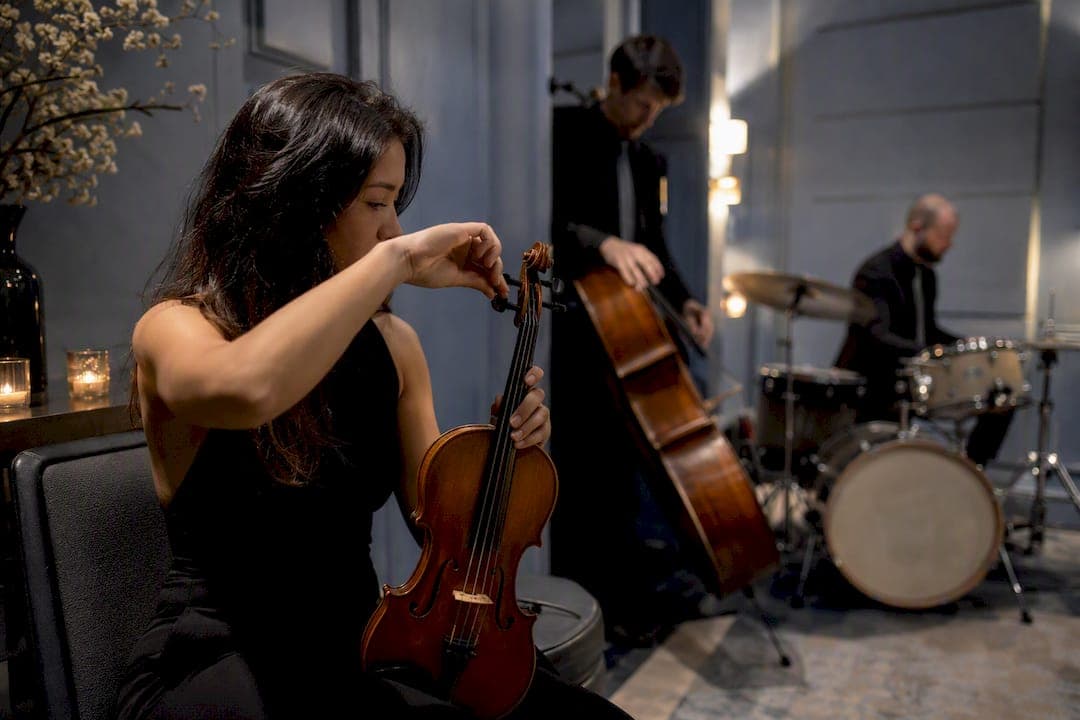
The fastest way to create an upscale venue ambiance is to choose instrumental, finely arranged music and program it deliberately by event stage. That means jazz trios or solo piano during cocktail hour, string ensembles or quiet piano through dinner, and layered ambient or bossa nova textures wherever conversation matters more than a dance floor. Instrumental arrangements avoid lyric distraction during networking or toasts, which is why hospitality professionals lean on them for formal settings.
Here's where each style earns its place:
- Cocktail and arrival: jazz trio, solo piano, or bossa nova at a relaxed, conversational volume
- Dinner: solo piano, classical guitar, or a string duo, arranged sparse enough to sit under conversation
- Transitions and speeches: minimal instrumentation, lower volume, no drums
- Reception and dance: full band or hybrid DJ setup once the room shifts from talk to movement
Pro Tip: Pick your ensemble size before you pick songs. A trio can cover cocktail-to-dinner in one continuous arc; a quartet or band is what you need once dancing starts.
Key Takeaways
Upscale venue ambiance depends on matching instrumental music styles to each event stage and controlling tempo, volume, and transitions with the same care given to lighting or catering.
| Point | Details |
|---|---|
| Lead with instrumental genres | Jazz, solo piano, strings, and ambient soundscapes avoid lyric distraction during conversation and networking. |
| Program by stage, not by event | Cocktail, dinner, transitions, and reception each need distinct tempo and volume targets. |
| Control speech-moment volume | Mix background music roughly 12 decibels below peak so toasts and speeches carry clearly. |
| Choose hybrid setups on a budget | Pair live piano or trio for arrival and dinner with a band or DJ once dancing starts. |
| Work with a specialist ensemble | Alexlevinmusic builds stage-by-stage programs with rehearsal and on-site sound checks included. |
Table of Contents
- What Music Styles Suit Upscale Venues and Guest Demographics
- Programming Music by Event Stage: Ceremony to Reception
- What Each Elegant Genre Actually Brings to the Room
- Live Ensembles, Curated Playlists, or a Hybrid Setup
- Tempo, Volume, and Licensing Rules to Hand Your Sound Tech
- A Real Example: Programming Sound Across a Boutique Property
- How We Build Upscale Music Programs at Alex Levin Music
- Book Sound Design That Actually Fits Your Venue
- Sources
What Music Styles Suit Upscale Venues and Guest Demographics
Before booking a single musician, run the event through a short filter. Skipping this step is how planners end up with a saxophonist playing to a room of finance executives who wanted string quartet, or a harpist at a tech launch that needed something with more pulse.
Work through these six questions in order:
- What is the event's actual goal? A product launch wants energy and modernity; a donor gala wants gravitas and warmth.
- Who is in the room? A guest list skewing 60-plus responds differently to bossa nova than a 30-something wedding crowd raised on neo-soul.
- What time of day is it? Morning and early-afternoon corporate events call for brighter, lighter arrangements than an evening gala.
- How formal is the dress code and program? Black tie usually means classical or jazz standards; business casual can flex toward acoustic pop covers.
- What does the room sound like empty? A marble lobby with hard surfaces needs different arrangement density than a carpeted ballroom.
- What's the music budget relative to catering and decor? Music is often a significant part of the total event budget, and that should guide ensemble size before it guides genre.
Two criteria matter more than the rest: lyric content and cultural fit. Instrumental music is the safer default in any room where conversation and networking are the point, since lyrics compete for the same attention guests are supposed to give each other. Cultural fit matters just as much: bossa nova reads as sophisticated but casual, while a string quartet signals formality that some corporate crowds find stiff rather than elegant.
Pro Tip: Ask the client or venue two questions before finalizing anything: "Will there be a moment where someone needs to be heard over the music?" and "Is there a generational split in the guest list?" The answers dictate volume caps and repertoire more than genre preference does.
If you're coordinating with a venue directly, get their acoustic quirks and power/outlet locations in writing, and consider corporate event furniture rental to optimize guest flow and acoustics. A jazz ensemble sized correctly for the room solves half of what generic playlist volume problems create.
Programming Music by Event Stage: Ceremony to Reception
Treat the event as a single audio arc, not five disconnected playlists. Each stage has its own tempo range, volume target, and job to do.
Ceremony (if applicable). Solo piano or a string duo works best here, at 60 to 80 BPM, kept quiet enough that officiant vocals carry without a microphone in a small room. Sample options: a classical guitar arrangement of a familiar processional, a piano rendition of a jazz standard slowed to ceremony tempo, or a solo cello piece with minimal ornamentation.
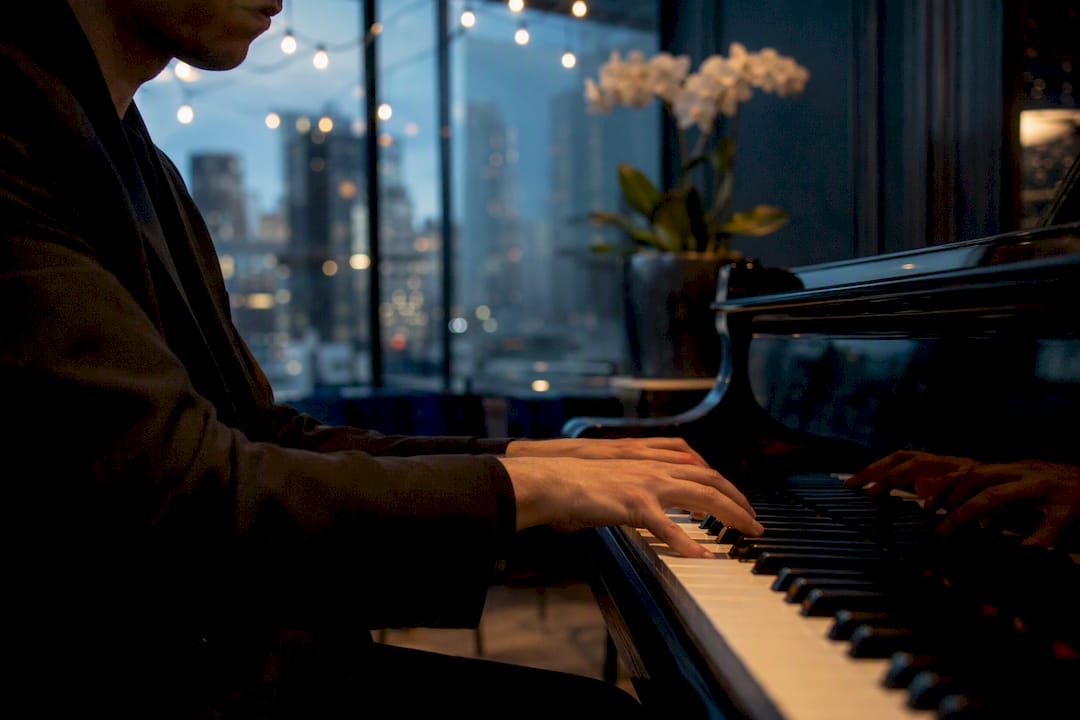
Arrival and cocktail hour. This is where jazz trios and solo piano do their best work, at 90 to 120 BPM, volume set to conversational level, meaning guests thirty feet apart shouldn't have to raise their voices. A sample set: two bossa nova standards, a swing-tempo jazz cover of a modern pop song, a Latin jazz instrumental, then back to a ballad to reset energy before guests move to dinner. Industry programming guides consistently recommend instrumental jazz and acoustic sets for exactly this window, since it fills silence without demanding attention.
Dinner. Drop tempo and arrangement density further, 70 to 100 BPM, with a duo or solo pianist rather than a full trio. Guests are seated and talking across tables, so anything with a drum kit or heavy bassline becomes intrusive. A sample dinner set rotates jazz standards played sparse, one or two classical guitar pieces, and a neo-soul instrumental cover to keep things from feeling like elevator music.
Transitions (toasts, speeches, program moments). This is the stage planners get wrong most often. Cutting music entirely creates an awkward dead-air moment; leaving it at dinner volume drowns out a nervous best man. The fix: fade the ensemble down to near silence, hold a single sustained note or soft arpeggio under the microphone moment, then rebuild volume gradually once the speech ends. No abrupt stops, no abrupt restarts.
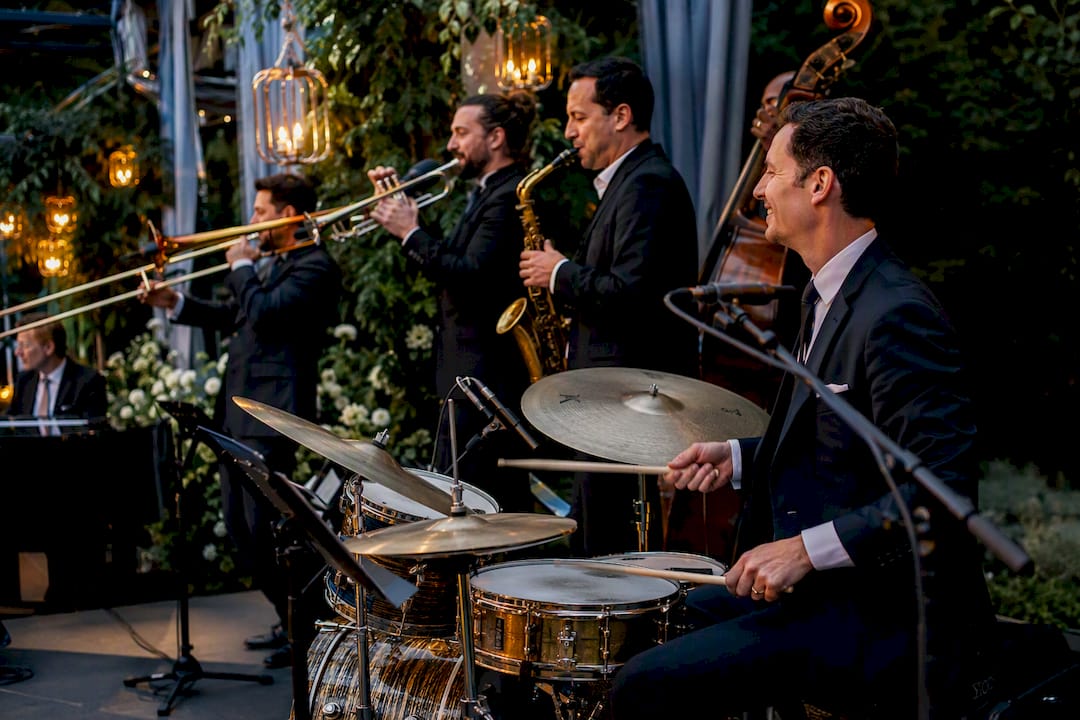
Reception and dance. Energy jumps to 110 to 130 BPM and stays there. This is the one stage where a full band or a hybrid live-plus-DJ setup outperforms a small ensemble, since the room's job has shifted from talking to moving. A seamless plan from dinner into dancing usually overlaps the last dinner song with the first dance-floor song rather than stopping cold between them.
What Each Elegant Genre Actually Brings to the Room
Not every "sophisticated" genre does the same job. Here's what each one is actually good for, and where it falls flat.
- Smooth jazz: warm, unobtrusive, works almost anywhere from lobby to cocktail hour, but can feel generic if overused across every stage of the same event.
- Cool jazz: more restrained and cerebral than smooth jazz, excellent for dinner or a corporate reception where guests skew older or more formal.
- Bossa nova: relaxed sophistication with a rhythmic pulse, ideal for cocktail hour and outdoor or garden venues, less suited to somber or highly formal galas.
- Solo piano: the most flexible option on this list, works for ceremony, dinner, or lobby ambiance, and scales down cost without scaling down perceived quality.
- String quartet or classical: the highest formality signal available, best for black-tie weddings, ceremonies, and donor events, but can feel mismatched at a casual corporate mixer.
- Ambient soundscapes: less a genre than a design approach; useful in lobbies, spas, and transitional spaces where structured melody would compete with conversation.
- Neo-soul and lounge: modern and a touch more textured than smooth jazz, good for after-dinner lounges or younger corporate crowds.
- Acoustic instrumental covers: familiar melodies without lyrics, a safe bridge option when the client wants recognizable songs but not sing-alongs during networking.
On live versus recorded: a live ensemble matters most wherever guests linger and notice detail, cocktail hour, dinner, arrival. That's where a real player responding to room energy in real time reads as luxury in a way a speaker never quite matches. Curated playlists or bespoke ambient soundscapes are perfectly acceptable in secondary spaces, restrooms, hallways, coat check, where guests pass through rather than sit and listen.
The clearest don't: avoid lyric-heavy contemporary pop during any networking or dinner window. It pulls attention toward the words and away from the person across the table. Keep arrangement density low during speeches regardless of genre, since a busy piano part under a toast reads as sloppy planning, not ambiance.
Live Ensembles, Curated Playlists, or a Hybrid Setup
The honest answer is that the right choice depends on which stage of the event you're programming, not a single decision for the whole day. Live music consistently produces a more memorable, higher-perceived-value experience, particularly during moments guests actually pay attention to. Playlists are efficient and consistent but flatten out over a long event. Hybrid setups split the difference.
| Format | Best for | Tradeoff |
|---|---|---|
| Live ensemble | Cocktail hour, dinner, ceremony | Highest cost per hour, highest perceived quality |
| Curated playlist | Hallways, coat check, pre-arrival | Cheapest, but generic and static over time |
| Hybrid (live + recorded) | Full-day events on a fixed budget | Requires a clean handoff plan between formats |
A common hybrid: solo piano for arrival and dinner, then a curated playlist takes over for the tail end of dinner service while the band sets up, followed by a live band or hybrid DJ for dancing. Another version pairs a jazz trio for cocktail hour with a seamless playlist handoff once guests move into the dining room.
If you go hybrid, lock down three things in advance:
- A specific cue point for when the live set ends and the playlist starts, not a vague "whenever they're ready"
- A crossfade plan so the transition takes ten to fifteen seconds instead of a hard cut
- Confirmed stage or table placement for musicians so equipment doesn't need to move mid-event
Tempo, Volume, and Licensing Rules to Hand Your Sound Tech
A few operational rules eliminate most of the mistakes that turn elegant music into a distraction.
- Tempo: stay under 80 BPM for ceremony and dinner, 90 to 120 BPM for cocktail hour, and only push past 120 BPM once the room has shifted to dancing.
- Volume: during speeches or toasts, mix background music roughly 12 decibels below its normal peak level, quiet enough to sit under a voice without disappearing.
- Set length: 45-minute sets with 10 to 15 minute breaks work for most ensembles; stagger breaks so the room is never silent for long during cocktail hour.
- Licensing: if you're using recorded music rather than a hired ensemble, check whether the venue already holds a public performance license, since playing commercial recordings at a ticketed or corporate event can require one separately from streaming subscriptions.
- Speaker placement: aim for even coverage rather than one loud point source. Two smaller speakers placed wide beat one large speaker cranked up, especially in rooms with hard, reflective surfaces.
Pro Tip: Walk the room during setup, not just from the stage. Stand where the farthest table will sit and where the closest table will sit, then adjust before doors open, not after a guest complains.
A Real Example: Programming Sound Across a Boutique Property
Bespoke sound design for hospitality venues treats music as part of the physical space, not a playlist bolted on afterward. One documented approach built zone-specific soundscapes for a luxury spa, using field recordings and distinct mixes for different areas so each space felt sonically consistent with its purpose rather than sharing one generic loop.
A similar principle applies to a boutique hotel or private club running a full-day event: arrival lobby gets a soft ambient texture, cocktail terrace gets a live trio, the dining room gets solo piano, and the after-party moves to a hybrid band and DJ setup. Some venues even tie ambient elements to time of day, letting the soundscape shift gradually as light changes rather than snapping between fixed playlists.
The difference guests notice isn't the genre choice. It's that nothing in the space ever feels like it's fighting the room, or repeating on a loop they can predict by hour two.
Takeaways to reuse: match ensemble type to room function, not just event type, and treat transitions between zones as intentional design choices rather than gaps to fill.
How We Build Upscale Music Programs at Alex Levin Music
Every program starts with a short brief covering venue, guest mix, formality level, and the moments that matter most, ceremony, toasts, first dance. From there we sketch sample arrangements, walk through instrumentation options, and confirm ensemble size before locking repertoire.
A rehearsal and an on-site sound check happen before the event, not on the day of it, so tempo and volume decisions get tested against the actual room rather than guessed at. Clients get flexibility to adjust setlists, ensemble configuration, and day-of coordination, including handoffs between live sets and any recorded portions of the program.
Book Sound Design That Actually Fits Your Venue
Generic playlist services and one-size-fits-all DJ packages can't account for how your specific room sounds empty versus full, or how a corporate crowd differs from a wedding party. Alexlevinmusic builds the program around your venue and your event stages, not a template. You get an ensemble sized correctly for cocktail hour, dinner, and reception, live musicians who read the room instead of running a fixed loop, and on-site coordination so transitions between speeches and dancing never feel abrupt.
What's included: ensemble options from solo piano to full band, programming built stage by stage, day-of logistics coordination, and an on-site sound check before guests arrive. Corporate planners can see packages built specifically around formal and networking events, while private and wedding clients can browse full ensemble and booking options directly.
Reach out now to check date availability and request sample arrangements for your event's specific mix of stages and guest profile.
Sources
- Montcalm Mayfair — Mindfidelity project page
- Park Hyatt - NatureScape - Resonate Audio
- The Best Types of Music for Corporate and Formal Events - AGNT • BLOG