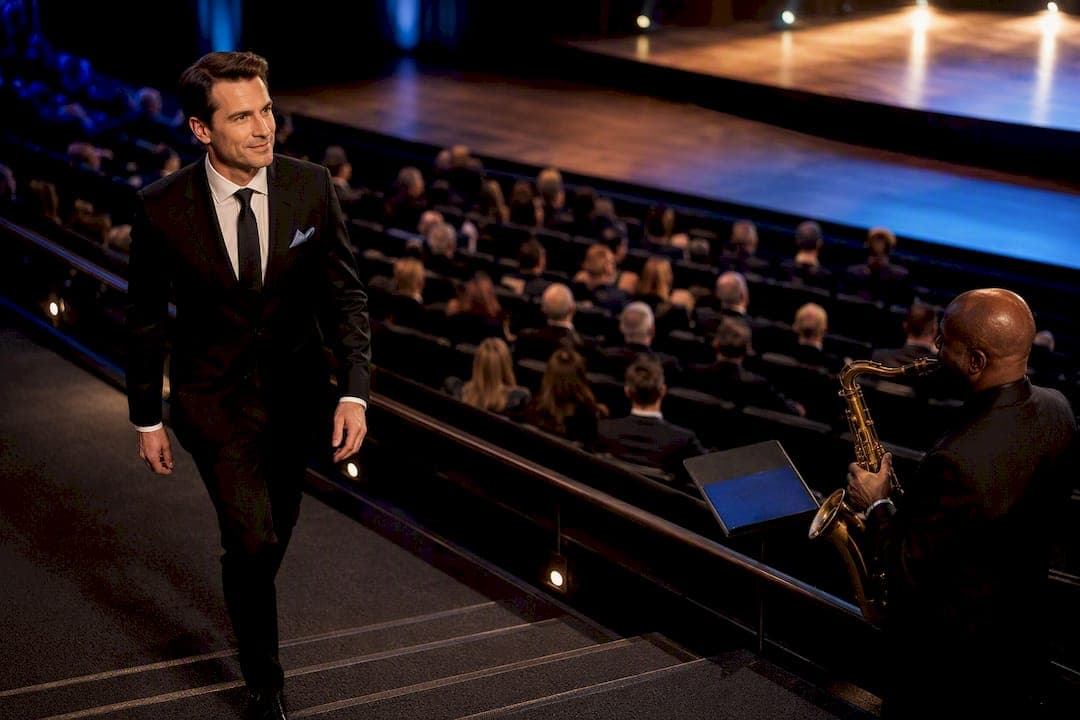
The quickest path to a memorable entrance is a short, recognizable clip lasting several seconds, cued to match each presenter's energy and edited from a licensed or instrumental source. For a bespoke moment, book a live or hybrid musician instead. Either way, confirm your public-performance license before showtime and rehearse the audio cue with your AV team at least once. Then send your shortlist to AV or reach out to Alex Levin Music directly.
TL;DR:
- Playing recorded music at a large awards ceremony typically requires a license from BMI or ASCAP, which must be confirmed with the venue or AV provider ahead of time.
- For small or high-stakes events, live or hybrid music offers real-time tempo adjustment and reduces licensing concerns, often providing a more engaging experience.
- Effective walk-on cues should be timed precisely with the presenter’s movement, using short clips of 15 to 30 seconds with clear, recognizable hooks or instrumental signals.
- It is crucial to rehearse, time, and test audio levels during setup, especially for hybrid events, to ensure cues land exactly when the presenter enters the stage.
- Choosing music that matches the award category’s mood and consulting presenters about their preferences enhances memorability and avoids inappropriate or distracting song choices.
Table of Contents
- Curated Awards Ceremony Walk-On Music by Category
- Do You Need a License to Play Music at an Awards Ceremony?
- How Do You Time and Cue Walk-On Music Correctly?
- Matching Walk-On Music to Each Presenter and Award
- When Live or Hybrid Music Beats a Recorded Track
- Backup Plans When the Music Cuts Out
- What Actually Matters When You're Choosing Walk-On Music
- Ready to Book Live Music for Your Awards Ceremony
- Where to Confirm Licensing and Playlist Details
- Sources
- FAQ
Curated Awards Ceremony Walk-On Music by Category
Most planners need three moods covered: something loud and celebratory, something cinematic and understated, something polished and refined. Building playlists this way, rather than hunting for one "perfect" song, gives you options for every award category on the program, from the loud technical achievement award to the quiet lifetime honor.
Upbeat and anthemic. This is your energy category, best for popular-choice awards, sales achievements, or any moment that wants applause before the presenter even reaches the podium. Think tracks built on a strong drum intro or a recognizable hook within the first ten seconds, since audiences respond fastest to something they already know.
- "Uptown Funk" by Mark Ronson ft. Bruno Mars — cue the horn stab at 0:00 to 0:20, instant recognition
- "Can't Stop the Feeling!" by Justin Timberlake — 0:04 to 0:24, built-in momentum
- "Signed, Sealed, Delivered" by Stevie Wonder — 0:00 to 0:18, warm and celebratory
- "Walking on Sunshine" by Katrina and the Waves — 0:00 to 0:22, classic crowd-pleaser
- "24K Magic" by Bruno Mars — 0:00 to 0:20, punchy and confident
- "Best Day of My Life" by American Authors — 0:00 to 0:19, anthemic build
Cinematic and instrumental. Reserve this category for lifetime achievement honors, keynote speakers, or moments that need gravity rather than hype. Instrumental tracks also sidestep lyric risk entirely, which matters when you're playing to a mixed audience.
- Hans Zimmer's "Time" from Inception — 0:00 to 0:25, builds tension into arrival
- "Sunrise" by Ludovico Einaudi — 0:10 to 0:30, quiet and confident
- "Circles" by Bonobo (instrumental edit) — 0:15 to 0:30, modern and understated
Elegant and jazz. This is where Alexlevinmusic's own repertoire lives, and it fits award dinners, industry galas, and any ceremony aiming for a black-tie feel rather than a stadium one.
- "Feeling Good" (instrumental cover) — 0:00 to 0:20, sophisticated swagger
- "Take Five" by Dave Brubeck — 0:05 to 0:25, distinctive and memorable
- "Fly Me to the Moon" (swing arrangement) — 0:00 to 0:22, timeless
Whichever list you pull from, a production music library or a radio edit solves most licensing headaches before they start, and asking your supplier for a broadcast-safe, instrumental-only version avoids any lyric surprises during a live broadcast or recording.
Do You Need a License to Play Music at an Awards Ceremony?
Yes, in almost every case. Public performance of copyrighted music at a ticketed or corporate event typically requires a license from a performing rights organization, most commonly BMI or ASCAP. The venue, the AV supplier, or the event promoter usually holds a blanket license covering the space, but that coverage is never guaranteed, and it's on you to confirm it rather than assume it.
Before finalizing your walk-on lineup, check three things:
- Ask the venue directly whether their BMI or ASCAP blanket license is current and covers your event date.
- If working through an AV or production company, get written confirmation of who holds licensing responsibility in the contract.
- For recorded broadcasts or livestreams, confirm separate sync or streaming rights, since a venue license usually doesn't cover that.
If licensing can't be confirmed in time, three safe alternatives exist: instrumental covers, production music libraries, or hiring a live musician to perform an original arrangement. A live ensemble sidesteps public-performance licensing questions entirely since the performance itself is the content, not a recording.
How Do You Time and Cue Walk-On Music Correctly?
Getting the cue right is mostly about math and rehearsal, not taste. A 15 to 30 second clip is the sweet spot: long enough to establish mood, short enough that it doesn't drag past the walk. Start the excerpt so the recognizable hook or hit lands right as the presenter crosses into full view, not when they first step from the wings.
- Measure the actual walk distance during a venue walkthrough and time it at a natural pace.
- Mark the AV cue point in your run sheet with the exact timestamp, not just the song title.
- Rehearse once with the live cue, ideally with the presenter or a stand in, and confirm sound levels.
- Set the fade to begin under the presenter's first spoken word so the mic never fights the track.
- For hybrid events, test the mix on the room speakers and the stream feed separately, since levels rarely match.
Keep the walk-on volume just under conversational mic level. If the presenter has to raise their voice to be heard over the intro, the mix needs to come down.
Matching Walk-On Music to Each Presenter and Award
Ask each presenter three quick questions before finalizing anything: Is there a song or artist they associate with strongly? Does the award category call for celebration or reflection? Is there any music they'd specifically want to avoid? Those answers do more to shape a good entrance than any generic "best of" list.
Energy should track the award itself. A rookie-of-the-year or most-improved category can carry an upbeat, almost playful track. A lifetime achievement or memorial honor calls for something instrumental and restrained, never anything with a party-anthem feel.
- Skip anything with explicit lyrics, even in a "clean" edit, since context can still read wrong on stage.
- Avoid songs carrying strong political or polarizing associations, regardless of your own read on them.
- Watch for lyrics that could be misread as commentary on the winner or the room.
A themed sting tied to a presenter's public identity can also land memorably. When Joshua Jackson walked out to the Dawson's Creek theme at the 2024 Emmys, it turned a routine presenter walk into one of the night's most shared clips.
Pro Tip: Keep a repeated short sound motif, four to six notes, between award categories. It reinforces the ceremony's identity without needing a new song every time, and it gives your AV operator a reliable transition cue.
When Live or Hybrid Music Beats a Recorded Track
Recorded clips work well for high-volume awards shows with dozens of presenters. But intimate galas, branded corporate moments, or ceremonies built around a signature sponsor benefit from a live or hybrid approach instead, where a musician can shift tempo in real time as a presenter's walk speeds up or slows down.
Briefing a live act is straightforward: give them the song list, the exact timing window, and any presenter-specific requests, plus a soundcheck window, generally around 30 minutes, to balance the ensemble against the room. A well-rehearsed hybrid DJ and live setup can also blend a recorded intro into a live instrumental motif, so the transition from track to performer feels intentional rather than jarring.
Backup Plans When the Music Cuts Out
Even a well-rehearsed cue can fail. A laptop freezes, a wireless connection drops, a cable comes loose mid-ceremony. The fix isn't hoping it won't happen. It's building a backup into your run sheet before doors open.
Keep a secondary playback device, a phone or tablet with the full walk-on playlist downloaded locally rather than streamed, ready at the AV table. Streaming apps fail the moment venue Wi-Fi hiccups, so local files are the safer default for anything mission-critical. Assign one person, not the general AV lead, whose only job during presenter segments is watching for playback issues and triggering the backup device within seconds.
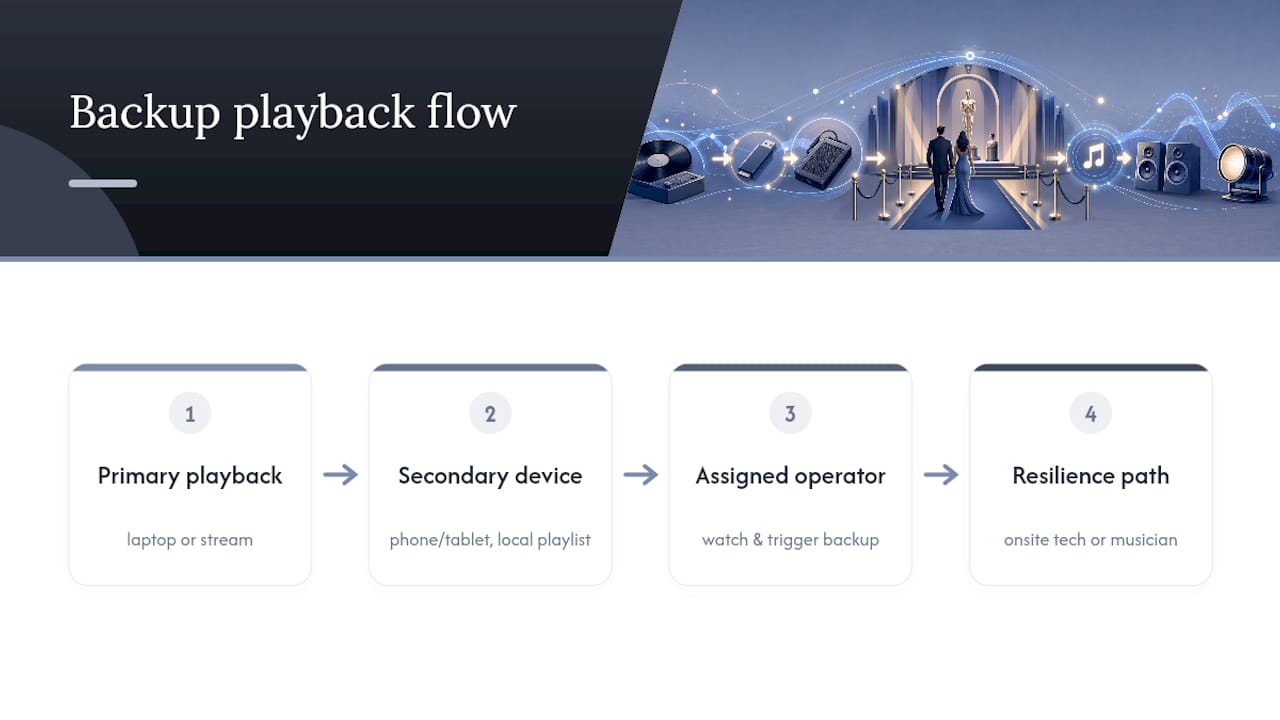
If you're working with an outside AV company, ask specifically whether an onsite technician will be present for the full ceremony or just for setup and teardown. That distinction matters more than most contracts make clear. A technician who leaves after soundcheck can't fix a dropped cue at 8:40 PM.
For live or hybrid acts, the backup is built in: a musician can vamp, extend, or improvise if a presenter's entrance runs long, something no recorded track can do. That flexibility is one of the quieter reasons galas with tight, unpredictable runtimes often lean toward hiring a musician rather than relying entirely on a playback system.
What Actually Matters When You're Choosing Walk-On Music
Most advice on this topic overindexes on song selection and underindexes on execution. Picking a great track matters less than most planners think if the cue is late, the volume drowns the presenter's first line, or nobody confirmed the license. The song list in this article will get you 80 percent of the way there in an afternoon. The other 20 percent, rehearsal, timing, and licensing confirmation, is where most ceremonies actually stumble.
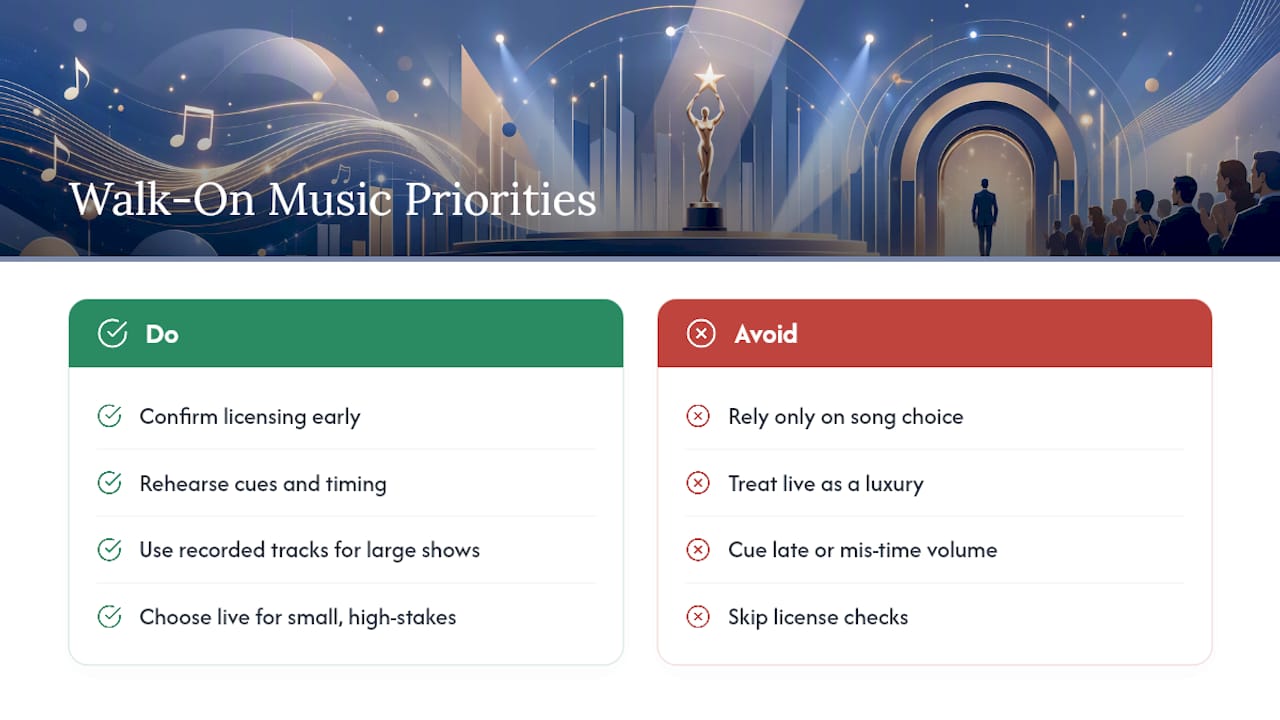
The other overlooked point: recorded tracks are the right default for large-scale, multi-presenter shows, but they're not automatically the better choice for smaller, higher-stakes moments. A gala honoring one person in front of 150 guests can carry a live instrumental arrangement that a recorded clip simply can't replicate, because a musician can read the room and adjust in real time. Planners who treat "live music" as a luxury upgrade rather than a functional tool are usually the ones scrambling when a track glitches mid-ceremony.
Prioritize licensing and rehearsal first, song selection second. The best playlist in the world doesn't help if it can't legally play or nobody tested the cue.
— Alex
Ready to Book Live Music for Your Awards Ceremony
If you want an entrance that doesn't depend on a laptop staying connected, Alexlevinmusic builds custom walk-on moments with live musicians who read the room and adjust timing on the spot, something no playlist can do. Whether you need a full jazz quartet for a black-tie gala or a hybrid setup that blends recorded intros with a live instrumental motif, the curation and cueing get handled for you.
For awards dinners and galas, the DJ & Hybrid Music service covers presenter walk-ons alongside the rest of your program, while a Jazz Quartet or Corporate Event Entertainment booking suits a more formal ceremony that wants live instrumentation throughout the evening. Every booking includes a soundcheck window to balance the ensemble against your room and mic setup, so nothing gets improvised on the night itself. Check availability for your ceremony date and get a quote through the services page.
Where to Confirm Licensing and Playlist Details
Before finalizing your walk-on lineup, confirm public-performance coverage directly with BMI or ASCAP or your venue's AV contract. For additional song ideas beyond this list, industry playlist guides and entertainment format overviews offer further reference. Always reconfirm final cue timing with your venue or AV team the week of the event.
Sources
- 10 Great Walk-On Songs for Corporate Events (Updated for 2025)
- Joshua Jackson Intro'd by 'Dawson's Creek' Theme Song at 2024 Emmys
FAQ
What are some good walk-on songs for an awards ceremony?
Strong choices include upbeat tracks like "Uptown Funk" or "Can't Stop the Feeling!" for celebratory categories, and instrumental pieces like Hans Zimmer's "Time" for more solemn honors. Match the song's energy to the award category rather than picking one track for the whole show.
What is good background music for an award ceremony?
Instrumental jazz, cinematic scores, or soft big-band arrangements work well as background music between segments, since they set a tone without competing with conversation. Jazz trio and string quartet arrangements are built specifically for this kind of ambient ceremony use.
What are the best walk-up songs for 2026?
Current favorites lean on recognizable hooks within the first ten seconds, tracks like "24K Magic" and "Best Day of My Life" for high-energy moments, alongside instrumental covers for more formal categories. The strongest choice is usually whatever the presenter already associates with themselves personally.
Do I need a license to play copyrighted music at an awards ceremony?
Yes, almost every ceremony playing recorded copyrighted music needs coverage through a performing rights organization like BMI or ASCAP. Confirm with your venue or AV supplier whether their blanket license covers your event date before finalizing your playlist.
How much does it cost to book live music for an awards ceremony?
Pricing depends on the ensemble and event scope; ceremony and reception packages start at stated minimums. Current rates and package details are listed on the services page. Current rates and package details are listed on the services page.