 how-to
How to Choose Live Music for a Small Party
Quick Summary
Live music for small parties works best when the act fits the room, the crowd, and the mood you want. For most gatherings of 20 to 60 guests, a solo acoustic performer or a duo covers the job well, and the smallest act that fills the space comfortably is usually the right choice.
- Hosts with 20 to 60 guests often find a solo acoustic artist or duo covers the job well.
- Avoid booking a full band for a space that holds only a few dozen people.
- A jazz trio suits dinner parties; save energetic swing tunes for after dinner.
- A solo acoustic artist needs roughly a 4-by-6-foot area and one standard 120-volt outlet if amplified.
- Aim for volume where guests talk normally while still hearing the music clearly.
Table of Contents
- Last Updated: October 30, 2026
- What Live Music Works Best for a Small Party
- Live Jazz for Dinner Party Settings
- Live Music Setup for Home Party Spaces
- Live Music Volume for Dinner Party Guests
- Booking Your Small Party Musician
- Frequently Asked Questions
Last Updated: October 30, 2026
Last Updated: October 30, 2026
What Live Music Works Best for a Small Party
Live music for small parties works best when the act fits the room, the crowd, and the mood you want. Most hosts with 20 to 60 guests find that a solo acoustic performer or a duo covers the job well.
Start with the purpose of the music. Background music during a cocktail hour calls for something soft and conversational. Dancing later in the evening calls for a bigger sound.
Here are the most common options for a small gathering:
- Solo acoustic artist: Minimal setup, and easy to place in a corner of the room.
- Duo or trio: Adds harmony and variety, often including jazz standards or pop covers.
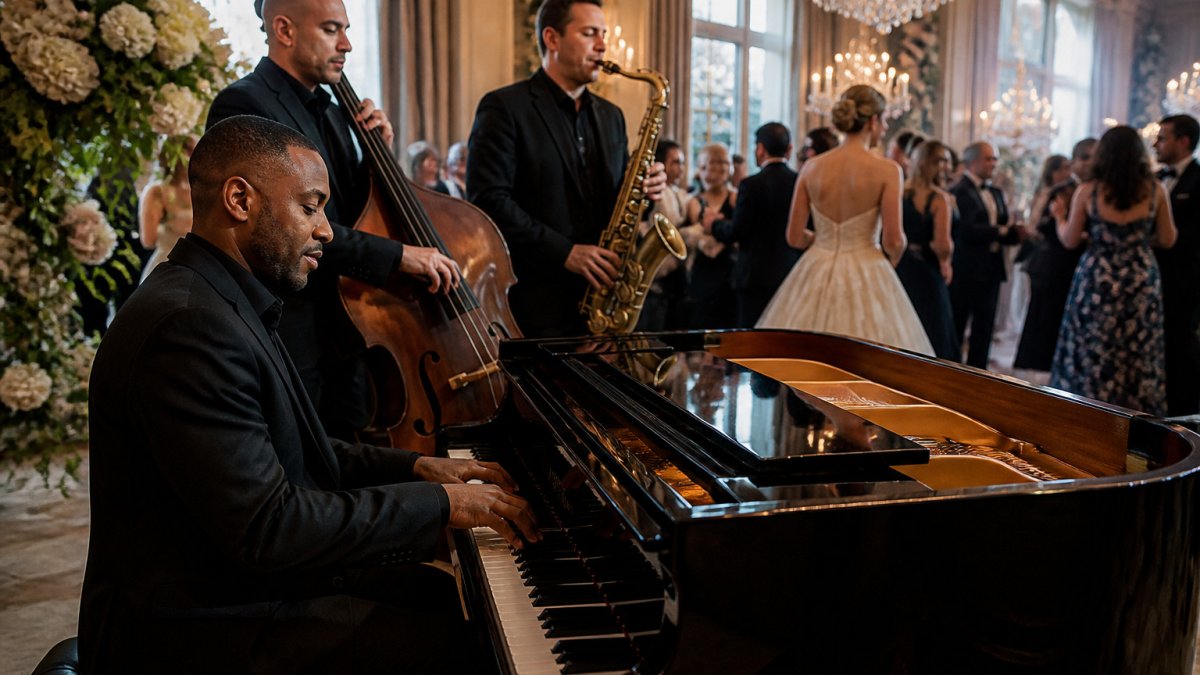
- Small ensemble: A string quartet or jazz trio suits dinner parties with a more formal feel.
A common mistake is booking a full band for a space that only holds a few dozen people. The sound can overwhelm the room, making conversation difficult. Start with the smallest act that fills the space comfortably, then scale up only if the room and crowd demand it.
Live Jazz for Dinner Party Settings
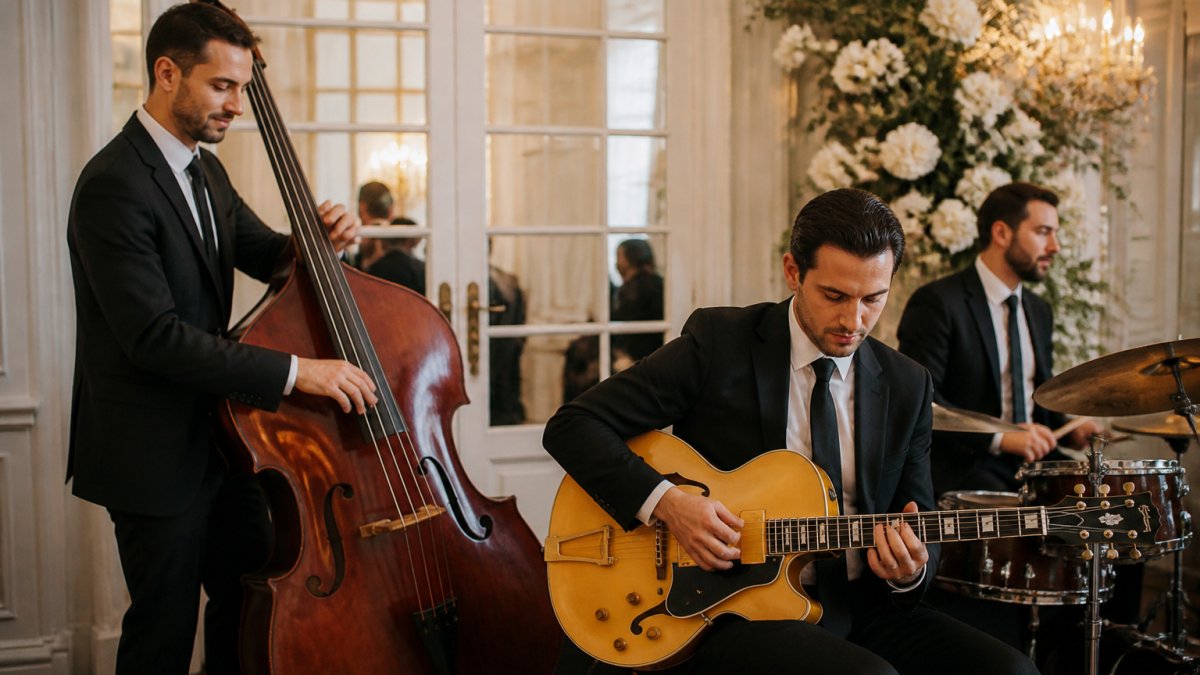
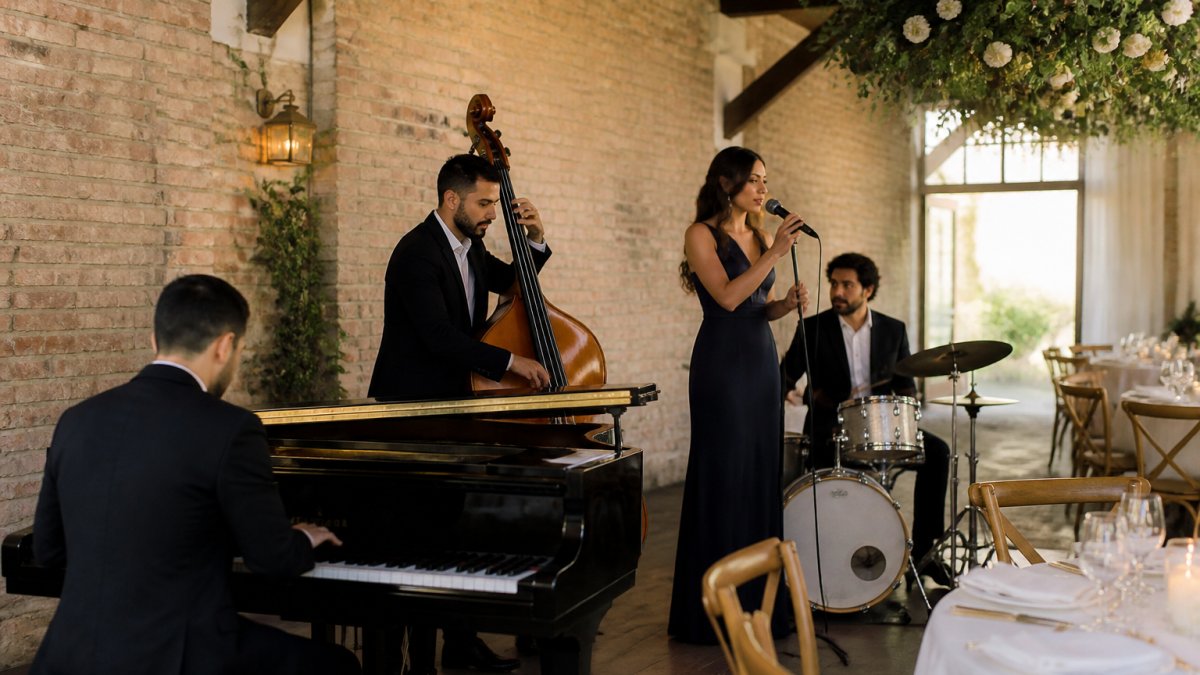
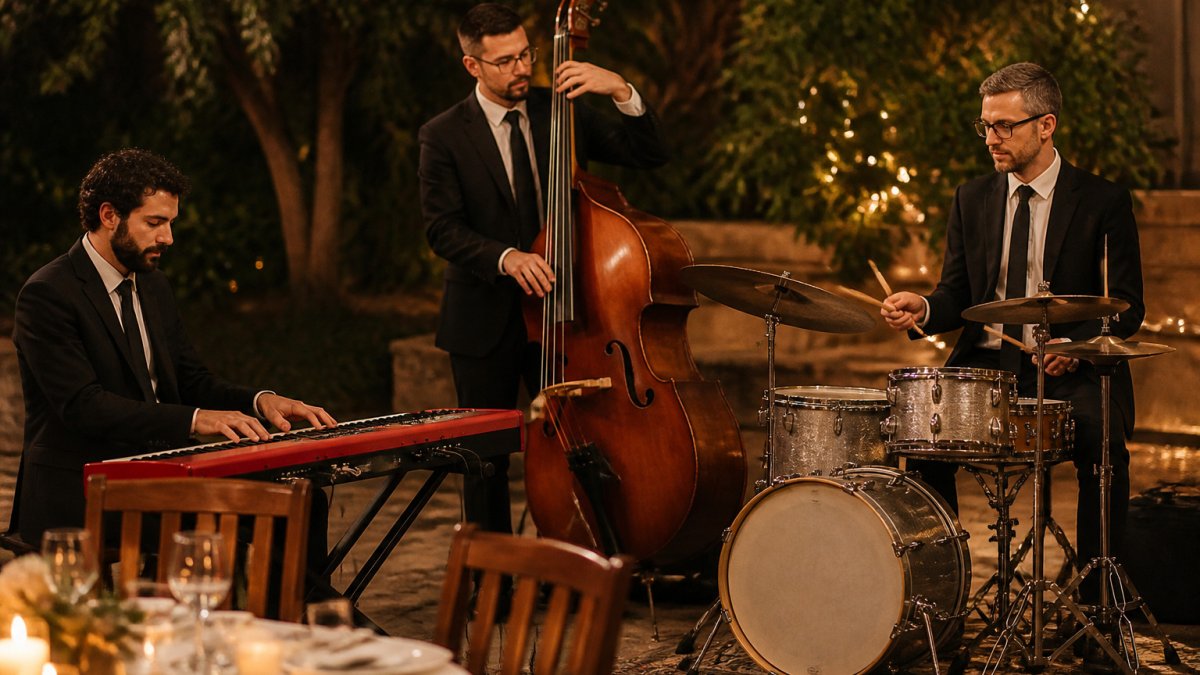
Live jazz is one of the most popular choices for dinner parties because it sets a relaxed, sophisticated tone without demanding attention. A jazz trio, typically piano, bass, and drums or a vocalist, can play standards and softer arrangements at a level that lets conversation continue.
The key is pacing. Jazz works best during the meal and cocktail hour, when guests want ambient music. Save more energetic swing tunes for after dinner, when dancing starts.
Watch out: a jazz trio sounds very different in a small dining room than in a large hall. Ask whether the group can perform acoustically without amplification, or whether they need speakers and space for their instruments.
Live Music Setup for Home Party Spaces
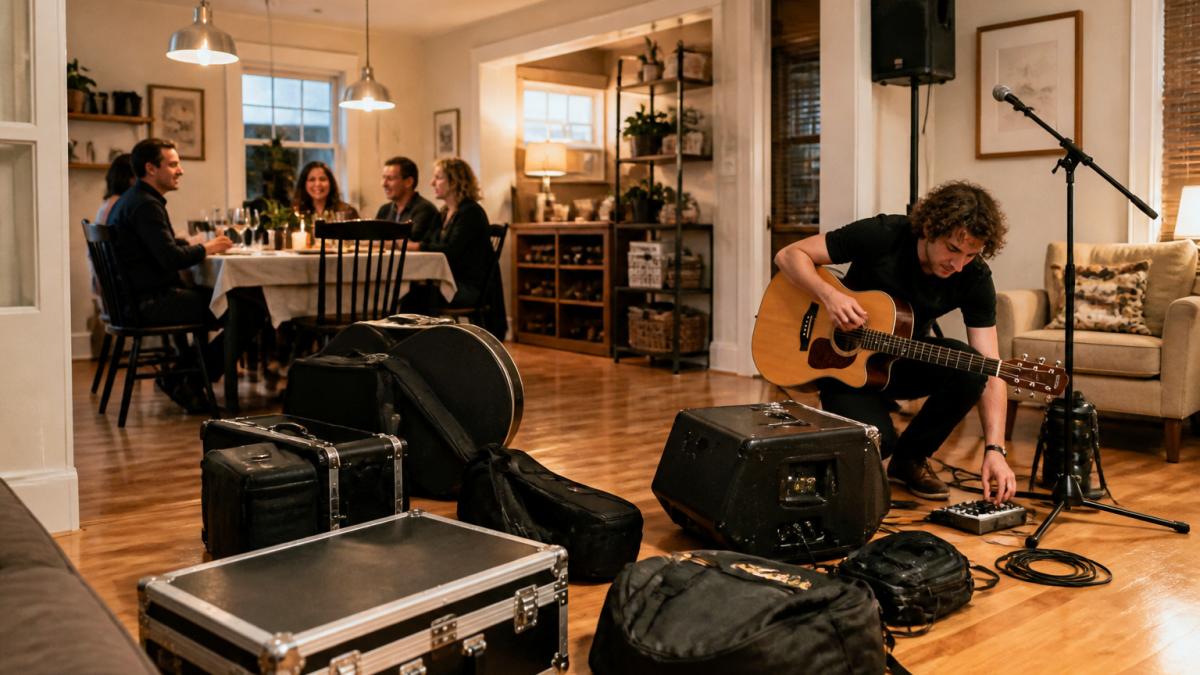
Home party spaces are smaller and more acoustically unforgiving than event venues, so setup is where a good booking turns into a bad one. Living rooms and dining areas have furniture, hard floors, glass, and uneven surfaces that bounce sound in ways a banquet hall does not. The fix is to plan the footprint and the sound before the musicians arrive, not after. Managing these acoustic variables requires the same level of foresight as selecting a venue where the architecture is designed to support live performance rather than compete with it.
Measure the footprint before you book
Ask each act for its minimum performance area and its power draw, then measure the room. A common pattern among working musicians:
- Solo acoustic artist: roughly a 4-by-6-foot area for a chair, music stand, and a small amplifier or none at all; one standard 120-volt outlet if amplification is used.
- Duo or trio: roughly 8-by-10 feet, with a few feet of clearance around a drum kit or upright bass; one to two outlets on separate circuits if amps and a small PA are involved.
- String quartet or jazz quartet: roughly 10-by-12 feet, seated, with music stands; usually acoustic, so power needs are minimal.
Leave a clear line of sight from the musicians to the guests, and keep them out of doorways, the kitchen pass, and the path to the bathroom. Foot traffic and kitchen noise will compete with the performance no matter how good the act is.
Plan power and placement
Confirm which outlets are on which circuit. A single 15-amp household circuit can usually handle a small amplifier and a powered speaker, but a full band with a PA, monitors, and lighting will trip a breaker. Ask the performer what they need and whether they carry extension cords and power strips; most do, but you should still clear the path.
Place the act in a corner or along a wall rather than in the center of the room. Corner placement reinforces low end, which helps a soloist or duo sound fuller at low volume, but it can make a drum kit boomy in a small room.
Set a volume target, not a volume wish
Aim for a level where guests can talk at a normal conversational volume while still hearing the music clearly. During dinner, the music should sit slightly below conversation; during dancing, it can rise a little. Ask the musicians to do a short sound check before guests arrive and to rebalance as the room fills, because a full room absorbs sound and changes the mix.
The article's footprint and power figures for each act type can be summarised as follows.
| Act | Space needed | Power note |
|---|---|---|
| Solo acoustic artist | ~4 by 6 ft | One 120-volt outlet if amplified |
| Duo or trio | ~8 by 10 ft | One to two outlets on separate circuits |
| String or jazz quartet | ~10 by 12 ft | Usually acoustic, minimal power |
Live Music Volume for Dinner Party Guests
Volume is the factor that most often ruins a small party. If the music is too loud, guests raise their voices, the room gets tense, and the music becomes background noise you can't enjoy. If it's too quiet, the entertainment feels like an afterthought.
Aim for a level where guests can talk at a normal volume while still hearing the music clearly. As a rule of thumb, the music should sit slightly below conversation during the meal and rise a little during dancing.
Many hosts find that a solo or duo performer is the easiest way to control volume, since the sound is naturally softer than a full ensemble.
Booking Your Small Party Musician
Booking goes more smoothly when you plan ahead, especially around holidays, when popular performers fill first. Once you have chosen a style and approximate size, contact the performer with the event date, start and end times, guest count, room size, indoor or outdoor setting, and whether you want background music, dancing, or both. Those details let the musician recommend the right lineup instead of guessing.
What drives the price
Live music for a small party is priced on a few variables, and understanding them helps you compare quotes fairly:
Ask for a written quote so you can compare options on the same basis. Pricing depends on quantity, dates, and delivery, so request a current quote directly.
Questions to ask before you sign
A short checklist separates a smooth booking from a stressful one:
- What is the exact set length, and how many breaks are included?
- Can the act take song requests, and how much notice do they need?
- What equipment do they bring, and what do they need from you (power, space, a table)?
- What is the setup and teardown time, and does it count against the performance hours?
- What is the deposit, when is the balance due, and what is the cancellation policy?
- Will they emcee announcements or coordinate with a DJ or planner?
Event-day logistics
Confirm the arrival time, load-in path, and where the musicians can park and unload. Send a short timeline a few days before the event: when guests arrive, when dinner is served, when dancing starts, and when the act should finish. A performer who knows the schedule can shape the set list around it rather than reading the room cold.
You can review our live music options for private events to compare sizes and styles before you reach out. Our Services page outlines the ensembles available, and our Contact Us page is a direct way to request a quote. For hybrid setups, see our DJ Hybrid Music page.
Frequently Asked Questions
What kind of live music works best for a small party?
For most small parties, a solo acoustic performer or a jazz duo or trio fits best because these acts stay at a comfortable volume and adapt to conversation. Acoustic guitar, piano, or a small jazz ensemble can play softer standards and then lift the energy when guests want to dance. Pop or rock cover bands usually need more space and volume than a small home party can comfortably accommodate, so they suit larger gatherings better.
How much space does a live band need at a small party?
A solo performer usually needs only a corner of the room, with room for a stand and a small amplifier if used. A trio needs enough floor space for its instruments, cables, and a chair for each player. Before booking, measure the room, confirm outlet locations, and ask the musician what setup they require so the space works for both the performers and your guests.
Is a solo musician or a small band better for an intimate event?
A solo musician can be a good choice for intimate gatherings, because the sound stays soft. A small band such as a duo or trio adds richness and variety but needs more floor space and produces more volume. Choose the act based on guest count, room size, and whether you want the music to stay in the background or become a feature of the evening.
What should I ask a live musician before booking?
Ask about the performer's repertoire, whether they can play at your requested volume, how long they perform, and what setup they need. Confirm the rate in writing, including any travel fees or overtime charges, and ask how they handle song requests and breaks. Book early, because popular performers fill their calendars quickly, especially for weekend and holiday dates. Pricing depends on the act, date, and length of performance, so request a current quote from the musician directly.
Choosing live music for a small party comes down to matching the act to the room, the moment, and the crowd. Get in touch with Alex Levin Music and we'll help you find the right fit for your gathering.