 how-to
7 Music Moves for Small Wedding Venues That Work
Last Updated: October 25, 2026
Quick Summary
Customizing music for small wedding venues starts with matching ensemble size to your guest count and room: a soloist or duo suits under 40 guests, while trios work with 50 to 80 guests and some breathing room. Let the room's acoustics, not its square footage, drive the plan, since hard surfaces bounce sound and close guests hear every detail.
- Walk the room and clap once before booking to listen for echo.
- A band fits only when the room has high ceilings and open floor space.
- In a small room, the pause between songs is louder than the songs.
- Build 10 to 15 minutes of buffer before the first dance and last dance.
- Share a single run sheet with all vendors at least a week before the event.
Table of Contents
- Why Small Wedding Venues Need a Different Music Plan
- Matching Ensemble Size to Your Guest Count and Space
- Your Wedding Ceremony Music Checklist for an Intimate Room
- Building a Wedding Reception Music Timeline That Fits the Room
- Small Wedding Playlist Ideas That Still Feel Personal
- Questions to Ask Wedding Musicians Before You Book
- Frequently Asked Questions
Why Small Wedding Venues Need a Different Music Plan
Picture a string trio in a candlelit brownstone parlor, then the same trio in a hotel ballroom: same players, same songs, completely different result. That gap is what customizing music for small wedding venues is all about.
Small rooms amplify everything: a drum kit that sounds warm in a ballroom turns harsh in a 60-guest parlor, while a single violin can fill the same space beautifully.
How Room Size and Layout Change the Sound
Hard floors, plaster walls, and low ceilings bounce noise back at guests; soft furnishings and drapes absorb it. That's why a room's acoustics, not its square footage, should drive your music plan.
A few practical rules we apply:
- Distance matters. Guests seated close to the musicians hear every detail, so rough playing has nowhere to hide.
- Volume has a ceiling. Past a certain level, conversation dies and guests drift toward the exit.
- Placement beats power. Moving a speaker two feet can fix more than adding equipment ever will.
Walk the room before you book. Clap your hands once. Listen for echo.
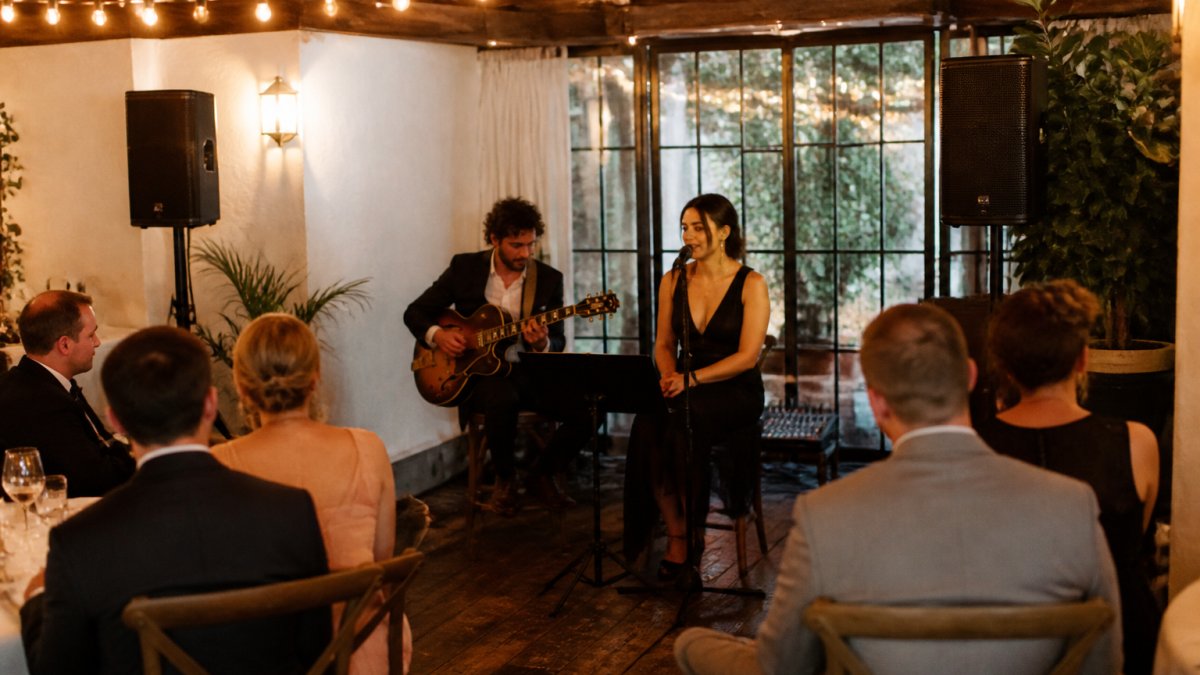
Matching Ensemble Size to Your Guest Count and Space
The right ensemble size follows a simple ratio: fewer guests and tighter rooms call for fewer players. A soloist or duo suits most intimate spaces; trios work with 50 to 80 guests and some breathing room; a full band fits only if the room and guest list both stretch.
| Guests | Room Feel | Ensemble That Fits |
|---|---|---|
| Under 40 | Parlor, patio, private dining room | Soloist or duo |
| 40-70 | Small ballroom, gallery, garden tent | Duo or trio |
| 70-100 | Open loft, larger tent | Trio or compact band |
| 100+ | Full ballroom | Band with room to spread |
Soloists, Duos, Trios, and When a Band Still Fits
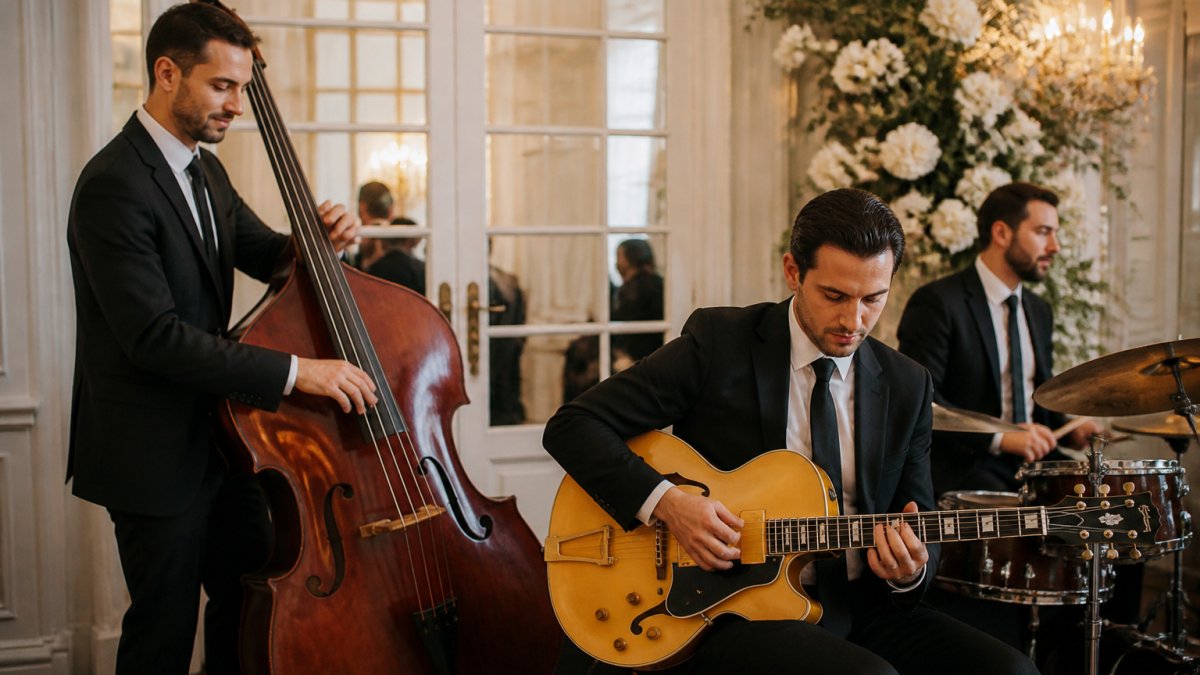
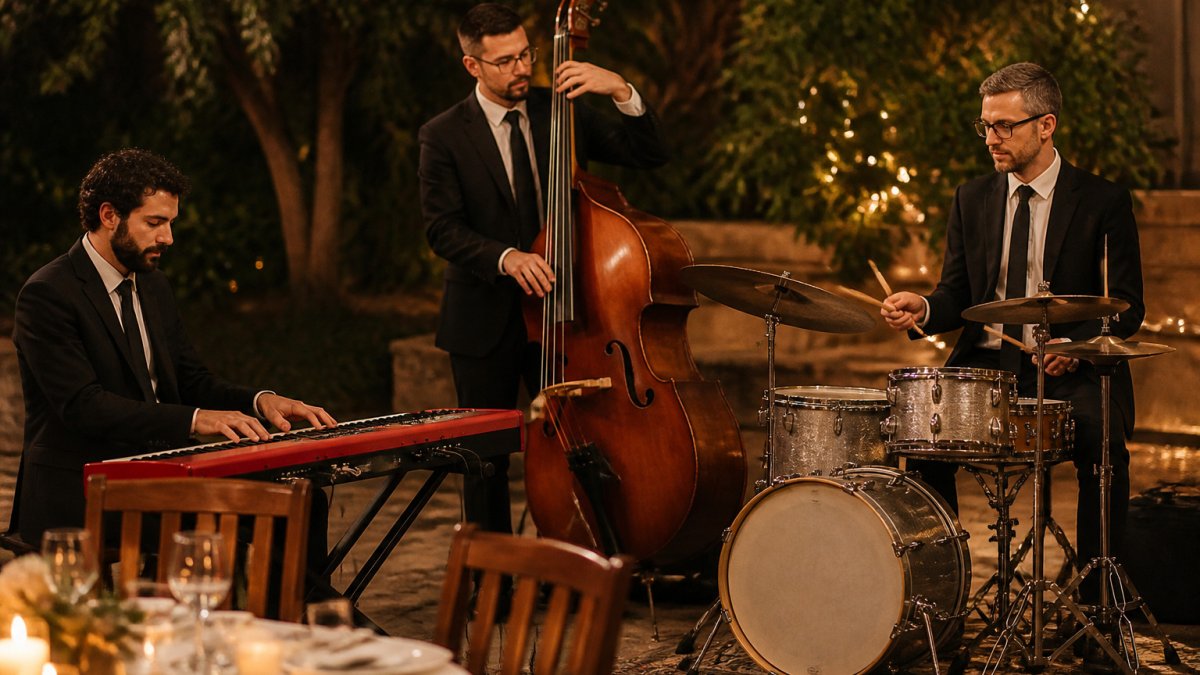
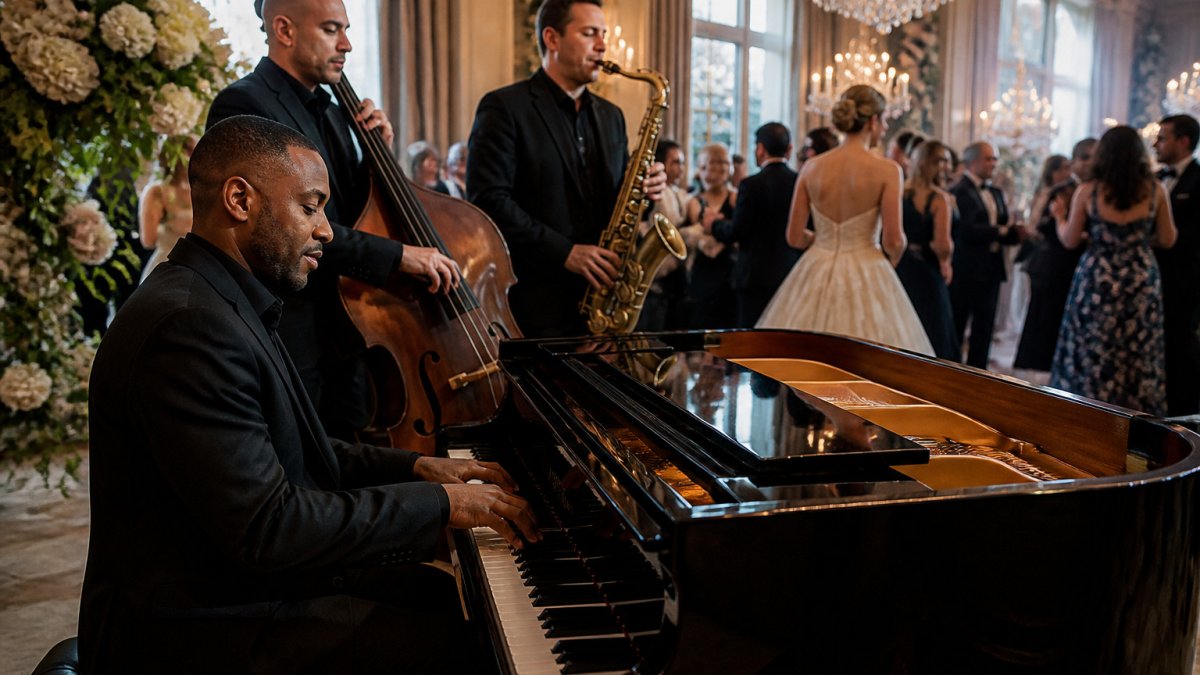
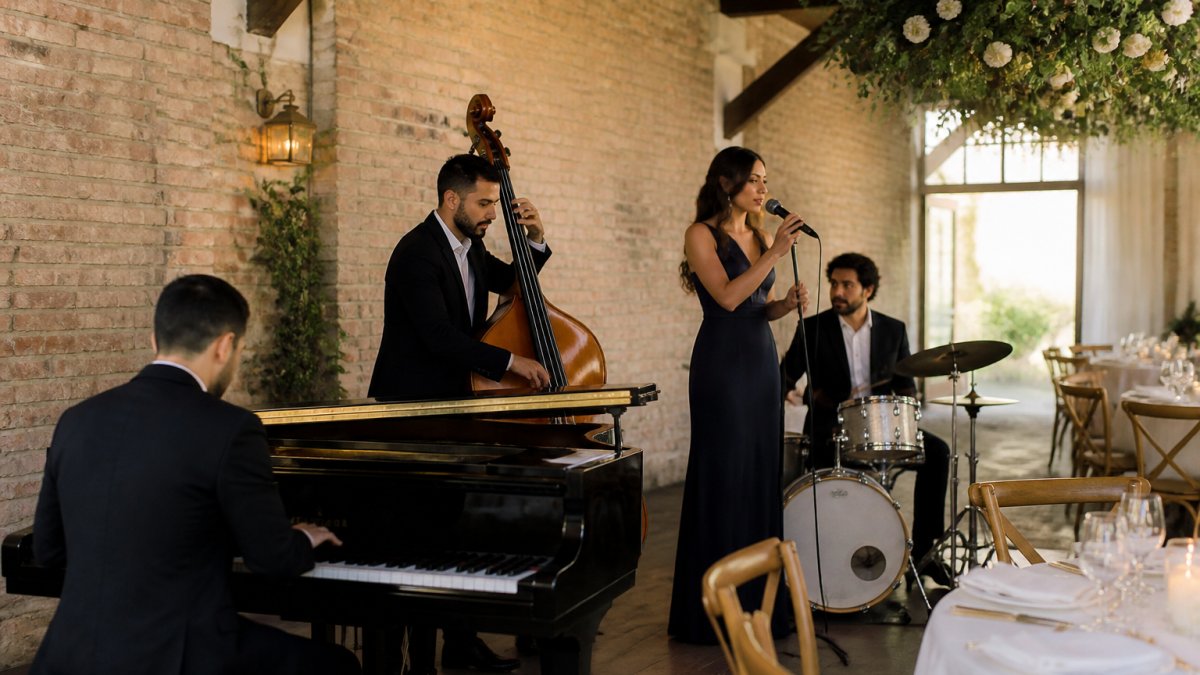
A solo harpist or pianist sets a refined tone without crowding the floor; a second player adds warmth, and a trio gives a fuller sound that still respects the room's limits. A band still fits when the room has high ceilings, open floor space, and a guest list that wants to dance, and even then, a compact lineup with a controlled rhythm section beats a full stage setup. To see the actual configurations we offer, explore our ensemble options and match one to your space.
Your Wedding Ceremony Music Checklist for an Intimate Room
Ceremony music in a small room needs a tighter plan, not a bigger one. The procession, vows, and recessional all happen within a few feet of your guests, so every transition should be deliberate.
Use this checklist:
- Choose a processional song that starts softly and builds
- Pick a distinct song for the couple's entrance
- Select one short piece for a candle lighting or reading
One insider tip: in a small room, the pause between songs is louder than the songs, so ask your musicians to keep transitions seamless. Ready to lock in the ceremony? Review our ceremony music service.
Building a Wedding Reception Music Timeline That Fits the Room
A reception timeline in a small venue should follow the energy of the room, not a template. Cocktail-hour music stays light. Dinner music sits underneath conversation. Dancing comes last, once the space clears.
A workable flow:
- Cocktail hour: acoustic or jazz, low volume
- Dinner: instrumental background, no vocals fighting the chatter
- Toasts: music stops completely
- First dance: one clear, quiet moment
- Open dancing: controlled volume, dance floor sized to the room
The mistake we see most is treating the dance floor like a ballroom. To see how live reception music supports this flow, look at our reception music options.
A Minute-by-Minute Timeline for a Small Room
Small venues compress everything. Transitions happen faster, and there's less room to recover from a delay. Here's a realistic timeline for a 60-guest reception in a compact space:
| Time | Moment | Music Cue |
|---|---|---|
| 4:00 | Guests arrive for cocktail hour | Solo guitar or jazz duo, low volume |
| 4:45 | Guests invited to dinner | Music fades, announcement made |
| 5:00 | Dinner service begins | Instrumental trio, background level |
| 5:45 | Toasts begin | Music stops completely |
| 6:15 | First dance | One song, quiet and clear |
| 6:20 | Open dancing begins | Band or DJ ramps up gradually |
| 8:30 | Last dance | One song, then music ends |
Adjust the times to your schedule but keep the sequence, and give each transition a musical cue so guests always know what's happening without announcements.
Adapting the Timeline to Different Room Layouts
A small room's layout changes how the timeline works. Three common configurations:
- Single-room layout: ceremony, cocktail hour, and reception all happen in one space. Music must transition smoothly from processional to cocktail to dinner without a break. Plan for the musicians to reposition once, and keep a playlist ready for the gap.
- Two-room layout: ceremony in one room, reception in another. This gives you a natural reset point. Use the walk between rooms as a musical transition, with a processional that carries guests toward the reception space.
- Indoor-outdoor layout: ceremony outside, reception inside. Weather and sound spill become factors. Have a backup plan for moving the ceremony inside, and keep the outdoor music acoustic so it doesn't carry to neighbors.
Contingency Planning for the Music Timeline
Even the best timeline needs a backup. In a small venue, a single delay can throw off the whole evening because there's no separate space to absorb it.
Build these contingencies into your plan:
- Backup playlist: Prepare a curated playlist on a phone or tablet with the same song sequence as your live music plan. If a performer is delayed or equipment fails, plug it into the venue's sound system and keep the timeline moving.
- Backup power: Ask the venue where the outlets are and whether they're on a dedicated circuit. Bring an extension cord and a portable battery pack for small speakers; a full band may need more power than standard outlets provide.
- Performer backup: Ask your musicians what happens if a player is sick. A professional ensemble has substitutes on call. If not, know which songs can be cut or covered by a smaller lineup.
Coordinating Music with the Event Schedule
Your musicians, caterer, photographer, and officiant all need the same timeline. Share a single run sheet with everyone at least a week before the event. Include:
- Exact times for each musical moment
- Cues for the officiant and caterer
- The name and phone number of the person managing music on the day
In a small room, everyone can see and hear each other, which makes coordination easier but also makes a missed cue more visible. A shared run sheet keeps everyone on the same page.
Small Wedding Playlist Ideas That Still Feel Personal
Personal playlists fail when built from a generic "wedding songs" list and work when built from your actual memories: what song played on your first road trip? What did your parents dance to?
Try these directions:
- Decade-based sets: all 1970s soul for cocktail hour
- Genre threads: acoustic covers of songs you both love
- Guest requests: one song per table, worked into the set
The goal is a soundtrack that sounds like you, not a playlist anyone could have. For deeper tactics, read our guide on how to build the perfect wedding reception playlist.
Questions to Ask Wedding Musicians Before You Book
Ask direct questions and listen for direct answers. Vague replies about flexibility or experience are a warning sign, especially for a room where every detail shows.
Ask these:
- How will you adjust the lineup to our room and guest count?
- Can you walk our venue and check power access and speaker placement?
- What happens if a performer is sick or delayed?
A professional ensemble answers all five without flinching. For a fuller list of what to ask and what the answers should tell you, see our guide to questions to ask before booking your wedding band.
Planning music for a tight room means making a hundred small calls, and getting them right takes experience.
Frequently Asked Questions
How loud should wedding music be in a small venue?
Loud enough that guests at the back can hear clearly, quiet enough that people at the front can talk without raising their voices. In a small room, that usually means acoustic or lightly amplified instruments during cocktails and dinner, with volume rising only for dancing. Walk the room during setup and check the level from the farthest corner. If the venue has hard floors and bare walls, expect sound to bounce, so aim lower than feels right at the source.
How many musicians do you need for a small wedding?
Most intimate rooms work best with one to three players. A solo pianist, harpist, or acoustic guitarist covers a ceremony beautifully. A duo or jazz trio adds energy for cocktails and dinner without overwhelming the space. A full band can fit a small venue, but only with a reduced lineup and careful speaker placement. Match the count to your guest count and room dimensions rather than to what looks impressive on paper.
Can a live band fit in a small wedding venue?
Yes, if you choose a configurable group. Many bands offer smaller formats, such as a trio pulled from a larger lineup, that keep the footprint tight. Confirm the minimum space the band needs, whether they bring their own sound system, and where power outlets are located. Ask the venue about load-in access and setup time. A band that has played small rooms before will know how to control volume and keep the dance floor full without spilling sound into dinner conversation.
What should you ask wedding musicians before booking?
Ask how they adapt to small rooms: ensemble size options, volume control, and whether they bring their own sound equipment. Confirm their arrival time, setup window, and what happens if the schedule shifts. Ask for recordings of the exact lineup you are booking, not a larger group. Find out how they handle song requests and special moments like a first dance or a surprise act. A provider with years of experience will answer these without hesitation.