 Listicle
Live Entertainment for Gala Dinners: A Planning Guide
Last Updated: November 15, 2026
Quick Summary
Live entertainment for gala dinners sets the mood, gives guests something to talk about, and adapts to each phase of the evening. Choose a soft ensemble like a jazz trio or string duo for dinners focused on conversation, and a full band or swing group for celebrations with dancing. Match the music to each phase of the program, from arrival to the last song.
- Match the ensemble to the atmosphere, with quiet options for formal dinners and full bands for celebrations.
- Write the schedule in 15-minute blocks and share it with the entertainment team at least two weeks before the event.
- Plan clear transition cues, such as a toast or lighting shift, when the mood changes.
- Position background musicians away from speeches and serving stations, and check sightlines with the venue.
- Confirm power, rigging, and ceiling height in writing with the venue before signing any contract.
Table of Contents
- Why Live Entertainment Changes the Feel of a Gala Dinner
- Gala Dinner Entertainment Ideas by Event Atmosphere
- Matching Entertainment to Your Event Timeline
- Interactive Gala Activities and Games for Adults
- Live Music for Corporate Events: Choosing the Right Ensemble
- Planning Venue Logistics, Sightlines and Sound
- Booking Your Gala Entertainment With Alex Levin Music
- Frequently Asked Questions
Why Live Entertainment Changes the Feel of a Gala Dinner
Live entertainment for gala dinners does more than fill silence between courses. It sets the mood, gives guests something to talk about, and signals that the evening was planned with care. At Alex Levin Music, we have spent years playing at The Standard Hotel, Chez Oscar, The Hard Rock Hotel, and private residences in Manhattan.

The difference is easy to feel and hard to describe. A recorded playlist plays in the background, but a live ensemble responds to the room. It slows down when the speeches begin and lifts when the dancing starts.
We think of ourselves as event partners rather than hired players. Our musicians come dressed to impress and bring a high level of professionalism to every event. Whether the evening calls for a quiet backdrop or a full stage show, the entertainment should serve the purpose of the gala.
Gala Dinner Entertainment Ideas by Event Atmosphere
Start with the atmosphere you want guests to feel. A formal awards dinner calls for a different sound than a celebration of a company milestone, and the right choice depends on how the evening is meant to flow.
Quiet Background Options for Formal Dinners
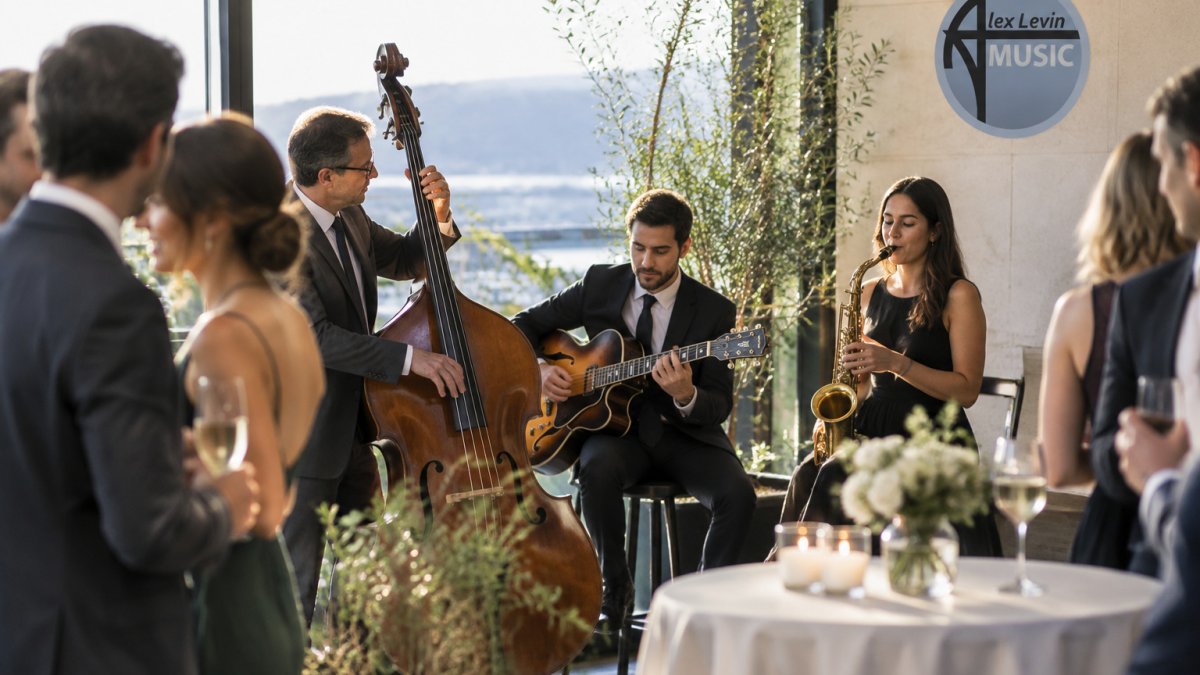
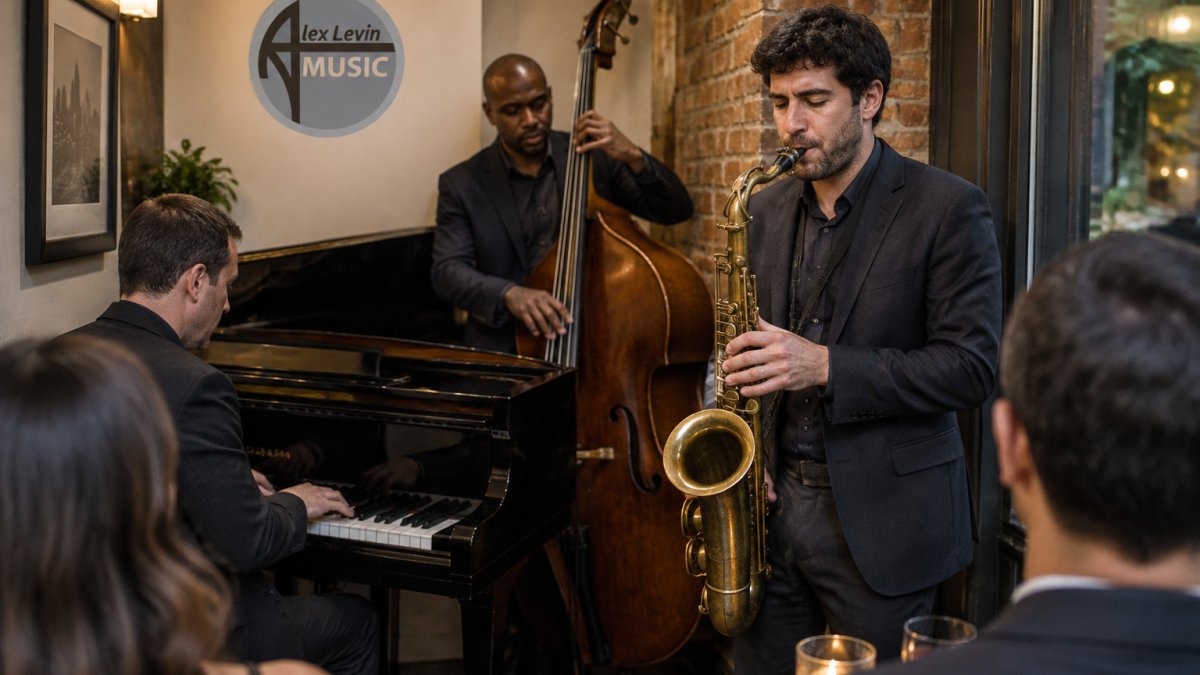
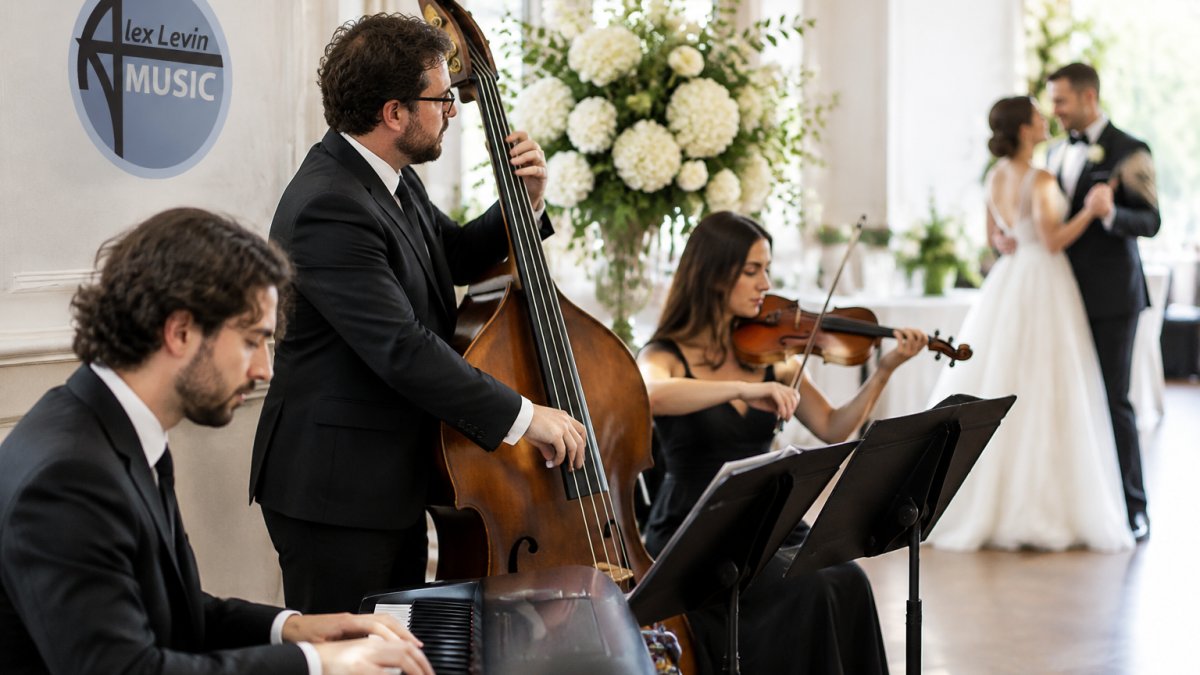
For dinners where conversation matters most, a soft ensemble works well. A jazz trio or a string duo can fill the room without competing with speeches or table talk. Musicians can play at a low volume to suit the room.
Position the musicians where they can be heard but not seen as the focus. A corner of the room or a raised area near the entrance often works better than the center of the floor. Ask the venue about sightlines and sound before the event so the ensemble does not end up crowded against a wall or too close to the kitchen.
Center-Stage Performances for Celebration-Focused Nights
Some galas are built around a moment of celebration. For these, a full band or a featured performer can take center stage after dinner. A swing band, a vocalist with a horn section, or a DJ paired with live percussion can turn the second half of the evening into a party.
Plan the transition carefully. Guests need a clear cue that the mood is changing, whether that is a toast, a lighting shift, or the end of the formal program. A common mistake is starting a high-energy set while people are still seated and eating, which leaves the room split between two moods.
Matching Entertainment to Your Event Timeline
A gala is not one event; it is a sequence of small events that share a room. The entertainment should change with each phase, and the change should feel intentional rather than abrupt. Most planners think in terms of arrival, cocktail hour, dinner, program, and dancing, but the strongest run of shows breaks those phases down further and assigns a specific musical cue to each transition.
Here is a practical phase-by-phase map that planners can adapt. It goes beyond the usual four-row summary by naming the moments where entertainment either supports the program or gets in its way.
| Event Phase | Typical Entertainment | Volume Level | Transition Cue | Watch Out For |
|---|---|---|---|---|
| Guest arrival and check-in | Solo pianist, harpist, or jazz duo | Low to moderate | Music begins 15-20 minutes before doors | Amplified music competing with the registration desk |
| Cocktail reception | Jazz trio or strolling acoustic duo | Moderate | A short musical lift as guests move from check-in | Sets that run long and delay the call to dinner |
| Call to dinner | Emcee announcement or a brief musical fanfare | Moderate | A clear, rehearsed cue from the emcee | Starting dinner music before guests are seated |
| First course | Quiet string duo or solo guitar | Low | Music drops under conversation level | Musicians positioned too close to serving stations |
| Between courses | Short table-side moment or solo feature | Low | A 3-5 minute feature, then back to background | Features that run long and slow service |
| Speeches and awards | Music paused or very soft underscore | Very low | Emcee handoff to the podium | Underscore that masks the speaker's first words |
| Dessert and live auction | Light trio or soloist | Low to moderate | Music lifts slightly as the program winds down | Auctioneer and band competing for the same attention |
| Dancing and celebration | Full band, swing band, or DJ with live percussion | High | A lighting shift or toast as the formal program ends | Starting the dance set while guests are still seated |
| Last song and send-off | Featured ballad or a short encore | Moderate to high | A rehearsed final song and thank-you | Letting the set fade out without a clear ending |
Sit down with your planner and write the schedule in 15-minute blocks before you choose performers. Note when doors open, when guests are called to dinner, when each course is served, when speeches begin and end, when awards are presented, and when the last song should play. Share that document with the entertainment team at least two weeks before the event so transitions can be rehearsed rather than improvised.
At Alex Levin Music, we enjoy working with clients on developing their plans for their events. We are more than just musicians; we are event partners who work on each project in collaboration with our clients. We can be quiet when appropriate, or our musicians can take center stage at your events.
Interactive Gala Activities and Games for Adults
Live music is not the only way to engage a room. Some clients add interactive elements that get guests moving and talking, especially at events where people do not know each other well.
Options include a quiz-style game during dessert, a short audience participation moment, or a murder mystery element woven through dinner. These work best when they are short, clearly explained, and do not interrupt the program. A five-minute activity between courses is often enough.
Be selective. Adults at a corporate gala may prefer low-key engagement, while a celebratory dinner for a milestone anniversary may welcome something more playful. Match the activity to the guest group and the event goal.
Live Music for Corporate Events: Choosing the Right Ensemble
Corporate galas have their own requirements. The audience often includes executives, clients, and partners, so the music needs to feel polished and appropriate for a professional setting.
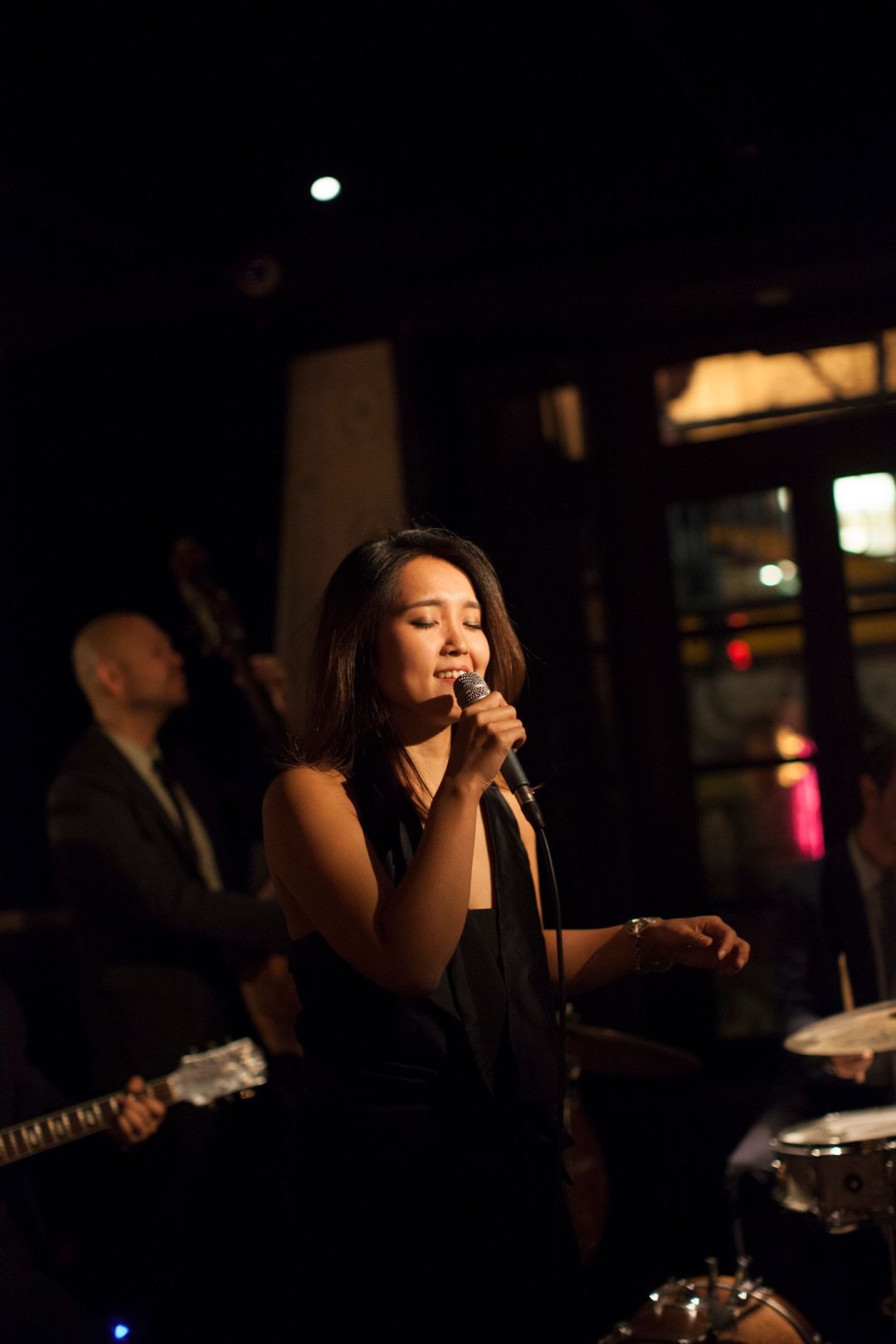
A jazz trio is a versatile option for many corporate dinners. A string quartet can suit formal awards nights. For a company celebration with dancing, a swing band or a combined ensemble with a DJ are options to consider.
When choosing an ensemble, consider these questions:
- How large is the room, and how loud can the music be?
- Will there be speeches or presentations that need quiet?
- What is the age range and style preference of the guests?
- Does the program include dancing, or is the evening mainly seated?
Share your answers with your entertainment partner. Alex Levin Music can customize the size of each ensemble to fit the room and the program.
Planning Venue Logistics, Sightlines and Sound
Venue details affect live entertainment more than many planners expect, and the constraints are usually invisible until load-in day. A ballroom with high ceilings and hard surfaces carries sound differently than a room with carpet and drapes. A room with a low ceiling may not accommodate a standing string quartet plus a grand piano. A space with a single 20-amp circuit near the stage may not support a full band with amplified instruments. These are not minor details; they determine which acts are even possible.
Walk the room with the venue's event manager and ask specific questions rather than general ones. The answers should go into a written technical summary that you share with the entertainment team.
Sound and noise limits. Ask whether the venue has a decibel limit, a curfew for amplified music, or a resident or neighboring-tenant sensitivity. Hotels with guest rooms above the ballroom often enforce a lower limit after a certain hour than a standalone event space. A jazz trio may be fine under any limit; a full band with horns and drums may need to be scaled back or repositioned. Most practitioners find that the limit is less about volume and more about low-frequency bass, which travels through walls and floors more than mid-range sound.
Ceiling height and rigging. Ask for the ceiling height at the stage location and whether rigging points are available. Aerial, acrobatic, and circus-style acts require certified rigging and often a minimum height that many hotel ballrooms do not have. Even non-aerial acts need headroom for a drum riser, a horn section standing on a riser, or a lighting truss. If the ceiling is low, a seated ensemble or a strolling format may be the better fit.
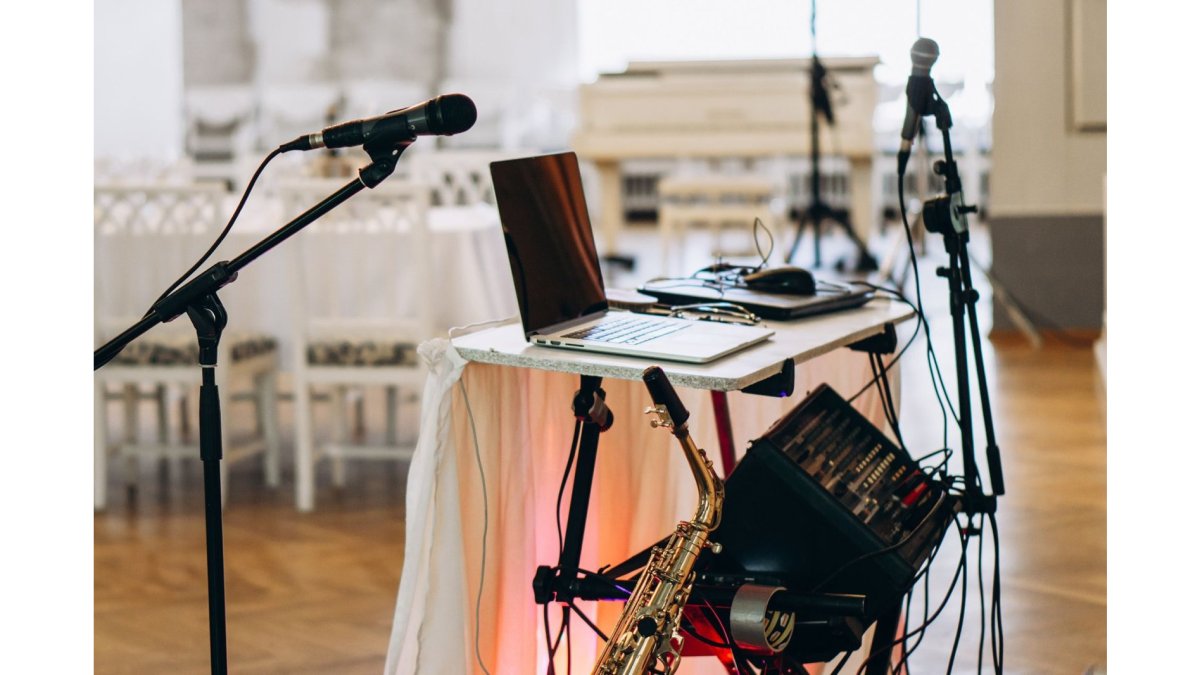
Power and load-in. Ask how many circuits are available at the stage, what amperage they carry, and whether the venue requires a licensed electrician for any tie-in. Ask about load-in times, freight elevator dimensions, and whether the room is shared with another event before yours. A rushed load-in is one of the most common causes of poor sound, because the ensemble never gets a proper soundcheck.
Sightlines. Musicians should be visible enough to create atmosphere but should not block views of the stage, the podium, or a screen. Ask the venue to mark the sightline from the farthest table to the podium, then place the ensemble outside that line. If the room has a balcony or a separate lounge, decide early whether music should reach those spaces; a single trio may not carry to a mezzanine without reinforcement, and adding reinforcement changes the sound in the main room.
Stage placement. A corner of the room or a raised area near the entrance often works better than the center of the floor for background music, because it keeps the ensemble out of the main traffic path and away from serving stations. For a center-stage performance, confirm that the stage can be set and struck within the venue's changeover window.
Build in time for setup and soundcheck, and confirm the schedule with venue staff at least a few days before the event. At Alex Levin Music, we come dressed to impress and provide a level of professionalism at the event that our clients have noticed. We have spent years playing at The Standard Hotel, Chez Oscar, The Hard Rock Hotel, and private residences in Manhattan, and we have learned to ask these questions before the event rather than on the day. Our reviews are consistently 5-stars, and a large part of that comes from planning the logistics in collaboration with our clients and their venues.
Watch out: the single most common logistics failure is discovering at load-in that the power, rigging, or ceiling height does not support the act that was booked. Confirm the technical requirements in writing with the venue before the contract is signed, not after.
Booking Your Gala Entertainment With Alex Levin Music
Booking works best when you contact us early and share the basics of your event. Tell us the date, the venue, the guest count, the program, and the atmosphere you want. We will talk through options with you and suggest an ensemble that fits the room and the timeline.
Alex Levin Music has more than 20 years of experience and offers everything from soloists to full bands, including jazz trios, string quartets, swing bands, and DJs. We work with clients on planning details, from arrival time to wardrobe requests, and we can adjust the size of each act to suit your event. Pricing depends on quantity, dates, and delivery, so contact us for a quote tailored to your gala.
Explore our New York City booking area to see how we serve local events, review our full range of services to find the right format, and read more about corporate event bands in NYC. If you are choosing a jazz group for a corporate evening, our guide to selecting the perfect jazz ensemble for corporate events covers the key questions. For more entertainment ideas, see our corporate gala entertainment ideas article.
Frequently Asked Questions
What are some good entertainment ideas for a gala dinner?
Strong options include a jazz trio or string quartet during cocktail hour, a swing band for the dinner and dancing portion, or a DJ for late-night energy. Many planners combine a quiet ensemble during the meal with a livelier act afterward. Alex Levin Music works with clients to match the ensemble to the event's atmosphere, guest count and venue, so the music supports the evening rather than competing with conversation.
How should entertainment fit into a gala dinner schedule?
Map the music to each phase of the evening: arrival and cocktail reception, seated dinner, and dancing or program. Quieter performance suits conversation-heavy moments, while the energy can rise once guests are ready to move. Share your run-of-show with your entertainment partner early so set lengths, breaks and any speeches or awards can be planned together.
What live music works best for a formal dinner?
For most formal dinners, a jazz trio, string quartet or small acoustic ensemble works well because it adds atmosphere without overpowering conversation. Larger swing or dance bands suit galas that include dancing. Sound levels and sightlines matter as much as the genre, so discuss the room layout and acoustics before choosing.