 How-to
Hiring Jazz Musicians for Weddings: A Planning Guide
Last Updated: November 24, 2026
Quick Summary
Hiring jazz musicians for weddings lets live music shape the mood of each moment, from ceremony to dancing. Most couples pick a trio, quartet, or big band based on guest count, venue space, and the mood they want. Ask every band the same questions and compare total costs before booking.
- Couples usually choose live jazz for atmosphere, flexibility, and the visible craft musicians bring.
- A trio suits intimate ceremonies, a quartet fits mid-size receptions, and a big band suits large ballrooms.
- Under about 75 guests, a trio usually fills the room; between 75 and 150, a quartet works well.
- Walk the venue with your musicians to confirm space, power, and sound limits before choosing a size.
- Request a written quote for your event and compare every line item, not just the base rate.
Table of Contents
- Why Couples Choose Live Jazz for Their Wedding
- Choosing the Right Jazz Ensemble: Trio, Quartet, or Big Band
- Matching Live Music to Each Moment of the Day
- Planning Music for the Wedding Reception
- Questions to Ask and How to Compare Quotes
- Working With Your Musicians on the Plan and Booking Your Date
- Frequently Asked Questions
Why Couples Choose Live Jazz for Their Wedding
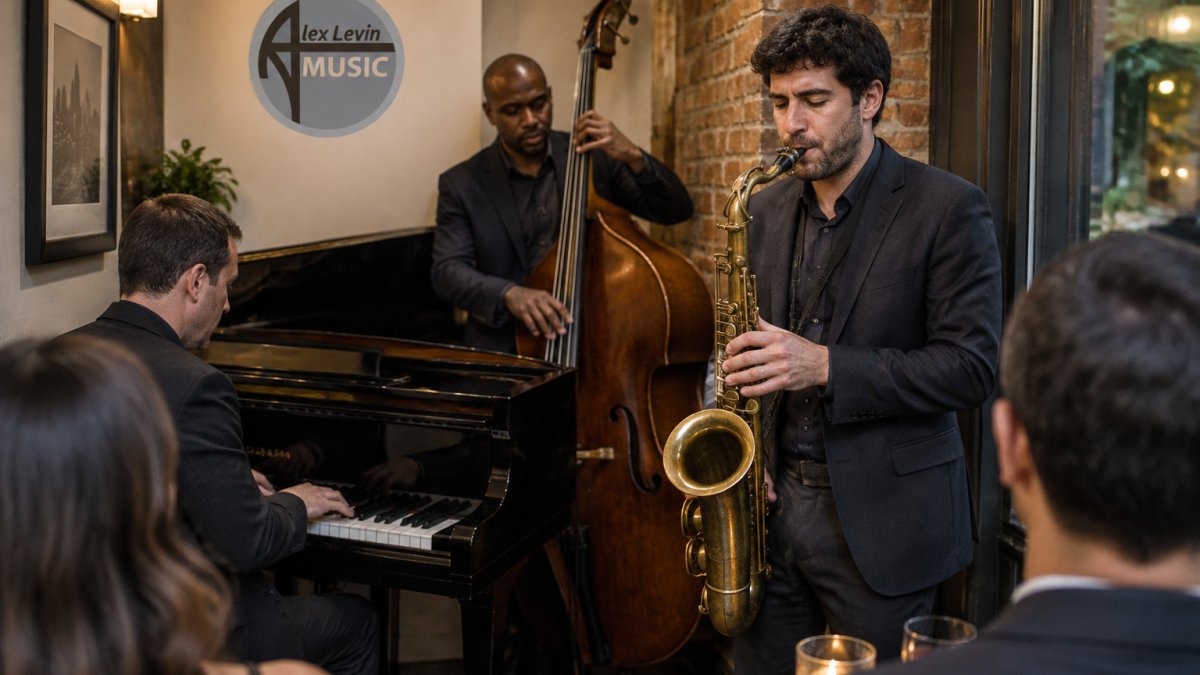
Hiring jazz musicians for weddings changes how a room feels from the first guest through the last dance. At Alex Levin Music, we have spent over 20 years playing ceremonies, cocktail hours, and receptions. Guests notice when the music responds to the room.
Couples usually come to live jazz for three reasons. The first is atmosphere: a trio or quartet sets an elegant tone without overpowering conversation. The second is flexibility, since a band can shift from quiet background music during dinner to upbeat standards once dancing starts. The third is presence. Guests see the musicians, and that visible craft gives the day a sense of occasion.
Many couples also value that live musicians can adapt in real time. If a toast runs long or the dinner service moves ahead of schedule, a good band adjusts without fuss. That kind of responsiveness is hard to program in advance.
Choosing the Right Jazz Ensemble: Trio, Quartet, or Big Band
The right ensemble depends on your guest count, your venue, and the mood you want. A trio, a quartet, and a big band each solve a different problem, so it helps to decide what you need before comparing names.
A jazz trio is usually the most versatile choice for weddings. It fits intimate ceremonies, smaller venues, and budgets that need to stretch. A quartet adds a horn or extra voice, giving the sound more depth for a larger reception. A big band brings a full, swinging sound that suits ballrooms and couples who want a dance floor packed all night.
Consider these questions when you narrow your options:
- How many guests will be in the room at one time?
- Will the music need to stay in the background during dinner, or lead the dancing?
- How much space does the venue have for musicians and equipment?
- Do you want a classic sound, a swing sound, or a mix?
Comparing Ensemble Sizes and Instrumentation
The table below summarizes how each common size typically works at a wedding. Your musicians can tailor the exact lineup to your event.
| Ensemble | Typical Instrumentation | Best For | Watch Out For |
|---|---|---|---|
| Jazz trio | Piano, bass, drums or vocals | Intimate ceremonies, small venues, background dining | Less volume for large dance floors |
| Jazz quartet | Trio plus horn or extra voice | Mid-size receptions, mixed programs | Needs more setup space |
| Big band | Brass, reeds, rhythm section | Large ballrooms, dancing-focused weddings | Requires the most room and budget |
Each ensemble has tradeoffs. A trio is easy to place and quiet enough for conversation, but a big band can overwhelm a small room. A quartet often hits the middle ground. Ask your musicians to recommend a lineup based on your guest list and floor plan rather than choosing by instrument count alone.
Venue Logistics and Sound Requirements
Before you settle on a size, walk the room with your musicians or share a floor plan. A trio needs roughly a 6-by-8-foot footprint for players and stands; a quartet needs closer to 8-by-10 feet; a big band can need 20 feet or more of width plus room for music stands and horns. Confirm whether the venue supplies a stage, whether there is a loading dock or freight elevator, and how early the band can load in. Ask about power: most small jazz groups need one or two standard 15-amp circuits near the performance area, while a big band with amplification may need more. Check whether the venue has sound limits or a curfew that affects volume and end time. If the event is outdoors, confirm rain backup and whether the band supplies its own tent or cover. Ask whether the band brings amplification and a small PA, or whether the venue provides a house system with a sound engineer.
A Simple Decision Framework
Start with guest count. Under about 75 guests, a trio usually fills the room. Between roughly 75 and 150, a quartet gives you headroom for dancing without overwhelming dinner conversation. Above 150, or in a large ballroom, a big band or an expanded lineup keeps the sound from thinning out. Then check the venue's space, power, and sound rules against that size. Finally, match the ensemble to the moments you care most about: if the ceremony and dinner matter more than a packed dance floor, a trio or quartet is often the better fit; if dancing is the priority, plan for a larger group or a band that can add players for the reception. Ask your musicians to recommend a lineup based on your guest list and floor plan rather than choosing by instrument count alone.
Matching Live Music to Each Moment of the Day
Wedding music works best when it follows the shape of the day. Guests move from arrival to ceremony to cocktails to dinner to dancing, and each stage asks for a different volume and energy.
During the ceremony, a soft jazz arrangement or a single featured voice can frame the moment without distracting from vows. Cocktail hour is often the easiest time to showcase the band, since guests are mingling and the room can take a lively standard. Dinner calls for lower volume and steady tempos. Once the dance floor opens, the music can rise in energy and swing.
Ask your musicians how they plan transitions between these moments. A well-planned set list keeps the energy consistent and prevents awkward gaps.
Planning Music for the Wedding Reception
The reception is where most of your band's time will be spent, so plan it with care. Start by mapping the evening: when the first dance happens, when dinner is served, and when the dance floor opens. Share that timeline with your musicians so they can build sets around it.
Discuss song requests early. Some couples want a fixed list of standards, while others prefer to leave most of the program to the band. Either approach works, but agree on a clear plan so the music supports your guests rather than surprising them. Also confirm set lengths and breaks, since a steady rhythm of playing and rest keeps performances fresh.
Think about your guests as well. A mix of familiar standards and a few lively numbers often works best for mixed-age crowds.
Questions to Ask and How to Compare Quotes
Before you book, ask every band the same questions so you can compare them fairly. Good questions include how long the sets run, how many musicians will perform, whether the lineup can change for ceremony versus reception, and how the band handles requests. Ask about setup needs, sound equipment, and what the venue should provide.
A Vetting Checklist
Use the same list for every band so the answers line up side by side:
- Can I see live video of the actual musicians who will play my date, not a promo reel of a different lineup?
- Can you provide references from weddings at venues similar to mine?
- What is your repertoire, and how do you handle requests outside it?
- Who will emcee announcements, and is that included?
- What will the musicians wear, and can they match my dress code?
- How many breaks, and how long, and is recorded music played during breaks?
- Who is my main contact on the day, and how do we reach them?
- What is your backup plan if a musician is ill or unavailable?
How to Compare Quotes and Understand Total Costs
Quotes can vary widely, so compare what each one includes rather than the headline number. Break every quote into the same line items: number of musicians, performance hours, travel and setup fees, sound equipment and PA, overtime rate, deposit amount, and whether a planning meeting or site visit is included. Ask for the total cost in writing, not just a base rate. Pricing depends on date, length of performance, and ensemble size, so request a written quote for your specific event rather than relying on general estimates. You can review the questions to ask before booking your wedding band and what their answers should tell you to see what each answer should reveal. You can request a quote through the Alex Levin Music website.
Compare the all-in figure for the same hours and the same ensemble size.
Contracts, Cancellation, and Backup Plans
Ask about contracts and backup plans too. Confirm what happens if a musician is unavailable and how changes to the date or timing are handled. Check the cancellation and postponement terms, the deposit refund policy, and whether the band carries liability insurance if the venue requires it. Confirm in writing who supplies sound equipment and whether the band has a substitute list for each instrument. Ask how schedule changes on the day are handled, such as a delayed dinner or an extended cocktail hour, and what the overtime rate is. A clear written agreement protects both you and the band.
A Step-by-Step Booking Timeline
Most couples find the following sequence works well:
- Research and shortlist bands 9 to 12 months before the date, or earlier for peak seasons.
- Request quotes and check availability for your specific date.
- Review live video and references, then schedule a call or meeting.
- Confirm the ensemble size and the moments you want covered.
- Sign the contract and pay the deposit to hold the date.
- Finalize the timeline, song requests, and logistics 4 to 6 weeks out.
- Confirm load-in, sound, and contact details 1 to 2 weeks before the event.
Watch out: leaving the contract review until after you have paid a deposit can lock you into terms you have not read, so read the cancellation and substitution clauses before you sign.
Working With Your Musicians on the Plan and Booking Your Date
We enjoy working with couples to develop their music plans. At Alex Levin Music, we treat ourselves as event partners rather than simply performers. We meet with clients to talk through the schedule, the venue, and the feeling they want for their day. We can be quiet and unobtrusive when the moment calls for it, or take center stage when the celebration needs energy. Our musicians arrive dressed to impress and bring a level of professionalism to the event. We have played for years at venues including The Standard Hotel, Chez Oscar, and The Hard Rock Hotel, as well as private residences in Manhattan.
If you are planning a wedding in the New York area, booking early gives you the most flexibility on dates and ensemble choices. You can learn more about when to book a wedding string quartet with Alex Levin Music to plan your timeline. Once you have shortlisted options, use our guide to choosing the right musician for your event style and audience to match the band to your celebration. Our services page outlines the full range of performances and how booking works.
For the day itself, many couples begin with cocktail hour music, which sets the tone before dinner and dancing begin.
The music you choose will shape how your guests remember the evening. Start the conversation early, bring a clear picture of your day, and let your musicians help you shape it into something memorable.
Frequently Asked Questions
How much does it cost to hire a jazz band for a wedding?
Pricing depends on the ensemble size, the number of performance hours, the date, and travel to the venue. Because every wedding is different, Alex Levin Music builds a quote around your specific plan rather than offering a fixed rate. Visit the Alex Levin Music website or contact the team directly for current pricing and a detailed quote that lists exactly what is included.
How many musicians do I need for a wedding?
The answer depends on the size of your guest list, the size of your room, and how you want the music to feel. A jazz trio often suits an intimate ceremony or a smaller reception, while a larger ensemble can fill a big room and support dancing. Alex Levin Music works with couples to match the number of players to the venue and the mood they want for each part of the day.
What should I ask a jazz band before booking them for my wedding?
Ask how the musicians will be selected and whether the ensemble can be adjusted to your room and timeline. Confirm how many sets will be played, whether the music can be customized for ceremony, cocktail hour, dinner, and dancing, and how changes to your plan are handled closer to the date. It also helps to ask about attire, arrival time, and how the team coordinates with your planner and venue.
Can a jazz band play during both the ceremony and reception?
Yes. Many couples book the same ensemble for the ceremony, cocktail hour, and reception, which keeps the sound consistent across the day. Alex Levin Music can plan music for each moment, with a quieter setting for the ceremony and a fuller sound for the reception, and the team can discuss the timing and setup with you during planning.