 How-to
Hiring Live Entertainment for Events in 2026: A Step-by-Step Guide
Last Updated: November 21, 2026
Quick Summary
To hire live entertainment for an event, first define your guest count, venue, and the mood you want, then match the act to each part of the evening. Ask each act for references from similar events, confirm the exact lineup, and get insurance, backup plans, and load-in times in writing before booking.
- Write down guest count, venue, and desired guest feel before contacting any act.
- Match the act to the event purpose: jazz trios suit receptions, string quartets suit ceremonies.
- Ask for references from two recent events of similar size, venue, and tone.
- Confirm the exact lineup, insurance certificate, and backup plan for illness or equipment failure.
- Get performance duration, breaks, overtime terms, and cancellation rules in writing before the date.
Table of Contents
- Why Live Entertainment Changes the Feel of an Event
- Step 1: Define Your Event Goals, Guest Count, and Venue
- Step 2: Choose the Right Act, from Live Bands for Hire to Jazz Trios and DJs
- Step 3: Ask the Right Questions and Plan Logistics Early
- Booking Your Live Entertainment for Your Next Event
- Frequently Asked Questions
Why Live Entertainment Changes the Feel of an Event
Hiring live entertainment for events changes how guests experience the room. A live ensemble responds to the crowd, shifts with the mood of the evening, and gives the space a sense of occasion that a playlist rarely matches.

We treat live music as an event partner, not a background feature. That means the music supports the moment: quiet and unobtrusive during cocktail hour, then confident and central when the dance floor opens.
Step 1: Define Your Event Goals, Guest Count, and Venue
Start with three questions: what should guests feel, how many people will be there, and what kind of room will host the music. A cocktail reception calls for a different sound than a seated dinner or a dance party, and each needs a different amount of space.
Guest count and venue shape almost every other decision. Tight rooms and unusual layouts need planning before the booking, not on the day. Hiring musicians for tight venues offers practical guidance on which musicians fit a tight or unusual space.
Write these details down before you contact any act. A clear brief lets a performer recommend options that actually fit your space and schedule.
Step 2: Choose the Right Act, from Live Bands for Hire to Jazz Trios and DJs
Match the act to the purpose of the event, not to a genre preference. The same room can call for a string quartet at a ceremony and a swing band three hours later, and the right choice depends on four variables: audience size, age range, venue constraints, and how much audience participation you want.
A simple decision framework
- Audience size and age range: A small, seated, mixed-age group usually responds better to a jazz trio or string ensemble than to a high-volume band. A younger, standing crowd tends to engage more with a full band or a DJ who reads the room.
- Venue constraints: Tight rooms, low ceilings, and shared walls favor acoustic or lightly amplified ensembles. Large ballrooms and outdoor spaces can absorb a fuller band and louder sound.
- Event tone: Formal ceremonies and seated dinners call for precision and restraint. Galas and holiday parties often want a sense of occasion without drowning out conversation. Dance-focused celebrations need a group that can build and hold energy.
- Desired participation: If guests should mingle and talk, keep the music supportive. If the goal is a dance floor, choose an act that can drive a set and adjust on the fly.
Matching formats to moments
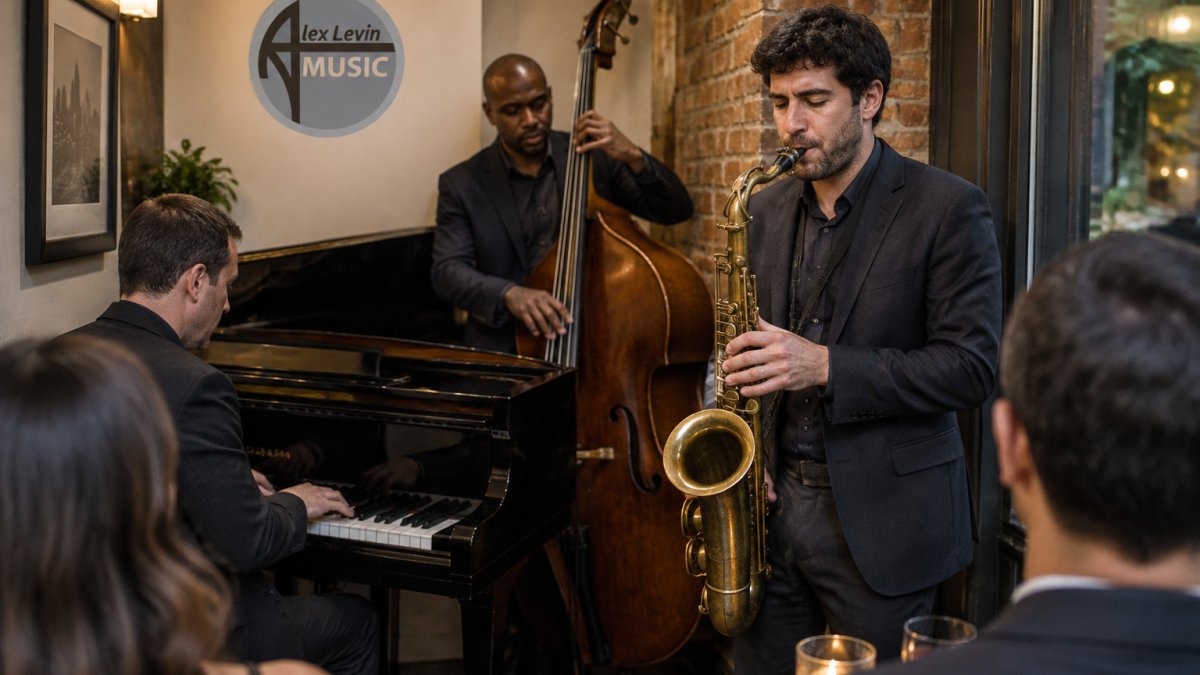
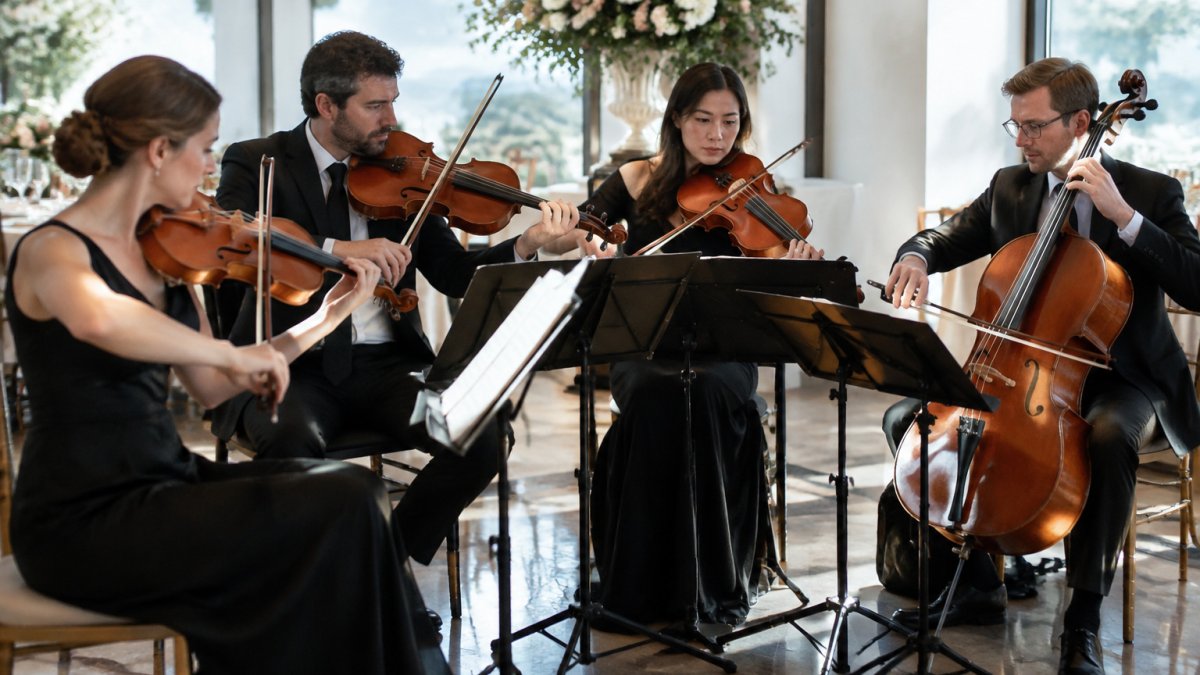
A jazz trio works well for receptions and dinners where music should stay in the background. A string quartet suits ceremonies and formal occasions. Swing bands and full live bands bring energy to dance-focused celebrations, and DJs fit events that need a long, continuous playlist.
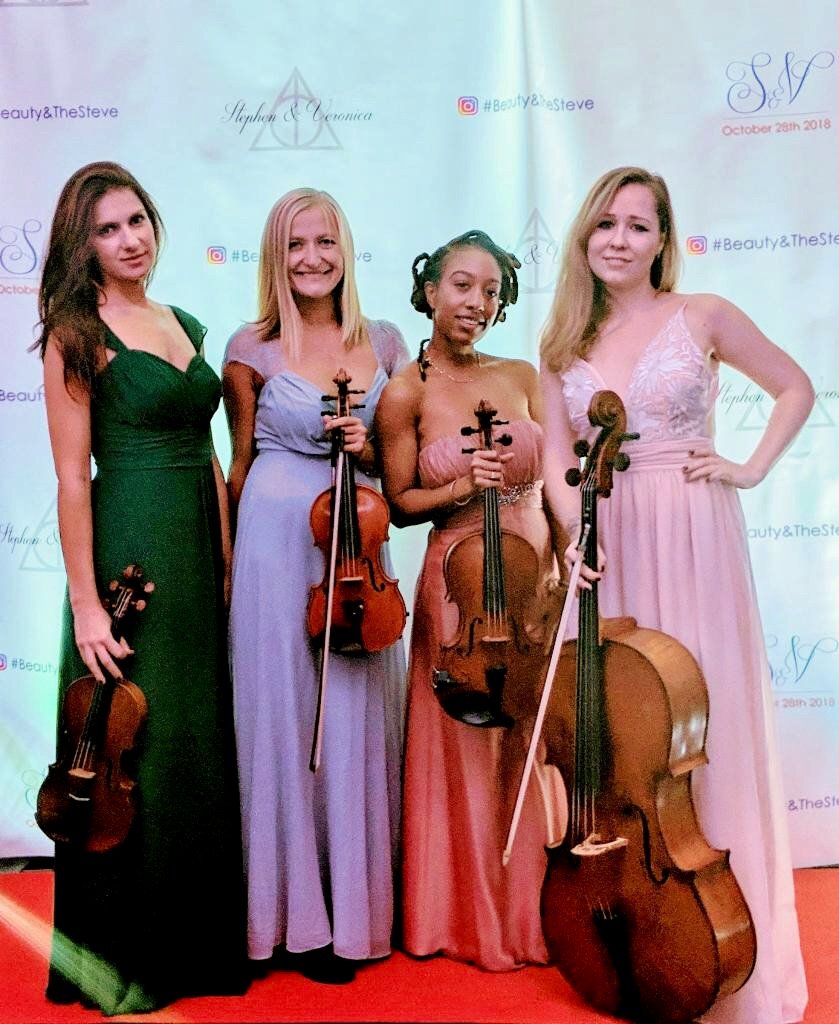
Ask any performer how they adjust repertoire and volume for each part of the event, and ask to see photos of the actual group being offered rather than a generic promotional image. How to vet professional event musicians before you book covers how to check a musician's credentials before committing.
Live Music for Weddings: Ceremony, Cocktail Hour, and Reception
Weddings need music in several places, and each moment has different demands. The ceremony calls for something gentle and precise. Cocktail hour benefits from a relaxed jazz or string sound. The reception shifts toward dancing and celebration. Planning the timeline with your musicians ahead of time keeps the transitions smooth.
Couples often ask whether a live group is worth the added cost over a DJ. The answer depends on how much of the day they want live.
Live Entertainment for Corporate Events: Galas and Holiday Parties
Corporate galas and holiday parties need music that suits the brand and the crowd. The goal is usually to create a polished atmosphere without drowning out conversation.
Share the event agenda, speaker schedule, and any moments when the room should go quiet.
At Alex Levin Music, we enjoy working with clients on developing their plans for their events.
The right act depends on audience size, venue constraints, event tone, and how much participation you want. Here is how the main formats fit common moments.
| Format | Best for | Key difference |
|---|---|---|
| Jazz trio | Receptions and dinners | Stays in the background |
| String quartet | Ceremonies and formal occasions | Gentle, precise sound |
| Swing band or full live band | Dance-focused celebrations | Builds and holds energy |
| DJ | Events needing a long, continuous playlist | Non-stop music without live players |
| Acoustic or lightly amplified ensemble | Tight rooms and low ceilings | Suits shared walls and small spaces |
| Full band | Large ballrooms and outdoor spaces | Absorbs fuller, louder sound |
Step 3: Ask the Right Questions and Plan Logistics Early
Before you book, treat the conversation with each act as an evaluation, not a sales call. Questions to ask before booking a wedding band explains what good answers from a band should sound like. The strongest performers answer specifically, and the questions below separate them from the ones who only send a rate sheet.

Questions that reveal real experience
- How long have you played events like mine, and can you share references from two recent ones? Ask for events of similar size, venue type, and tone, not just any past client.
- Who exactly will be on stage? Confirm the actual lineup and instruments, and ask whether substitutions are possible.
- What is your repertoire, and how do you handle requests? Ask for a sample setlist and how far in advance special requests need to be submitted.
- Are you insured, and can you provide a certificate of insurance? Many venues require general liability coverage before load-in, and the requirement usually falls on the performer.
- What is your backup plan if a musician is ill or equipment fails? A professional act has a bench of substitute players and a plan for a broken amp or missing cable.
- How do you handle overtime, extended sets, and breaks? Get the performance duration, break structure, and overtime terms in writing before the date.
What a written agreement should cover
A clear contract protects both sides. Look for the performance date, arrival and load-in time, start and end times, total performance duration, number and length of breaks, the exact lineup, wardrobe expectations, and the deposit and balance schedule. Confirm the cancellation and postponement terms, including what happens if the venue changes or the event is rescheduled. Ask whether travel is included or billed separately, and whether there are any additional charges for equipment, sound reinforcement, or extended setup.
Technical and logistics checklist
- Space and staging: Confirm the footprint the ensemble needs and whether the venue provides a stage, risers, or just floor space.
- Power: Ask what the group needs for amplification and lighting, and confirm outlet locations with the venue.
- Sound check and load-in: Agree on a load-in window and a sound check slot that does not collide with the venue's setup or the caterer's schedule.
- Sound limits: Some venues enforce decibel limits or cutoff times. Share those rules with the performers before the event, not during it.
- Weather and outdoor plans: For outdoor events, agree on a covered backup location and a decision deadline for moving the performance.
Watch out: skipping the insurance and contract conversation is the most common way a booking goes sideways, because venue requirements surface late and leave no time to resolve them.
At Alex Levin Music, we enjoy working with clients on developing their plans for their events, and we walk through these details together before the date. We are more than just musicians, we are event partners who work on each project in collaboration with our clients.
Booking Your Live Entertainment for Your Next Event
Live entertainment works best when it is planned as part of the event from the start. Define your goals, guest count, and venue, choose the act that fits each part of the evening, and settle the logistics early.
At Alex Levin Music, we enjoy working with clients to shape each plan around their event and their guests. To book live music for your next event, book your live entertainment and share your date, venue, and vision.
Frequently Asked Questions
How do I hire live entertainment for an event?
Start by defining your event type, guest count, venue, and the moments you want music to cover, such as a ceremony, cocktail hour, or dancing. Then contact Alex Levin Music with those details so the team can recommend an ensemble, from a jazz trio or string quartet to a swing band or DJ. Pricing depends on the act, date, and scope of the event, so request a quote through the Alex Levin Music website for current rates and availability.
How far in advance should I book live entertainment?
Book as early as you can, especially for weekend dates, holiday season events, and popular venues. Early booking gives you time to meet with the team, customize the ensemble size, and plan the timeline for each part of the event.
What type of live entertainment is best for a wedding or corporate event?
The best choice depends on the atmosphere you want. A string quartet or jazz trio suits a refined ceremony and cocktail hour, while a swing band or full live band can carry dancing at a reception or gala. Alex Levin Music can adjust the ensemble to match your guest count and room.
What should I ask a live entertainment provider before booking?
Ask how the team plans each event with clients, how the performers are vetted, and how the act can be adjusted for your venue's size and acoustics. Confirm arrival times, wardrobe expectations, and how the music will follow your timeline. Ask about changes close to the event date and what happens if plans shift. Clear answers to these questions help you compare providers on professionalism and reliability.