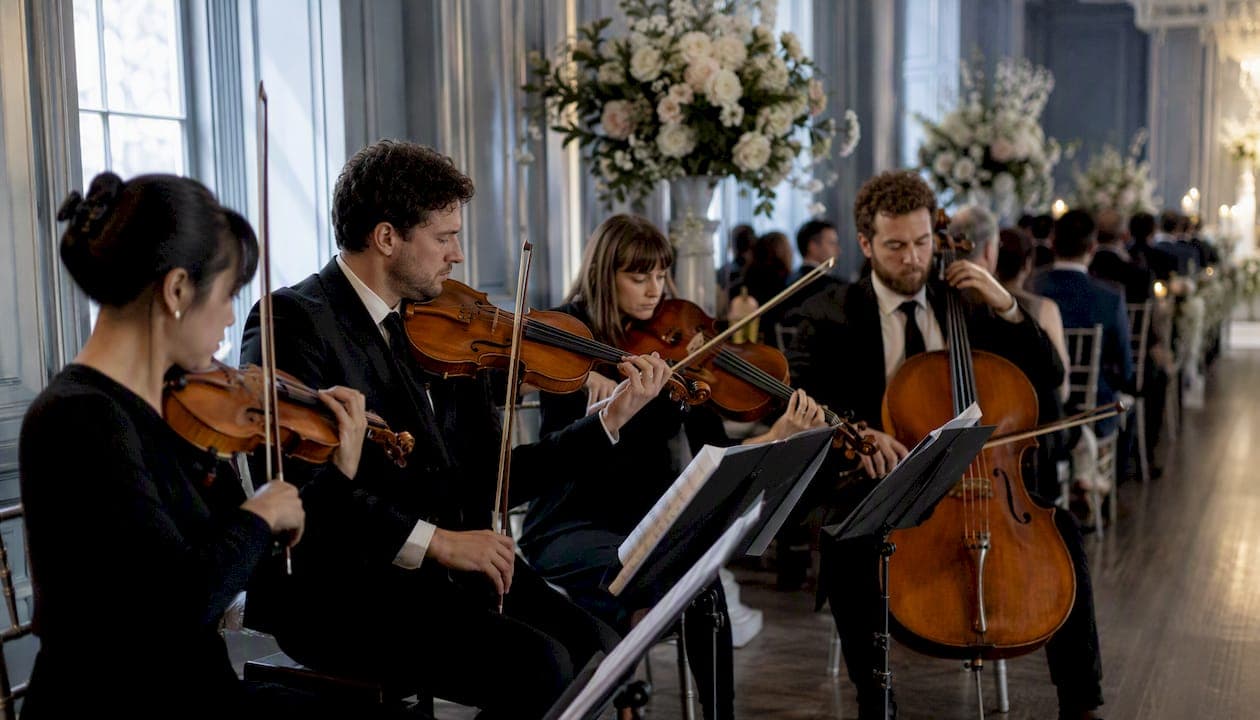
Processional music is the music that plays as the wedding party walks down the aisle, marking the official start of the ceremony. According to The Free Dictionary, a processional is music composed specifically to accompany a formal procession. In a wedding context, it does three things at once: it sets the emotional tone, cues participants to begin walking, and signals to every guest that the ceremony has begun. The two songs couples reach for most often are Wagner's Bridal Chorus ("Here Comes the Bride") and Pachelbel's Canon in D, though neither is required, and the field of options is far wider than most couples realize.
Table of Contents
- What is processional music and where does it fit in the ceremony?
- Why processional music shapes the whole ceremony mood
- Classic and modern processional song examples
- How to choose and coordinate your processional music
- A sample ceremony music timeline
- Key Takeaways
- A professional musician's perspective on processional timing
- Live ceremony music from Alexlevinmusic
- Useful sources
What is processional music and where does it fit in the ceremony?
The ceremony has four distinct musical phases: the prelude (background music as guests are seated), the processional (entrances), the ceremony itself (any readings, unity rituals, or hymns), and the recessional (the couple's exit). The processional is the hinge between casual gathering and the formal rite.
The standard entrance order runs like this:
- Grandparents and parents are escorted to their seats
- The officiant and groom (or both partners) take their positions at the altar
- Bridesmaids and groomsmen walk, often in pairs
- Flower girl and/or ring bearer
- The bride (or the final partner) enters last
Most couples need two or three distinct pieces of music: one for parents, one for the wedding party, and a separate, more impactful song for the bride's entrance. Stanford's Office for Religious & Spiritual Life notes that using two separate compositions for attendants and the bride is common practice, and it gives the bride's entrance a clear, distinct emotional lift. How long each piece needs to run depends on aisle length and party size, so there is no universal answer.
Why processional music shapes the whole ceremony mood
The processional does more than fill silence. It controls the room. When the music shifts, guests instinctively turn, sit up straighter, and quiet down. A well-chosen piece at the right tempo guides walkers without anyone counting steps, and it frames the entrance visually so the moment reads as significant rather than logistical.
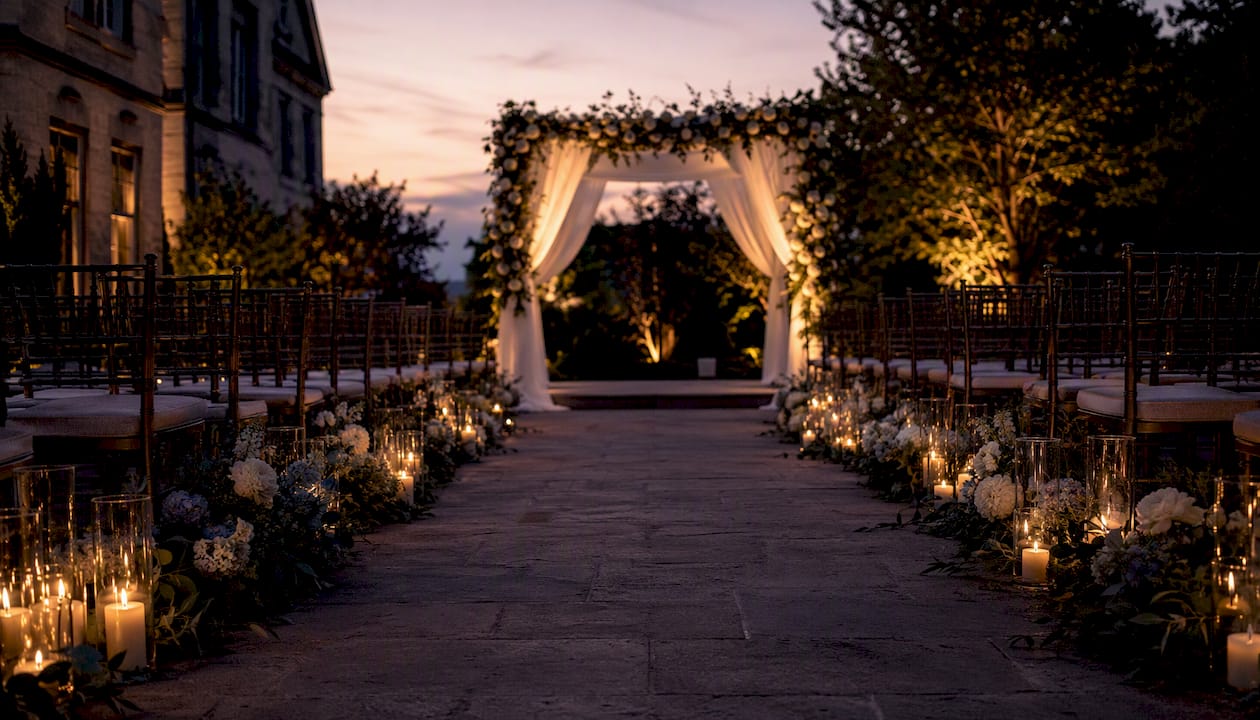
Tempo is the most underrated variable. A piece that is too fast turns a dignified walk into a march; too slow and the wedding party looks like they are wading through water. The arrangement matters too: a full string quartet version of Canon in D fills a cathedral differently than a solo piano version in a garden venue.
Pro Tip: Pick the bride's entrance song first. Every other piece in the processional should build toward that moment. If you choose the wedding party's song after the bride's, you can match the emotional arc rather than accidentally front-loading the most powerful music.
Classic and modern processional song examples
Three classical pieces dominate American wedding ceremonies, and each has a distinct character worth understanding before you default to one.
Wagner's Bridal Chorus ("Here Comes the Bride") is the most recognized processional in Western culture. It is stately and unmistakable, but some couples avoid it because of its association with Wagner's personal history or simply because it feels expected.
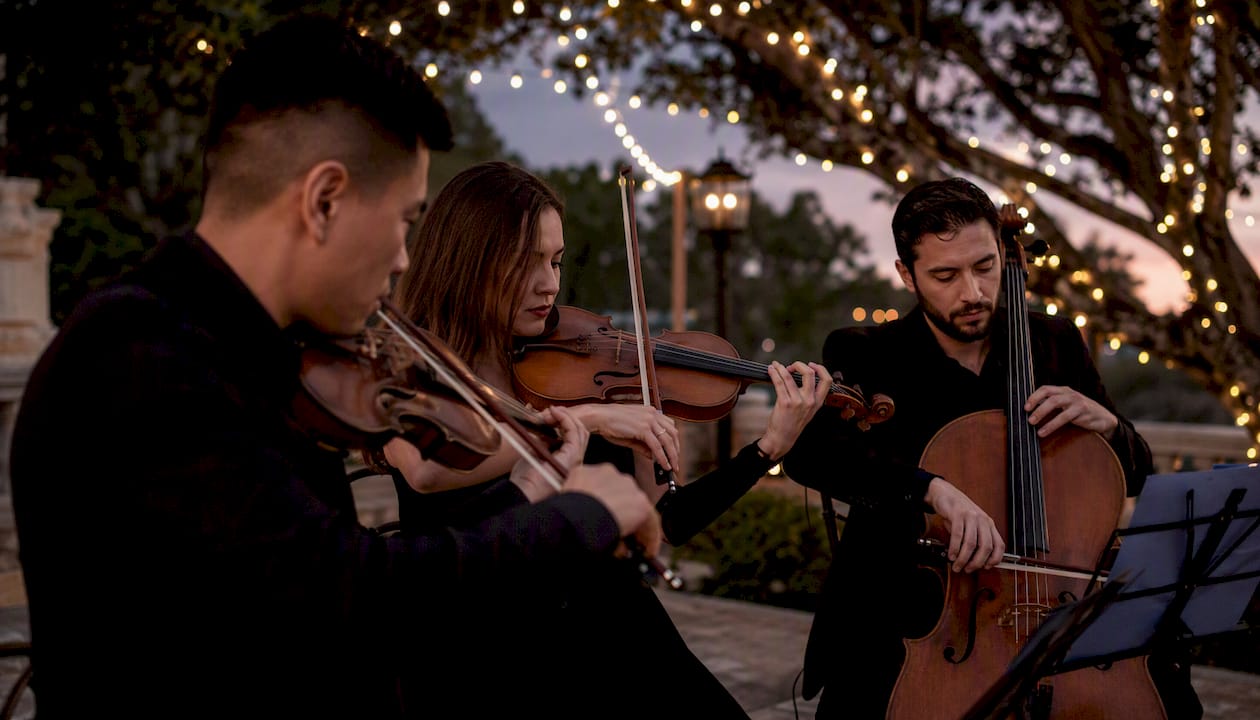
Pachelbel's Canon in D is the most versatile of the three. Its repeating bass line and gradual harmonic build make it work at almost any tempo, in almost any arrangement, for almost any venue. A string quartet version feels formal; a solo guitar version feels intimate.
Prince of Denmark's March (also called the Trumpet Voluntary, long attributed to Purcell but composed by Jeremiah Clarke) carries a regal, ceremonial weight that suits larger venues and formal ceremonies. It gained renewed popularity after several high-profile royal weddings.
Beyond the classical canon, couples increasingly choose instrumental covers of modern songs because they carry personal meaning without the lyric distraction that can pull guests' attention away from watching the entrance. A string quartet arrangement of a favorite pop song often lands better than the original recording during a visual moment.
| Song | Style | Best Venue Fit | Instrumentation |
|---|---|---|---|
| Bridal Chorus (Wagner) | Traditional march | Any size | Organ, full ensemble |
| Canon in D (Pachelbel) | Classical, flowing | Any size | String quartet, piano, guitar |
| Prince of Denmark's March | Regal, ceremonial | Large/formal | Brass, organ |
| Modern instrumental cover | Contemporary | Intimate to mid-size | Piano, guitar, strings |
For a role-by-role breakdown of processional song picks organized by entrance order, that resource is worth bookmarking before your planning session.
How to choose and coordinate your processional music
Start with the bride's entrance, not the first song. Once that piece is locked, work backward so the preceding music builds toward it rather than competing with it. The Evore's practitioner guidance recommends this approach specifically because it prevents the common mistake of front-loading the most emotionally powerful music and leaving the bride's entrance feeling anticlimactic.
- Select the wedding party song — It should feel like a setup, not a climax.
Pro Tip: Tell your musician exactly what the cue is for the bride's entrance — not just "when she appears at the door" but the specific measure or beat where the new piece begins. Ambiguous cues cause the most timing problems on the day itself.
Avoiding common wedding music planning mistakes starts with these coordination conversations happening weeks before the ceremony, not the morning of.
A sample ceremony music timeline
This timeline is a starting framework. Adjust durations based on your venue size and party count.
| Phase | Music Role | Typical Duration | Cue Notes |
|---|---|---|---|
| Guest seating (prelude) | Ambient background music | — | Begins as doors open |
| Parents' entrance | Processional piece 1 | 2–5 min (total processional) | Cue: parents reach the aisle |
| Wedding party entrance | Processional piece 2 | 2–5 min (total processional) | Cue: first attendant steps in |
| Bride's entrance | Processional piece 3 (peak) | 2–5 min (total processional) | Cue: agreed visual signal |
| Ceremony | Optional hymn or reading music | Varies | Per officiant's order |
| Recessional | Upbeat exit piece | 1–2 min | Cue: couple turns to exit |
The Knot notes that processional song length varies depending on procession size, so a large wedding party may need a longer or repeated arrangement. For a detailed ceremony music timeline with cue-by-cue guidance, that planning guide covers the full arc from prelude to recessional.
Key Takeaways
Processional music is the ceremony's emotional ignition: choose the bride's entrance song first, match tempo to walking pace, and coordinate cues with your musicians well before the wedding day.
| Point | Details |
|---|---|
| Core definition | Processional music accompanies formal entrances and marks the official start of the ceremony. |
| Pick the peak first | Choose the bride's entrance song before any other piece so the arc builds toward it. |
| Plan for multiple songs | Most ceremonies need two to three pieces: parents, wedding party, and bride each benefit from distinct music. |
| Live music adapts | Live musicians can adjust tempo in real time; a recording cannot respond to a slow walk or a late entrance. |
| Alexlevinmusic for ceremony music | Alexlevinmusic offers solo piano, string quartets, and hybrid DJ/live ensembles with rehearsal coordination included. |
A professional musician's perspective on processional timing
The detail most couples overlook is not the song choice. It is the transition measure. When you have two or three pieces in your processional, the moment the music changes is the moment the room holds its breath. If your musician does not know the exact visual cue, that breath turns into an awkward pause or a rushed entrance.
After years of playing wedding ceremonies, the single most reliable fix is this: at rehearsal, walk the transition yourself. Stand at the back of the aisle, watch the flower girl pass the midpoint, and confirm that your musician sees the same thing you do. That shared reference point is worth more than any song selection debate.
Live ceremony music from Alexlevinmusic
For couples who want the processional to feel exactly right, live music for your ceremony is the difference between a moment that lands and one that almost lands. Alexlevinmusic provides solo piano, string quartets, harp, jazz trio, and DJ/hybrid ensembles for ceremonies in Philadelphia, New York, and beyond. Every booking includes timeline coordination and rehearsal support so your musicians know every cue before the wedding day.
Check venue requirements for recorded music licensing before you finalize anything, and if you are leaning toward live performance, browse the full ensemble options and reach out to confirm availability for your date.
Useful sources
- How to Plan Your Wedding Ceremony Music: Order to Know | The Knot
- Wedding Music | Office for Religious & Spiritual Life (Stanford)
- Wedding procession - Wikipedia
- Understanding Processional Music: Enhancing Your Wedding Ceremony's Emotional Journey | ShunBridal
- Wedding Processional Songs for Parents, Party & Aisle | The Evore
- processional - definition | The Free Dictionary