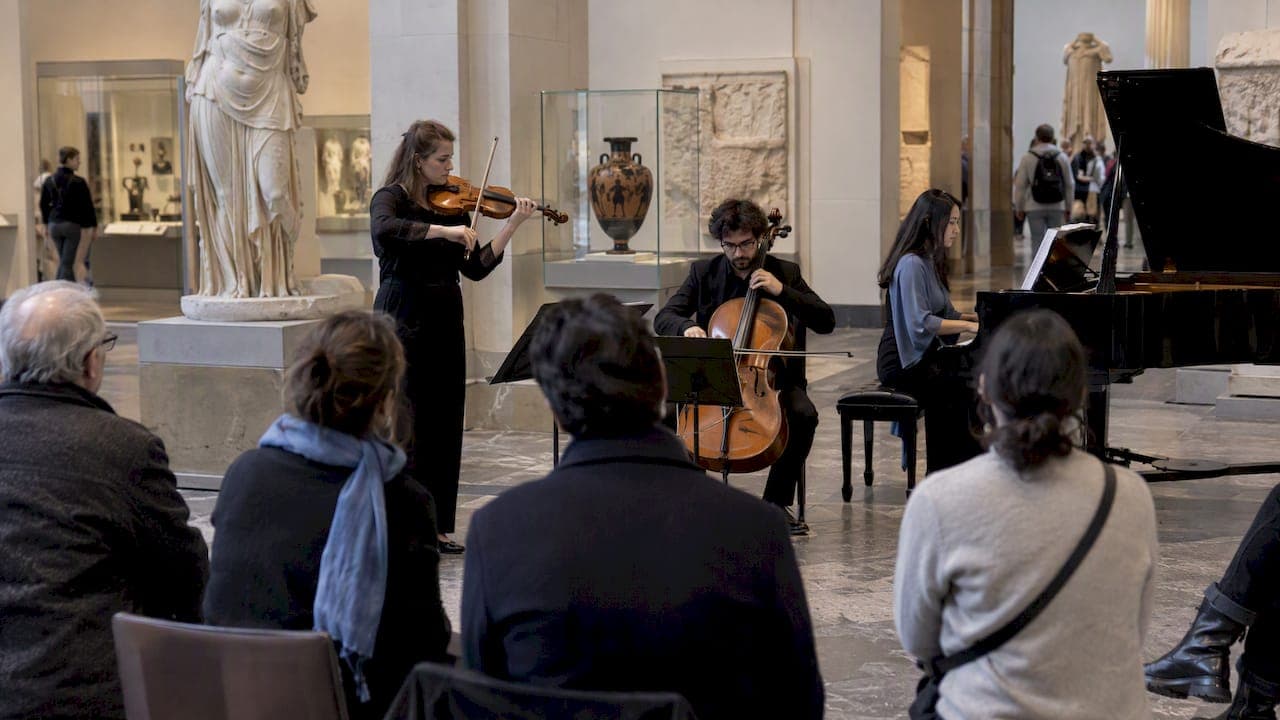
Most museums publish a clear events or calendar page listing every concert, so check that page or the box office before you make plans. Some programs are free with admission, others are ticketed and can sell out weeks ahead. Start by opening the museum's official events page or signing up for its email alerts, since that single step tells you more than any third-party listing will.
TL;DR:
- Always verify performance dates and ticket availability directly with the museum's official events page or box office, as third-party listings may be outdated or inaccurate.
- Museum concert spaces vary from recital halls requiring early arrival to outdoor or gallery settings that favor casual movement and may allow different behavior.
- Reading the specific language about ticketing, capacity, and accessibility features on the event page is crucial before planning to attend or book a performance.
- Museum acoustics can be unpredictable; sitting closer to performers and adjusting your position can significantly improve sound quality during visits.
- Most museum performances feature chamber, solo, jazz, or experimental ensembles, with programming often themed around current exhibitions or historical contexts.
Table of Contents
- How to find and use museum event calendars and listings
- What concert formats and spaces should you expect at a museum?
- Ticketing rules and accessibility features to check before you go
- Planning your visit around a museum concert
- How museums manage sound, acoustics, and safety during performances
- Notable musicians and ensembles who perform in museum settings
- How live music connects the galleries to what you hear
- How to actually hear and appreciate live music in a museum space
- Audience etiquette during museum music events
- A musician's checklist for performing in museum spaces
- Booking Alex Levin Music for a museum-style event
- FAQ
- Sources
How to find and use museum event calendars and listings
Museum websites usually organize live performances under an Events, Calendar, or Live Music tab, separate from exhibition listings. The strongest pages name the specific room or hall, list program notes describing the artists and repertoire, and link straight to a ticket purchase page. The Isabella Stewart Gardner Museum's music page is a good model: it lists the performance space, season dates, and links for each concert rather than a vague "live music" mention.
A few habits make schedule-hunting far more reliable:
- Check for a calendar subscription option (iCal or Google Calendar) so new concerts land on your phone automatically.
- Sign up for the museum's email list, since many venues announce ticket release dates before the general listing goes live.
- Use on-site filters for "music," "performance," or "concert" rather than scrolling a general events feed.
- Note whether the page lists a specific venue room, since a recital hall and an outdoor plaza have very different ticketing rules.
Third-party event aggregators and city "things to do" sites are convenient for discovery, but they often lag behind the museum's own updates or drop ticketing details entirely. When a listing site says a concert is free, it's worth a quick check against the museum's own program page. The Gardner Museum's Fall 2026 Weekend Concert Series announcement shows how a primary source lists exact dates, named artists, and box office notes together, which is the level of detail you want before buying tickets or planning a trip around a single performer.
The box office itself remains the final word on availability. If a listing and the museum's calendar disagree, or a show shows as "sold out" on one site but "available" on another, call or email the box office directly rather than guessing.
What concert formats and spaces should you expect at a museum?
Museum concerts happen in several distinct kinds of spaces, and the format shapes everything from your arrival time to what counts as acceptable behavior during the show; understanding how to curate an immersive pop art show that engages can offer useful insights into how these environments shape audience experiences (How to Curate an Immersive Pop Art Show That Engages). A seated recital in a dedicated hall behaves like a concert hall: fixed seats, a printed program, and an expectation of quiet attention between movements. A gallery listening experience is looser, with audiences often standing or moving between rooms as musicians perform among the artwork. Outdoor series and courtyard concerts tend to allow more casual movement, food, and conversation.
- Seated recital halls require arriving before the posted start time, since latecomers are often held until a break in the program.
- Gallery performances may let you walk between rooms during the set, so check whether the listing says "promenade" or "seated."
- Outdoor concerts usually have more relaxed photography and movement rules, but weather and curfew times can shorten the program.
- Theater-style performances, including those paired with film or spoken word, follow standard theater etiquette with a clear intermission.
The Isabella Stewart Gardner Museum's Calderwood Hall is a 300-seat space built with three levels of balconies around a central stage, designed for an unusually intense, close listening experience rather than a traditional proscenium setup. The Whitney Museum's Free Friday Nights lean toward a looser, drop-in format tied to general admission, while the Parrish Art Museum's jazz programming sits closer to a club atmosphere, with more conversational energy between sets than a formal recital would allow.
Pro Tip: Read the event page's wording closely: "seated" means arrive early and stay put, while "promenade" or "gallery" means you can move around during the performance.
Ticketing rules and accessibility features to check before you go
Ticketing language on museum sites varies more than it should, and it pays to read closely before assuming a concert is free. "Free with admission" means you need a museum ticket but not a separate performance ticket. "Free, ticketed" means the concert itself requires a no-cost reservation that can still sell out. "Paid, ticketed" means a separate purchase on top of or instead of general admission. The Whitney's page for live performances such as Marc Ribot's show spells out that Friday evening programs are free but require a timed ticket, a distinction that trips up a lot of first-time attendees.
- Confirm whether membership unlocks early access or discounted pricing, since many museums open presales to members days before the public.
- Check the refund and waitlist policy before buying, since sold-out museum concerts often release a handful of seats closers to the date.
- Look for a stated capacity limit on the event page, which tells you how quickly a popular show is likely to sell out.
- Search the accessibility page for induction loops, infrared listening systems, or accessible seating, all of which the Whitney lists directly on its event pages.
- Contact the box office in advance if you need a companion seat or sensory accommodations, since many venues hold a small block of accessible seats that aren't visible in the general ticketing flow.
Reading the fine print once saves a wasted trip. A concert marked "members only until [date]" or "limited capacity" is telling you exactly how early to act.
Planning your visit around a museum concert
A concert and a gallery visit work well together if you budget time for both. For a seated recital, plan to arrive 30 to 45 minutes early to clear security, check coats, and find your seat without rushing. For a drop-in gallery or outdoor series, 15 to 20 minutes is usually enough.
- Bring your ticket (digital or printed) and a photo ID if the museum requires will-call pickup.
- Check the bag policy ahead of time, since many museums restrict bag size near performance spaces to protect the artwork.
- Confirm the photography policy for the specific event, since flash and video are often restricted even when general gallery photography is allowed.
- Time a short gallery walk before the show rather than after, when fatigue sets in and performance spaces often close off access to nearby rooms.
- Check parking and transit options in advance, since museum neighborhoods can have limited evening parking once a concert lets out.
Smaller, specialist museums handle this with individual event pages that spell out exact door times and format. The International Museum of Surgical Science's listing for Sounding/BODY names a specific doors-open time of 6:30 PM alongside program notes, which is the kind of detail worth copying into your calendar the moment you book.
How museums manage sound, acoustics, and safety during performances
Museums aren't concert halls by design, and the artwork on the walls often dictates how loud a performance can get. Production guidelines from venues like the Frist Art Museum spell out hard limits, including a maximum sound pressure level of 94 decibels, past which an event can be shut down mid-performance. That's not an arbitrary number: sustained high sound pressure can stress delicate materials and vibrate display cases, so the limit protects the collection as much as it protects your ears.
A museum production guideline can include a house console, a fixed microphone inventory, and a maximum sound pressure threshold that organizers must not exceed, with a specific decibel limit stated as a shutdown trigger.
In practice, this means ensembles performing in galleries often scale down amplification, use directional microphones, and position speakers to avoid reflecting sound directly off hard surfaces or glass cases. A trio that might use a full PA system at a wedding reception will often run near-acoustic levels in a museum atrium instead. Outdoor series face their own constraints, including neighborhood noise curfews that can end a set earlier than the printed program suggests. For organizers and performers, our guide to noise ordinance compliance for live events breaks down how these limits get negotiated before a single note is played.
Pro Tip: If a program note mentions "unamplified" or "acoustic set," expect a noticeably more intimate volume than a typical nightclub or wedding reception.

Notable musicians and ensembles who perform in museum settings
Museum concert series tend to favor chamber ensembles, solo recitalists, and jazz groups whose scale fits the room rather than large touring acts. The Gardner Museum's Fall 2026 Weekend Concert Series lists a roster including violinist Rachel Barton Pine, the Twelfth Night Ensemble, the Ivalas Quartet, and harpsichordist Jean Rondeau, a mix that spans Baroque specialists to contemporary string quartets across its announced season. That range reflects how museum programming often pairs a concert with a current exhibition, using the music to extend the themes on the walls rather than simply filling a room.
Experimental and vocal performances also find a home in smaller institutions. The International Museum of Surgical Science's staging of Sounding/BODY: Philomela Fragments paired composer Terns with vocalist Ah Young Hong, an example of how niche museums book work that wouldn't fit a standard concert hall season. Jazz programming at venues like the Parrish Art Museum tends to favor working ensembles over solo stars, since a quartet or trio can adapt its volume and arrangement to a gallery space more easily than a big band can.
What connects these profiles is adaptability. Musicians who perform well in museums tend to be comfortable adjusting instrumentation, volume, and even repertoire on short notice to fit a room that was never built as a concert venue.
How live music connects the galleries to what you hear
A concert placed inside a museum does more than fill a quiet evening: it reframes the art around it. Programming a string quartet near a gallery of 17th-century portraits, or a jazz trio in a modern wing, draws a direct line between the sound and the period or mood the exhibition evokes. The Gardner Museum has paired specific concerts with exhibitions, including a performance by the contemporary ensemble ACRONYM presented alongside a Rembrandt exhibition, using the music to deepen the historical context rather than sit beside it as an unrelated add-on.
That pairing changes how visitors experience both halves of the evening. Walking through a gallery before a related concert gives the music a visual anchor, and hearing a live performance afterward can send you back into the same rooms with sharper attention to detail. Museums that program this way are, in effect, treating sound as another curatorial tool, not just a revenue add-on for a slow Friday night.
For visitors, this means the smartest way to pick a concert isn't only by artist name. Checking whether a program note mentions a related exhibition can point you toward an evening where the music and the art genuinely talk to each other, rather than one that simply happens to share a building.
How to actually hear and appreciate live music in a museum space
Museum acoustics are unpredictable by design, since most of these rooms were built to display art, not to project sound. Hard floors, high ceilings, and glass cases can create echo in one room and dead, absorbed sound in the next. A few habits help you get the most out of what you're hearing.
Sit or stand closer to the ensemble than you might at a traditional concert hall, especially for unamplified or lightly amplified sets, since museum rooms rarely have the engineered sound projection of a dedicated auditorium. In a promenade-style gallery performance, move slowly between rooms rather than planting yourself in one spot, since the sound balance often shifts dramatically just a few feet from the musicians. For seated formats like Calderwood Hall's recital series, the room itself is built for close listening, so trust the architecture and settle in rather than hunting for a "better" seat.
Give your ears a minute to adjust at the start of any outdoor or atrium performance, where ambient noise from the space competes with the music more than it would indoors. If a passage sounds thin or distant, it's often the room working against the ensemble rather than a flaw in the performance itself, and repositioning yourself even slightly can make a real difference.
Audience etiquette during museum music events
Museum concerts sit somewhere between a formal recital and a casual gallery stroll, and the etiquette expectations shift depending on which one you're attending. A few general rules apply almost everywhere: silence phones completely rather than just switching to vibrate, since even a buzzing phone carries in a stone-and-glass gallery. Save flash photography and video for after the program ends, since both the artwork and the performers are usually protected by a no-flash policy that extends to the concert itself.
In seated formats, hold applause until the end of a full piece rather than between movements, following standard classical concert convention. In promenade or gallery formats, keep movement between rooms slow and quiet, since footsteps and conversation travel further in these spaces than in a padded concert hall. Outdoor and jazz-club-style programs tend to welcome more open reaction, including applause between songs and quiet conversation during a set, so it's worth checking the program notes or asking museum staff if you're unsure which register the room expects.

When in doubt, watch the room rather than relying on habit from a different kind of concert. A hushed, seated hall and a lively jazz night call for genuinely different behavior, and museums generally make the expected tone clear through their program notes if you read them before arriving.
A musician's checklist for performing in museum spaces
Before accepting a museum booking, musicians typically confirm a short list of practical details that shape how the night actually sounds and feels for the audience. Ensemble size matters first, since a trio fits a gallery corner in a way a full band cannot. Power access, stage dimensions, and soundcheck timing come next, since museums often have tighter load-in windows than a hotel ballroom or wedding venue.
Questions we ask before any museum date include how much acoustic treatment the room already has, whether the space allows a full PA or requires near-acoustic performance, and what time doors open relative to the agreed soundcheck. The answers shape everything from the mic choices we bring to how we pace a set list between quieter and more upbeat pieces. For visitors, this same checklist is useful in reverse: if you're planning accommodations or just curious what to expect, asking the box office about ensemble size and amplification tells you more about the evening's character than the artist's name alone.
— Alex
Booking Alex Levin Music for a museum-style event
If you're planning a private event and want the same adaptability that makes live music work inside a gallery, that's exactly what we build our ensembles and soloists around. A jazz trio, string quartet, solo piano set, or DJ and hybrid pairing can all scale up or down in volume and footprint, the same flexibility that lets a museum run a quiet gallery set one night and a fuller jazz program the next.
Booking practicalities are straightforward: we ask for your date, the specific room or space you're working with, expected guest count, and whatever technical setup is already available on site. That lets us match ensemble size and sound level to the room before we ever show up, rather than improvising on arrival.
- Jazz trios and solo piano suit gallery receptions and cocktail-style hospitality before or after a scheduled program.
- String quartets fit formal, seated moments such as a private viewing or ceremony inside a museum space.
- DJ and hybrid sets work for receptions that transition from live ensemble to dance music later in the evening.
Our Cocktail Hour Music and Reception Music pages outline what's included and provide details on pricing, and reaching out early gives us the best shot at matching the right ensemble to your date and space.
FAQ
What songs are good for museum posts?
There's no single catalog for this since it depends heavily on the exhibition and the ensemble booked, but museums with curated series often choose repertoire that echoes the themes of a current exhibit. Checking the specific event's program notes, as the Gardner Museum does for its concert series, is the most reliable way to see what's actually being performed.
What are some good music themes for events?
Pairing live music with a related exhibition period or style, such as Baroque repertoire near period portraiture or contemporary jazz near a modern art wing, is a common approach museums use to tie sound and visuals together. For private events, themes usually follow the occasion itself, with jazz and swing standards fitting elegant receptions and string arrangements suiting formal ceremonies.
What music do they play in museums?
Programming spans chamber music, solo recitals, jazz, and occasionally experimental or vocal works, depending on the institution and series. The Gardner Museum's Fall 2026 season, for example, includes violin, early music ensembles, and harpsichord performances across its announced lineup, while jazz clubs within museums like the Parrish lean toward working trios and quartets.
What are some songs about museums?
This falls outside what museum event pages or production guidelines document, since it's a songwriting topic rather than a programming one. It's best answered by searching music databases or streaming platforms directly rather than museum sources.
How do I know if a museum concert is free or ticketed?
Check the specific event page rather than assuming based on general admission, since language like "free with admission," "free, ticketed," and "paid, ticketed" all mean something different. The Whitney's event listings are a clear example of a museum spelling out that a free program still requires a timed ticket.
Sources
- Music at the Gardner | Isabella Stewart Gardner Museum
- Live Music by Marc Ribot | Whitney Museum of American Art
- Sounding/BODY: Philomela Fragments with Terns & Ah Young Hong - International Museum of Surgical Science
- Special Events Music Performance Technical Rider (Frist Art Museum production guidelines)