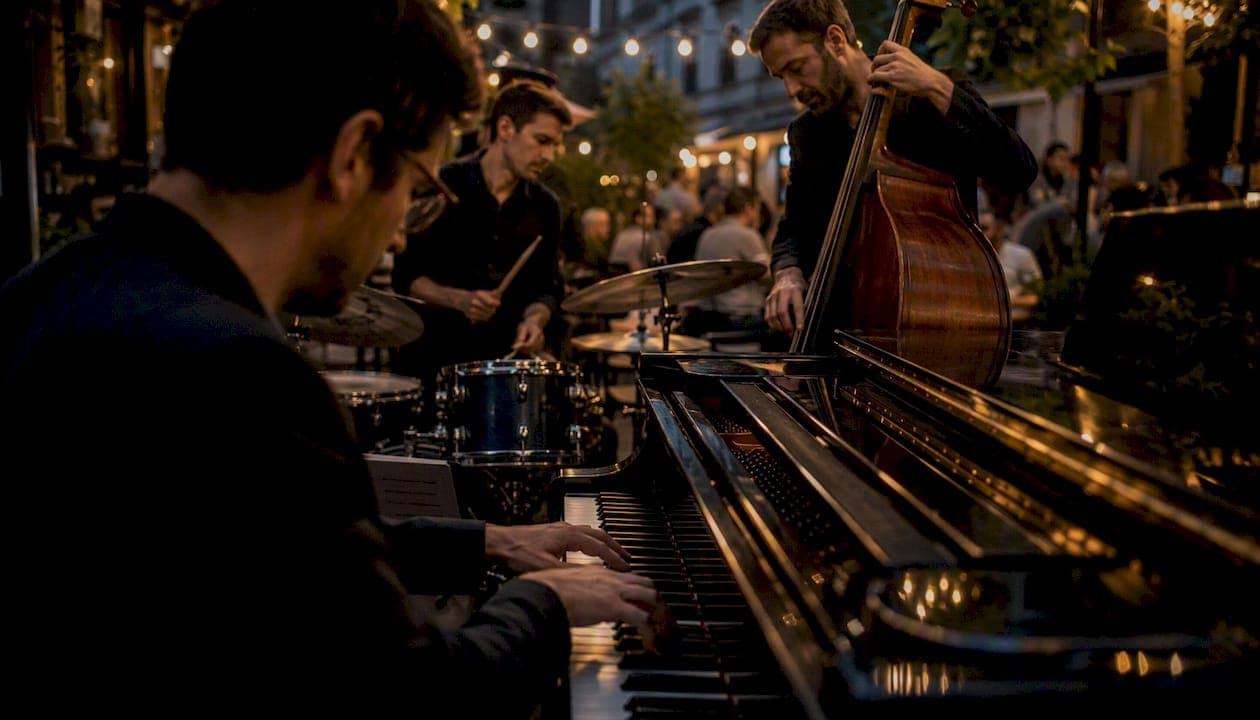
Live performances and recordings deliver fundamentally different musical experiences because of measurable differences in acoustics, production technique, performer behavior, and the social physics of being in a room with other people. The gap is not just about audio quality. It runs deeper.
Here is what drives those differences:
- Acoustic environment: Venue size, surface materials, and speaker systems shape the sound before it reaches your ears in ways a studio mix cannot replicate.
- Production and editing: Studio recordings use overdubbing, pitch correction, comping, and mastering to create a polished, repeatable result. Live sound is a single-take event.
- Performer spontaneity: Tempo, dynamics, and arrangement choices shift in real time on stage. Improvisation happens. Mistakes happen too, and sometimes they are the best moments.
- Audience co-presence: Being in the room with other listeners changes your physiological and emotional response in ways peer-reviewed research has now confirmed.
- Multisensory context: Watching a musician move, seeing lighting cues, and feeling low-frequency bass through your chest all alter how you perceive the music itself.
Research and musician perspective follow in the sections below.
Key Takeaways
Live performances and recordings differ across every layer of the musical experience, from the physics of sound in a room to the neuroscience of how a live audience changes your brain's response to rhythm.
| Point | Details |
|---|---|
| Studio production is intentional craft | Overdubbing, comping, and mastering create a designed listening object, not a fixed performance. |
| Venue acoustics shape what you hear | Room size, surface materials, and PA placement change timbre, warmth, and spatial impression in ways no recording fully captures. |
| Audience presence alters both performer and listener | Research found live conditions increased immersion and heart-rate synchrony versus simultaneous livestreams. |
| Neural response differs measurably | EEG studies show live music produces stronger neural-acoustic phase-locking and higher pleasure-engagement than recorded playback. |
| A/B listening reveals the gap | Three focused passes (timbre, timing, crowd context) make the live-versus-recorded difference clearly audible in acoustic music. |
Table of Contents
- How live performances differ from recordings at the production level
- What venue acoustics actually do to the sound you hear
- How performers change their playing when the audience is in the room
- How live shows are actually captured on recording
- What research actually shows about liveness and your brain
- What musicians actually do differently when they play live
- Why watching performers changes how you hear the music
- Why many listeners prefer live versions over studio recordings
- How to train your ears to hear the difference
- The craft behind both formats deserves more credit than it gets
- Sources
How live performances differ from recordings at the production level
The studio is a controlled environment built for precision. A producer can record a guitar solo twenty times and assemble the best two bars from each take, a technique called comping. Pitch correction tools like Auto-Tune or Melodyne can nudge a vocal note into tune without the listener noticing. Automation adjusts volume levels across a mix so that a whispered lyric and a belted chorus both translate cleanly on earbuds. Mastering then applies a final layer of equalization and limiting so the track sounds consistent across streaming platforms, car speakers, and headphones.
None of that is dishonest. As one practitioner analysis argues, studio editing is an artistic process analogous to film directing: producers use multiple takes and editing tools to craft an ideal listening experience, not merely to cover mistakes. The result is intentional and crafted, the way a film director chooses the best angle from multiple camera setups.
Live sound engineering works under entirely different constraints:
- A front-of-house engineer mixes in real time with no undo button.
- PA systems must project sound to the back of a room while avoiding feedback from stage monitors.
- Instrument bleed between microphones is unavoidable in most live setups.
- Tonal balance shifts depending on where in the room a listener stands.
The perceptible result: a studio recording of a jazz piano solo will sound cleaner, more spatially defined, and dynamically consistent. The same pianist playing live will have more room ambience, slight timing variations, and a rawer transient attack from the piano's hammers. Neither is better in an absolute sense. They are different objects.
Pro Tip: When you listen to a studio track, try to identify moments that feel "too perfect" — a vocal that never wavers, a drum hit that lands exactly on the grid every time. Then find a live version of the same song and notice where those moments breathe or break. That contrast is the production gap made audible.
What venue acoustics actually do to the sound you hear
Sound in a concert hall or club travels two ways simultaneously. Direct sound reaches your ears first, traveling in a straight line from the source. Reflected sound arrives milliseconds later, bouncing off walls, ceilings, and floors. Early reflections (arriving within roughly 50 milliseconds) add warmth and spatial width. Later reflections build into reverberation, the sense of a room "ringing" after a note ends.
Venue size and surface materials change all of this dramatically:
- A small jazz club with exposed brick and low ceilings creates dense early reflections that make the sound feel intimate and present.
- A large concert hall with curved plaster walls and wooden floors generates longer reverberation times that add grandeur but can blur fast passages.
- An outdoor amphitheater has almost no natural reverberation, so PA systems must work harder to fill the space.
PA system design matters just as much as the room. Speaker placement, delay towers, and subwoofer positioning determine whether the bass feels physical or just audible. Artists adapt their arrangements and pacing to match venue scale: intimate rooms invite nuance and quiet dynamics, while larger spaces demand broader gestures and more familiar repertoire so the audience can follow through the reverb.
Pro Tip: Your seat changes everything. Close to the stage, you hear more direct sound and instrument detail. Mid-hall, you get the best blend of direct and reflected sound. Up in the balcony, reverberation dominates and the mix can feel muddier. If you care about clarity, aim for the lower mid-section of the hall.
How performers change their playing when the audience is in the room
A studio recording session rewards precision. A musician can stop, reset, and try again. The best take wins. Live performance rewards something else entirely: commitment. There is no stopping, no second chance, and the audience knows it. That shared awareness changes how performers play and how listeners hear.
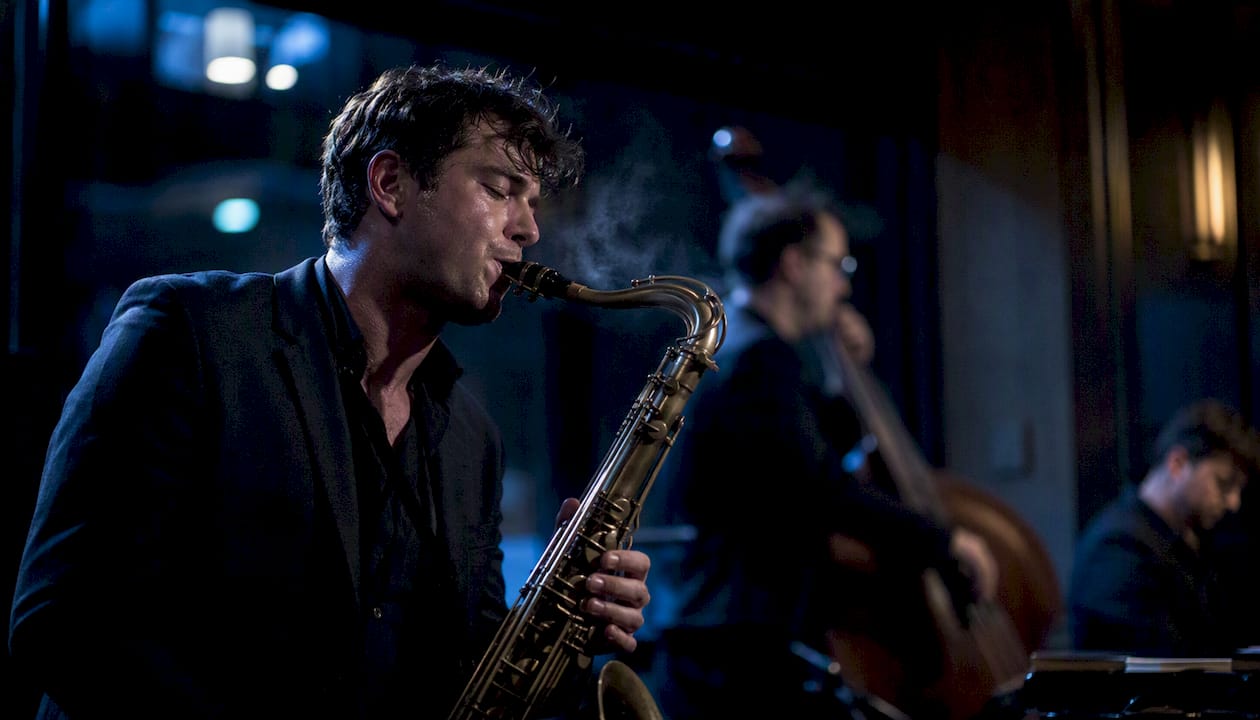
Spontaneity is the most obvious difference. A jazz quartet on stage might extend a solo by four choruses because the rhythm section is locked in and the crowd is responding. That decision happens in real time and will never be repeated exactly. In a studio, the same solo would likely be tightened to fit an arrangement.
Tempo rubato, the slight pushing and pulling of time for expressive effect, is more pronounced live. So are dynamic swings: a pianist who plays at a consistent mezzo-forte on a studio track might drop to near-silence and then surge in a live setting because the room and the audience demand it. Small timing deviations that would be edited out in a studio register as human and emotionally compelling in a live context.
Research supports this. A study of 13 pianists recording Schumann's Träumerei found that audience presence altered temporal and dynamic expressions in ways that non-expert listeners preferred. The audience-present recordings were generally rated higher, suggesting that social facilitation shapes musical output in measurable ways.
Key expressive differences listeners can hear:
- Extended solos and improvised passages not present on the studio recording
- Tempo fluctuations that feel intentional rather than accidental
- Dynamic peaks that exceed what a studio mix would allow
- Spontaneous call-and-response between instruments
What changes in a live arrangement, step by step:
- The opening may be stripped down or reharmonized to suit the room's acoustics.
- Solos expand or contract based on audience energy.
- Endings are often extended or cut short depending on the moment.
- Transitions between songs become part of the performance rather than silent gaps.
How live shows are actually captured on recording
Not all live albums are created equal, and the production choices behind them explain a lot about why some feel immediate and others feel processed.
The main capture approaches:
- Stereo audience recording: A single stereo microphone pair placed in the hall captures the full room sound, crowd noise, and natural ambience. This is the most "honest" approach but offers almost no post-production flexibility.
- Multitrack isolation recording: Each instrument and vocal gets its own microphone feed recorded to separate tracks. Engineers can remix the balance after the show but lose some of the room's natural blend.
- Direct soundboard feed: The front-of-house mix is recorded directly from the mixing console. Fast and clean, but it captures only what the engineer sent to the PA, not the room acoustics.
- Hybrid approaches: Most professional live albums combine a soundboard feed with room microphones, giving engineers the ability to blend clarity and ambience in post-production.
How much post-production gets applied varies widely. Some artists heavily edit live recordings with overdubs and fixes; others release them nearly untouched. The listening clues that reveal the approach are worth knowing.
Pro Tip: Listen for crowd noise between songs. Consistent, uninterrupted applause suggests minimal editing. Abrupt cuts or sudden silence between tracks often signal heavy post-production. Instrument bleed (hearing the drummer through the piano microphone) is a sign of a more honest, less isolated capture.
What research actually shows about liveness and your brain
The subjective sense that live music hits differently now has physiological and neurological evidence behind it.
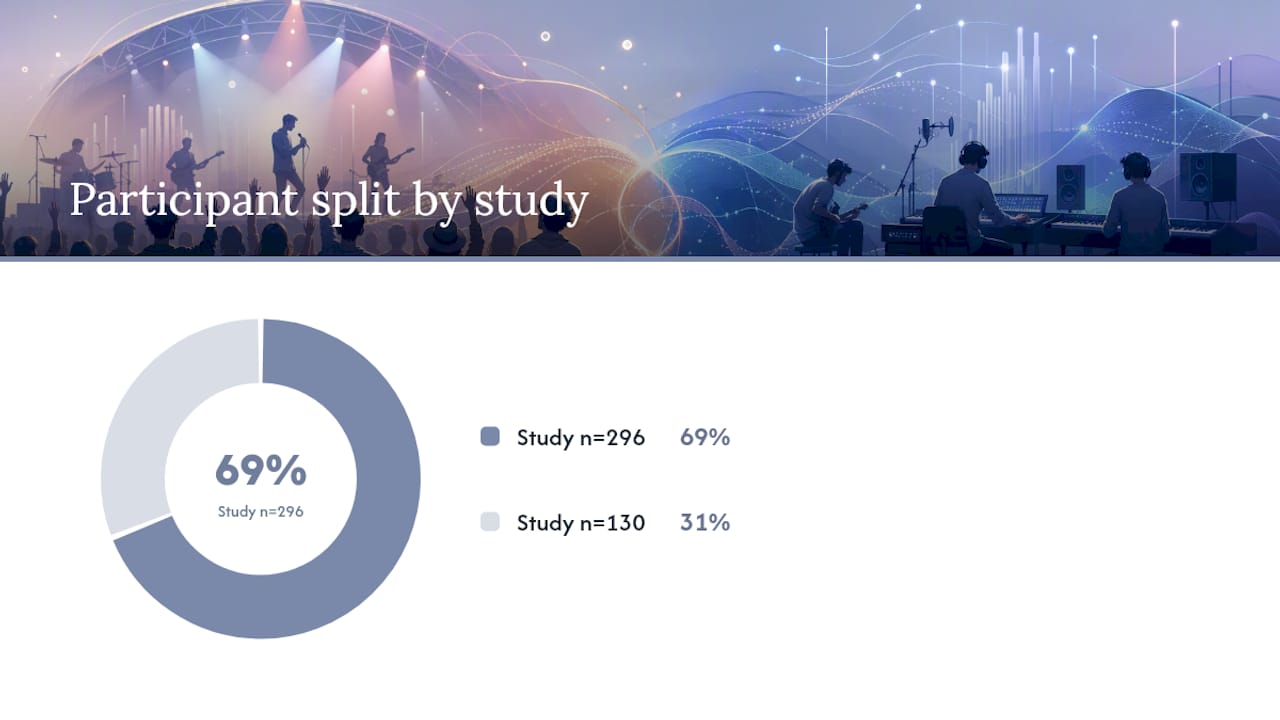
A controlled study of 296 participants found that physical presence of musicians increased immersion and heart-rate synchrony compared with watching a simultaneous livestream of the same concert. Participants in the live condition also reported higher intent to return to future concerts.
A separate randomized pilot study (n = 130) reported that being physically present with performing musicians produced higher kama muta scores (the technical term for the "being moved" sensation) and a higher mean heart rate than watching a cinematic livestream. Heart rate variability results were mixed, which the researchers noted as a limitation.
At the neural level, EEG evidence shows that live performances produce stronger neural-acoustic phase-locking at rhythmic frequencies than recorded trials. Phase-locking refers to how closely the brain's electrical activity synchronizes with the rhythmic structure of the music. Higher phase-locking correlated with higher pleasure-engagement ratings in that study.
What the research does not yet fully resolve:
- Most studies use small samples and controlled lab or concert settings that may not generalize to all genres or venue types.
- Genre specificity matters: findings from classical violin studies may not transfer directly to arena rock or jazz club settings.
- The role of expectation and prior experience with live music has not been fully isolated from the liveness effect itself.
The honest summary: the evidence consistently points in the same direction. Being present with live musicians changes your body and your brain in ways that a recording, however well-produced, does not replicate. The effect size and the mechanisms are still being mapped.
What musicians actually do differently when they play live
Ask any working musician what changes when they step on stage, and the answer is rarely about technique. It is about reading the room.
In a studio, the audience is hypothetical. On stage, the audience is immediate and visible. A bassist who notices the crowd leaning in during a quiet passage will hold that dynamic longer. A pianist who feels the energy drop will push the tempo slightly to re-engage. These micro-decisions happen in seconds and are never written into a score or a session plan.
Professional musicians at live events use this responsiveness as a core skill. Social facilitation research suggests that for well-rehearsed material, audience presence tends to improve performance quality. The pressure of a live room sharpens focus in ways a studio session rarely does.
Practical things musicians change live:
- Arrangements get simplified or expanded based on ensemble chemistry that day.
- Dynamic shaping becomes more extreme: quieter lows, louder peaks.
- Phrasing opens up, with more space between notes to let the room breathe.
- Eye contact and physical cues between players create real-time interplay that listeners can see and feel.
Pro Tip: At your next live show, watch the musicians' eyes and body language rather than just listening. When a guitarist nods to the drummer before a dynamic shift, or a pianist raises an eyebrow to signal an extended solo, you are watching the live arrangement being written in real time. That interplay is what makes live music special in a way no recording can fully document.
Why watching performers changes how you hear the music
Hearing and seeing are not separate processes when it comes to music. The brain integrates visual and auditory information continuously, and what you see changes what you perceive.
When you watch a violinist's bow arm accelerate into a climax, your brain anticipates the dynamic peak before it arrives. That anticipation heightens the emotional impact of the moment. When you see an improvising musician's face register surprise at a chord change, you share that surprise. The visual cue amplifies the auditory event.
How multisensory elements alter the live experience:
- Movement: A performer's physical gestures communicate phrasing and intensity, giving the audience a visual map of the music's shape.
- Lighting: Sudden darkness before a loud chord, or a warm wash during a ballad, primes emotional response before the sound arrives.
- Crowd reaction: Seeing other listeners respond, leaning forward, swaying, applauding, triggers social contagion. Their emotional state becomes part of your own.
- Physical bass: Low frequencies at sufficient volume are felt in the chest and stomach, adding a tactile dimension that headphones cannot reproduce.
Consider an improvised solo. On a recording, you hear the notes. Live, you also see the musician's hands, their posture, the slight hesitation before a risky phrase. That visible risk-taking raises the emotional stakes. The same notes carry more weight because you watched them being chosen.
Why many listeners prefer live versions over studio recordings
The preference for live versions is not nostalgia or audiophile snobbery. It has identifiable psychological and social roots.
Authenticity: A live performance cannot be undone. Every note was played in real time, in that room, on that night. That irreversibility signals genuine performer intent in a way a carefully assembled studio composite cannot. Listeners sense this, even when they cannot articulate why.
Unpredictability: The possibility that something unexpected might happen keeps attention sharper. A studio track is fixed; you know exactly what comes next after a few listens. A live version carries the implicit promise that tonight's version might be different.
Communal resonance: A survey study found that live stimulative music maintained higher active feelings compared with recorded versions, and live sedative music increased relaxation more effectively. The shared emotional state of a crowd amplifies individual response. You are not just listening; you are listening together.
Unique auditory cues also play a role:
- Room ambience signals physical presence in a specific space.
- Crowd noise between songs confirms the communal context.
- Instrument bleed and slight tuning imperfections signal an unmediated, human performance.
These cues combine to create what researchers describe as a "liveness" effect, a sense of spatial and temporal co-presence with the performers that recordings, even excellent ones, can only approximate. For events where atmosphere and memory matter, live music consistently outperforms a playlist in creating those shared peak moments.
How to train your ears to hear the difference
The gap between live and recorded music becomes much more audible once you know what to listen for. This three-pass A/B exercise works best with acoustic music: jazz, solo piano, or chamber music, where the differences are clearest.
Choose your material: Pick a song that exists in both a studio version and a documented live recording. Miles Davis's Kind of Blue and his live recordings from the same era work well. So does any Bill Evans studio album paired with his live concert recordings.
Playback gear: Use headphones for the studio version (where the mix is designed for close listening) and speakers for the live version (where room ambience needs space to develop). If you only have headphones, open-back models reveal more spatial information than closed-back ones.
Three focused listening passes:
-
Pass one: timbre and ambience. Listen only to the overall sound quality. Is the studio version drier, more defined? Does the live version have a sense of space around the instruments? Notice the reverb tail on piano notes and whether you can hear the room.
-
Pass two: timing and dynamics. Focus on the rhythm section. Does the tempo stay perfectly locked, or does it breathe and push? Listen for moments where the live version gets louder or quieter than the studio version would allow. Notice where a solo extends beyond what the studio arrangement contains.
-
Pass three: crowd and context. On the live version, listen specifically to the background: applause, ambient noise, the sound of the room between phrases. Then ask yourself whether those sounds make the music feel more or less real to you.
Tips for getting the most from the exercise:
- Use the same song for both versions so the arrangement is your constant.
- Take a short break between the studio and live listens so your ears reset.
- Acoustic jazz and solo piano reveal the most; heavily produced pop or electronic music narrows the gap because the studio version already contains artificial space.
- Choosing the right ensemble for a live event follows similar logic: smaller acoustic groups reward close listening, while larger ensembles fill bigger rooms with more physical presence.
The craft behind both formats deserves more credit than it gets
The debate over live versus recorded music often gets framed as authenticity versus polish, as if the studio is where musicians go to cheat and the stage is where the truth lives. That framing undersells both formats.
A great studio recording is a composition in itself. The producer who decides to layer three guitar tracks, pan them across the stereo field, and compress the drums into a punchy, radio-ready sound is making artistic choices as deliberate as any live arrangement. The result is not a document of a performance. It is a new object, built from performance material.
A great live performance is equally constructed, just in real time. The musician who reads the room, adjusts the tempo, extends a solo, and brings the band down to a whisper before the final chorus is making the same kind of decisions a producer makes in post-production. The difference is that those decisions are irreversible and visible, which is exactly why they carry emotional weight.
What I find most interesting, working across both contexts, is how each format sharpens the other and how live music consistently outperforms for creating memorable moments, as detailed in how music elevates Bar and Bat Mitzvah tours in Israel. Studio discipline makes live playing more intentional. Live experience makes studio choices more grounded. The musicians who do both well tend to bring a quality to events that neither a DJ nor a purely studio-trained player can match: the ability to read a room and shape a moment in real time, the way Alexlevinmusic approaches every wedding, corporate event, and private celebration we play.
Sources
The studies and practitioner pieces below form the evidence base for this article. Primary studies are noted where applicable.
- Live music enhances self-reported audience immersion and physiological synchrony compared to live-streaming | Scientific Reports
- Musician presence and its effects on physiological and psychological well-being in live versus livestreamed concerts | Scientific Reports (preview)
- Audience presence improves pianists' performances and listeners' evaluations (PMC article)
- Live performance vs recording: practitioner perspectives (CMP/CP paper)