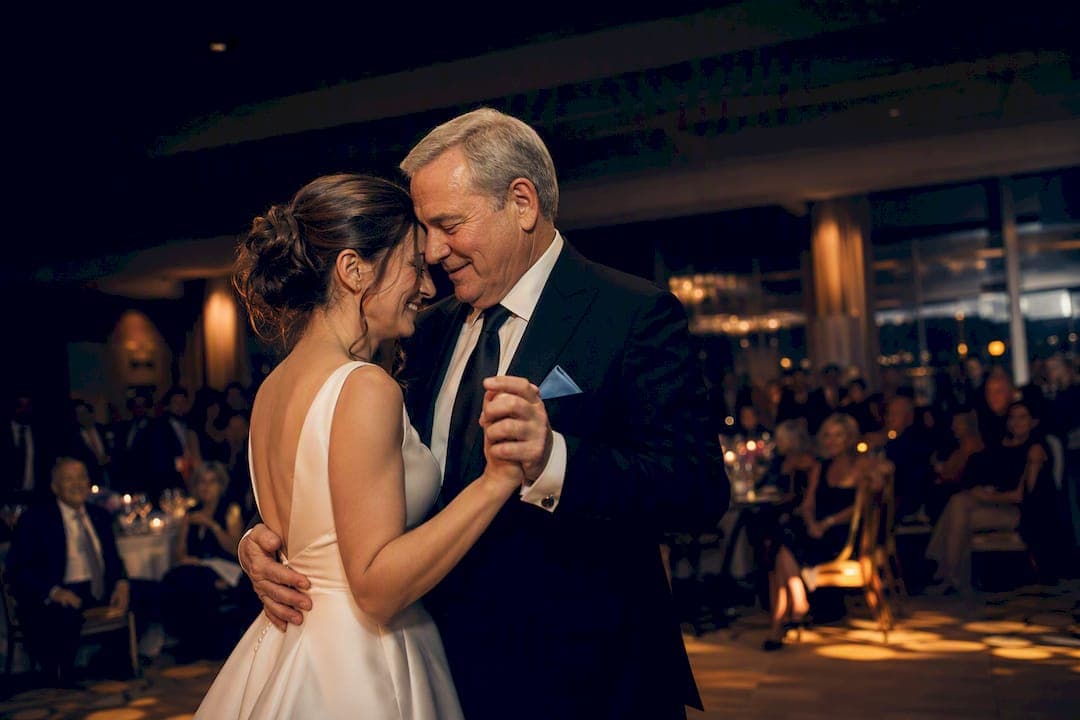
Jazz standards and light swing arrangements are the safest bet for a father-daughter dance that feels warm without turning into a tearjerker. Start with proven picks like "The Way You Look Tonight," "Unforgettable," "What a Wonderful World," "My Girl," and "Beyond the Sea." Every one works as a full-length recording or a trimmed two- to three-minute live arrangement, which is really the whole game. The full list, plus how to shorten any song for the reception floor, is below.
TL;DR:
- The best father-daughter dance songs are jazz standards or swing tunes that can be shortened to two to three minutes for smooth pacing.
- Songs like "The Way You Look Tonight" and "Unforgettable" are popular because they evoke warmth and connection without excessive sentimentality.
- When choosing a song, consider the tempo, lyrics about growth or gratitude, and whether to use a recorded track or live jazz, with a preference for rehearsed, customized arrangements.
- Shortening jazz standards involves trimming introductions and verses, ending with a clear tag, and ensuring it fits within the recommended duration for a reception dance.
- Confirm sound logistics, rehearse cues, and match the song's mood to your event to ensure a meaningful, smooth father-daughter dance.
Table of Contents
- Jazz and Swing Songs for a Father-Daughter Dance
- How to Pick the Right Song for Tempo, Lyrics, and Length
- Shortening a Jazz Track for the Dance Floor
- Live Band or Recorded Track: Which Fits Your Reception?
- Why a Wedding Jazz Musician Trusts These Picks
- Setting the Mood: Attire and Ambiance for a Jazz Father-Daughter Dance
- Common Problems With the Father-Daughter Jazz Dance (and Fixes)
- Editorial Perspective: Choose Meaning Over Trend
- How Alexlevinmusic Brings This to Life
- Where to Listen and Read More
- Sources
- FAQ
Jazz and Swing Songs for a Father-Daughter Dance
A good father-daughter jazz list mixes unhurried standards with a few upbeat swing numbers, so you're not stuck picking one mood for the whole moment. Here's a set that covers both, with notes on which version to grab and how long to let each one play.
- "The Way You Look Tonight" (Frank Sinatra): The go-to jazz standard for this exact moment. Wedding editors consistently point to it for striking an elegant tone without tipping into heavy sentiment. Use the classic Sinatra vocal or ask a live trio for an instrumental verse into one sung chorus.
- "Unforgettable" (Nat King Cole): Warm, slow, and lyrically about lasting connection rather than romance, which is exactly the tone you want for a parent and child. Editorial roundups rank it among the most requested standards for this reason.
- "What a Wonderful World" (Louis Armstrong): Simple, universally recognized, and gentle enough that it works as background dancing even for guests who aren't paying close attention.
- "My Girl" (The Temptations): Technically Motown, not jazz, but it swings hard when a trio takes it on, and it shows up on nearly every best-of list for father-daughter moments.
- "Isn't She Lovely" (Stevie Wonder): A crowd favorite that a jazz combo can slow into a ballad feel or keep bouncy, depending on how the rest of your reception is playing out.
- "Beyond the Sea" (Bobby Darin): The upbeat option. Swung hard, it's short, cheerful, and doubles as a natural bridge into open dancing.
- "Cheek to Cheek" (Fred Astaire, or Ella Fitzgerald and Louis Armstrong): A light swing choice with playful, non-romantic lyrics that fit a father-daughter pairing better than most love songs.
- "You Make Me Feel So Young" (Frank Sinatra): Fast, fun, and genuinely about joy rather than romance. Good pick if Dad wants something livelier than a ballad.
- Modern songs with a swing cover: Tracks like a jazz-arranged version of a contemporary pop song are increasingly common requests. Ask your band whether they can do a swing cover of a favorite tune. Forum discussions among couples planning weddings confirm this is a popular workaround when the "obvious" songs feel overused.
Any of these work as recorded tracks or live arrangements. The version matters less than making sure it's trimmed to fit your program, which is the next problem to solve.
How to Pick the Right Song for Tempo, Lyrics, and Length
Choosing well comes down to four checks, not gut feeling alone.
- Match the tempo to the mood you want. A slow ballad (around 60 to 80 beats per minute) creates an intimate, still moment. A light swing feel (100 to 130 beats per minute) keeps energy up and works better if the reception has been high energy already.
- Screen the lyrics for romantic language. Save the straightforward love songs for the couple's first dance. Father-daughter picks should lean on words about growth, memory, or gratitude, or skip lyrics entirely with an instrumental.
- Keep it short. Bridal planning guides recommend two to three minutes for this segment so the reception keeps moving.
- Decide between the original recording, a pure instrumental, or a jazz cover of a non-jazz favorite. Each has a different feel, and there's no wrong answer here.
Pro Tip: Sit down with Dad and play 20 to 30 seconds of two or three candidates back to back. Reactions in the moment tell you more than any list ever will.
Shortening a Jazz Track for the Dance Floor
Most jazz standards run four minutes or longer in their original recordings, way past what a reception dance segment needs.
- Cut an instrumental verse or intro solo and get straight to the vocal, or vice versa if you want the lyrics up front.
- Keep one full chorus, not two. A single pass through the melody is almost always enough.
- End on a two-bar tag instead of a fade, so the room knows exactly when to applaud.
- For a live trio, hand your musicians the recording you love and ask specifically for a two- to three-minute arrangement. Wedding jazz ensembles typically build custom cuts this way, trimming a verse and finishing with a clean tag.
- For a DJ, provide the edited file in advance with the exact fade point marked, not a verbal instruction on the day.
Live Band or Recorded Track: Which Fits Your Reception?
Live jazz gives you a custom tempo, a personalized intro, and a musician who can read the room and adjust on the fly. Recorded tracks give you the exact version you fell in love with, at a lower cost, with zero risk of a missed cue.
- Choose live if you want a bespoke arrangement, a specific key change for Dad's vocal range if he's singing along, or a band that can vamp until the dance floor fills.
- Choose recorded if budget is tight or you want the identical Sinatra or Nat King Cole recording, note for note.
- Consider a hybrid: a small ensemble plays a live intro, then hands off to a recorded track for the rest, or a trio handles the dance while a DJ runs everything else.
- Either way, confirm sound logistics ahead of time: check monitor placement, run one full rehearsal of the cue, and always have a backup device loaded with the track in case a laptop or a live mic fails.
Why a Wedding Jazz Musician Trusts These Picks
After years of building father-daughter arrangements for weddings, a pattern holds: the songs that work best are the ones that survive being cut down to ninety seconds and still feel complete. That's the real test, not how the song sounds at full length on a record.
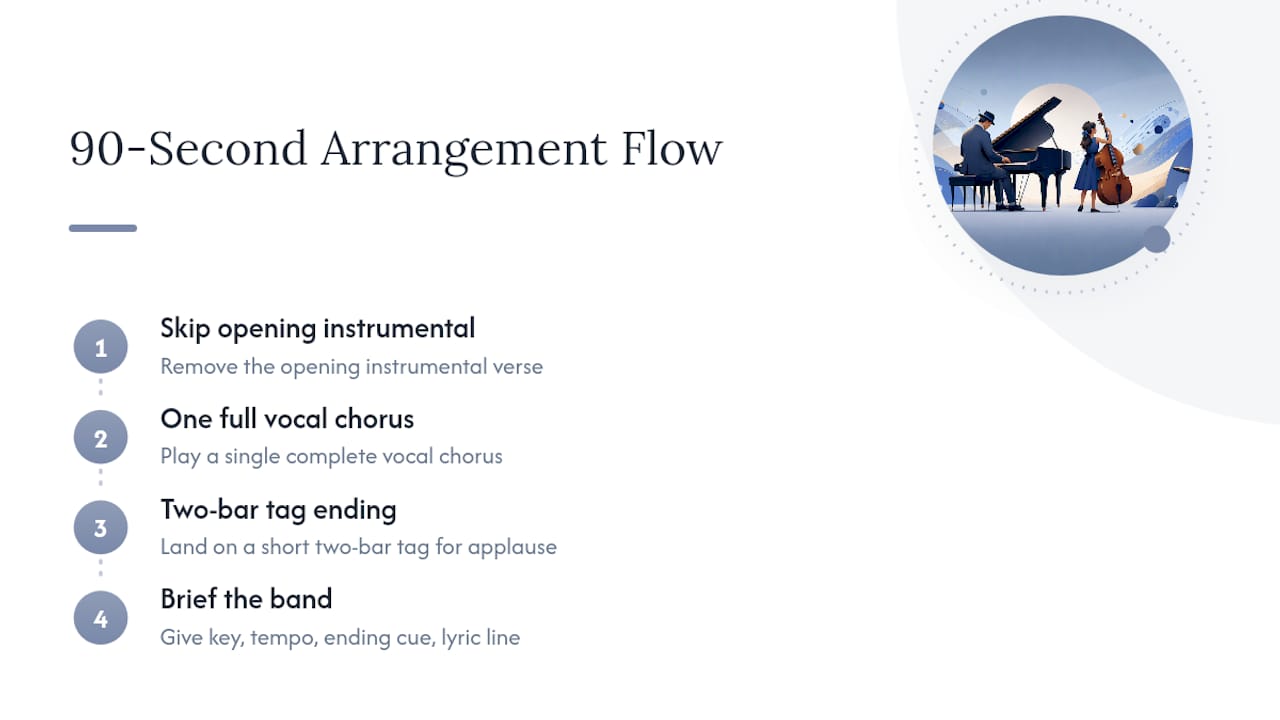
When a trio shortens "The Way You Look Tonight" for this moment, the common move is to skip the opening instrumental verse, play one full vocal chorus, and land on a short two-bar tag. It gives the room a clean, obvious moment to applaud instead of wondering if the song just faded out awkwardly.
Pro Tip: When briefing a hired band, give them four things: the key, the tempo, the exact fade or ending cue, and any lyric line you want emphasized. That's usually all a working jazz trio needs to build the arrangement in one rehearsal.
Loop in the venue's stage manager early about monitor placement and cue timing. A thirty-second conversation the week before saves a scramble on the day.
Setting the Mood: Attire and Ambiance for a Jazz Father-Daughter Dance
Jazz has a built-in aesthetic, and leaning into it costs nothing extra. Think warm, low lighting rather than bright uplighting, a slightly dimmed room that mimics a supper club rather than a ballroom under full brightness. If your venue allows it, string lights or a single spotlight on the dance floor does more for mood than any decor budget line.
Attire doesn't need to be formal beyond whatever your wedding or event already calls for, but small touches nod to the era the music comes from. A father in a well-cut suit or blazer, a daughter's dress with a bit of movement in the fabric for actual dancing, these read as intentional rather than costume-like. Skip anything too literal, like full 1940s dress. A subtle nod (a pocket square, a simple updo) works better than a themed outfit that fights with the rest of the event's style.
If you're building a broader jazz theme around the reception, keep the visual cues consistent: warm color palettes (amber, deep red, brass tones) read as "classic jazz club" without anyone having to say it out loud. The music does most of the work. Ambiance just needs to not contradict it, which means avoiding harsh white lighting or anything that feels more modern club than 1950s lounge.
Common Problems With the Father-Daughter Jazz Dance (and Fixes)
A few issues come up again and again, and every one of them has a straightforward fix.
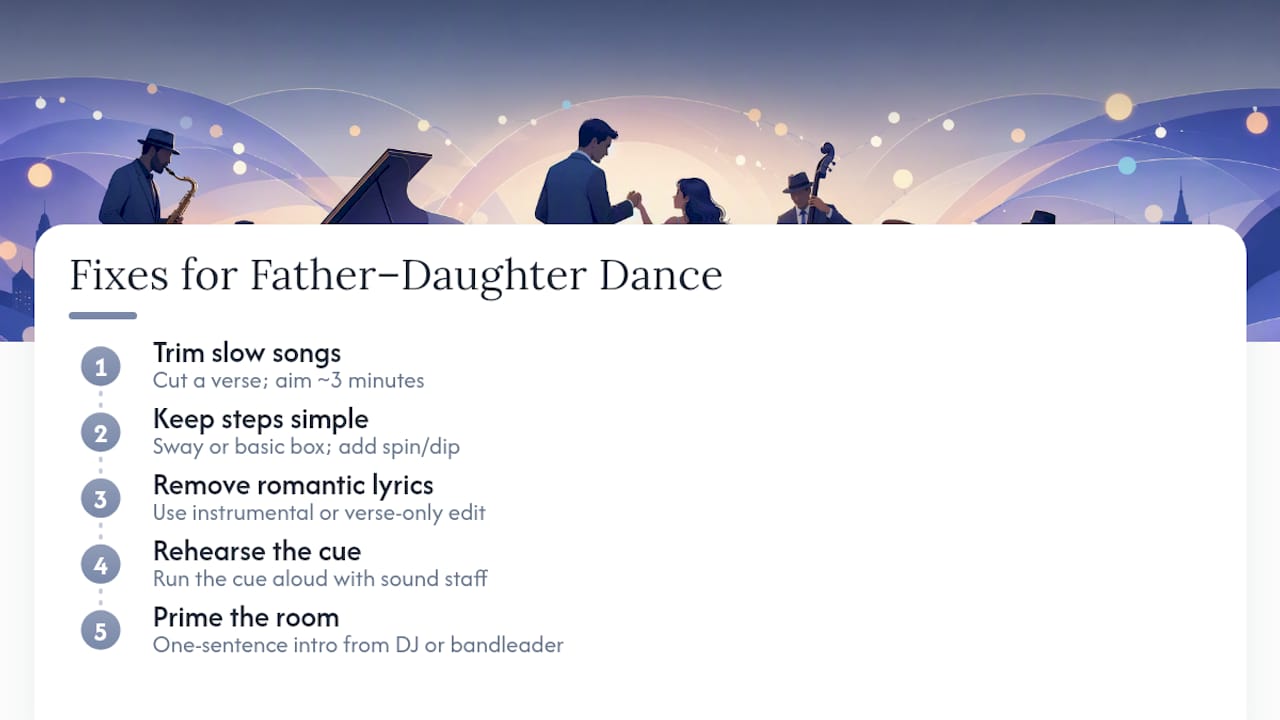
The song feels too slow and drags on the dance floor. Trim it. A four-minute ballad rarely needs to run past three minutes at a reception. Cut a verse, not the chorus.
Dad doesn't dance, or feels awkward with choreography. Jazz solves this better than most genres because it doesn't demand set steps. A simple sway or a basic box step covers almost any tempo, and swing tunes give you room to add a spin or dip if both of you are comfortable with it.
The lyrics are unintentionally romantic. Swap to an instrumental version, or pick a verse-only edit that skips the line that feels off.
The moment gets rushed by a nervous DJ or band. Rehearse the cue once, out loud, with whoever is running sound. Confusion at the actual moment almost always traces back to skipping this step.
Guests talk through it because the room isn't primed. A brief, warm introduction from the DJ or bandleader, even one sentence, resets the room's attention before the first note plays.
Editorial Perspective: Choose Meaning Over Trend
The song that matters isn't the one topping this year's wedding blogs. It's the one that means something to the two of you, whether that's a tune from Dad's own wedding or an obscure jazz cut nobody else would pick. Try swapping in a personalized lyric line, building a short medley of two songs, or bringing in a surprise vocalist for one verse. Guests won't remember the song title. They'll remember that it looked like it mattered to you.
— Alex
How Alexlevinmusic Brings This to Life
Picking the right song is half the work. Getting a musician to arrange it into a clean two- to three-minute moment, rehearsed and cued correctly, is the other half, and it's where most playlists fall apart on the actual day. Live music providers often book jazz trios and solo piano for exactly this kind of moment, building custom arrangements around whatever standard or swing tune is chosen and coordinating the fade, key, and cue directly with the venue's sound team.

Instead of handing a DJ a generic file and hoping the edit lands right, a skilled musician can shorten "The Way You Look Tonight" and songs like it to fit the moment and know exactly where the natural ending sits. Check availability for your date and talk through arrangement options on the reception music services page, or browse full ensemble details on the booking page to see what fits your event.
Where to Listen and Read More
- Father Daughter Dance Jazz Songs playlist on Spotify for quick listening.
- Style Me Pretty's full song roundup for more options beyond jazz.
- Terrifficc's reception music guide for broader reception planning ideas.
Sources
- Father-daughter dance songs that will melt your heart | Inside Weddings
- 60 of the best father/daughter songs of all time | Style Me Pretty
- Best father-daughter dance wedding songs | Brides
- Father Daughter Dance Jazz Songs - playlist by Minted | Spotify
FAQ
What is the most popular father-daughter wedding dance song?
"The Way You Look Tonight" by Frank Sinatra is consistently named the top pick because it balances warmth with a timeless, non-romantic feel.
What is the best song for a father and daughter dance?
There's no single right answer, but jazz standards like "Unforgettable" and "What a Wonderful World" work for most families because their lyrics center on connection rather than romance.
What is Frank Sinatra's best father-daughter dance song?
"The Way You Look Tonight" is Sinatra's most frequently chosen track for this moment, with "You Make Me Feel So Young" a strong upbeat alternative.
Should the father-daughter dance be a full-length song?
No. Aim for two to three minutes, which keeps the reception program moving without cutting the moment short.
Can a live band shorten any jazz song for this dance?
Yes. A trio can trim a verse, keep one vocal chorus, and end on a short tag, which is how most professional wedding jazz arrangements are built for this exact moment.