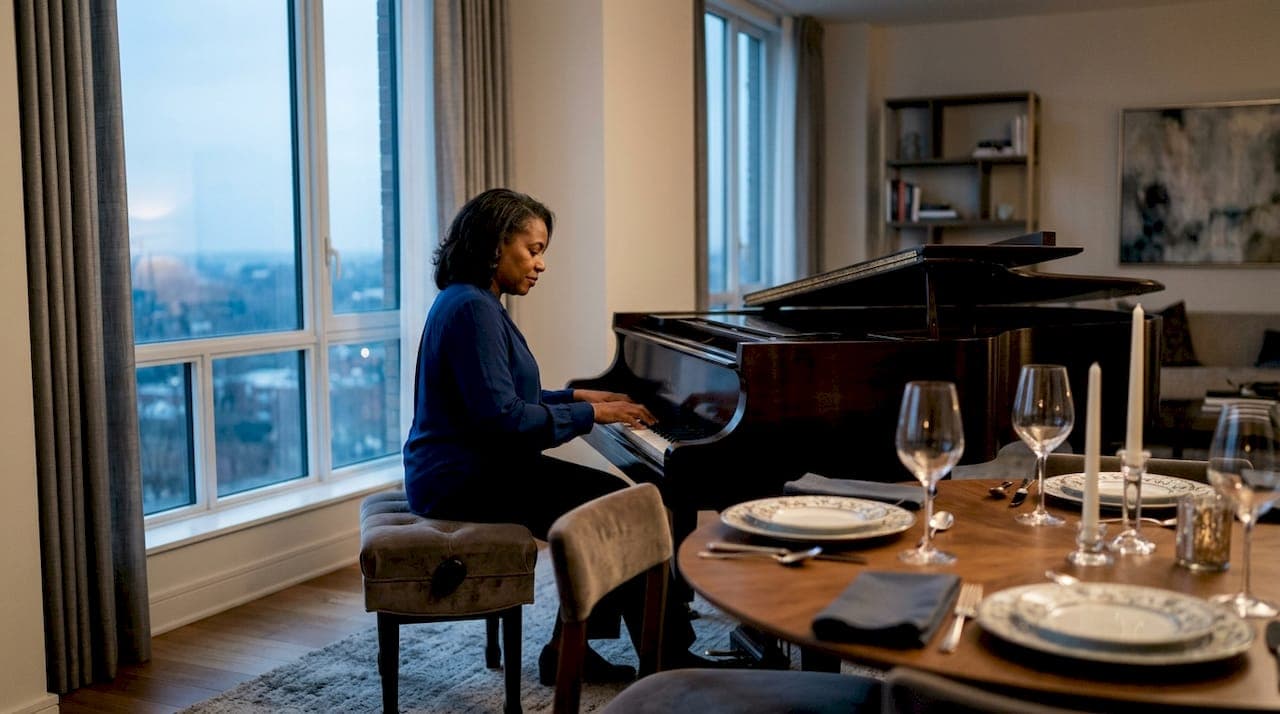
Piano music is the single most effective background choice for a dinner party because it fills a room with warmth and sophistication without competing with conversation. Unlike pop tracks or music with prominent lyrics, instrumental piano operates in the background as a social partner, not a centerpiece. Research confirms that classical piano music raises average guest spend by roughly 10% compared to pop or silence. That number tells you something important: the right music does not just set a mood, it shapes how guests feel about the entire experience.
Why piano music suits dinner parties better than any other genre
Piano music suits dinner parties because its instrumental nature removes the single biggest threat to good conversation: lyrics. When guests hear words, the brain instinctively tries to process them. That cognitive pull fragments attention and raises the effort required to hold a conversation. Instrumental piano sidesteps this entirely, giving guests a rich sonic environment without the distraction.
The tempo of piano music also works in your favor. Slow-tempo music at 60–90 BPM correlates directly with relaxed dining behavior and higher guest satisfaction. That range matches the natural pace of dinner conversation, so the music and the room feel synchronized rather than at odds. Jazz standards, Chopin nocturnes, and Debussy impressionist pieces all sit comfortably in this range.
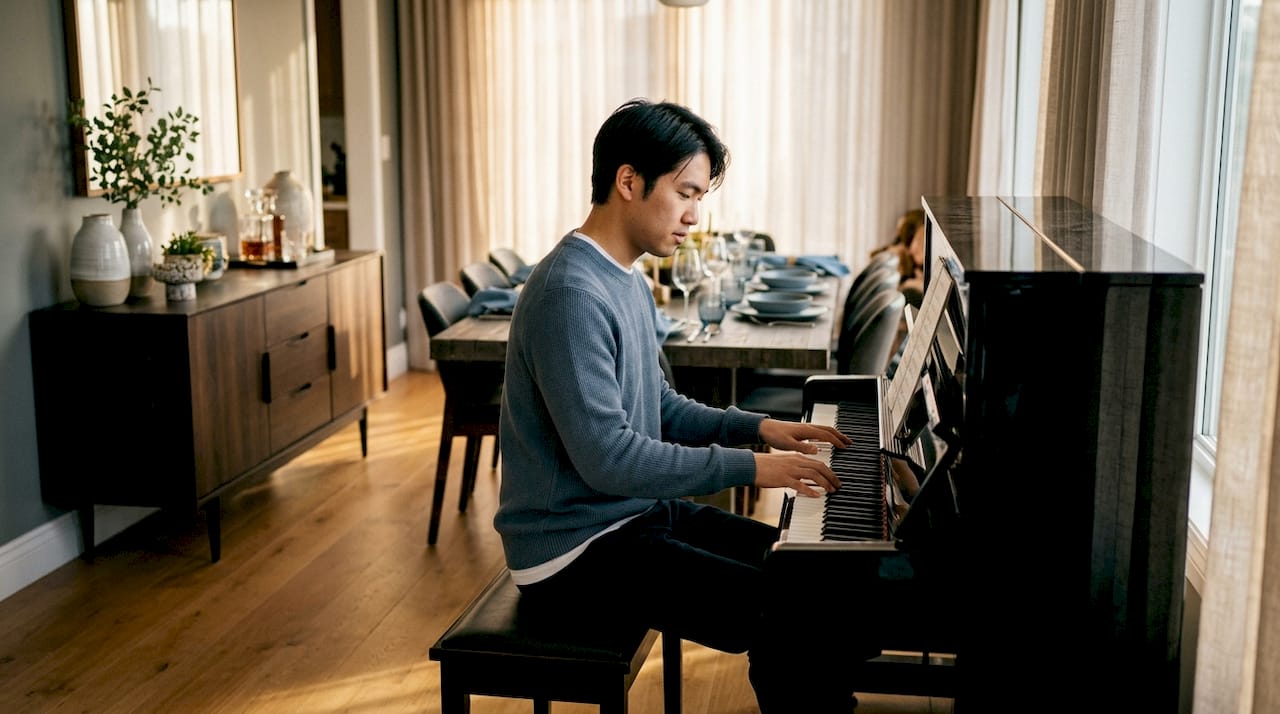
Piano also has a wide dynamic range. A skilled pianist or a well-produced recording can fill a large dining room at low volume without sounding thin or distant. That quality makes piano uniquely suited to the acoustic challenge of a dinner party, where you need presence without volume.
Pro Tip: Test your music volume by standing at the far end of your dining table and speaking at your normal voice level. If you have to raise your voice to be heard over the music, turn it down. Music should never win that contest.
What does research say about piano music and dining behavior?
The evidence connecting piano music to better dining outcomes is consistent and specific. Classical and refined piano music signals quality to guests before a single dish arrives. That signal shapes perception of the entire event, from the food to the host's attention to detail.
Music acts as a price and quality cue, encouraging guests to stay longer and feel more at ease. In practical terms, this means your guests linger at the table, conversation flows more freely, and the evening feels unhurried. That is exactly the atmosphere most hosts want to create.
Live piano music creates presence without overwhelming guests, balancing warmth and sophistication in a way that recorded playlists rarely achieve. A live pianist reads the room and adjusts energy in real time. A playlist cannot do that.
| Music type | Effect on conversation | Effect on guest mood | Effect on perceived quality |
|---|---|---|---|
| Instrumental piano | Supports naturally | Calm and relaxed | High |
| Pop with lyrics | Competes with speech | Energetic, sometimes distracting | Neutral to low |
| Silence | No interference | Awkward, exposed | Neutral |
| Heavy rhythm or dance music | Strongly competes | Stimulating, not relaxing | Low for formal dining |
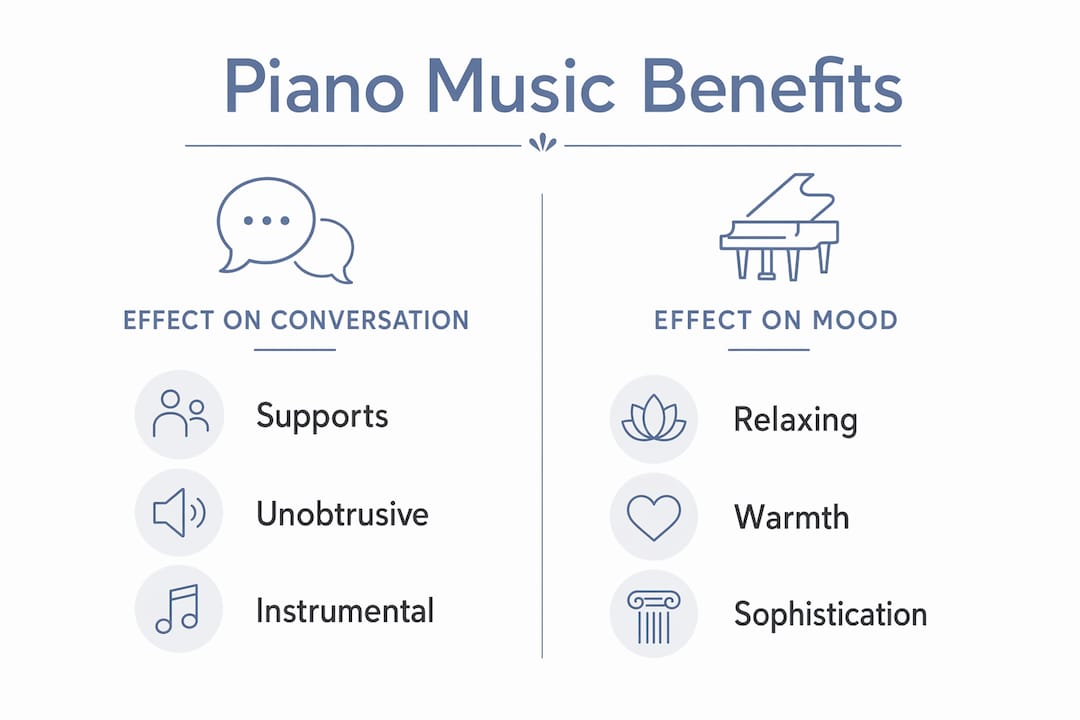
The table above shows a clear pattern. Piano music is the only option that scores well across all three dimensions that matter for a dinner party setting.
How to curate piano music for your dinner party
Curation is where most hosts make avoidable mistakes. The most common error is building a playlist that is too short, too repetitive, or tonally flat from start to finish. A well-planned music arc for private events treats the evening as a story with a beginning, middle, and end.
For a four-hour dinner party, aim for 60–80 songs. That works out to 15–20 songs per hour, which gives you enough variety to avoid repetition while keeping the tone consistent. Fewer songs and you will hear the same pieces twice, which breaks the illusion of a curated atmosphere.
Pace your selections to match the event arc:
- Arrival and cocktail hour: Choose brighter, slightly more upbeat piano pieces. Think George Gershwin, Oscar Peterson, or Bill Evans playing uptempo standards. Guests are arriving, greeting each other, and need energy to settle in.
- Dinner service: Shift to slower, more lyrical pieces. Chopin nocturnes, Debussy's Clair de Lune, or gentle jazz ballads work well here. The goal is to hold the room without pulling focus from the table.
- After dinner: Allow a subtle lift in tempo as conversation loosens and guests relax. This is where a live pianist has a clear advantage, reading the room and responding naturally.
Matching music style to your dinner theme also matters. A formal dinner with a French menu calls for different choices than a casual jazz-themed gathering. Aligning music energy with event arc is not a minor detail. It is one of the most direct ways to control how your guests feel throughout the evening.
Pro Tip: If you are using a recorded playlist, build three separate queues: one for arrival, one for dinner, and one for after dinner. Switching between them manually gives you the same control a live pianist has over the room's energy.
How does piano music compare to other dinner party music options?
The comparison between piano and other music formats comes down to one question: does the music serve the guests or compete with them? Music with prominent lyrics distracts guests from conversation. This is not a matter of taste. It is how the brain processes language, and no amount of volume adjustment fixes it.
Here are the top reasons piano music outperforms other formats for dinner parties:
- No lyrics. Guests process speech without interference from competing words in the music.
- Flexible tempo. Piano repertoire spans from 50 BPM ballads to 120 BPM swing, giving you precise control over room energy.
- Timbre suits any theme. Classical, jazz, bossa nova, and contemporary piano all share the same instrument but serve very different dinner aesthetics.
- Live adaptability. A live pianist adjusts to the room in real time, something no fixed playlist can replicate. This is why live music outperforms playlists for events where atmosphere is the priority.
- Volume efficiency. Piano fills a room at lower volumes than most other instruments, protecting conversation without sacrificing presence.
Recorded playlists have one advantage: cost. But they carry a real risk. Abrupt transitions between tracks, inconsistent volume levels, and the inability to respond to the room's energy can break the atmosphere you worked hard to build. For high-stakes dinners, that trade-off rarely pays off.
For hosts who want the benefits of live music without a full ensemble, a solo pianist is the most practical choice. The cocktail hour soundscape principle applies equally to dinner: live presence changes how guests experience a space in ways that recordings simply do not.
Key Takeaways
Piano music suits dinner parties because it supports conversation, signals quality, and adapts to the event's natural arc better than any other music format.
| Point | Details |
|---|---|
| Instrumental nature protects conversation | Piano music carries no lyrics, so guests process speech without cognitive interference. |
| Tempo aligns with dining pace | Music at 60–90 BPM matches the natural rhythm of dinner conversation and relaxed dining. |
| Music signals perceived quality | Refined piano music raises guests' perception of the event and encourages them to linger. |
| Curation requires an event arc | Build separate playlists for arrival, dinner, and after dinner to control room energy throughout. |
| Live piano outperforms playlists | A live pianist reads the room and adjusts in real time, which no recorded playlist can do. |
What I have learned from years of playing dinner events
The most common mistake I see hosts make is treating music as an afterthought. They spend weeks on the menu and the table setting, then plug in a generic playlist at the last minute. The result is a room that feels slightly off, and guests often cannot identify why. Music is the invisible architecture of an event. When it is right, nobody notices it. When it is wrong, everybody feels it.
The second mistake is volume. Hosts tend to set music too loud early in the evening, before guests arrive, and then forget to adjust it once the room fills up. A room full of people absorbs sound differently than an empty one. What felt right at 6:00 PM will feel intrusive by 7:30 PM. Check the volume after your first guests arrive, not before.
The third thing I have learned is that piano music rewards restraint. The temptation is to choose dramatic, emotionally loaded pieces because they feel impressive. But at a dinner party, impressive is the wrong goal. The right goal is invisible support. A Debussy prelude played softly does more for a dinner than a Beethoven sonata played at full expression. The music should make guests feel good without making them think about the music at all.
Choosing piano for a dinner party is not just a safe choice. It is the correct one, and the research backs it up.
— Alex
Live piano for your next dinner party
Alexlevinmusic specializes in exactly this kind of event: intimate, sophisticated, and built around the guest experience. A live solo pianist from Alexlevinmusic brings the adaptability and presence that no playlist can replicate, reading your room and adjusting the energy from arrival through dessert.
Every performance is customized to your dinner's theme, guest profile, and pacing preferences. Whether you are hosting in Philadelphia, New York, or beyond, Alexlevinmusic can match the right musical style to your event. Reach out through alexlevinmusic.com to discuss your dinner and get a consultation on the right musical approach for your gathering.
FAQ
Why is piano music ideal for dinner parties?
Piano music is instrumental, which means it supports conversation without competing with speech. Its typical tempo of 60–90 BPM also matches the relaxed pace of dining, making guests feel at ease.
How loud should piano music be at a dinner party?
Music should sit below normal conversation volume. Volume calibration is simple: if guests need to raise their voices to be heard, the music is too loud.
How many songs do I need for a four-hour dinner party playlist?
Aim for 60–80 songs to cover a four-hour event without repetition. That works out to roughly 15–20 songs per hour across your arrival, dinner, and after-dinner queues.
Is live piano better than a recorded playlist for dinner parties?
Live piano adapts to the room's energy in real time, avoiding the abrupt shifts and tonal inconsistencies that recorded playlists often produce. For high-stakes dinners, live music is the stronger choice.
What piano music styles work best for a dinner party?
Jazz standards, Chopin nocturnes, Debussy impressionist pieces, and bossa nova piano all work well. Match the style to your dinner's theme and shift from brighter pieces during arrival to slower, more lyrical selections during the meal itself.
Recommended
- From Dinner to Dancing: Seamless Music Planning for Private Events
- Corporate Event Music: How to Strike the Right Tone Between Formal & Fun
- Cocktail Hour Soundscapes: Setting the Mood with Live Music Instead of Just Background Noise
- How to Build the Perfect Wedding Reception Music Playlist: 10 Tips to Keep the Party Going