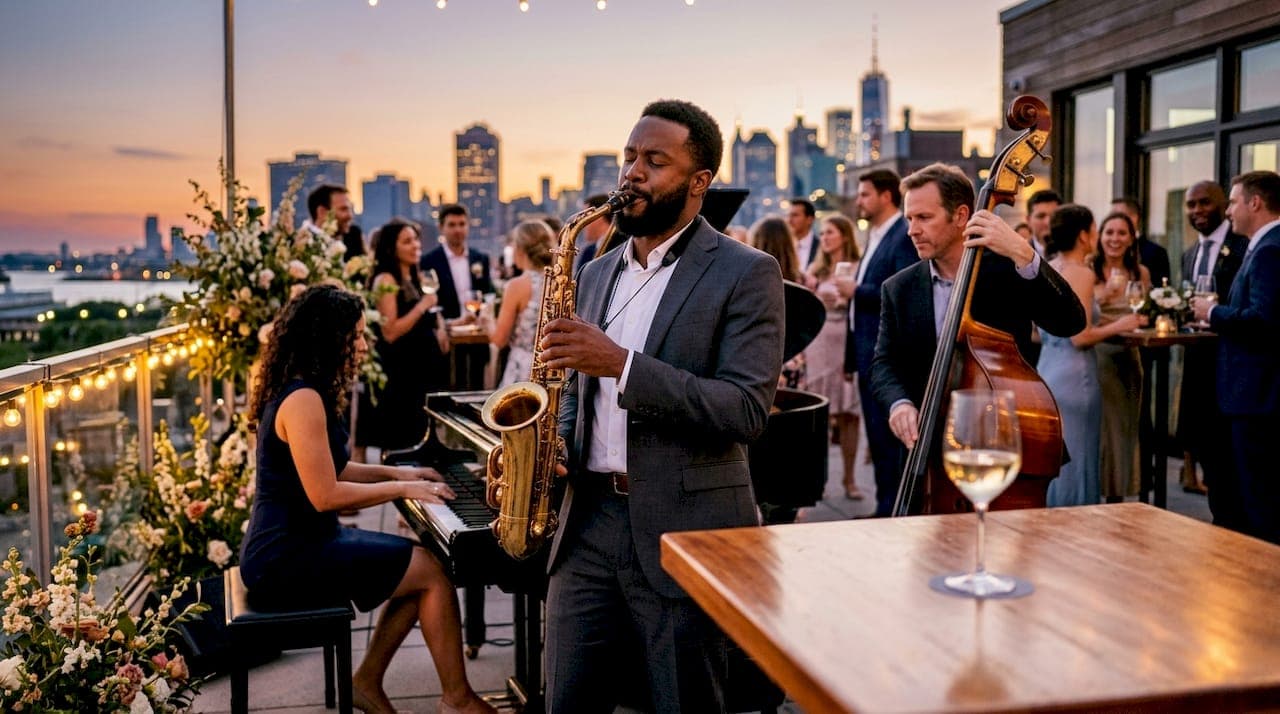
Live jazz is defined as a performance art that transforms reception spaces through direct physiological and emotional engagement that recorded music cannot replicate. The science behind why live jazz elevates receptions is now well documented. A february 2026 pilot study with 130 participants found that live music raises heart rate and emotional response significantly more than livestreamed or pre-recorded alternatives. Northeastern University's MIND Lab confirmed that brainwaves synchronize more strongly with live music, producing higher pleasure ratings. Alexlevinmusic has built its entire service model around this reality, offering jazz trios, solo piano, and swing ensembles for weddings, corporate events, and private receptions across Philadelphia, New York, and beyond.
Why live jazz elevates receptions: the physiological evidence
Live jazz does something to the human body that a playlist simply cannot. A february 2026 pilot study measured physiological and psychological responses in 130 participants across live, livestreamed, and pre-recorded music conditions. The live condition produced a higher mean heart rate than any digital alternative. That elevated heart rate is not stress. It is the body's signal of active engagement, the same response you get from a compelling conversation or an absorbing film.
Psychologists measure emotional response to music using two axes: valence (positive or negative feeling) and arousal (energy level). Live jazz scores higher on both during actual performances. Researchers also tracked "kama muta," a technical term for the feeling of being deeply moved, sometimes described as chills or a lump in the throat. Live performances triggered kama muta more reliably than digital playback. That emotional depth is exactly what separates a memorable reception from a forgettable one.
Northeastern University's MIND Lab added a neurological layer to this picture. Their may 2026 research found that audience brainwaves align with music rhythms far more effectively during live performances, especially at faster tempos. That alignment produces measurably higher engagement and pleasure ratings. Jazz, with its syncopated rhythms and dynamic phrasing, is particularly effective at driving this neural synchronization.

Pro Tip: Book a jazz trio for the cocktail hour specifically. The intimacy of three musicians in a room creates the strongest brainwave entrainment effect without overwhelming conversation.
The physical presence of the musicians matters independently of the music itself. Even subtle differences in performance context, such as seeing a pianist's hands or watching a bassist lean into a phrase, affect psychological and heart rate responses in measurable ways. The visual dimension of live jazz adds a sensory layer that no speaker system can deliver.
How does social connection shape the live jazz reception experience?
Live jazz does not just affect individuals. It connects them to each other. Sociologist Émile Durkheim coined the term "collective effervescence" to describe the electric sense of shared energy that emerges when people experience something together in real time. University at Buffalo researchers published findings in february 2026 confirming that live music generates collective effervescence and that this effect predicts lasting well-being for days after the event.
"The shared social experience of live music connects individuals to something larger, which enhances overall well-being." This finding, drawn from four separate studies at the University at Buffalo, explains why guests at receptions with live jazz consistently report feeling more connected to each other long after the event ends.
The practical implications for event organizers are direct. A reception with live jazz does not just sound better. It produces a shared emotional state among guests that recorded music cannot generate. Guests who experience collective effervescence together form stronger social bonds. At a wedding, that means the couple's community leaves feeling genuinely united. At a corporate reception, it means colleagues leave with a stronger sense of team identity.
Recorded music and livestreams fall short on this dimension for a specific reason. They lack the social co-presence of musicians in the room. Physical co-presence of musicians enhances immersive and sensory experiences in ways that digital delivery cannot match. The audience knows the musicians are present, responding to the room, and performing for them specifically. That awareness changes how guests relate to each other and to the event itself.
Why choose live jazz over recorded music or playlists?
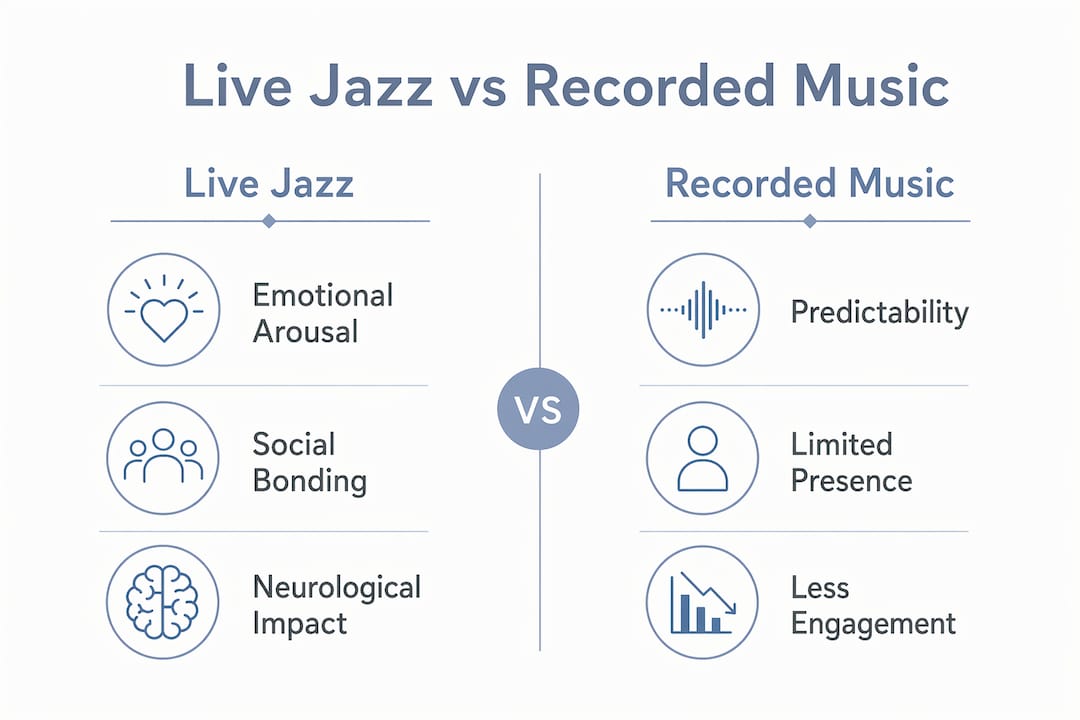
Recorded music is predictable. Live jazz is alive. That distinction matters more than most event organizers realize when planning a reception. Live music produces higher ratings of emotional arousal, pleasure, and immersion compared to livestreamed or pre-recorded experiences. A playlist cannot read the room, slow down for a quiet moment, or build energy as guests arrive.
The table below compares live jazz and recorded music across the dimensions that matter most at a reception.
| Dimension | Live jazz | Recorded music |
|---|---|---|
| Emotional arousal | High, physiologically confirmed | Moderate, context-dependent |
| Guest engagement | Active, multisensory | Passive, auditory only |
| Social interaction | Amplified by collective effervescence | Minimal social catalyst |
| Adaptability | Real-time response to room energy | Fixed playlist, no adjustment |
| Ambiance sophistication | Elegant, dynamic, and personal | Generic without curation effort |
The visual element of live jazz is an underrated advantage. Guests watch the musicians interact with each other. They see improvisation happen in real time. That visual engagement gives guests something to talk about, a natural conversation starter that a speaker playing a Spotify playlist never provides. For wedding receptions, this social catalyst effect is particularly powerful during cocktail hours when guests who do not know each other need a reason to connect.
Music therapy research also confirms that jazz music reduces stress and improves mood in listening environments. A reception is exactly the kind of environment where stress reduction matters. Guests arrive from different places, some travel-weary, some socially anxious. Live jazz creates a warm, welcoming atmosphere that lowers those barriers faster than any other musical format.
Pro Tip: Ask your jazz ensemble to keep volume at a conversational level during dinner. The goal is presence, not performance. Guests should feel the music without raising their voices to talk across the table.
How to choose and incorporate live jazz for maximum reception impact
Choosing the right jazz ensemble starts with understanding your space. A solo piano works beautifully in a smaller venue with natural acoustics. A jazz trio, typically piano, bass, and drums, fills a mid-size ballroom without overwhelming it. Larger receptions with 150 or more guests benefit from a quartet or quintet that can project across the room while maintaining elegance.
Repertoire matters as much as ensemble size. Work with your musicians to build a set list that reflects the event's tone. A wedding cocktail hour calls for standards by composers like Duke Ellington or Cole Porter. A corporate reception might lean toward contemporary jazz or bossa nova to keep energy neutral and broadly appealing. Alexlevinmusic offers customizable jazz ensembles with repertoire tailored to client preferences, which removes the guesswork from this process entirely.
Timing is the most overlooked variable in live jazz planning. Structure your reception around the music, not the other way around.
- Cocktail hour: Deploy the ensemble here first. This is when guests arrive in waves and need a social anchor. Live jazz fills the room before it fills with people.
- Dinner service: Transition to softer, more melodic playing. The music should support conversation, not compete with it.
- Post-dinner: If your event includes dancing or a more festive close, the ensemble can shift to higher-energy swing or Latin jazz to lift the room.
- Transitions: Coordinate with your event coordinator so the band knows when toasts, speeches, or announcements are coming. A skilled jazz musician will taper naturally into silence and re-enter without disrupting the flow.
Logistics require direct communication before the event. Discuss volume levels, break schedules, and setup requirements with your musicians at least two weeks in advance. Ask about their amplification needs and whether the venue has a dedicated sound system or requires the band to bring their own. Professional ensembles like those at Alexlevinmusic handle these details routinely, but your event coordinator should confirm them in writing. For a deeper look at how live music shapes event flow, the planning process becomes much clearer when you map music to each phase of the evening.
Pro Tip: Request a short sound check at least 45 minutes before guests arrive. This is not just for audio levels. It lets the musicians calibrate to the room's acoustics and gives you a chance to hear how the ensemble sounds in the actual space.
Key Takeaways
Live jazz elevates receptions by triggering measurable physiological engagement, generating collective social bonding, and creating an adaptable, multisensory atmosphere that recorded music cannot replicate.
| Point | Details |
|---|---|
| Physiological engagement | Live jazz raises heart rate and emotional arousal more than any digital music format. |
| Brainwave synchronization | Northeastern University's MIND Lab confirmed stronger neural alignment with live music, producing higher pleasure ratings. |
| Collective effervescence | University at Buffalo research links live music to social bonding and well-being that lasts days after the event. |
| Ensemble and timing | Match ensemble size to venue capacity and structure the set list around cocktail hour, dinner, and post-dinner phases. |
| Musician presence | The physical co-presence of musicians adds a visual and sensory dimension that amplifies guest engagement beyond audio alone. |
What I have learned after years of playing receptions
The moment that convinced me live jazz is irreplaceable at receptions happened at a wedding cocktail hour in Philadelphia. The couple had debated whether to use a playlist to save money. They chose a trio instead. Within ten minutes of the first song, guests who had never met were leaning toward each other, pointing at the musicians, and laughing. By the time dinner was announced, the room had a warmth that no playlist could have manufactured.
What I have noticed consistently is that guests do not just listen to live jazz. They orient toward it. They position themselves in the room relative to the musicians. They make eye contact with the pianist during a solo. That physical orientation changes how people inhabit a space and how they interact with each other. It is a social architecture effect that event planners rarely account for but always notice afterward.
The practical advice I give every organizer is this: do not treat live jazz as a luxury add-on. Treat it as the foundation of your reception's social environment. The music sets the emotional temperature of the room from the first note. Get that right, and everything else, the food, the décor, the speeches, lands better because guests are already in a receptive, connected state. For anyone planning a reception and wondering whether live jazz is worth it, the research and the room tell the same story.
— Alex
Live jazz for your reception with Alexlevinmusic
Alexlevinmusic specializes in live jazz ensembles for weddings, corporate receptions, and private events across Philadelphia, New York, and surrounding areas. Every ensemble is customized to match your venue size, event tone, and guest preferences, from intimate solo piano to full jazz quartets.
The research is clear: live music creates a reception experience that recorded audio cannot match. Alexlevinmusic brings that experience with professional musicians, flexible repertoire, and a track record of events where guests remember the music long after the evening ends. Read more about why live music beats a playlist and reach out to discuss your event directly.
FAQ
What makes live jazz better than a DJ at a reception?
Live jazz produces higher emotional arousal, brainwave synchronization, and collective social bonding than recorded music formats. A DJ plays fixed tracks; a jazz ensemble reads the room and adjusts in real time.
How does live jazz affect guests who are not jazz fans?
The physiological effects of live music, including elevated heart rate and the feeling of being moved, occur regardless of genre preference. The visual and social dimensions of live performance engage guests independently of their musical taste.
What size jazz ensemble works best for a wedding reception?
A jazz trio suits venues up to roughly 100 guests, while a quartet or quintet works better for larger ballrooms. Ensemble size should match the room's acoustics and the desired volume level for conversation.
Does live jazz work for corporate receptions, not just weddings?
Live jazz is particularly effective at corporate receptions because it creates collective effervescence and social bonding among colleagues. University at Buffalo research confirms these well-being effects persist for days after the event.
How early should I book a jazz ensemble for my reception?
Book at least three to six months in advance for peak wedding and event seasons. Professional ensembles fill their calendars quickly, and early booking gives you time to customize the repertoire and confirm logistics.