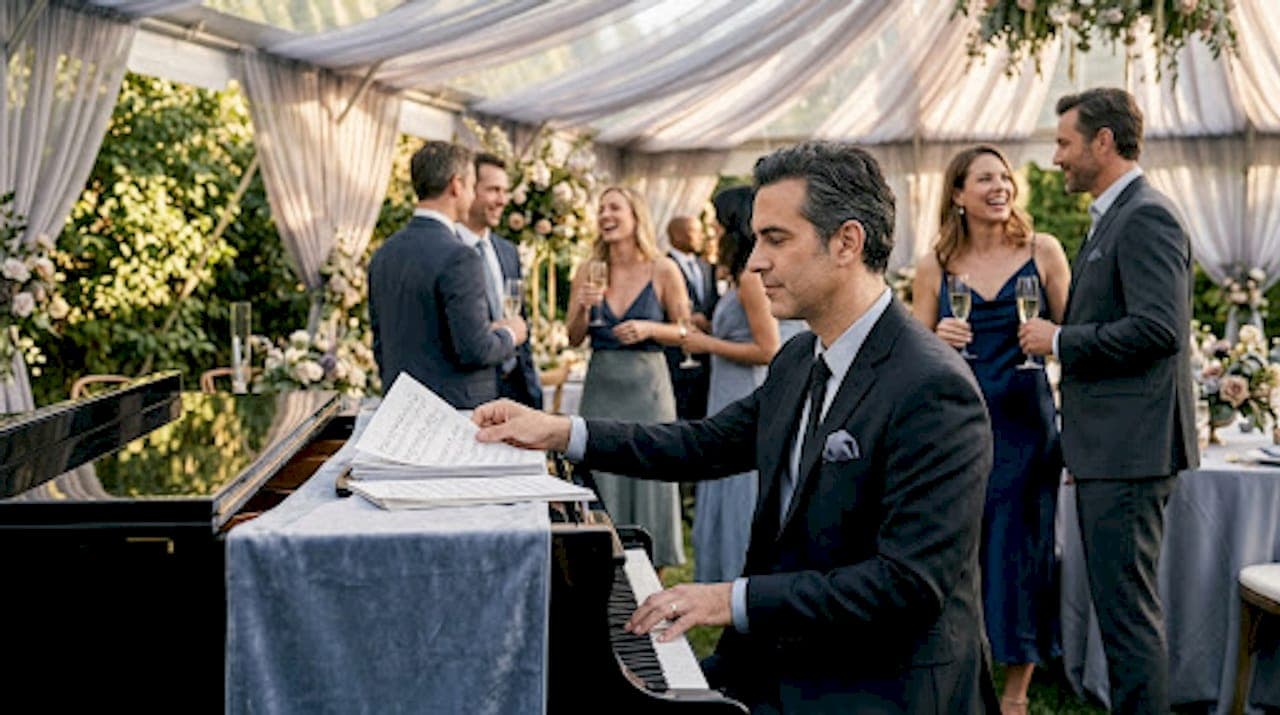
Music is the only wedding detail every single guest experiences at the same moment. Yet most couples spend more time debating centerpieces than thinking seriously about what a jazz ensemble versus a DJ actually does to the room. The answer to why jazz at weddings works so well has nothing to do with nostalgia or trend. It comes down to something measurable: live jazz changes the emotional temperature of a space in ways that a Spotify playlist never can. Here is exactly what that means for your ceremony, cocktail hour, and reception.
Table of Contents
- Key Takeaways
- Why jazz at weddings works: the emotional science
- Jazz at cocktail hours and receptions
- Live jazz vs. DJs and recorded music
- Choosing your jazz ensemble and logistics
- Common pitfalls when using jazz at weddings
- My honest take on jazz and weddings
- Book the perfect live jazz for your wedding
- FAQ
Key Takeaways
| Point | Details |
|---|---|
| Live jazz outperforms recorded music | Studies confirm live performance produces higher emotional arousal and engagement than any recorded or streamed alternative. |
| Jazz fits every wedding segment | From soft processionals to high-energy receptions, jazz styles like swing, bossa nova, and smooth jazz cover every moment. |
| Ensemble size matters | Match your jazz group size to venue acoustics. Solo piano suits intimate ceremonies; a quartet fills a ballroom beautifully. |
| Hybrid plans work well | Pairing live jazz for ceremony and cocktail hour with a DJ for late-night dancing balances elegance with energy. |
| Communication is everything | Share a detailed brief with your musicians before the event to personalize the setlist and avoid surprises. |
Why jazz at weddings works: the emotional science
Most couples assume that any pleasant background music will do for a ceremony. That assumption costs them one of the most powerful tools they have. Live music performance significantly increases emotional engagement compared to recorded or livestreamed alternatives, with measurable differences in psychological scores for emotional response, pleasure, and arousal.
Jazz specifically earns its place in that conversation because of its structure. A jazz musician is never simply playing notes. The instrument breathes with the room. A pianist softens as guests hush before the processional. A saxophone swells during the recessional. That responsiveness is something no playlist can replicate, because live musicians adjust their playing in real time to match room resonance and atmosphere.
This matters for ritual transitions. The moment before a bride walks down the aisle is one of the most charged silences in any couple's life. A live jazz trio can hold that tension and release it with intention. A pre-recorded track cannot read the room. It simply plays on schedule.
Pro Tip: Ask your jazz ensemble to rehearse the processional timing with an actual walk-through if possible. Even a five-minute sound check in the ceremony space helps musicians calibrate volume and tempo to the room's acoustics.
For ceremony formats, instrumentation shapes the experience. A solo piano creates intimacy and quiet elegance for smaller venues. A jazz trio adds warmth and a little texture without overwhelming spoken vows. A quartet, with its fuller harmonic range, suits larger spaces and outdoor ceremonies where sound needs to carry naturally.
Jazz at cocktail hours and receptions
This is where jazz truly shows its range. Jazz's versatility across styles means a single ensemble can shift from soft and conversational to lively and engaging within the same set, matching exactly what the social energy of your event requires.
Here is what different jazz styles bring to specific moments in your wedding:
- Bossa nova and smooth jazz work beautifully for cocktail hours. The tempo is relaxed enough that guests can talk over the music without straining, but the groove keeps the room feeling alive rather than awkward.
- Swing and big-band arrangements raise the energy for early reception moments, giving guests a reason to start moving toward the dance floor without the full pressure of a DJ set.
- Vocal jazz standards create focal points during dinner. Think classic romantic jazz wedding songs like "The Way You Look Tonight" or "Fly Me to the Moon." They feel personal without being intrusive.
- Upbeat contemporary jazz covers that original first-dance moment if you want something that feels both timeless and fresh.
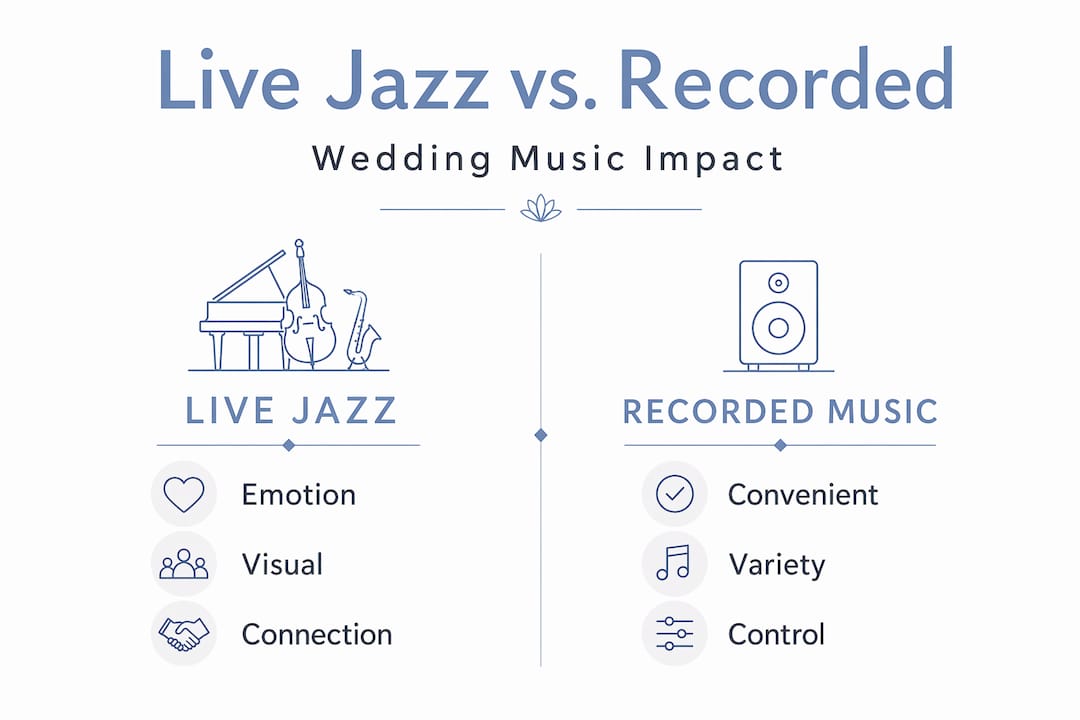
Beyond the setlist, there is a visual dimension that people underestimate. Live musicians add visual engagement and an authentic presence that no recording can replicate. Guests naturally gravitate toward the band, watch the interplay between musicians, and feel connected to a shared experience. That connection is what makes cocktail hours feel like the party has already started rather than a waiting room.
One thing that distinguishes jazz from almost every other genre for weddings: it occupies a rare middle ground. It is sophisticated enough to match a formal event and warm enough to feel approachable. Classical music can feel stiff. Pop can feel casual. Jazz sits right between them.
Live jazz vs. DJs and recorded music
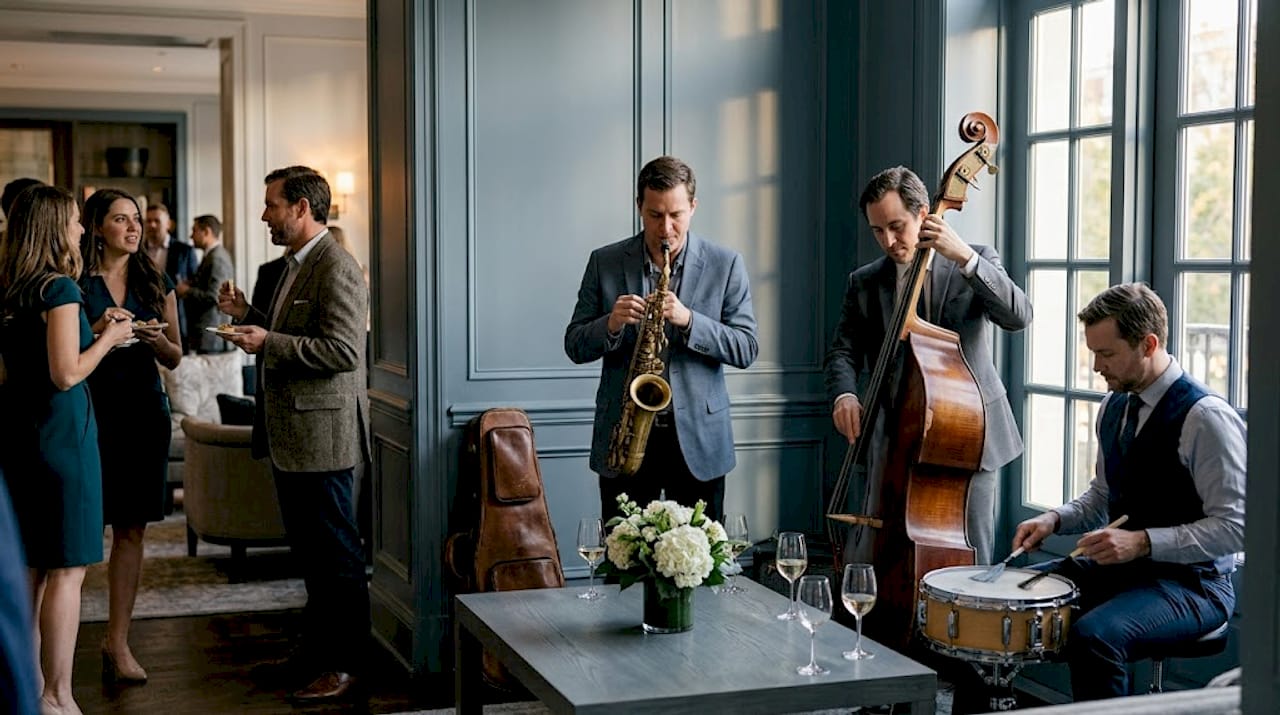
This comparison deserves more honesty than it usually gets. DJs are excellent. A skilled DJ reads a dance floor better than most musicians can, and for late-night dancing, the energy of a DJ set is hard to match. But the comparison is not really about quality. It is about what each option does to your guests' bodies and emotions.
Research is direct on this point. Higher mean heart rate and stronger emotional responses are consistently observed during live music conditions compared to recorded alternatives. Your guests will physically feel the difference, even if they cannot name it.
| Factor | Live jazz band | DJ or playlist |
|---|---|---|
| Emotional engagement | Higher arousal, stronger memory formation | Moderate, depends on song selection |
| Adaptability | Real-time response to room and guests | Limited to pre-planned sets or requests |
| Visual experience | Musicians as entertainment and focal point | Minimal visual element |
| Volume control | Naturally scales to acoustic environment | Requires active management |
| Best suited for | Ceremony, cocktail hour, dinner | Late-night dancing, high-energy reception |
| Cost | Higher investment | Generally lower |
The smartest approach many wedding planners recommend is a hybrid. Live music for ceremony and cocktail hour, then a DJ for the reception's high-energy dance portion. You get the elegance and emotional depth of live jazz exactly when it matters most, and the DJ handles the part of the night where volume and variety are more important than atmosphere. If you are thinking about how to organize that blend logistically, planning a DJ setlist that picks up after the jazz ensemble finishes is worth thinking through in advance.
Pro Tip: Tell your DJ exactly when the live jazz set ends so they can begin with a song that matches the room's energy at that moment, rather than starting cold with a high-tempo track that catches guests off guard.
Choosing your jazz ensemble and logistics
Getting the jazz ensemble selection right is a practical decision, not just an aesthetic one. Matching ensemble size to venue prevents the most common mistake: hiring a quartet for a space that seats thirty people and spending the ceremony trying to talk over the music.
Here is a practical process for planning your live jazz music logistics:
- Assess your venues separately. Ceremony space, cocktail area, and reception room often have different acoustics and capacities. The ensemble that works for one may not work for all three.
- Define the mood for each segment. Write a one-sentence description of how you want guests to feel during each part of the day. Share this with your musicians before the first consultation.
- Build a "must-play" and "do-not-play" list. Give your jazz ensemble at least ten songs you love and five you want to avoid. Good musicians will use this to understand your taste, not just follow a script.
- Visit the venue with your musician contact if possible. Even a brief site visit helps the ensemble understand speaker placement needs, power access, and how the room carries sound.
- Confirm logistics in writing at least four weeks out. Setup time, break schedules, amplification needs, and backup plans for outdoor events should all be documented.
Budget is real. A professional jazz ensemble for weddings costs more than a playlist. But the value calculation changes when you consider that live music is one of the few details guests explicitly remember and mention afterward. It is not decoration. It is an experience.
Common pitfalls when using jazz at weddings
The benefits of jazz at weddings are real, but execution matters. Here is where couples and planners most often go wrong:
- Volume creep during dinner. Bands naturally play louder as energy builds. Without a clear brief, what starts as background music becomes a competition with conversation. Set a maximum volume for the dinner portion upfront.
- Starting the reception set too early. If the jazz band launches into swing numbers before guests have found their seats and eaten, you lose the mood-building opportunity. Time the energy increase to match when guests are ready for it.
- Skipping the soundcheck. Acoustic spaces surprise even experienced musicians. A fifteen-minute soundcheck before guests arrive catches feedback issues, volume imbalances, and equipment problems before they become your wedding's most memorable moment for the wrong reasons.
- Not briefing musicians on the ceremony's timeline. If the officiant runs long or a reading is added, the musician needs to know how to hold or adjust. Build in flexibility rather than a rigid minute-by-minute cue sheet.
Pro Tip: Designate one point of contact, such as your wedding planner or a trusted family member, to communicate with the band on the day itself. Musicians should not have to track down the couple between sets to ask timing questions.
The personalized jazz music experience your guests remember is built through these practical decisions, not just through hiring talented musicians.
My honest take on jazz and weddings
I've played hundreds of weddings, and the question I hear most from couples is some version of: "Is jazz too old-fashioned?" What I've found is that it is usually the wrong question entirely. The real question is whether you want music that makes people feel something or music that simply fills silence.
What I've witnessed firsthand is that a live jazz trio during cocktail hour transforms how guests interact with each other. People who might otherwise stand quietly and check their phones start listening, leaning in, and talking about the music. It creates a social anchor. That is something I have never seen a playlist do.
I've also learned that the couples who are happiest with their wedding music are the ones who treat it as a collaboration. They share stories about songs that matter to them, and a good musician builds a set around those emotional anchors. The live jazz experience is at its best when it feels like it was written specifically for the two people getting married. That takes conversation, not just a booking confirmation.
My honest advice: do not decide on jazz because it sounds sophisticated. Decide on it because you want your guests to feel something they will carry with them after the last dance ends.
— Alex
Book the perfect live jazz for your wedding
If you've read this far, you already know the difference between music as a backdrop and music as an experience. Alexlevinmusic brings that difference to life for weddings across Philadelphia, New York, and beyond.
Whether you want a solo pianist for an intimate ceremony or a full jazz ensemble for a grand reception, the wedding music services at Alexlevinmusic are built around your vision, not a standard package. Browse available ensembles and soloists to find the right fit for your venue and style, or explore the full band and performance gallery to hear and see the quality before you book. Real musicians, real customization, and a team that understands what makes wedding music genuinely memorable.
FAQ
Why does live jazz work better than recorded music at weddings?
Live performance produces higher emotional engagement and physiological arousal than recorded alternatives, meaning guests feel more connected and present. Musicians also adapt in real time to the room's energy, which a recording cannot do.
What jazz style is best for a wedding cocktail hour?
Bossa nova and smooth jazz are ideal for cocktail hours because they maintain a warm, sophisticated atmosphere without overpowering conversation. Swing works well if you want to build energy toward the reception.
How big should a jazz ensemble be for a wedding?
Match ensemble size to your venue. Solo piano or a duo suits intimate settings under fifty guests, while a trio or quartet works well for mid-size and larger venues. Overpowering a small space with too many musicians is one of the most common mistakes couples make.
Can you combine live jazz with a DJ at a wedding?
Yes, and many wedding planners consider a hybrid approach the best of both worlds. Live jazz covers the ceremony and cocktail hour for atmosphere and elegance, while a DJ handles the high-energy dancing portion of the reception.
What are some classic romantic jazz wedding songs?
"The Way You Look Tonight," "Fly Me to the Moon," "At Last," and "La Vie en Rose" are perennial favorites. A professional jazz ensemble can arrange these in styles ranging from intimate and slow to uptempo and celebratory depending on your preference.
Recommended
- Creating Memorable Moments: The Impact of Personalized Jazz Music at Your Wedding | Alex Levin Music | Live Wedding Music Philadelphia | Live Event Music Philadelphia
- The Magic of Live Jazz at Your Wedding: Why It’s a Must-Have | Alex Levin Music | Live Wedding Music Philadelphia | Live Event Music Philadelphia
- Elevate Your Wedding Day with Enchanting Jazz: Why a Live Band is a Must-Have in NYC | Alex Levin Music | Live Wedding Music Philadelphia | Live Event Music Philadelphia
- 5 Secret Moments Where Live Music Makes Your Reception Unforgettable | Alex Levin Music | Live Wedding Music New York | Live Wedding Music Philadelphia