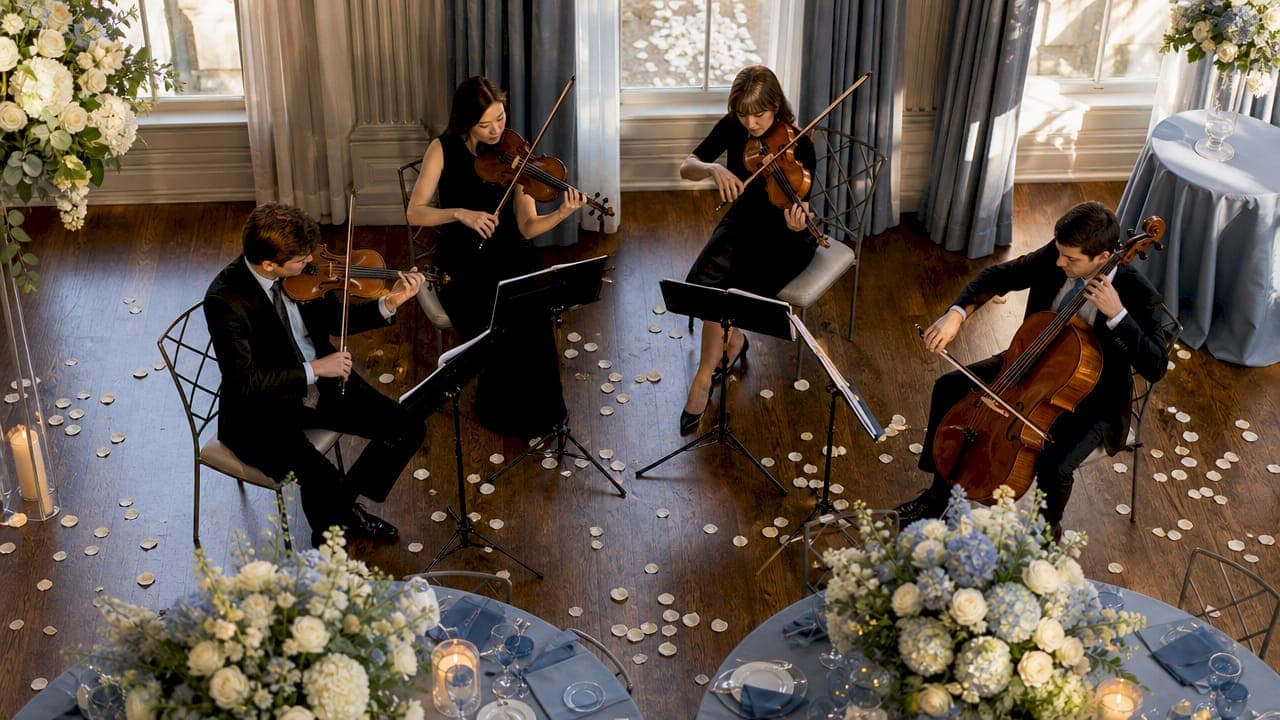
A string quartet is a live ensemble of two violinists, a violist, and a cellist whose combined sound adds elegance and emotional depth to wedding ceremonies without amplification or electronic equipment. Couples who hire musicians for ceremony entertainment consistently report that live strings create an atmosphere no playlist can replicate. The reasons why hire string quartet ceremony planning conversations come up so often are grounded in both science and practical experience. Live chamber music lowers cortisol and blood pressure while deepening the sense of shared connection among guests. That combination of beauty, flexibility, and well-being impact makes a string quartet one of the most effective ceremony entertainment ideas available.
Why hire a string quartet for your ceremony instead of other options?
A string quartet outperforms a DJ or recorded playlist at a wedding ceremony for one fundamental reason: it responds to the room in real time. A DJ cues tracks on a fixed timeline. A quartet reads the pace of the processional, stretches a piece when the flower girl slows down, and transitions gracefully when the officiant signals the next moment. That live adaptability is impossible to fake with pre-recorded music.
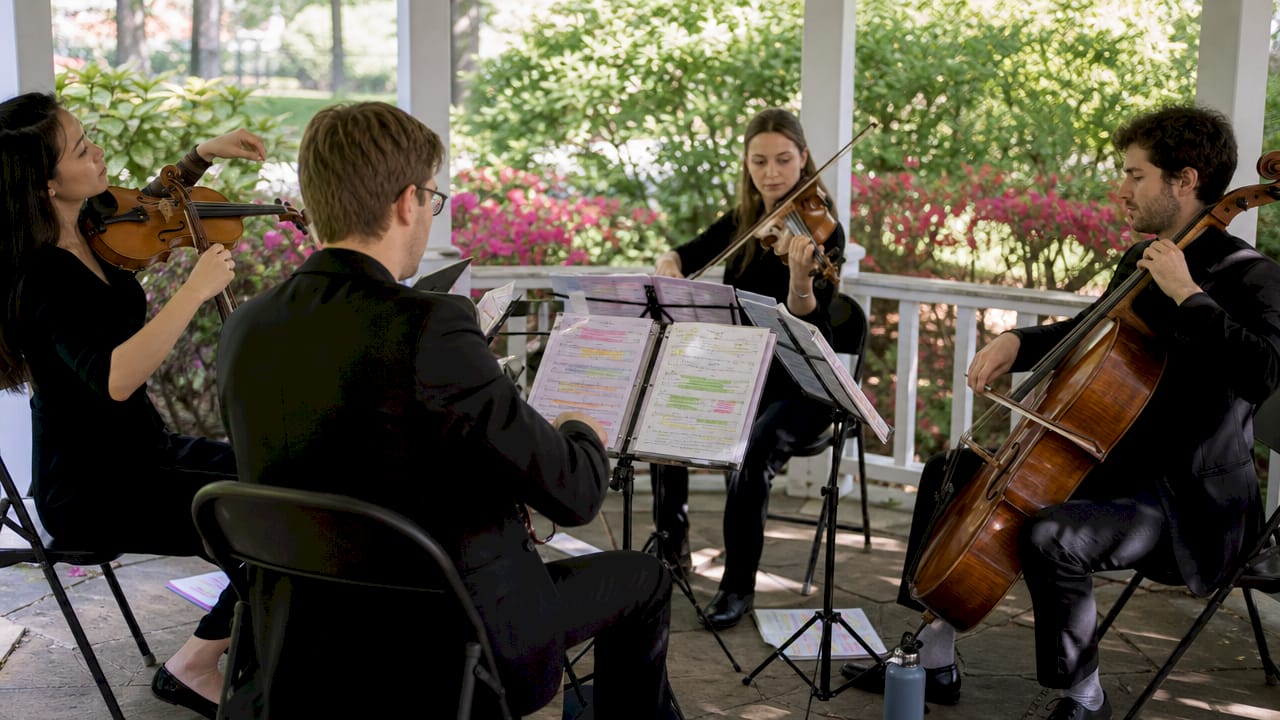
The acoustic advantages are equally significant. Amplification is generally not needed for a string quartet unless electric instruments or a PA system are part of the setup. This matters enormously for outdoor garden ceremonies, historic chapels, and intimate indoor venues where speakers and cables would look out of place. The natural volume of four acoustic instruments fills a space without overwhelming conversation or competing with the officiant's voice.
The benefits of string quartet performance extend to repertoire as well. Professional quartets perform both classical and contemporary pop songs arranged for strings, offering genuine versatility. Vivaldi's "Four Seasons," Pachelbel's "Canon in D," and Handel's "Water Music" sit comfortably alongside string arrangements of Coldplay, Ed Sheeran, and John Legend. That range means couples do not have to choose between a sophisticated sound and the songs that actually mean something to them.
Pro Tip: Ask your quartet for a sample setlist before booking. A strong quartet will show you at least 50 songs across classical, pop, and jazz categories. If the list is thin, keep looking.
Key advantages of choosing a string quartet over other ceremony music options:
- Natural acoustic volume fills the venue without speakers or cables
- Real-time adaptability lets musicians match the actual pace of the ceremony
- Classical and modern repertoire covers everything from Bach to Beyoncé
- No power source required for standard acoustic performance
- Visual elegance adds a formal, polished look to the ceremony space
What music options can you expect from a string quartet?
Repertoire customization is one of the strongest practical arguments for hiring a string quartet for weddings. Couples typically choose key songs for the most important moments while trusting the musicians to curate mood-appropriate repertoire for the gaps in between. That division of labor works well because professional quartets have performed hundreds of ceremonies and understand how music shapes the emotional arc of each moment.
The standard structure for ceremony music breaks into four distinct phases, each with its own musical purpose:
- Prelude (guests arrive): Background pieces that set a calm, welcoming tone. Common choices include Debussy's "Clair de Lune," Bach's "Air on the G String," and Satie's "Gymnopédie No. 1."
- Processional (wedding party enters): Slightly more formal and uplifting. Handel's "Arrival of the Queen of Sheba" and Jeremiah Clarke's "Trumpet Voluntary" are perennial favorites, though string arrangements of modern songs like "A Thousand Years" by Christina Perri are equally popular.
- Signing or interlude (during vows or ring exchange): Softer, intimate pieces that do not distract. A string arrangement of "Can't Help Falling in Love" or Schubert's "Ave Maria" works beautifully here.
- Recessional (couple exits): Joyful and celebratory. Mendelssohn's "Wedding March" remains the classic choice, but many couples now request string versions of "Happy" by Pharrell Williams or "Signed, Sealed, Delivered" by Stevie Wonder.
Professional quartets routinely perform adapted pop music, providing sophisticated string versions of modern songs that feel personal without losing elegance. Jazz and international music are also available from experienced ensembles. If you want a specific song not on the standard list, ask early. Most quartets can commission a custom arrangement or source one from their existing library.
What logistics should you plan for when booking a string quartet?
Booking a string quartet for a wedding ceremony requires more lead time than most couples expect. Peak wedding dates require booking 9–12 months in advance to secure availability. The practical advice from industry professionals is to confirm your quartet immediately after signing your venue contract, not after you have finalized the guest list or catering.
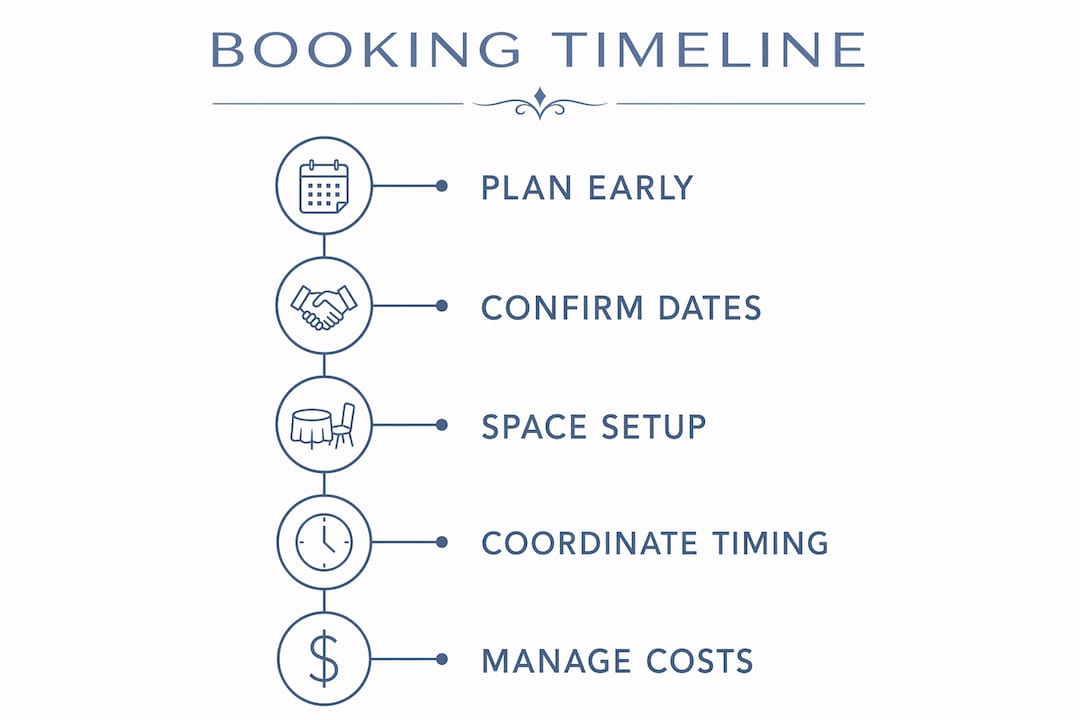
Cost is the other major planning variable. Ceremony-only string quartet pricing typically starts close to £600, while full-day coverage averages around £1,800–£2,200, with variation based on ensemble size and performance duration. Pricing in the United States follows a similar structure, though rates vary by market. Philadelphia and New York bookings, for example, tend to reflect the higher cost of living in those metro areas.
| Planning factor | What to know |
|---|---|
| Booking lead time | 9–12 months before peak dates; confirm after signing venue |
| Space requirement | Approximately 2m x 3m, four armless chairs, flat stable ground |
| Outdoor setup | Shade from direct sun, protection from temperature extremes for tuning |
| Power needs | None required for standard acoustic performance |
| Timing coordination | Quartets work directly with planners and registrars to manage transitions |
The space requirements for a string quartet are specific: roughly 2 meters by 3 meters of flat, stable ground, four armless chairs, and protection from direct sunlight and temperature extremes. Instruments go out of tune quickly in heat or direct sun. If your ceremony is outdoors, plan for a shaded area or a tent section for the musicians.
Pro Tip: Share your venue floor plan with the quartet at least four weeks before the wedding. Knowing the exact space lets them plan microphone-free positioning and confirm they can be heard from every seat.
Professional musicians coordinate directly with planners and officiants to manage timing, which means ceremony delays or pace changes do not derail the music. That coordination is a genuine logistical asset. Avoid common wedding music planning mistakes by briefing your quartet on the full ceremony order, not just the song list.
How does live string music affect your guests?
Live chamber music produces measurable physical and emotional effects that recorded music cannot match. Scientific evidence demonstrates that live music lowers cortisol and blood pressure while increasing feelings of social belonging compared to recorded or livestreamed alternatives. For a wedding ceremony, where guests are already emotionally primed, those effects are amplified.
The social dimension is equally important. Live music fosters a shared act of listening that creates deep human connection. Guests who might not know each other well find themselves united by the same musical experience in the same room. That shared attention is part of what makes a ceremony feel like a genuine communal event rather than a scheduled appointment.
"Audience members report a strong sense of belonging and prolonged emotional impact from live quartets. That emotional residue is what guests remember months after the wedding."
The emotional highlights of a ceremony, the processional, the exchange of vows, the first kiss, and the recessional, each land harder when underscored by live strings. A recording plays the same way every time. A live quartet responds to the energy in the room, playing with more intensity when the moment calls for it and pulling back when the officiant needs silence. That responsiveness is what separates live ceremony entertainment from background audio. For a deeper look at why live music outperforms playlists, the science is consistent and compelling.
Key takeaways
A string quartet is the most effective live music choice for a wedding ceremony because it combines acoustic elegance, real-time adaptability, and proven well-being benefits that no recorded alternative can replicate.
| Point | Details |
|---|---|
| Book early | Secure your quartet 9–12 months ahead of peak dates, right after confirming your venue. |
| Plan the space | Provide a 2m x 3m flat area with shade and armless chairs for outdoor or indoor setups. |
| Customize the repertoire | Choose key songs for processional and recessional, then trust the quartet to fill the rest. |
| Live music benefits guests | Live chamber music lowers cortisol and creates a shared sense of belonging among attendees. |
| No amplification needed | Standard acoustic quartets perform without power or speakers, suiting any venue type. |
What I've learned from watching string quartets transform ceremonies
Couples consistently underestimate how much the music shapes the ceremony's emotional tone. I have seen beautifully decorated venues fall flat because the couple relied on a Spotify playlist, and I have seen simple outdoor settings become genuinely moving because a skilled quartet was playing. The music is not background. It is the emotional architecture of the event.
The planning mistake I see most often is treating the quartet as an afterthought. Couples finalize the florist, the caterer, and the photographer before they even think about ceremony music. By then, the best quartets in their area are already booked. The couples who get the most out of live string music are the ones who book first and plan the setlist collaboratively, sharing meaningful songs and trusting the musicians to build a coherent arc around them.
One moment I keep coming back to: a bride walked down the aisle to a string arrangement of "Blackbird" by The Beatles. The guests who recognized it smiled. The ones who did not still felt the weight of it. That is what a skilled quartet does. It speaks to everyone in the room at once, regardless of their musical background. No playlist does that. No DJ does that at a ceremony. Only live musicians reading the room in real time can create that kind of shared experience.
— Alex
Live string music for your ceremony, made personal
Alexlevinmusic specializes in exactly this kind of performance: live, elegant, and built around what matters to you. The ensemble options include string quartets tailored for wedding ceremonies, with full repertoire customization from classical standards to modern pop arrangements.
Availability for peak wedding dates fills quickly, so early booking is the single most important step you can take. Alexlevinmusic serves couples and event planners across Philadelphia, New York, and beyond, bringing the kind of live music experience that guests talk about long after the reception ends. Browse the full range of ceremony music options to find the right ensemble for your venue and vision.
FAQ
What is a string quartet for a wedding ceremony?
A string quartet is an ensemble of four musicians playing two violins, one viola, and one cello. They perform live acoustic music during ceremony moments including the prelude, processional, signing, and recessional.
How far in advance should you book a string quartet?
Book your string quartet 9–12 months before your wedding date for peak seasons. Confirm the booking immediately after signing your venue contract to avoid losing availability.
Do string quartets need electricity or a PA system?
Standard acoustic string quartets do not require power or amplification. They perform naturally at a volume suited to most indoor and outdoor ceremony spaces without any electronic equipment.
Can a string quartet play modern pop songs?
Professional quartets routinely perform contemporary pop, jazz, and international music arranged for strings. Songs by artists like Ed Sheeran, Coldplay, and Christina Perri are common requests alongside classical repertoire.
How much does a string quartet cost for a ceremony?
Ceremony-only string quartet pricing typically starts around £600, with full-day coverage averaging £1,800–£2,200 depending on ensemble size and duration. Rates in U.S. markets like Philadelphia and New York vary based on local demand and musician experience.