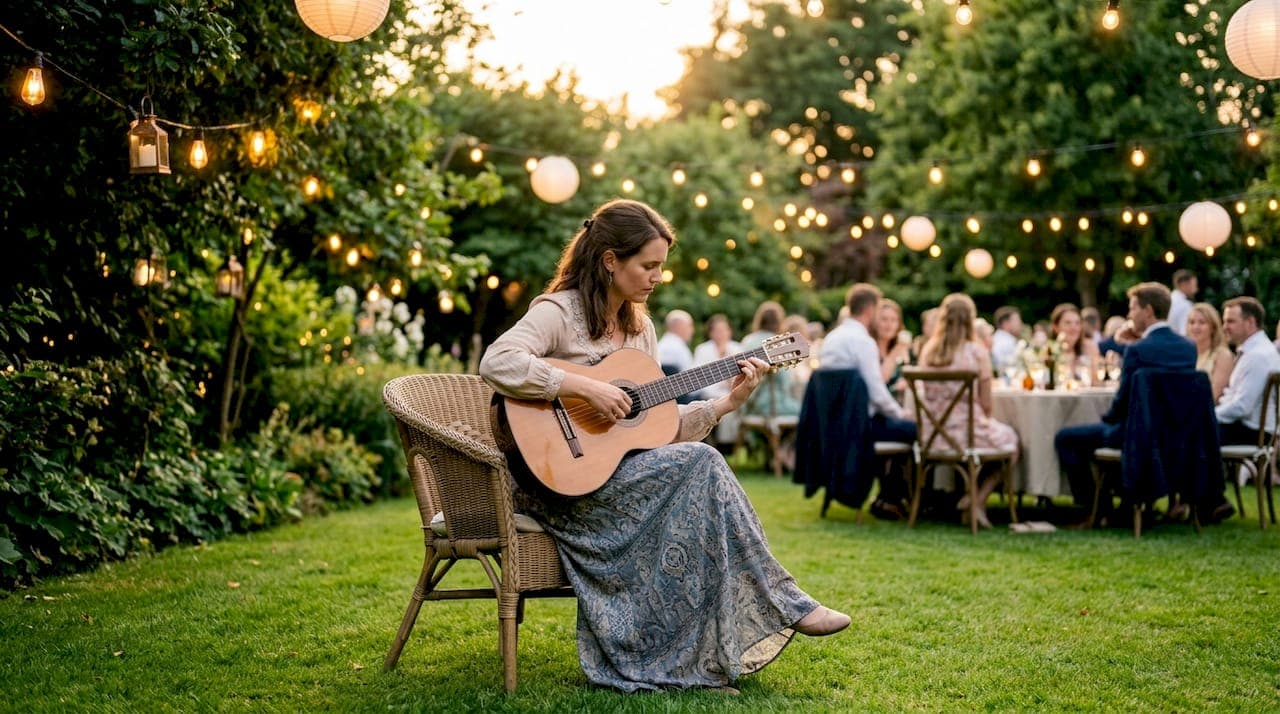
Acoustic music is the most effective way to create emotional depth and a calm, connected atmosphere at an outdoor wedding. The term "acoustic music" refers to live performance using unamplified or lightly amplified instruments, including guitar, violin, cello, piano, and upright bass. These natural frequencies engage the brain's limbic system, the region responsible for emotion and memory, more directly than synthesized or heavily processed sound. Couples planning open-air ceremonies consistently find that acoustic wedding entertainment fits the outdoor environment in ways that electronic music simply cannot replicate. The reasons are scientific, practical, and deeply human.
Why acoustic music outdoors weddings creates such a powerful effect
The emotional power of acoustic music at outdoor weddings is not accidental. Acoustic music uniquely suits emotional milestones like weddings by directly engaging the limbic system and promoting connection. That engagement explains why guests often feel moved during a ceremony even before vows are spoken.
The physiological effects go further than mood. Meta-analyses from early 2026 demonstrate significant reductions in systolic and diastolic blood pressure when listeners are exposed to acoustic music interventions. Lower blood pressure means guests arrive at the ceremony already relaxed, which sets the emotional tone for everything that follows.
Acoustic instruments produce organic, unprocessed frequencies that the human ear processes differently than synthesized tones. Those natural textures carry subtle variations in pitch, resonance, and timing that digital playback cannot reproduce. The result is a richer, more human listening experience.
"Acoustic music's natural frequencies engage the limbic system, fostering emotional regulation and connection more effectively than synthesized music. American Psychological Association experts highlight acoustic music for emotional milestones like weddings precisely because of this direct neurological pathway."
The benefits of acoustic music extend to every guest, not just the couple. A live guitarist playing fingerstyle arrangements during cocktail hour creates a shared listening experience that pulls people together. That collective calm is the foundation of a memorable wedding atmosphere.
What guests feel that they cannot explain
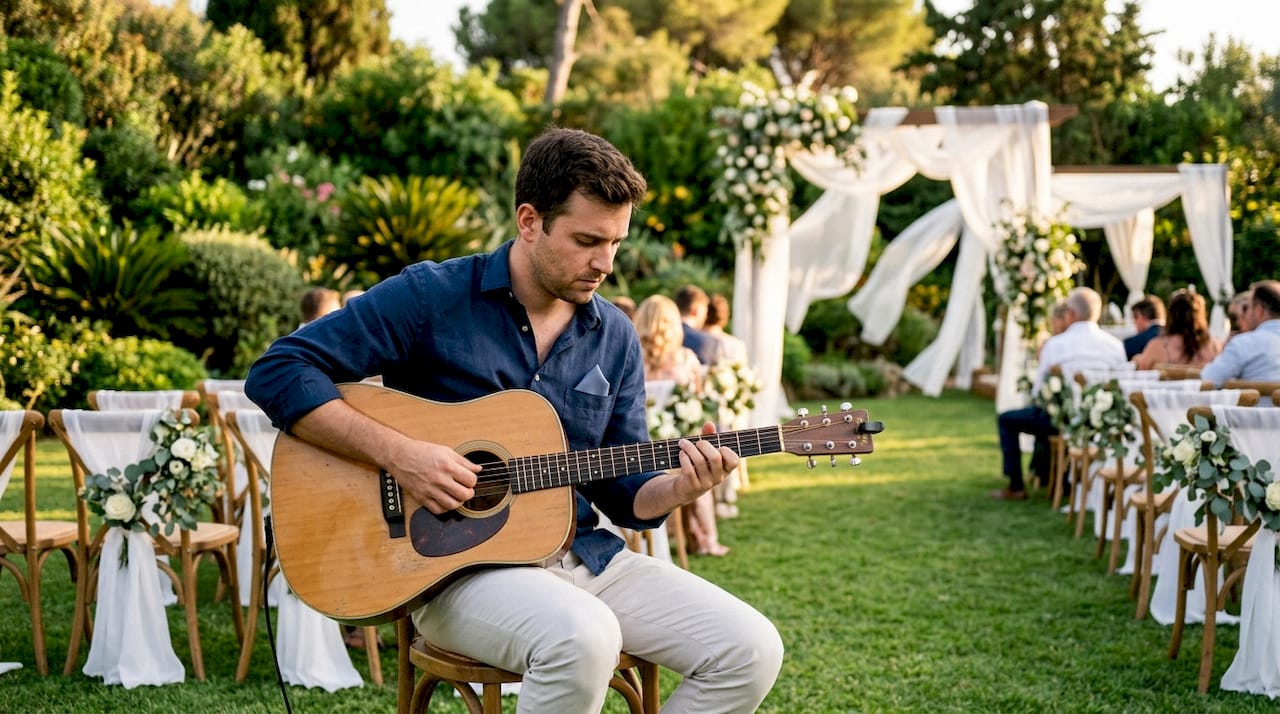
Guests often describe acoustic wedding entertainment as "warm" or "intimate" without knowing why. The answer lies in parasympathetic activation. Acoustic music triggers the body's rest-and-digest response, slowing heart rate and reducing cortisol. Guests feel at ease without understanding the mechanism. That invisible comfort is one of the strongest arguments for choosing live acoustic music over a playlist.
What acoustic challenges exist outdoors, and how does acoustic music solve them?
Outdoor spaces present a real acoustic problem. There are no walls, ceilings, or reflective surfaces to bounce and sustain sound. Energy from speakers or instruments disperses into open air almost immediately. This is why music planners emphasize "legibility" over volume for outdoor performance. A song that sounds full indoors can feel thin and directionless in a garden or vineyard.
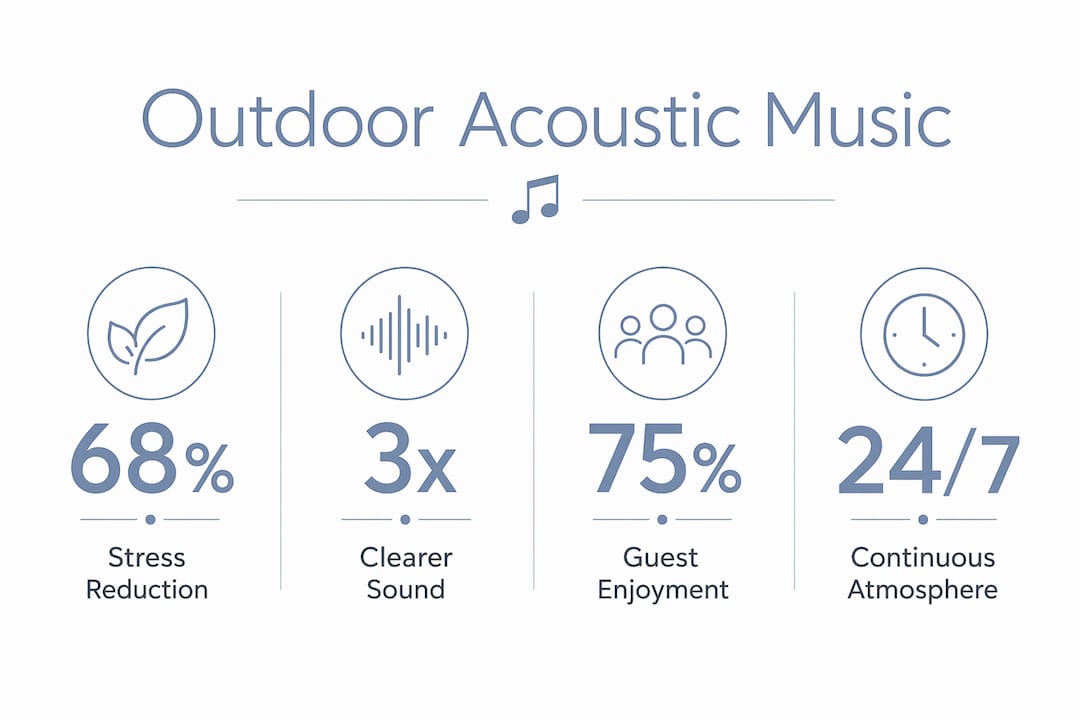
Acoustic instruments solve this problem through clarity of tone rather than raw volume. A classical guitar or violin produces a focused, defined sound wave that cuts through open air without distortion. The melody and rhythm remain intelligible even when the sound level is modest.
Selecting instruments that project clearly is the single most important decision for outdoor wedding sound. Instruments with strong midrange frequencies, such as acoustic guitar, violin, and cello, carry well in open spaces. Bass-heavy or heavily layered arrangements lose definition quickly outdoors.
Pro Tip: Position acoustic musicians facing the seated guests and slightly elevated if possible. Even a 12-inch riser improves sound projection significantly in open-air settings without requiring additional amplification.
Key practical considerations for outdoor acoustic sound:
- Place musicians upwind of the audience so natural air movement carries sound toward guests rather than away.
- Use a single small-diaphragm condenser microphone on acoustic instruments only when the venue exceeds 150 guests.
- Avoid hard surfaces directly behind musicians, such as stone walls, which can create unwanted echo.
- Schedule a brief sound check at the actual ceremony time of day, since temperature and humidity shift sound behavior.
Amplification is sometimes necessary, but the goal is to enhance the acoustic character of the instrument, not replace it. A light touch with a single monitor and one front-of-house speaker preserves the warmth that makes acoustic music worth choosing in the first place.
How does acoustic music compare with other outdoor wedding music options?
Couples weighing their outdoor wedding sound options often ask whether a DJ, a full band, or a live acoustic ensemble makes the most sense. The answer depends on what the couple wants guests to feel.
| Feature | Acoustic live music | Electronic or DJ-driven music |
|---|---|---|
| Sound character | Warm, organic, natural | Processed, layered, amplified |
| Outdoor suitability | High, clear projection in open air | Variable, prone to distortion outdoors |
| Sensory load | Low, supports mindful listening | High, can overwhelm open spaces |
| Guest atmosphere | Intimate, calm, connected | Energetic, louder, less personal |
| Flexibility | Moderate, set repertoire | High, instant song switching |
Acoustic music's textures create more relaxed and focused listener experiences compared to heavily layered or electronic music. That relaxation is especially valuable during a ceremony, when guests need to be present and attentive rather than stimulated.
Electronic music outdoors carries a specific risk: sudden volume shifts. Sudden volume shifts and confusing mood changes in music reduce concentration and increase tension. A DJ set that works perfectly in a ballroom can feel jarring in a garden because the open air strips away the acoustic cushion that normally softens loud transitions.
Acoustic music also supports what researchers call mindful listening. Acoustic music's simplicity and natural instrumentation encourage focused attention and reduce sensory overload compared to heavily processed music. Guests listen more actively, which means they are more present for the vows, the readings, and the moments that matter most.
The case for outdoor acoustic performances is also about atmosphere. A string duo playing softly during a garden ceremony creates a sense of occasion that no playlist can match.
What practical steps help couples get the most from acoustic wedding music?
Planning acoustic music for an outdoor wedding requires more than picking songs. The music needs to function as a continuous narrative that carries guests from arrival through the ceremony and into the reception.
- Choose instruments suited to your venue size. A solo acoustic guitar works beautifully for ceremonies under 80 guests. A string quartet or jazz trio scales better for larger gatherings of 100 or more.
- Plan music for every transition. Prelude music as guests arrive, processional music, a recessional, and cocktail hour music each serve a distinct emotional purpose. Gaps between these phases feel awkward without a musical bridge.
- Match tempo to the moment. Slower tempos during the processional and ceremony create reverence. Slightly brighter tempos during cocktail hour signal a shift toward celebration without losing warmth.
- Integrate environmental sounds. Wind, birdsong, and rustling leaves are not problems to solve. They are part of the outdoor atmosphere. Choose acoustic songs for weddings that leave space for those natural sounds rather than competing with them.
- Communicate with your musicians in advance. Share the ceremony timeline, the approximate guest count, and any songs that carry personal meaning. A skilled ensemble adapts in real time, but preparation prevents surprises.
Pro Tip: Ask your acoustic ensemble to play through transitions continuously rather than stopping between songs. Unbroken musical flow prevents the awkward silence that often disrupts outdoor ceremonies when a song ends and the next has not started.
Treating music as a continuous narrative linking event phases enhances atmosphere, especially during transitions that couples often overlook. The walk from the ceremony to the cocktail area, the moment guests find their seats, and the pause before the first dance all benefit from intentional musical planning.
Repeated moods and rhythmical continuity make outdoor wedding playlists coherent without becoming monotonous. A consistent emotional thread, whether that is warmth, joy, or gentle romance, holds the entire event together.
Key Takeaways
Acoustic music is the strongest choice for outdoor weddings because its natural frequencies reduce stress, project clearly in open air, and create the intimate atmosphere that couples and guests remember longest.
| Point | Details |
|---|---|
| Physiological benefit | Acoustic music lowers blood pressure and activates the parasympathetic nervous system in listeners. |
| Outdoor sound clarity | Acoustic instruments project clear melodies in open air where electronic music loses definition. |
| Sensory comfort | Natural instrumentation reduces sensory overload, keeping guests calm and present during the ceremony. |
| Music as narrative | Plan music for every transition, not just key moments, to maintain emotional flow throughout the event. |
| Instrument selection | Match ensemble size to guest count; a string quartet or jazz trio suits larger outdoor gatherings best. |
What I've learned from years of playing outdoor weddings
After performing at outdoor weddings across Philadelphia, New York, and beyond, the pattern I notice most is this: couples spend months choosing flowers and catering, then treat music as an afterthought. That order of priorities consistently produces the same result. Guests remember the music. They forget the centerpieces.
The moment that stays with me most is not the grand processional. It is the prelude. When guests arrive and find a live acoustic ensemble already playing, the entire atmosphere shifts within minutes. Conversations soften. People slow down. The space starts to feel like a ceremony rather than an outdoor gathering. No playlist produces that effect with the same reliability.
Live acoustic music enhances community bonds through shared attentive listening in group settings. I have watched that happen in real time. A room of strangers becomes a community of witnesses the moment the music starts and everyone listens together.
The most overlooked element in outdoor wedding music planning is volume control. Couples sometimes assume louder means better. The opposite is true outdoors. Well-balanced acoustic arrangements at a conversational volume level allow guests to hear the music, hear each other, and hear the ceremony. That balance is the difference between a wedding that feels alive and one that feels like a concert.
My advice to any couple planning an outdoor ceremony: hire musicians who understand the outdoor environment, not just the repertoire. The best acoustic performers read the space, adjust their dynamics in real time, and treat silence as part of the music.
— Alex
Live acoustic music for your outdoor wedding with Alexlevinmusic
Planning the music for an outdoor wedding is one of the most personal decisions a couple makes. A live acoustic ensemble does what no playlist can: it responds to the moment, fills the space with warmth, and gives guests something to feel rather than just hear.

Alexlevinmusic specializes in live acoustic and jazz performances for outdoor weddings in Philadelphia, New York, and surrounding areas. From solo guitar to string quartets and jazz trios, every ensemble is tailored to the couple's vision and the venue's acoustic character. If you want to understand why live music beats a playlist for your ceremony, or you are ready to explore available soloists and ensembles, Alexlevinmusic makes the process straightforward from the first conversation to the final note.
FAQ
Why is acoustic music better for outdoor weddings?
Acoustic music projects clear melodies in open air where electronic music loses definition, and its natural frequencies reduce guest stress by activating the parasympathetic nervous system. The result is a calmer, more emotionally connected ceremony atmosphere.
What acoustic instruments work best outdoors?
Violin, acoustic guitar, and cello carry well in open spaces because their midrange frequencies project clearly without amplification. A string quartet or jazz trio scales effectively for larger outdoor gatherings of 100 or more guests.
How do I manage sound volume for acoustic music outdoors?
Keep volume at a conversational level and position musicians slightly elevated and facing the audience. Use minimal amplification only when the guest count exceeds 150, and always conduct a sound check at the actual ceremony time of day.
What acoustic songs work well for outdoor wedding ceremonies?
Choose songs with clear melodies, moderate tempo, and minimal harmonic complexity. Acoustic arrangements of jazz standards, classical pieces, and folk songs all suit outdoor settings because they leave space for natural environmental sounds rather than competing with them.
Should I hire live acoustic musicians or use a playlist outdoors?
Live acoustic musicians adapt in real time to the space, the weather, and the emotional energy of the crowd. A playlist cannot respond to a delayed processional or an unexpected pause, while a skilled ensemble turns those moments into part of the experience.