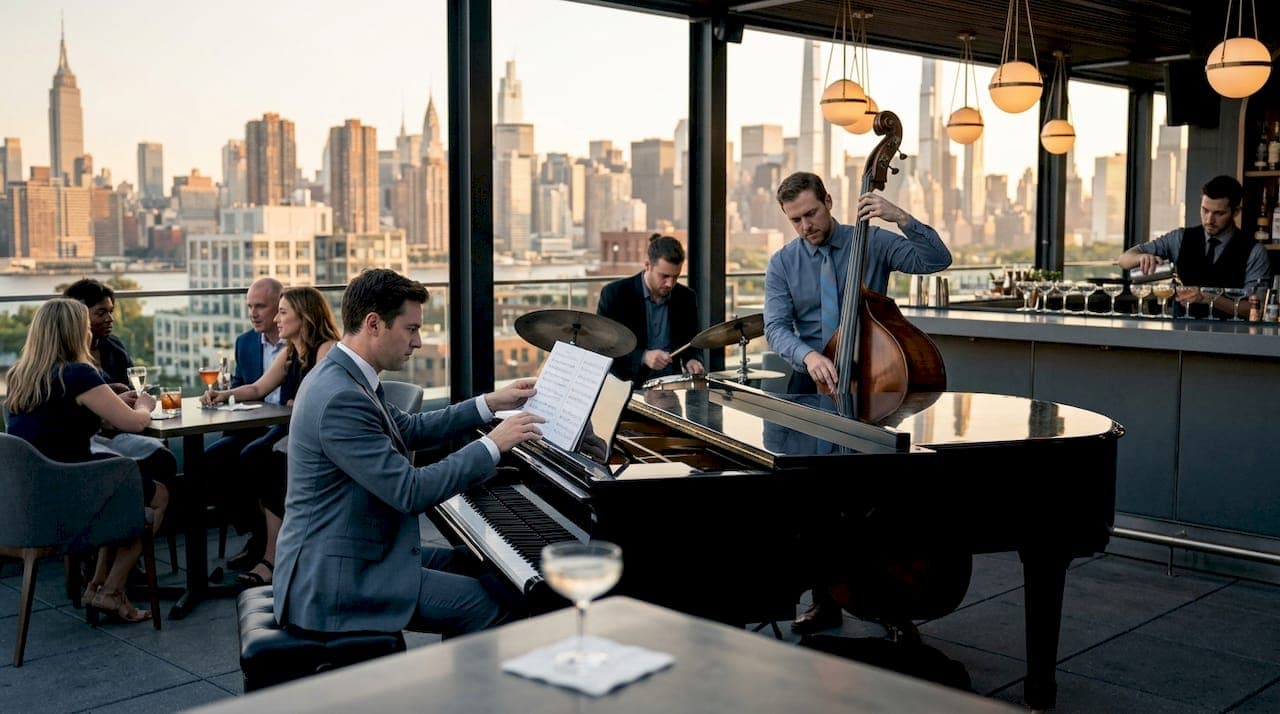
If you've ever assumed that cocktail jazz is simply any jazz record playing softly in the background, you're not alone — but that assumption can quietly undermine an otherwise flawless event. Cocktail jazz is a distinct, curated style designed specifically for social settings: sophisticated enough to signal elegance, relaxed enough to let conversations breathe. Whether you're planning a wedding reception, a corporate networking hour, or a private celebration, understanding what this music actually is will help you make choices that guests feel even if they can't name them.
Table of Contents
- The essence of cocktail jazz: styles, settings, and sound
- Stylistic characteristics and arrangements that create the perfect cocktail hour vibe
- Matching cocktail jazz styles with your event's ambiance and guest experience
- Practical guidelines for booking and setting up live cocktail jazz for your event
- Reimagining cocktail jazz: why subtlety and familiarity create lasting event memories
- Enhance your sophisticated event with premium live cocktail jazz ensembles
- Frequently asked questions
Key Takeaways
| Point | Details |
|---|---|
| Ambient jazz style | Cocktail jazz blends multiple jazz styles arranged for sophisticated, conversational social settings. |
| Small ensemble setup | Trio or quartet performances keep volume appropriate and foster intimacy during events. |
| Subtle arrangements | Smooth voicings and familiar standards ensure polished, unobtrusive background music. |
| Event and drink pairing | Matching jazz styles with cocktails enhances ambiance and guest experience. |
| Professional guidance | Expert live musicians adept at cocktail jazz simplify event planning and elevate your gathering. |
The essence of cocktail jazz: styles, settings, and sound
Cocktail jazz is not a single genre with a fixed rulebook. It's a practical descriptor, a category of intent. The music's purpose is to fill a room with warmth and sophistication while staying firmly in the background of the social experience. Think of it less like a concert and more like a well-chosen scent: present, pleasant, and doing real work without anyone consciously noticing.
What makes cocktail jazz distinct is the deliberate restraint built into every choice, from ensemble size to volume to tempo. A live jazz trio or quartet is the most common format because small groups can control their dynamics far better than a full band. They can read the room, pull back when conversations intensify, and add a touch of energy when the crowd needs a lift.
Stylistically, cocktail jazz pulls from several jazz traditions. It is worth knowing which ones, because each creates a slightly different atmosphere:
- Swing and classic jazz standards: Familiar, upbeat without being aggressive, and instantly recognizable to guests of all ages.
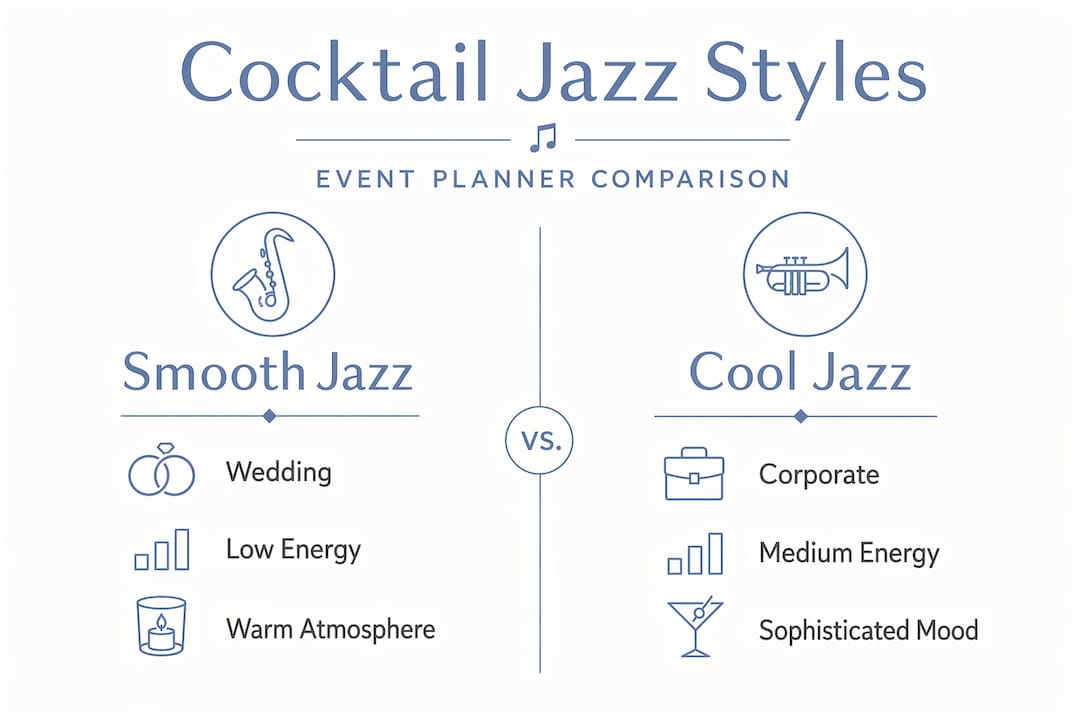
- Cool jazz: Slower, more introspective, with a sophisticated edge that works beautifully for upscale corporate events.
- Smooth jazz: Melodic, polished, and easy to absorb, ideal for wedding cocktail hours where guests are mingling and catching up.
- Contemporary jazz: A modern take that feels current without alienating traditionalists, good for younger or more eclectic crowds.
Importantly, cocktail jazz is not an official subgenre in the way bebop or hard bop are. It functions as a hospitality descriptor, a shorthand for "jazz that serves the room." That distinction matters when you're briefing musicians or booking an ensemble, because you want performers who understand the social function of the music, not just the technical execution. You can explore how cocktail hour soundscapes shape guest experience to understand just how much this choice affects the overall feel of your event.
Stylistic characteristics and arrangements that create the perfect cocktail hour vibe
Here is where the craft gets interesting. The difference between cocktail jazz that elevates a room and jazz that simply fills it comes down almost entirely to arrangement. The notes matter less than how they're delivered.
Lounge-style jazz arranging relies on subtlety as its primary tool: smooth chord voicings, tasteful fills between melodic phrases, and restrained energy that signals sophistication without demanding attention. A pianist who plays every note at full volume, no matter how technically impressive, will disrupt conversation. One who shapes dynamics, leaving space and breathing room between phrases, creates atmosphere.
Here's what the best cocktail jazz arrangements consistently do:
- Use slow-to-moderate tempos. Anything above a medium swing tempo starts pulling attention away from conversation. The rhythm should feel like a gentle current, not a push.
- Prioritize familiar melodies. Songs guests recognize, even subconsciously, create comfort. Jazz standards and Great American Songbook repertoire work precisely because they carry emotional memory without requiring active listening.
- Layer texture over complexity. Cocktail jazz is not the place for extended improvisation or complex harmonic experimentation. Texture, the interplay between instruments, is what makes the music feel rich.
- Keep dynamics conversational. The ensemble should be able to drop to near-whisper levels during toasts or announcements and return to full presence without jarring the room.
- Build in space. Silence, or near-silence, between phrases is not emptiness. It is what makes the music feel relaxed rather than relentless.
Pro Tip: When briefing your musicians, ask them specifically about their approach to dynamics in social settings. A band that talks about "reading the room" and "adjusting in real time" understands cocktail jazz. One that only discusses their setlist probably does not. Understanding jazz arranging techniques can help you ask the right questions.
Matching cocktail jazz styles with your event's ambiance and guest experience
Not all cocktail jazz sounds the same, and that's actually useful. Different substyles within the cocktail jazz umbrella create meaningfully different atmospheres. Matching the right style to your event's tone is one of the most underused tools in event planning.
Smooth and cool jazz styles dominate cocktail hour programming because their gentle tempos and mellow character match the pace of conversation and the feel of an upscale lounge. But there's more nuance available to you.
| Jazz style | Best event fit | Energy level | Conversation impact |
|---|---|---|---|
| Smooth jazz | Wedding cocktail hours, galas | Low | Minimal distraction |
| Cool jazz | Corporate receptions, art openings | Low to medium | Sophisticated backdrop |
| Swing standards | Festive weddings, holiday parties | Medium | Energizing but manageable |
| Contemporary jazz | Younger crowds, modern venues | Medium | Engaging without overpowering |
| Bossa nova jazz | Outdoor events, summer parties | Low to medium | Relaxed and warm |
Beyond the music itself, there's a concept worth borrowing from the hospitality world: pairing music with your drink menu. A menu built around classic gin cocktails and Champagne calls for cool jazz or classic standards. A craft cocktail bar with bold, adventurous drinks can support a more contemporary jazz sound. It sounds subtle, but guests experience the coherence even when they can't articulate why the evening felt so well-put-together.
A few practical considerations when selecting your jazz style:
- Guest demographics matter. Older guests tend to respond more warmly to classic swing and standards. Younger crowds often appreciate contemporary or bossa nova influences.
- Venue acoustics shape everything. Hard surfaces in a modern corporate space amplify sound, making a quieter, cooler jazz style smarter than a swinging trio at full energy.
- Event pacing changes the need. Early in a cocktail hour, when guests are arriving and settling, softer and slower works well. As the room fills and energy builds, the musicians can naturally lift the tempo.
Explore how jazz ensembles for events differ in character and function to make a more informed choice for your specific gathering.
Practical guidelines for booking and setting up live cocktail jazz for your event
Knowing what cocktail jazz is gets you halfway there. Knowing how to set it up properly gets you the rest of the way.
The trio and quartet format is the gold standard for a reason that goes beyond cost. Smaller ensembles give musicians the flexibility to manage their own dynamics without a sound engineer constantly adjusting levels. They can position themselves closer to guests, creating a sense of presence and intimacy that a large band on a distant stage simply cannot replicate.
Here's what to address when booking live cocktail jazz:
- Volume expectations in writing. Tell your musicians the room size, expected guest count, and the fact that conversation is the priority. Ask them to confirm they can perform at low-to-moderate volume throughout.
- Stage or performance area placement. Position the ensemble in a corner or along one wall, not in the center of the room. This keeps the music surrounding the space rather than dominating it.
- Set length and breaks. A cocktail hour typically runs 45 to 90 minutes. Confirm the musicians can play continuously or with very short breaks, and that break timing aligns with natural pauses in your event schedule.
- Repertoire alignment. Share your event's theme, guest profile, and any specific songs you want included or avoided. Good musicians will adapt their setlist accordingly.
- Sound reinforcement decisions. In smaller venues, acoustic performance without amplification often works better. In larger spaces, minimal and carefully managed amplification keeps the music present without pushing it into concert territory.
Pro Tip: Visit the venue before the event and stand in different areas of the room while imagining the ensemble playing. Where sound will carry, where it will get absorbed by guests, and where the natural focal points are will all influence where you place your musicians.
Reimagining cocktail jazz: why subtlety and familiarity create lasting event memories
Here's something the standard event planning advice rarely says out loud: the best cocktail jazz is the music your guests don't consciously remember hearing, but absolutely would have noticed if it were gone.
That sounds counterintuitive. You're spending real money on live musicians. Shouldn't guests notice? The answer is that they do notice, just not in the way you might expect. They notice that the room feels warm. They notice that conversation flows easily. They notice that the evening has a certain quality they struggle to put into words. That feeling is cocktail jazz doing its job correctly.
The biggest mistake event planners make is assuming "jazz" means bebop at cocktail-hour volume. Bebop is intellectually demanding music. It rewards focused listening and active attention. Those are exactly the wrong qualities for a social setting where guests need cognitive space to connect with each other. Cocktail jazz programming should prioritize smooth, familiar, rhythmically steady selections, the kinds of songs that feel like a comfortable room rather than a performance.
Familiar standards carry something that original compositions cannot: emotional memory. When a pianist plays a recognizable melody from the Great American Songbook, guests may not consciously identify the song, but something in them relaxes. The music signals that this is a known and comfortable world. That's not a small thing at an event where you want people to feel at ease quickly.
The practical implication is this: resist the temptation to book the most technically impressive jazz group you can find. Book the group that understands restraint. The musicians who know when not to play a note are often more valuable for your cocktail hour than the ones who can play every note brilliantly. Explore how personalized jazz creates emotional resonance at weddings to see this principle applied in a real event context.
Enhance your sophisticated event with premium live cocktail jazz ensembles
Planning the perfect cocktail hour means getting the music right, and that starts with working with musicians who understand the difference between performing jazz and serving a room.
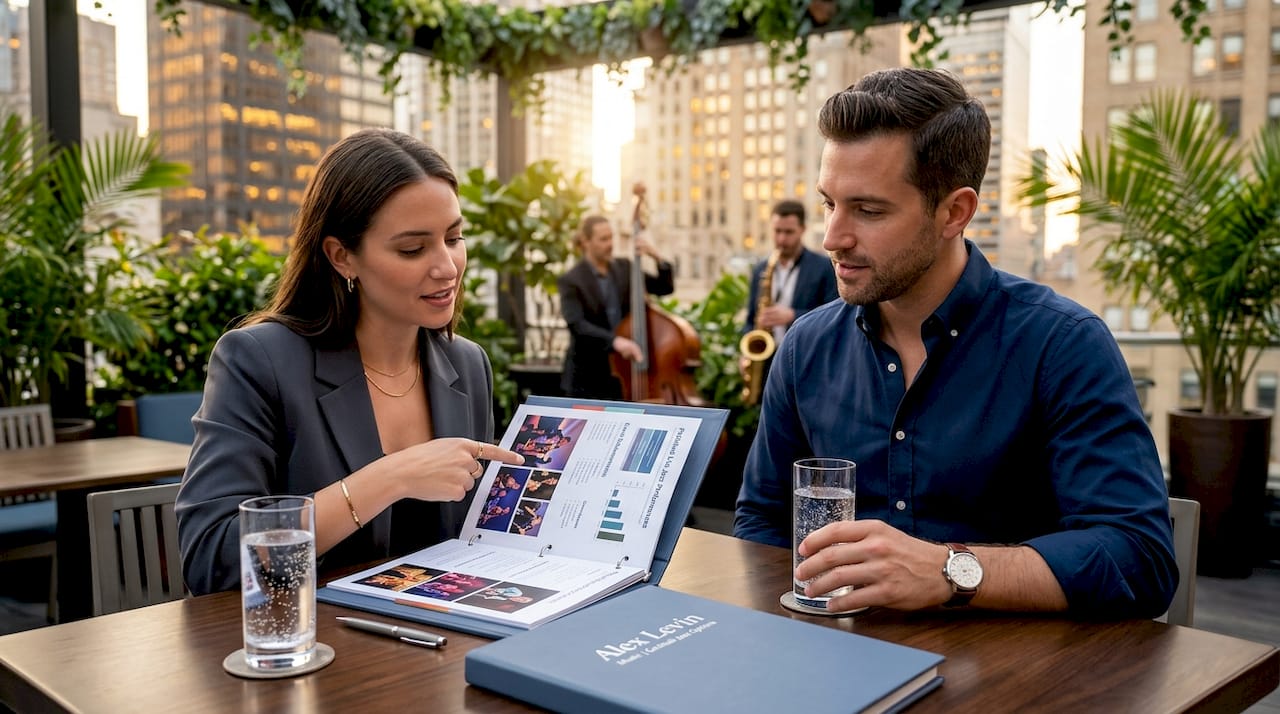
At Alex Levin Music, our premium cocktail jazz ensembles are built specifically for sophisticated social settings. We specialize in jazz trios, quartets, and solo piano performances calibrated for weddings, corporate gatherings, and private events across Philadelphia, New York, and beyond. Every ensemble we provide understands volume management, repertoire selection, and the art of making a room feel effortlessly elegant. Whether you need corporate event live music that impresses clients or wedding live music options that set the tone for your most important day, we make the booking process straightforward and the result exceptional.
Frequently asked questions
What defines cocktail jazz compared to other jazz styles?
Cocktail jazz is a curated event style focused on smooth, relaxed arrangements designed for social settings, prioritizing ambiance and conversation over energetic or demanding performances.
Why is a small ensemble preferred for cocktail jazz events?
Small ensembles like trios or quartets provide better volume control and intimacy, allowing live jazz to enhance ambiance without overpowering guest conversations.
What types of jazz songs are commonly played in cocktail jazz?
Jazz standards and familiar melodies from the Great American Songbook, arranged in a relaxed lounge style, form the core repertoire for cocktail jazz performances.
How can cocktail jazz music enhance a wedding or corporate event?
It creates a sophisticated, welcoming atmosphere that supports conversation and complements the drink menu, with smooth jazz styles producing an upscale lounge vibe ideal for both weddings and corporate events.
Is cocktail jazz an official jazz genre?
No. Cocktail jazz is a practical hospitality descriptor that encompasses multiple jazz subgenres, selected based on the event's atmosphere and ambiance goals rather than a fixed musical definition.
Recommended
- Cocktail Hour Soundscapes: Setting the Mood with Live Music Instead of Just Background Noise | Alex Levin Music | Live Wedding Music New York | Cocktail Hour Music New York
- Sophisticated Sounds: Selecting the Perfect Jazz Ensemble for Corporate Events | Alex Levin Music | Live Wedding Music Philadelphia | Live Event Music Philadelphia
- Overcoming Event Planning Stress: The Benefits of Professional Jazz Musicians | Alex Levin Music | Live Wedding Music Philadelphia | Live Event Music Philadelphia
- How Jazz and Classical Music Add Elegance to Philadelphia events | Alex Levin Music | Live Wedding Music Philadelphia | Live Event Music Philadelphia