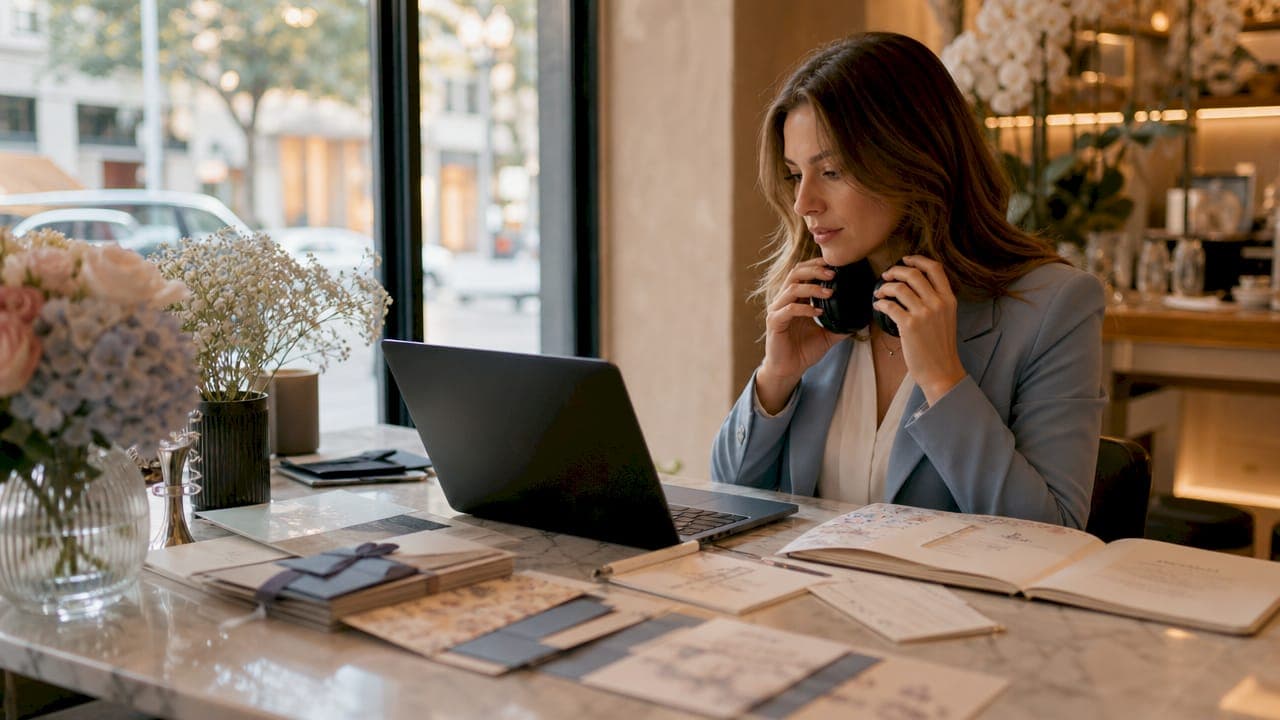
Ambient wedding music is background music designed to set the emotional tone of your wedding day without competing for attention. Unlike a first dance song or a processional piece, ambient music works quietly in the background during the ceremony prelude, cocktail hour, and dinner reception. It shapes how guests feel the moment they walk in. The right ambient music creates a relaxed, romantic atmosphere that makes every moment feel intentional. This guide covers what makes music ambient, how to choose it, and whether live or recorded is the better fit for your day.
What is ambient wedding music and why does it matter?
Ambient wedding music is defined as instrumental or softly vocal background music that sets the emotional temperature of a wedding event without demanding active listening. The industry term for this category is "background music" or "atmospheric music," and both terms are used interchangeably by wedding planners and musicians. What separates ambient music from other wedding music is its role: it supports the event rather than starring in it.
The practical impact is real. Guests arrive at a ceremony prelude and immediately read the room through sound. Soft piano or a jazz trio signals elegance and calm. Silence signals awkwardness. The music you choose for these quieter moments shapes the entire emotional arc of your wedding day, often more than the songs guests consciously remember.
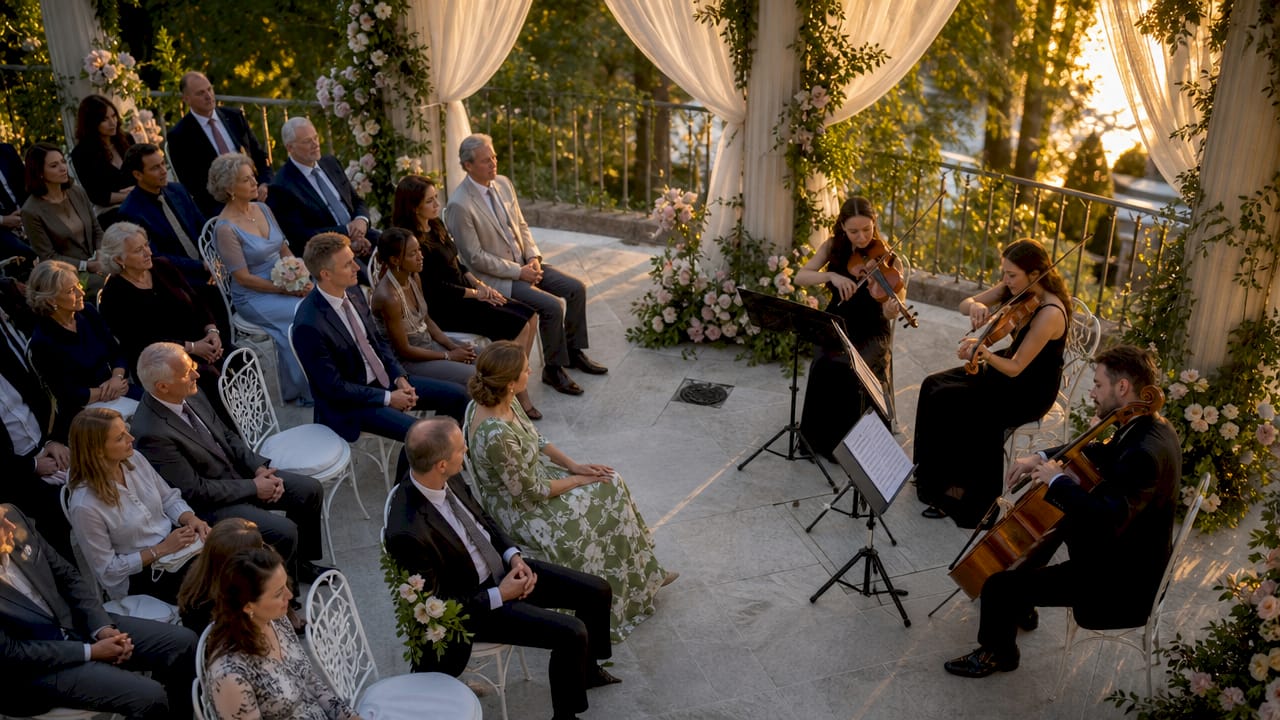
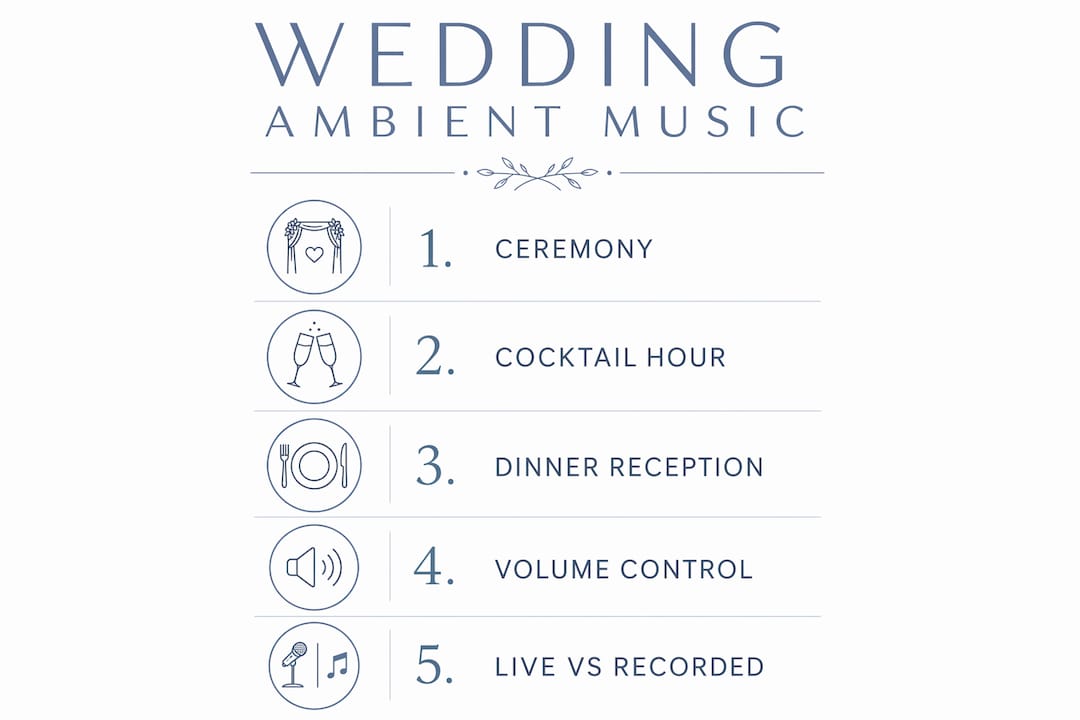
Ambient music for weddings typically appears in three key moments: the ceremony prelude (before the processional begins), the cocktail hour, and the dinner reception. Each moment calls for a slightly different energy, but the common thread is music that stays in the background and lets conversation, laughter, and connection take center stage.
What makes music ambient? Key characteristics and genres
Ambient music shares a set of defining qualities that make it work as background music for weddings. Understanding these qualities helps you make better choices when planning your playlist or briefing a musician.
Core characteristics of ambient wedding music:
- Instrumental or minimal vocals. Lyrics can overpower conversation and pull attention away from guests' interactions. Instrumental tracks or pieces with soft, wordless vocals keep the music unobtrusive.
- Soft dynamics. Ambient music stays at a consistent, low volume. It fills the room without peaks that interrupt speech.
- Slow to moderate tempo. Fast, driving rhythms create energy that works for dancing, not for a relaxed dinner. Ambient tracks move at a pace that feels unhurried.
- Unobtrusive melodies. The best ambient tracks have melodies that are pleasant but not so memorable that guests stop talking to listen.
- Texture over drama. Ambient music prioritizes the overall sound texture of the room rather than dramatic musical moments.
Common genres used for ambient wedding music:
- Classical: Debussy, Satie, Bach
- Jazz: bossa nova, cool jazz, solo piano jazz
- Acoustic: fingerpicked guitar, acoustic folk
- Soft pop instrumentals: stripped arrangements of familiar songs
- Chill-out and lo-fi: modern ambient tracks with gentle electronic textures
Pro Tip: Give your musician a genre direction rather than a specific song list. Experienced musicians can select tracks that maintain emotional consistency far better than a rigid playlist can.
The role of instrumentation matters as much as genre. A solo piano creates intimacy. A string quartet adds formality and warmth. A jazz trio brings sophistication with a relaxed pulse. Each instrument combination creates a different texture in the room, and that texture is what guests absorb emotionally.
How to choose ambient music that fits your venue and style
Choosing the best wedding background music starts with your venue, not your personal taste. Venue acoustics directly affect how any ensemble sounds, and ignoring this leads to music that either disappears into the room or overwhelms it.
Match ensemble size to your space
A violin and cello duo looks beautiful but can sound thin in a large stone chapel or an outdoor garden with no natural walls to reflect sound. A trio or an amplified solo instrument creates better presence in those spaces. Smaller, intimate venues like a private dining room or a boutique hotel ballroom suit a solo pianist or a guitar duo perfectly. Larger venues need more sonic fullness, which means a quartet, a jazz trio with upright bass, or amplified instruments.
Align music style with your wedding theme
Your music should match the visual and emotional identity of your wedding. A rustic barn wedding pairs naturally with acoustic guitar or a folk-influenced string arrangement. A formal ballroom wedding calls for classical strings or a jazz piano trio. A modern, minimalist wedding works well with lo-fi ambient tracks or a solo pianist playing contemporary arrangements.
Practical checklist for choosing ambient wedding music:
- Confirm the venue's noise ordinance and amplification rules before booking live musicians
- Ask your venue coordinator about natural acoustics and whether sound carries evenly
- Decide on a genre direction first, then choose specific ensembles or playlists
- Map your wedding day timeline before selecting music for each segment
- Brief your musician on the mood you want, not just the songs you like
Pro Tip: For outdoor ceremonies, always ask about amplification options early. Even acoustic instruments may need a small PA system to carry sound clearly across an open space without losing the ambient quality.
Volume control is one of the most overlooked factors in ambient music planning. Music that is too loud forces guests to raise their voices, which creates tension. Music that is too quiet disappears entirely. The goal is a volume level where guests can hear the music if they listen for it, but can also hold a normal conversation without effort.
Live versus recorded ambient wedding music: which is right for you?
The choice between live and recorded ambient music is one of the most practical decisions you will make. Both options work, but they serve different needs.
| Factor | Live music | Recorded music |
|---|---|---|
| Emotional impact | High. Dynamic interaction and acoustic richness create a presence recordings cannot match. | Moderate. Consistent but static. |
| Cost | Higher upfront investment. | Lower cost, often just a streaming subscription or playlist. |
| Flexibility | Musicians can adjust tempo and volume in real time to fit the moment. | Playlists require manual adjustments and cannot respond to the room. |
| Reliability | Depends on musician professionalism and logistics. | Highly reliable if equipment is tested in advance. |
| Repertoire range | Limited to what the ensemble plays well. | Virtually unlimited. |
| Ambiance quality | Unmatched for creating a warm, living atmosphere. | Can feel flat in intimate or acoustically rich spaces. |
Live music wins on atmosphere. Recorded music wins on budget and breadth of selection. For most couples, the decision comes down to which moments matter most. A live jazz trio during cocktail hour creates a memory. A curated playlist during dinner is perfectly acceptable and often goes unnoticed by guests.
Technical requirements for live ambient music include amplification, power access, and compliance with local sound ordinances. Address these logistics with your venue and musician well before the wedding date. A proactive conversation about volume levels and setup time prevents problems on the day.
Pro Tip: If budget is a constraint, prioritize live music for the cocktail hour. That is the moment guests are most socially active and most likely to notice and appreciate the atmosphere a live ensemble creates.
Ambient music selections for each moment of your wedding day
Ambient music works differently at each stage of your wedding. Here is a practical breakdown by moment.
1. Ceremony prelude
The prelude runs from the moment guests are seated until the processional begins. The goal is calm anticipation. Classical piano works well here: Erik Satie's Gymnopédies, Claude Debussy's Clair de Lune, or Bach's Air on the G String are proven choices. A solo violinist or a string duo playing soft classical arrangements also fits this moment perfectly.
2. Cocktail hour
Cocktail hour ambient music is typically upbeat but subtle, favoring jazz, bossa nova, or light acoustic arrangements. The energy should feel social and relaxed, not sleepy. A live jazz trio playing standards by Antonio Carlos Jobim or Miles Davis creates exactly the right mood. If you are using a playlist, build it around bossa nova and cool jazz instrumentals at a moderate tempo.
3. Dinner reception
Dinner music should be laid-back and cohesive. Stick to one or two complementary themes rather than jumping between genres. Soft jazz, acoustic pop instrumentals, or classical guitar all work well. The dinner music goal is to maintain a pleasant background without any single track standing out enough to interrupt conversation.
Smooth transitions between moments matter. Brief your musician or DJ on the timeline so the music shifts naturally from prelude to cocktail hour to dinner without jarring changes in energy or volume. Experienced musicians understand this flow and can maintain emotional consistency across the entire day without being told which specific track to play next.
Additional ambient music ideas by genre:
- Acoustic guitar: Tommy Emmanuel style fingerpicking, or soft arrangements of classic love songs
- Solo piano: Bill Evans, Keith Jarrett, or Norah Jones instrumental versions
- String quartet: arrangements of Coldplay, The Beatles, or Radiohead for a modern touch
- Lo-fi ambient: artists like Nils Frahm or Ólafur Arnalds for a contemporary, cinematic feel
Key takeaways
Ambient wedding music works best when it is treated as emotional temperature-setting rather than a featured performance, with instrumentation and venue acoustics driving every decision.
| Point | Details |
|---|---|
| Define the role first | Ambient music supports the event; it should never compete with conversation or activities. |
| Match ensemble to venue | Larger spaces need trios or amplified instruments; intimate rooms suit solos or duos. |
| Choose genre over songs | Give musicians a direction, not a rigid list, for better emotional consistency. |
| Live music wins on atmosphere | A live ensemble creates warmth and responsiveness that a playlist cannot replicate. |
| Plan each moment separately | Prelude, cocktail hour, and dinner each need a distinct but connected ambient approach. |
Why ambient music is the most underrated wedding decision
Most couples spend weeks choosing their first dance song and about ten minutes thinking about cocktail hour music. That is backwards. The first dance lasts three minutes. Ambient music runs for hours and shapes how every guest experiences your wedding from the moment they arrive.
The biggest mistake I see is couples treating ambient music as an afterthought, something to fill silence rather than something to craft an atmosphere. When you walk into a room and immediately feel relaxed, romantic, and present, that is ambient music doing its job invisibly. When you walk in and feel nothing, or worse, feel slightly uncomfortable, that is ambient music failing.
The second mistake is over-specifying. Couples hand musicians a 40-song playlist for cocktail hour and expect it to be followed track by track. Experienced musicians do not need that. They need a mood, a genre direction, and a volume target. Then they handle the rest better than any playlist can. I have seen a live jazz ensemble read a room and shift from bossa nova to soft swing mid-set because the energy in the room called for it. No playlist does that.
Trust your musicians. Brief them well. Then let them work.
— Alex
Live ambient music for your wedding, handled by professionals
Ambient music for weddings requires more than a good playlist. It requires musicians who understand acoustics, volume control, and how to read a room in real time.
Alexlevinmusic provides live ensembles and soloists for weddings across Philadelphia, New York, and beyond, specializing in jazz, classical, and acoustic styles that work beautifully as ambient background music. From a solo pianist during your ceremony prelude to a jazz trio for cocktail hour, every ensemble is chosen to match your venue and wedding style. Browse available ensembles and soloists or read more about why live music outperforms a playlist for weddings and events.
FAQ
What is the difference between ambient and background music?
Ambient music and background music describe the same function at a wedding: music that sets the mood without demanding attention. "Ambient" is the broader musical term, while "background music" is the practical event planning term.
Should ambient wedding music have lyrics?
Instrumental tracks are the standard choice for ambient wedding music because lyrics can distract guests from conversation and pull focus away from the event. Soft, wordless vocals are acceptable if the overall volume stays low.
How loud should ambient wedding music be?
Ambient music should sit at a volume where guests can hear it if they listen but can hold a normal conversation without raising their voices. This typically means the music is audible but never the loudest thing in the room.
Is a live band or a playlist better for ambient wedding music?
Live musicians create a warmer, more responsive atmosphere than a playlist, especially during cocktail hour. A playlist is a practical and cost-effective option for dinner reception background music when the priority is consistency over energy.
What genres work best for ambient wedding music?
Jazz, classical, bossa nova, acoustic guitar, and soft pop instrumentals are the most reliable genres for ambient tracks for ceremonies and receptions. The best choice depends on your venue size, wedding theme, and the emotional tone you want to create.