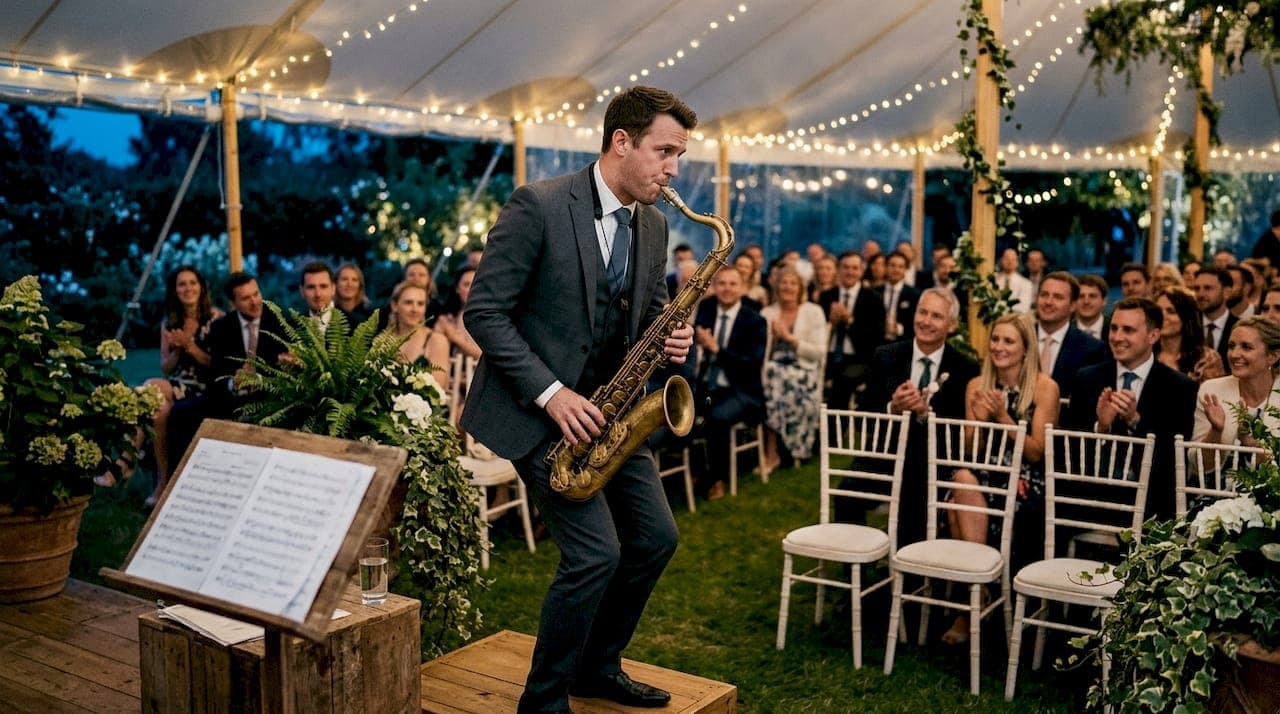
A wedding musician is a live performer or ensemble hired to create an emotional soundtrack for a wedding ceremony, cocktail hour, or reception. Unlike a DJ spinning prerecorded tracks, a wedding musician delivers real-time performance that responds to the room, the timing, and the mood of the moment. Services like Alexlevinmusic and platforms like Orphiq have built entire businesses around this distinction. Ceremony segments typically run 30 to 60 minutes, with instrumentation ranging from string quartets and solo harp to acoustic guitar and piano. The right musician does not just fill silence. They shape how your guests feel from the moment they take their seats.
What is a wedding musician and what do they actually do?
A wedding musician is a trained live performer hired specifically to support the emotional arc of a wedding event. The industry term for this role is "ceremony musician" or "wedding entertainment professional," though the broader phrase covers soloists, duos, quartets, and full bands alike. Their job spans far more than playing songs. They coordinate with officiants, follow a ceremony run-of-show, and adjust their performance in real time when a reading runs long or a processional starts late.
Live musicians enhance atmosphere in ways a playlist cannot replicate. A string quartet can swell during the processional, hold softly during vows, and lift again at the recessional. That dynamic range is impossible to program in advance. Couples who have experienced both consistently describe the live version as feeling more intentional and more personal.
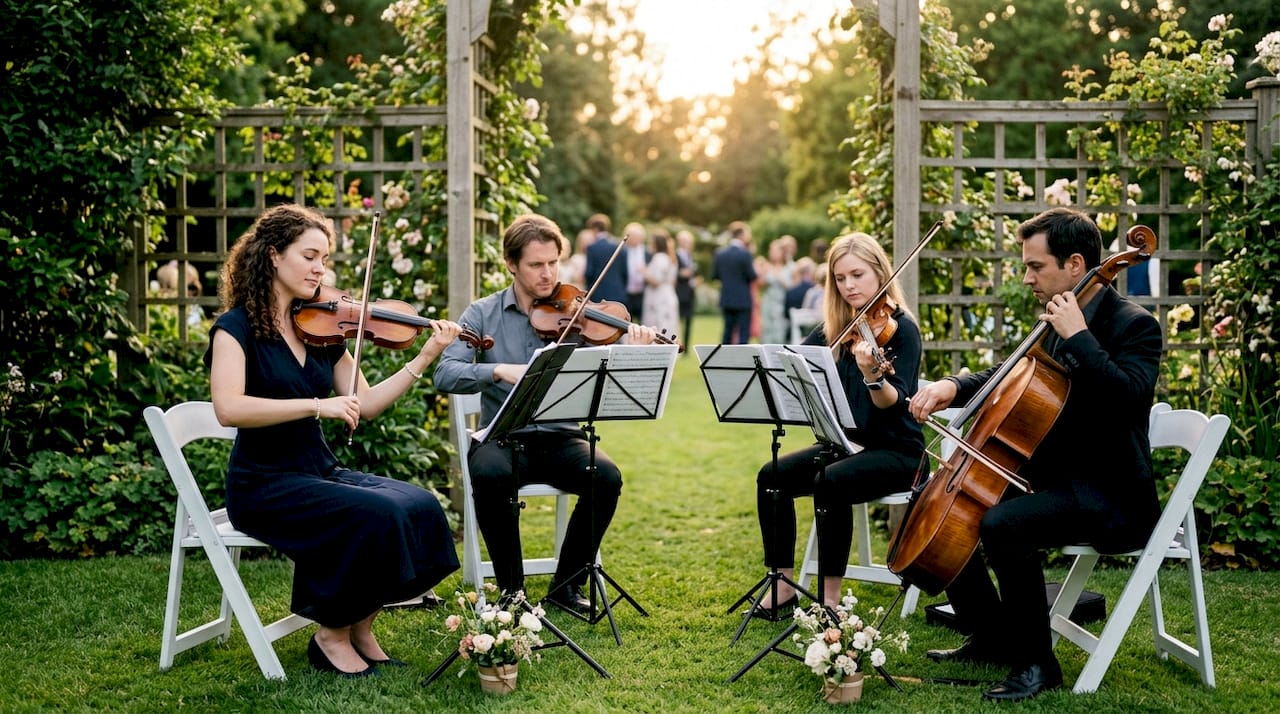
Wedding music services cover a spectrum of formats. A solo pianist works beautifully in an intimate chapel. A jazz trio fits a cocktail hour in a Philadelphia ballroom. A full live wedding band transforms a reception into a concert. Alexlevinmusic, for example, offers all of these formats with a specialization in jazz, swing, and sophisticated acoustic styles across the Philadelphia and New York areas.
When do wedding musicians perform during the ceremony?
Prelude music typically lasts 20 to 30 minutes and serves as atmospheric background sound while guests find their seats. This is the first impression your wedding makes musically, and it sets the formality level before a single word is spoken. A harpist playing softly in the corner signals something entirely different than an acoustic guitarist playing contemporary covers.
The ceremony itself breaks into several distinct musical moments:
- Prelude: Guests arrive and are seated. Music creates ambient warmth and signals the event is beginning.
- Processional: The wedding party and then the couple enter. This is the most emotionally charged musical moment of the ceremony.
- Interlude: Played softly during readings, signing of the register, or moments of reflection.
- Recessional: The couple exits as a married pair. Music here is typically joyful and celebratory.
- Cocktail hour: A separate but connected performance window, often 45 to 90 minutes, where musicians set a social and conversational tone.
Pro Tip: Ask your musician to play a slightly extended version of the processional piece if your wedding party is large. A skilled live musician can stretch or loop a section naturally. A playlist cannot.
Ceremony music is quieter and more emotionally layered than reception music, which means the musician selection and repertoire choices carry more weight per note. A wrong song choice during the processional is far more noticeable than a misfire during a reception set.
What types of wedding musicians are commonly hired?
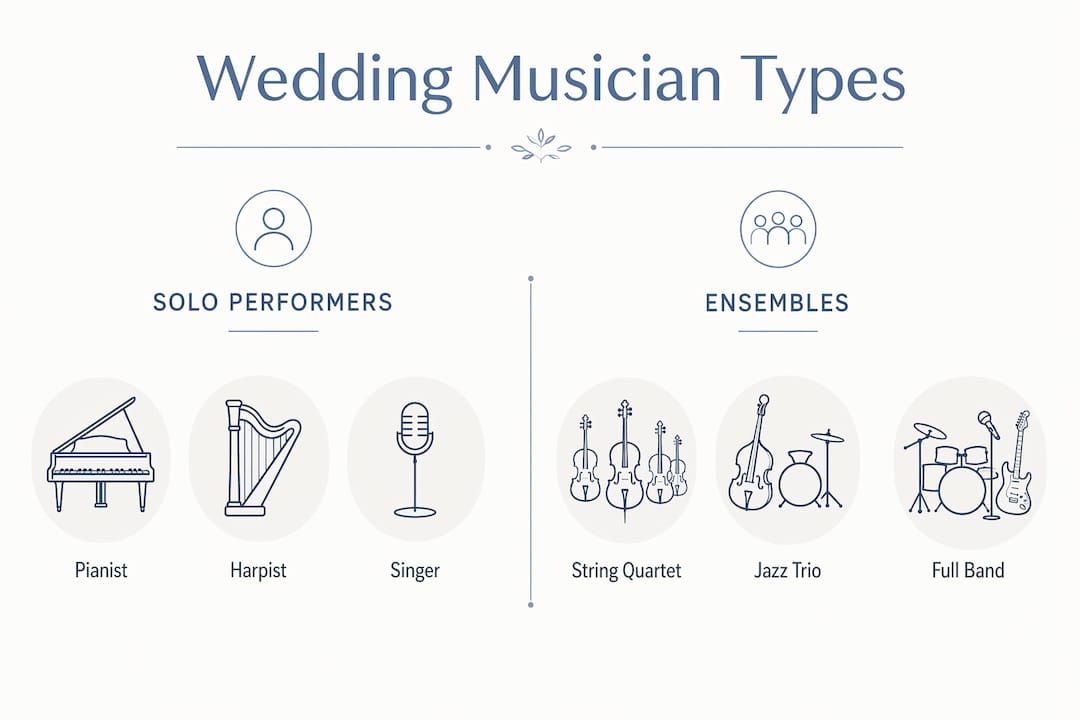
The types of wedding musicians available range from solo performers to full ensembles, and each creates a distinct atmosphere. Understanding the differences helps you match the right format to your venue size, budget, and wedding style.
| Format | Best for | Atmosphere created | Typical cost range |
|---|---|---|---|
| Solo pianist | Intimate venues, chapels | Warm, versatile, understated | Lower end |
| Solo harpist | Outdoor ceremonies, garden weddings | Soft, ethereal, visually striking | Mid range |
| String quartet | Formal or traditional ceremonies | Timeless, elegant, full-bodied sound | Mid to upper range |
| Jazz duo or trio | Cocktail hours, modern receptions | Contemporary, refined, conversational | Mid range |
| Live wedding band | Large receptions, dance-focused events | High energy, immersive, celebratory | Upper end |
A string quartet feels timeless and elegant; a solo pianist is intimate and versatile; a harpist adds softness and visual beauty. These are not interchangeable choices. Each format sends a signal about the kind of wedding you are hosting before a single guest reads the program.
Ensemble size also affects price directly. Pricing depends on ensemble size, travel, and equipment, which means a string quartet will cost more than a solo guitarist even for the same 45-minute ceremony block. Budget accordingly and get itemized quotes that separate ceremony, cocktail hour, and reception fees.
Musical genre matters as much as instrumentation. Classical repertoire fits a traditional church ceremony. Jazz standards work for a sophisticated urban venue. Acoustic pop covers appeal to younger couples who want familiar songs played with elegance. The best wedding musicians can move across genres within a single event.
How do wedding musicians contribute beyond just playing music?
Wedding musicians are vendor professionals delivering reliable, timely services aligned with carefully managed wedding timelines. This is the distinction that separates a great ceremony musician from a talented but unprepared performer. A club gig rewards spontaneity. A wedding ceremony demands precision.
The practical contributions of a skilled wedding musician include:
- Cue coordination: Musicians take live cues from the officiant or wedding planner to start and stop at exactly the right moment.
- Timing adjustments: If a reading runs three minutes longer than expected, a skilled musician fills that space naturally without making it feel like dead air.
- Volume control: Ceremony music must be audible but never distracting. A musician who plays too loudly during vows undermines the most personal moment of the day.
- Run-of-show briefing: Musicians need a clear ceremony run-of-show including cue points for entrance, exit, and signing moments to deliver a performance that feels seamless.
Pro Tip: Send your musician a written timeline at least two weeks before the wedding. Include the names of each processional song, the order of the wedding party, and the name of the officiant. The more context they have, the better they can prepare.
Skilled ceremony musicians adapt to timing shifts during vows or readings to keep the event on track. This adaptability is a professional skill, not a given. When you interview potential musicians, ask them directly how they handle unexpected delays. Their answer will tell you a great deal about their experience level.
How to choose a wedding musician that fits your wedding
Choosing the right live wedding musician requires matching three things: your venue's acoustics, your wedding's aesthetic, and your budget. Getting all three right is how you avoid the most common wedding music planning mistakes couples make.
Follow this process when evaluating your options:
- Define your ceremony style first. A black-tie ballroom wedding calls for different music than a garden ceremony. Decide on formality level before you contact any musicians.
- Match instrumentation to venue acoustics. A solo acoustic guitarist may not project well in a large cathedral without amplification. A string quartet may overwhelm a small outdoor space. Ask the venue about acoustics before booking.
- Request a repertoire list. The best wedding musicians provide a detailed song list across genres. If a musician cannot show you their repertoire, that is a red flag.
- Ask the right questions before booking. Questions like "How do you handle cue changes?" and "Have you performed at this venue before?" reveal professionalism quickly. The questions to ask before booking your musician are as important as the audition itself.
- Understand the full cost structure. Ceremony music packages differ in cost from full reception engagements, with ceremony-only blocks typically lasting 30 to 60 minutes. Get separate line items for each performance window so you can compare accurately.
- Watch live performance video. A studio recording is not a reliable indicator of live performance quality. Ask for video from an actual wedding, not a rehearsal or studio session.
Couples often underestimate the difference live ceremony music makes compared to recorded tracks. Live musicians provide emotional nuance and help the wedding feel curated from the first note. That is not a marketing claim. It is the consistent feedback from couples who have experienced both.
Key takeaways
A wedding musician's value comes from live adaptability, precise timing, and emotional responsiveness that no playlist can replicate.
| Point | Details |
|---|---|
| Core definition | A wedding musician is a live performer hired to play during ceremony segments, cocktail hour, and reception. |
| Ceremony segments | Prelude, processional, interlude, and recessional each require different musical energy and pacing. |
| Musician types | Solo pianists, string quartets, jazz trios, and live bands each create distinct atmospheres suited to different venues and styles. |
| Beyond music | Skilled musicians coordinate cues, adjust timing, and collaborate with officiants to keep the ceremony on track. |
| Hiring process | Match instrumentation to venue acoustics, request repertoire lists, and get itemized quotes for each performance window. |
Why live wedding music is worth the investment
After years of performing at weddings across Philadelphia and New York, I can tell you the moment that consistently moves people is not the first dance or the cake cutting. It is the processional. When the music shifts and the doors open, every guest in that room turns. What they hear in that exact second sets the emotional tone for everything that follows.
I have seen couples choose a playlist to save money and then spend the entire ceremony anxious about whether the right song will start at the right time. I have also seen couples invest in a live musician and visibly relax the moment the prelude begins, because they know someone is watching, listening, and responding in real time.
The most overlooked mistake I see is treating the musician as an afterthought. Couples spend months on flowers and catering and book the musician two weeks out. That leaves no time for a proper run-of-show briefing, no time to customize the repertoire, and no time to build the kind of trust that makes a ceremony feel effortless. Book your musician early. Brief them thoroughly. The return on that investment is a ceremony your guests will talk about for years.
One more thing: do not judge a musician solely by their genre specialty. A great jazz pianist can play a classical processional beautifully. What you are really hiring is their ability to read a room and respond. That skill transcends genre.
— Alex
Live wedding music from Alexlevinmusic
Alexlevinmusic specializes in live wedding music services for ceremonies, cocktail hours, and receptions across Philadelphia, New York, and beyond. The roster includes solo piano, jazz trios, string quartets, and full ensembles, all available with personalized repertoire planning and full run-of-show coordination.
Every booking includes direct communication with Alex to match the musical format to your venue, style, and timeline. Whether you need a single musician for a 30-minute ceremony or a full ensemble for a four-hour reception, the ceremony music options are designed to fit your wedding, not a template. Explore the full range of live wedding music services and request a custom quote for your date.
FAQ
What is a wedding musician exactly?
A wedding musician is a live performer hired to play music during key moments of a wedding, including the ceremony, cocktail hour, and reception. They differ from DJs by performing in real time, which allows them to adjust pacing and energy to match the live event.
How much does a wedding musician cost?
Cost depends on ensemble size, performance duration, travel, and equipment needs. Ceremony-only packages covering 30 to 60 minutes are priced lower than full reception engagements, so always request itemized quotes for each performance window.
What types of wedding musicians should I consider?
Common options include solo pianists, harpists, string quartets, jazz duos or trios, and full live wedding bands. The right choice depends on your venue size, acoustic environment, and the formality level of your wedding.
When should I book a wedding musician?
Book your musician as early as possible, ideally six to twelve months before the wedding date. Early booking gives you time to customize the repertoire, conduct a run-of-show briefing, and confirm all logistical details with your venue and officiant.
Do wedding musicians coordinate with other vendors?
Yes. Professional wedding musicians work directly with officiants, wedding planners, and venue coordinators to manage cues, timing adjustments, and volume levels throughout the ceremony. Providing them with a written run-of-show at least two weeks in advance produces the best results.