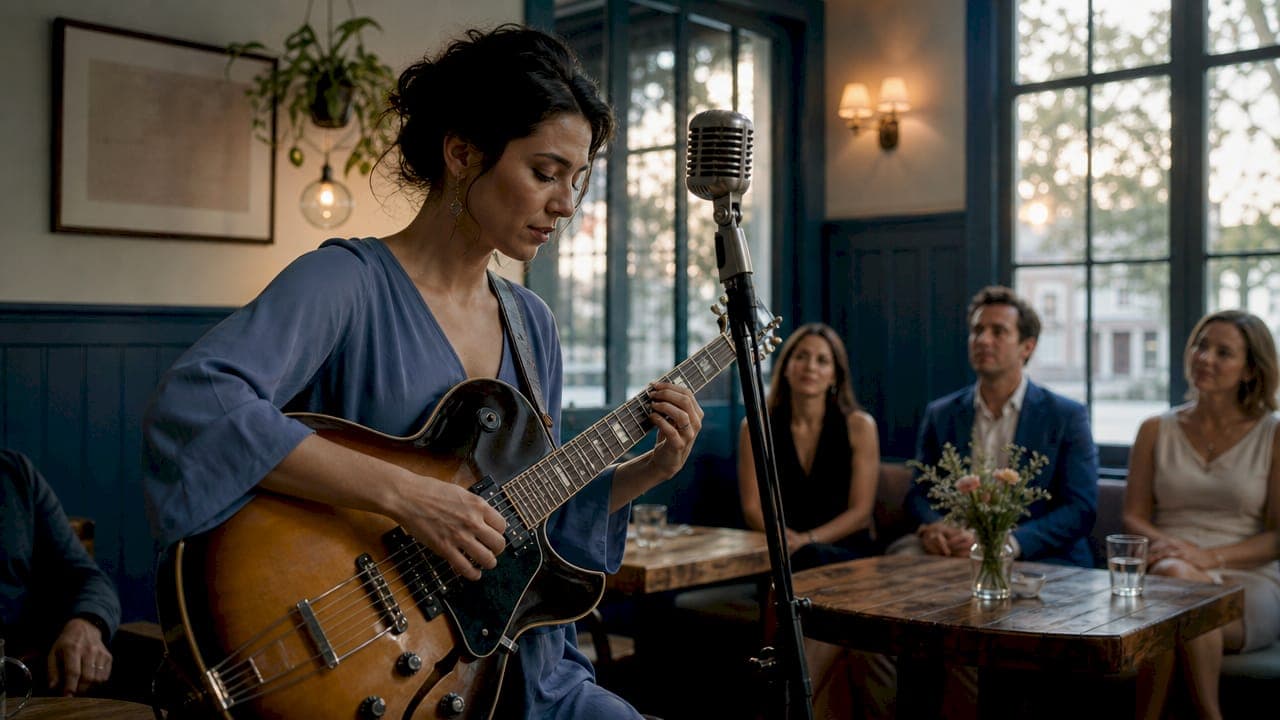
A private party musician is a professional performer hired to provide live music at private events such as birthdays, anniversaries, weddings, and corporate gatherings. Unlike a concert artist performing for a general audience, a private event musician tailors every set to the host's preferences, venue, and guest profile. The role covers a wide range of acts, from solo pianists and jazz trios to string quartets and full bands. Understanding what these performers do, what they cost, and how to book them correctly makes the difference between a forgettable party and one guests talk about for years.
What is a private party musician and what do they do?
A private party musician is any professional performer contracted to entertain guests at a non-public event. The industry term for this role is "private hire musician" or "function musician," and both phrases describe the same core service. The work goes well beyond simply showing up and playing songs. These performers read the room, adjust their energy to match the crowd, and often act as informal emcees who keep the event flowing.
Solo instrumentalists like pianists and guitarists provide ambient background music during cocktail hours or dinner, then shift to interactive entertainment as the evening picks up. They typically bring their own digital instruments and customize song choices to fit the event's mood. A jazz trio at a corporate dinner creates a completely different atmosphere than a four-piece cover band at a milestone birthday, even though both qualify as private musician services.
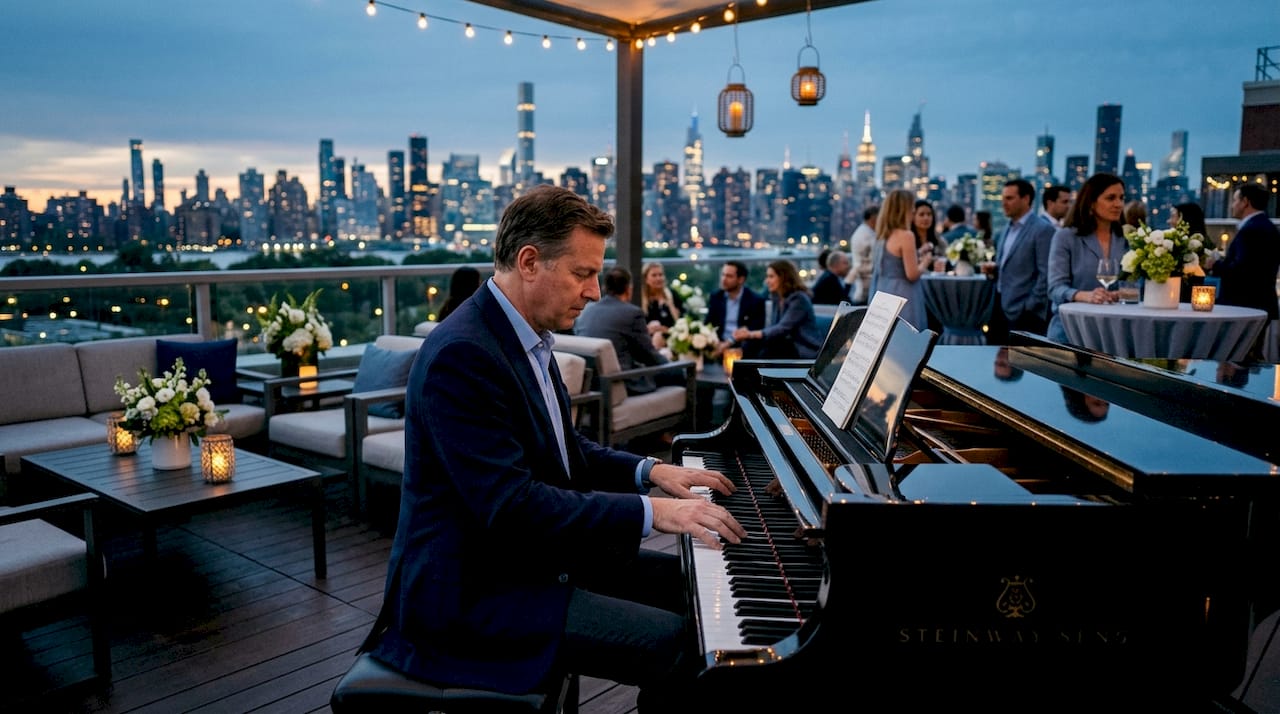
The events these performers serve span a broad range. Birthday parties, retirement celebrations, holiday galas, wedding receptions, bar and bat mitzvahs, and private corporate functions all regularly feature live music. The common thread is exclusivity: the performance is arranged for a specific group of guests, not sold to the general public.
What services do private party musicians typically provide?
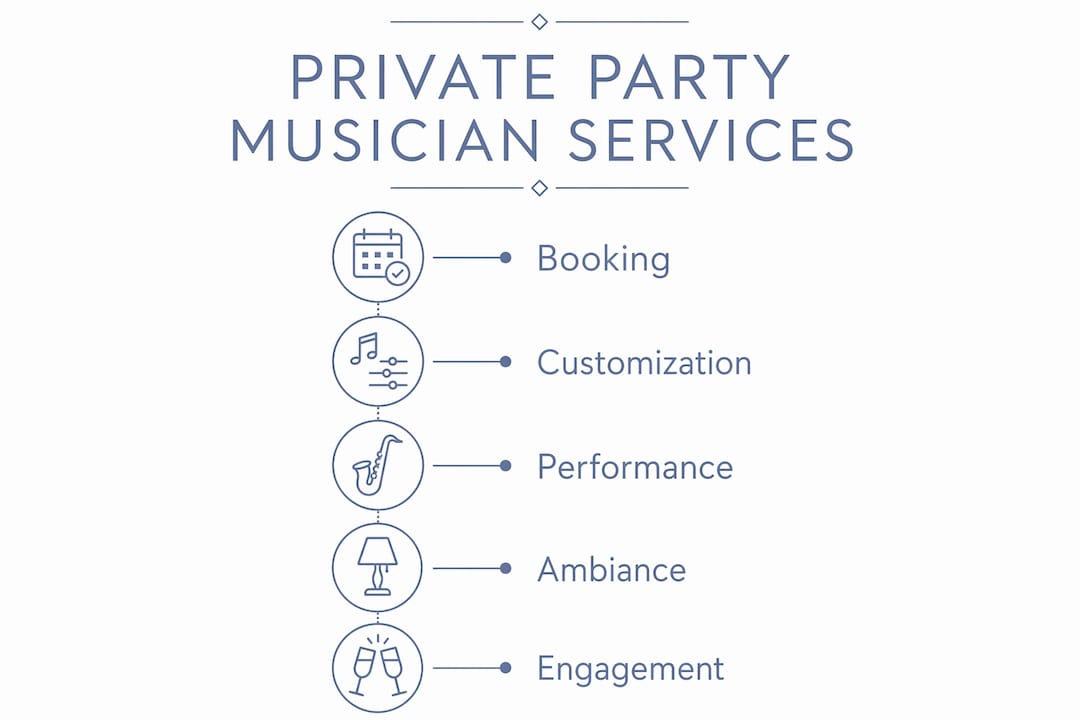
Private musician services extend well beyond a standard set list. Most professional acts offer a package that includes pre-event consultation, custom song selection, sound equipment, and post-event breakdown. The specific offerings depend on the act's size and specialty.
The most common formats include:
- Solo performers. A solo pianist, guitarist, violinist, or vocalist works well for intimate gatherings, cocktail receptions, and background ambiance. They bring flexibility and require minimal space.
- Duos and trios. A jazz duo or acoustic trio delivers more musical depth without the logistical footprint of a full band. These acts suit dinner parties, small corporate events, and garden weddings.
- Full bands. A four to seven piece cover band provides the highest energy and widest song range. They work best for large receptions, milestone birthdays, and corporate galas where dancing is expected.
- Specialty and hybrid acts. DJ hybrid performers combine live instrumentation with curated playlists. A saxophonist playing over DJ tracks, for example, creates a modern sound that works well for upscale private parties.
A popular option for intimate private events is compact roaming bands that move through the venue and engage guests spontaneously. Roaming trios weaving through a crowd increase guest interaction and create memorable moments that a stationary act simply cannot replicate.
Musicians also tailor their performance style to the event type. A corporate dinner calls for sophisticated jazz standards at a moderate volume. A 50th birthday party might call for crowd-pleasing pop hits and audience sing-alongs. The best private party entertainment comes from performers who ask the right questions before the event, not just on the night.
Pro Tip: Ask your musician to prepare a short set of 3 to 5 songs that reflect your event's theme. Hearing those songs in advance confirms you are aligned before the deposit clears.
How much does it cost to hire a private party musician?
The cost to hire a party musician varies widely based on act size, event duration, location, and the performer's experience level. Prices for private gigs can range from under $100 for solo performers to $1,200 or more for small bands covering multiple hours. Full bands at premium events in major markets like New York or Philadelphia command significantly higher rates.
The table below shows typical rate ranges by act type for a standard two to three hour private event.
| Act type | Typical rate range | Best suited for |
|---|---|---|
| Solo instrumentalist | $150–$500 | Cocktail hours, intimate dinners |
| Duo or trio | $400–$900 | Small receptions, garden parties |
| Four to six piece band | $1,200–$3,500+ | Large receptions, corporate galas |
| DJ hybrid act | $500–$1,500 | Upscale parties, modern receptions |
Several factors push costs higher. A musician traveling more than 60 miles will typically add a travel fee. Events requiring a full PA system, stage lighting, or backline equipment add rental costs on top of the performance fee. Overtime rates apply when events run past the agreed end time, and they are usually billed per 30-minute block.
Pro Tip: Always ask for an itemized quote that separates the performance fee from equipment, travel, and overtime charges. A low headline price can climb fast once extras are added.
Key considerations and tips for hiring private party musicians
Booking a live musician involves more than finding someone who sounds good on a demo video. The logistics, legal requirements, and communication steps matter just as much as the music itself.
Follow these steps to protect your event and your budget:
-
Verify credentials and insurance. Most reputable booking platforms require private party musicians to hold public liability insurance and use equipment meeting safety standards like PAT certification. Public liability insurance protects you if a guest is injured during the performance. PAT-certified electrical gear reduces fire and shock risk. Always ask for proof of both before signing a contract.
-
Confirm technical and venue logistics. Venue technical logistics that hosts frequently overlook include dedicated power supplies, level ground for performances, and easy load-in access for equipment. Clarifying these requirements in advance prevents setup delays and protects the event timeline. Walk through the venue with your musician's technical rider at least two weeks before the event.
-
Get a detailed contract. A correctly negotiated contract should specify performance duration, setup and breakdown times, technical requirements, and cancellation policies. Clear contract terms prevent misunderstandings and day-of stress. Never rely on a verbal agreement, regardless of how well you know the performer.
-
Communicate your event flow clearly. Share a full event timeline with your musician at least one week in advance. Include ceremony start times, dinner service windows, speeches, and any special moments like a first dance or cake cutting. Musicians who know the schedule can cue their sets to support each moment rather than compete with it.
-
Discuss song requests and style preferences. Send a list of must-play and do-not-play songs before the event. Learning how to choose the right musician for your event style and audience saves you from mismatched energy on the night.
Pro Tip: Book your musician at least 8 to 12 weeks before the event date. The best performers fill their calendars quickly, especially for peak seasons like june through september and the holiday months.
How does hiring a private party musician enhance your event compared to playlists or DJs?
Live music creates personal connections that pre-recorded audio cannot replicate. Guests appreciate unique live performances and can make requests in real time, adding spontaneity that a playlist simply cannot offer. That real-time interaction is what separates a live performance from background noise.
The specific advantages of live music over playlists or DJ sets include:
- Atmosphere. A live performer fills a room with energy that changes dynamically. A pianist can slow down a ballad for a tender moment or speed up a jazz standard when the crowd gets restless. No algorithm does that.
- Guest engagement. Live musicians make eye contact, take requests, and respond to applause. That feedback loop keeps guests present and engaged rather than distracted by their phones.
- Customization. A skilled musician can learn a specific song for your event, arrange a medley of your favorite artists, or blend genres to match a mixed-age crowd. A playlist is fixed. A musician is not.
- Memorability. Guests remember the night a jazz quartet played their favorite song on request. They rarely remember which Spotify playlist was running.
A DJ service offers its own strengths, particularly for events where a wide range of genres and high volume are priorities. The benefits of live music over a playlist are most pronounced at events where atmosphere and emotional connection matter most, such as weddings, milestone birthdays, and intimate corporate dinners. For large outdoor festivals or high-energy dance events, a DJ hybrid act often delivers the best of both worlds.
Key Takeaways
A private party musician is a professional performer who tailors live music to your specific event, offering customization, atmosphere, and guest engagement that no playlist or DJ can fully match.
| Point | Details |
|---|---|
| Definition is clear | A private party musician is a professional hired to perform live at non-public events. |
| Services vary widely | Acts range from solo instrumentalists to full bands and DJ hybrid performers. |
| Costs depend on act size | Solo performers start under $500; full bands for large events can exceed $3,500. |
| Contracts protect everyone | Always confirm insurance, technical needs, and cancellation terms in writing before booking. |
| Live music outperforms playlists | Real-time interaction, customization, and atmosphere give live performers a clear edge. |
Why live music at private events is worth every dollar
After performing at hundreds of private events across Philadelphia, New York, and beyond, I have seen the same pattern repeat itself. Hosts who invest in live music consistently report that it was the single detail guests mentioned most after the event. Not the food, not the venue, not the décor. The music.
The mistake I see most often is hosts treating the musician as an afterthought. They finalize the catering, the florals, and the photography, then scramble to book a performer three weeks out. By that point, the best acts are gone. The performers who remain available on short notice are often less experienced, and it shows.
The second common mistake is skipping the pre-event conversation. A musician who does not know your timeline, your must-play songs, or the age range of your guests is guessing. Guessing leads to wrong energy at the wrong moment. A five-minute phone call two weeks before the event eliminates most of that risk.
Live music at private events is not a luxury reserved for large budgets. A skilled solo pianist or acoustic duo can transform a modest gathering just as effectively as a full band transforms a ballroom. The key is matching the act to the event, not chasing the biggest or most expensive option. The impact of live music at events comes from the right fit, not the highest price tag.
— Alex
Live music for your next private event with Alexlevinmusic
Planning a private event in Philadelphia, New York, or the surrounding area? Alexlevinmusic specializes in live jazz, swing, and sophisticated musical styles for weddings, corporate gatherings, and private celebrations.
From solo piano to jazz trios and string quartets, every ensemble is customized to match your event's theme and guest profile. Alexlevinmusic also offers DJ services for hosts who want the energy of a full dance floor. Explore what makes live music special and see how a live performance can shape the entire feel of your event. Browse available ensembles and soloists to find the right act for your celebration.
FAQ
What is the difference between a private party musician and a wedding musician?
A private party musician performs at any non-public event, including birthdays, corporate dinners, and anniversaries. A wedding musician is a private party musician who specializes in ceremony and reception formats, including processionals, first dances, and cocktail hour sets.
How far in advance should I book a private party musician?
Book at least 8 to 12 weeks before your event date. Top performers in major markets like Philadelphia and New York fill their calendars quickly, especially during peak seasons from june through september and november through december.
Do private party musicians bring their own equipment?
Most professional acts bring their own instruments, amplification, and sound equipment. Always confirm this in writing, since some venues require musicians to use house sound systems, and some performers charge separately for PA rental.
What types of music can a private party musician perform?
Private musicians cover a wide range of genres including jazz, classical, pop, R&B, Latin, and acoustic covers. Wedding ceremony music types range from classical string arrangements to contemporary acoustic sets, showing how broad the genre options are even within a single event type.
Is it safe to book a private musician without a contract?
No. A contract protects both the host and the performer by confirming performance duration, setup times, payment terms, and cancellation policies. Booking platforms like FixTheMusic provide secure contracts and payment systems that reduce booking risk for event hosts.