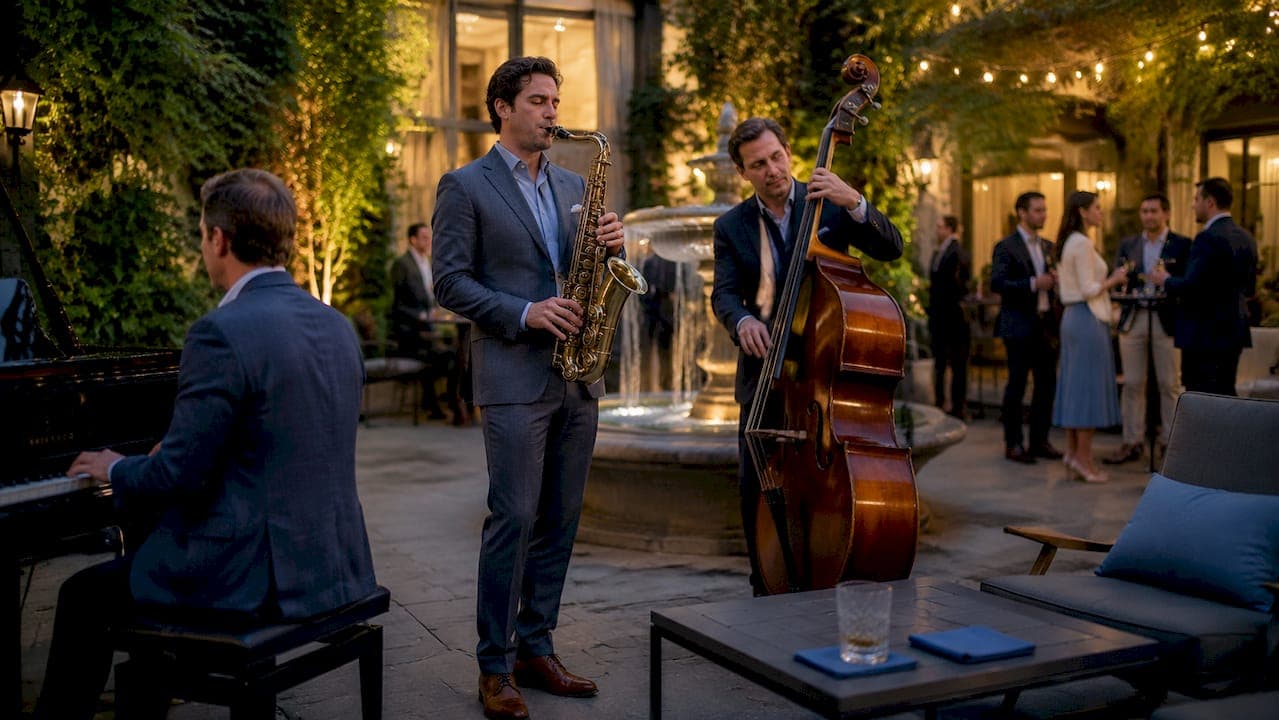
A cocktail reception band is a live music ensemble specifically hired to create a warm, social atmosphere during the cocktail hour of an event. Unlike a main reception or dance band, this group plays at moderate volume and tempo, filling the room with sound that encourages conversation rather than competing with it. Performance durations typically range from 30 to 120 minutes with 1–4 musicians providing ambient music that keeps guests comfortable and engaged. The industry term for this role is "cocktail ensemble" or "cocktail band," and understanding what separates it from other live music formats is the first decision every event planner needs to make.
What is a cocktail reception band and what does it do?
A cocktail reception band is a small live ensemble placed at the social midpoint of your event, typically between a ceremony and a seated dinner. Its job is not to entertain in the foreground but to shape the room's energy from the background. A well-planned cocktail music setup serves as a sonic bridge between ceremony formality and reception celebration, preventing the awkward silence or musical whiplash that derails guest comfort.
The ensemble size is deliberately compact. A jazz trio, solo pianist, or acoustic duo fits this role perfectly because each format produces enough sound to fill a room without overwhelming it. Alexlevinmusic, based in Philadelphia and serving New York and beyond, specializes in exactly these formats: jazz trios, string quartets, and solo piano acts designed for cocktail settings.
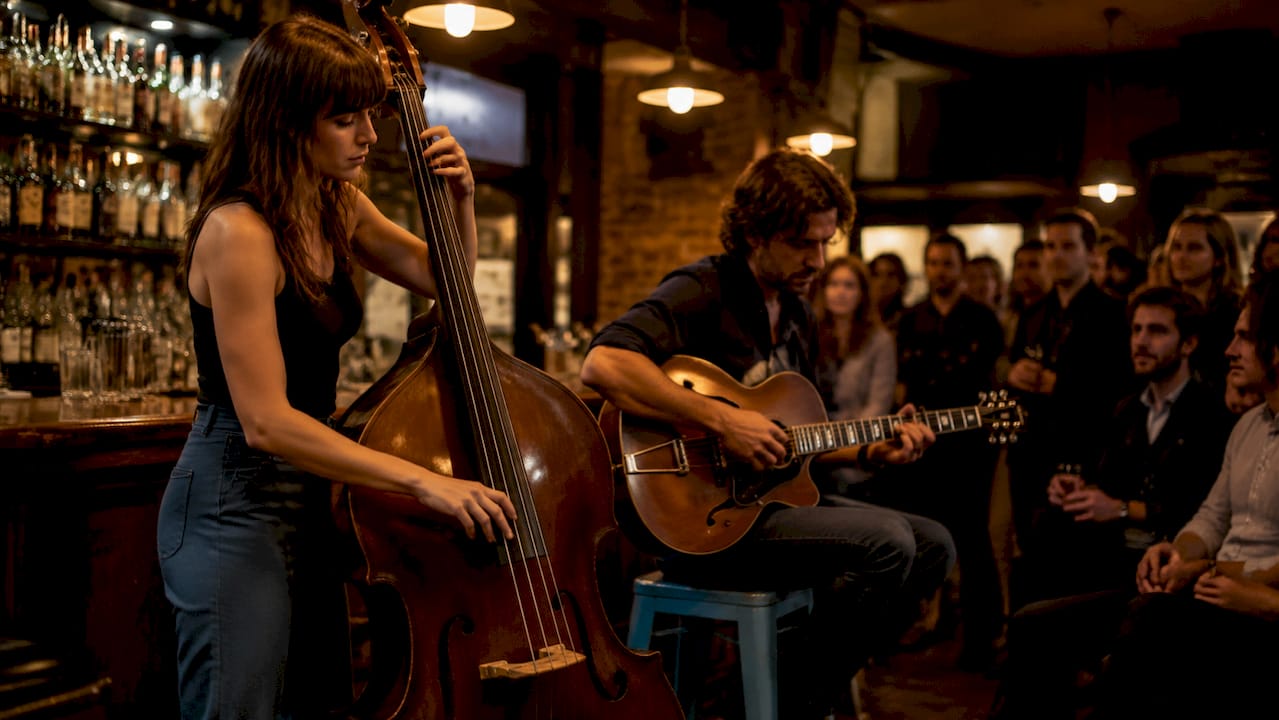
The best cocktail bands do something a playlist never can. They read the room in real time and adjust. If guests are animated and loud, the musicians lift the tempo slightly. If the room is quieter and more intimate, they pull back. That responsiveness is the defining feature of live music for cocktail reception settings.
What types of cocktail bands are available?
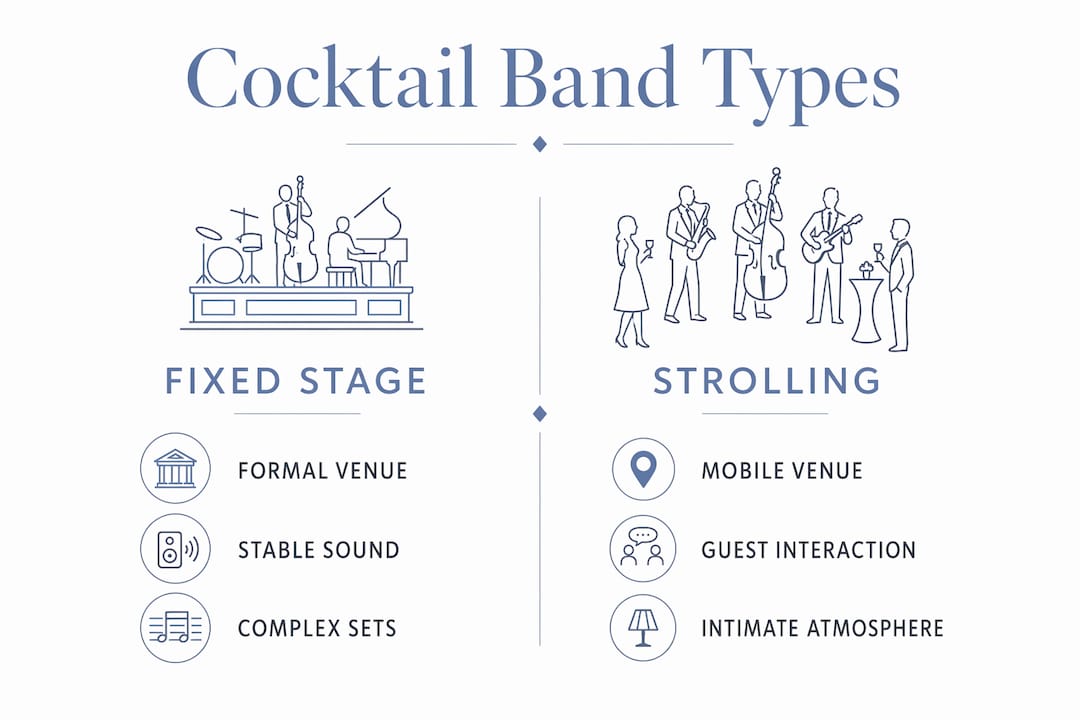
Two primary formats define the cocktail band market: fixed stage bands and strolling bands. Each serves a different event style, venue type, and guest experience goal.
Fixed stage bands
A fixed stage band performs from a designated area, typically a corner or small stage. This format suits traditional venues like hotel ballrooms, banquet halls, and formal dining rooms. Guests know where the music is coming from, which creates a clear focal point without disrupting the flow of the room. Fixed bands can include larger ensembles, such as a jazz quartet or a small swing group, because they have a defined space to set up.
Strolling bands
Strolling bands are popular for luxury or mobile environments such as gardens, yachts, and open-air venues. The musicians move through the crowd, performing up close and breaking the traditional barrier between performer and guest. This format creates a more immersive experience and works especially well at intimate or high-end events where personal interaction matters.
| Format | Best Venue Type | Guest Experience | Ensemble Size |
|---|---|---|---|
| Fixed Stage Band | Ballrooms, banquet halls, formal venues | Ambient, background presence | 2–6 musicians |
| Strolling Band | Gardens, yachts, open-air, intimate spaces | Immersive, interactive, up-close | 1–3 musicians |
The practical trade-off: Fixed bands offer better sound consistency and can handle more complex arrangements. Strolling bands create memorable moments but require musicians who are physically mobile and acoustically self-contained. Strolling bands break the traditional performance barrier and are favored for luxury and intimate cocktail hours where the goal is connection, not just atmosphere.
How does cocktail music differ from dance band music?
Cocktail reception music and main reception dance music serve completely different functions. Confusing the two is one of the most common and costly mistakes planners make.
Cocktail reception music prioritizes a lounge, social vibe using jazz, acoustic, or soft pop styles at moderate volumes and tempos. Dance bands, by contrast, play tracks at 120+ BPM designed to fill a dance floor and drive physical energy. Playing dance-level music during cocktail hour causes guest fatigue before the main event even begins.
The key differences come down to four factors:
- Volume: Cocktail music sits at conversational level. Guests should be able to talk without raising their voices.
- Tempo: Slow to mid-tempo tracks (60–100 BPM) keep the mood relaxed and social.
- Genre: Jazz standards, bossa nova, acoustic pop, and classical crossover all work well. Hard rock, EDM, and high-energy pop do not.
- Function: The music fills silence and creates texture. It is not the main attraction at this stage of the event.
Pro Tip: Ask your band to prepare a set list specifically for cocktail hour, separate from any dinner or dancing sets. A band that plays the same energy level across all three phases will flatten the emotional arc of your entire event.
The goal of cocktail hour music is not silence but creating a consistent acoustic footprint that fills empty spaces and makes conversation feel natural. Silence is not neutral. It creates self-consciousness and slows down the social momentum you need guests to build before dinner.
When should you schedule a cocktail band at your event?
Timing a cocktail band correctly determines whether it enhances your event or disappears into the background unnoticed. The standard window is immediately after a ceremony or during the first 45–90 minutes of guest arrival at a standalone reception.
Cocktail reception bands typically perform for 30 to 120 minutes depending on event timing and structure. Common practice is two sets of 60 minutes or three sets of 40 minutes, built around natural breaks and transitions. Here is a practical scheduling framework:
- Confirm the cocktail window first. Lock in the start and end time of cocktail hour before booking the band. Most planners underestimate how long guests take to move from ceremony to cocktail space.
- Build in setup time. A fixed stage band needs 30–60 minutes to set up and sound check before guests arrive. Schedule accordingly.
- Coordinate with catering. The band's final set should end as dinner service begins. A hard cutoff creates a clean transition.
- Plan the energy arc. Start with softer, more ambient material in the first set. Lift the energy slightly in the second set as guests loosen up and conversations grow louder.
- Book a pre-event planning session. Successful event planners coordinate all phases of music in a single session to ensure cohesive emotional flow from ceremony through reception.
Pro Tip: Ask your band whether they include a portable PA system in their fee. Many professional cocktail bands include portable PA systems in their standard pricing, which prevents last-minute rental costs and sound compatibility issues at the venue.
Coordinating music across all event phases in one planning session is the single most underused tactic in event planning. Most planners book ceremony music, cocktail music, and reception music separately. That approach creates gaps in tone and energy that guests feel even if they cannot name the cause. For guidance on seamless music planning across all event phases, the Alexlevinmusic blog covers this in detail.
Live cocktail band vs. playlist or DJ: which is better?
A live cocktail band outperforms a playlist or DJ during cocktail hour on every metric that matters for guest experience. The difference is not subtle.
Live cocktail bands dynamically adjust their tempo and volume in real time to enhance guest experience and guide mood transitions. A playlist cannot do this. A DJ can approximate it, but a DJ during cocktail hour is typically managing equipment and transitions rather than reading the room with the nuance a live musician brings.
A cocktail reception band enhances event quality significantly more than pre-recorded playlists by offering live, tailored soundscapes. Their presence encourages mingling, lifts mood, and creates a distinct atmosphere that guests remember. Here is why that matters in practice:
- Real-time responsiveness: Live musicians gauge the room and adjust. If the crowd is energized, they push the tempo. If guests are still arriving and the room is sparse, they play softer and more intimately.
- Unique atmosphere: No two live performances are identical. That unpredictability creates a sense of occasion that a Spotify playlist cannot replicate.
- Interaction opportunities: With a strolling band, guests can make eye contact, smile, and engage directly with performers. That interaction becomes a talking point and a memory.
- Professional sound quality: Experienced cocktail bands bring calibrated sound systems suited to smaller spaces, not the oversized PA rigs that make dance bands so loud.
"The biggest mistake planners make is either choosing overly intense music too early or having no music at all." — Pioneer Valley DJs
For planners weighing the decision, the question is not whether live music costs more. It does. The question is whether the atmosphere you want to create is worth the investment. For weddings, corporate galas, and private celebrations where first impressions matter, live music always outperforms a playlist. For guidance on choosing the right musician for your specific event style, Alexlevinmusic provides a detailed breakdown by event type and audience.
Key takeaways
A cocktail reception band is the single most effective tool for shaping guest mood, encouraging social interaction, and creating a smooth transition between ceremony and reception.
| Point | Details |
|---|---|
| Core function | A cocktail band creates ambient live music that fills space and encourages conversation without competing with it. |
| Format choice matters | Fixed stage bands suit formal venues; strolling bands work best for intimate or luxury outdoor settings. |
| Music style is specific | Jazz, acoustic, and soft pop at moderate tempo are the right genres. Dance-level energy during cocktail hour causes guest fatigue. |
| Timing and scheduling | Plan two to three sets of 40–60 minutes and coordinate all music phases in one pre-event session. |
| Live beats recorded | Live musicians read the room and adjust in real time, creating an atmosphere no playlist or DJ can fully replicate. |
Why the "background music" label sells cocktail bands short
I have played hundreds of cocktail hours across Philadelphia, New York, and private estates in between, and the one thing I keep seeing is planners treating the cocktail band as an afterthought. They spend months on the ceremony and the reception band, then book a cocktail ensemble two weeks out and give it no direction.
That approach costs them the best part of the event. The cocktail hour is when guests are most open. They are not seated yet. They are not watching speeches. They are moving, talking, and forming their first impression of the event. The music you put in that room shapes every conversation that follows.
What I have learned is that the best cocktail performances are not the loudest or the most technically impressive. They are the ones where the musicians are paying attention. A trio that watches the room and adjusts between songs creates a completely different experience than one that runs through a set list mechanically. When I work with clients at Alexlevinmusic, the first question I ask is not what songs they want. It is what feeling they want guests to have when they walk in. The music follows from that answer.
The other thing planners consistently underestimate is ensemble size. A solo pianist or a duo can fill a medium-sized room beautifully. You do not need a five-piece band for a 60-person cocktail reception. Matching the ensemble to the space is as important as matching the genre to the event. Bigger is not always better. The right size is the one that fits the room without overwhelming it.
— Alex
Book the right cocktail band for your event
Planning a cocktail hour that guests actually remember starts with the right live music choice. Alexlevinmusic offers jazz trios, string quartets, solo piano, and strolling ensemble options tailored to weddings, corporate events, and private celebrations across Philadelphia, New York, and beyond.
Every booking includes a personalized planning consultation to match the ensemble size, genre, and energy level to your specific event timeline. Whether you need a fixed stage jazz trio for a hotel ballroom or a strolling acoustic duo for a garden reception, Alexlevinmusic handles the logistics, the sound setup, and the set list coordination. Explore the full range of live music services or read more about what makes live music special for events of every size and style.
FAQ
What is a cocktail reception band exactly?
A cocktail reception band is a small live music ensemble, typically 1–4 musicians, hired to perform ambient music during the cocktail hour of an event. Their role is to create atmosphere and encourage social interaction, not to serve as the main entertainment.
How long does a cocktail band typically perform?
Cocktail bands perform for 30 to 120 minutes, usually structured as two or three sets with short breaks. The exact duration depends on the event timeline and how long the cocktail hour runs.
What music style works best for a cocktail reception?
Jazz, bossa nova, acoustic pop, and classical crossover are the best cocktail reception music genres. These styles maintain a social, relaxed atmosphere without overpowering conversation or front-loading the energy before dinner and dancing.
What is the difference between a strolling band and a fixed stage band?
A fixed stage band performs from one location and suits formal venues like ballrooms. A strolling band moves among guests and creates a more immersive, interactive experience, preferred at luxury or outdoor events.
Is a live cocktail band better than a DJ for cocktail hour?
Yes. Live musicians adjust tempo and volume in real time based on the room's energy, which a DJ or playlist cannot replicate with the same nuance. Live performance also creates a unique atmosphere that guests find more memorable.
Recommended
- Cocktail Hour Soundscapes: Setting the Mood with Live Music Instead of Just Background Noise | Alex Levin Music | Live Wedding Music New York | Cocktail Hour Music New York
- Bands for Hire | Wedding DJ | Best Wedding Musicians
- Cocktail Hour Music | Alex Levin Music
- How to Build the Perfect Wedding Reception Music Playlist: 10 Tips to Keep the Party Going | Alex Levin Music | Live Wedding Music New York | Live Event Music Philadelphia