
Music sets the emotional tone of a wedding more than almost anything else, yet the wedding music budget explained in most planning guides barely scratches the surface of what you actually need to know. Costs range from a few hundred dollars for a ceremony soloist to well over $25,000 for a premium live band, and most couples only discover that range after they've already started getting quotes. This guide breaks down real numbers, the factors that move those numbers up or down, and how to build a budget that reflects what actually matters to you on your wedding day.
Table of Contents
- Key takeaways
- Wedding music budget explained: averages and percentages
- What actually drives your wedding music costs
- Live band vs DJ: cost, energy, and real value
- Building your wedding music budget with room to breathe
- My honest take on what couples get wrong
- Bring your wedding music vision to life with Alexlevinmusic
- FAQ
Key takeaways
| Point | Details |
|---|---|
| Budget 5–8% for music | Wedding music typically consumes 5–8% of your total budget, scaling with overall spend. |
| Bands cost roughly 2.5x more | Live bands average $4,500 versus $1,800 for DJs, but both vary widely by region and add-ons. |
| Production costs are the hidden driver | Sound systems, lighting, and overtime fees often account for more of your bill than the performers themselves. |
| Define coverage hours first | Setting how many event segments you need music for is the single fastest way to get accurate quotes. |
| Build in a contingency buffer | Reserve an extra 5–10% of your music budget for overtime charges, travel, and last-minute additions. |
Wedding music budget explained: averages and percentages
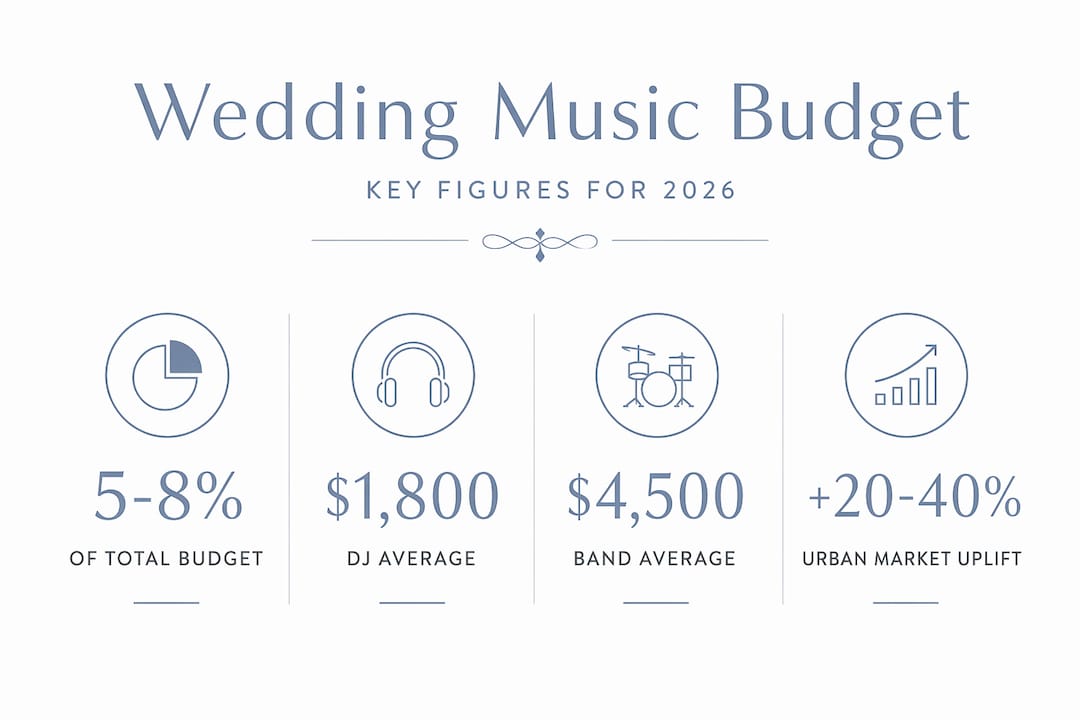
Most financial planning resources suggest allocating 5–8% of your total wedding spend to music and entertainment. On a $30,000 wedding, that translates to roughly $1,500 to $2,400. On a $15,000 budget, you are looking at $750 to $1,200. Those ranges are tight, which is why understanding where your money actually goes is so important before you start requesting quotes.
The headline numbers are these: live bands average around $4,500 for a wedding reception, while a wedding DJ averages around $1,800. That is a 150% price difference, though neither figure tells the full story. Upper-tier bands can run $7,000 or higher, and premium DJ packages in competitive markets can reach $2,700 or more.
Here is a quick reference for what couples typically pay across entertainment types:
| Entertainment type | Low end | Average | High end |
|---|---|---|---|
| Wedding DJ (4–6 hours) | $1,000 | $1,800 | $4,000+ |
| Live band (reception) | $4,000 | $4,500 | $25,000+ |
| String quartet (ceremony) | $800 | $1,500 | $3,500 |
| Solo pianist or guitarist | $400 | $900 | $2,000 |
| Ceremony-only DJ package | $300 | $500 | $600 |
Regional pricing adds another layer. Urban markets like New York City or Philadelphia typically sit 20–40% above national averages because of higher performer fees, transportation costs, and competitive demand. Guest count matters too. Larger venues and guest lists require bigger sound systems, more microphones, and sometimes a larger band, all of which increase your final total.
What actually drives your wedding music costs
Most couples assume they are paying for the performers. In reality, the biggest cost surprises come from production elements, not the musicians themselves. Understanding the true cost drivers lets you negotiate and customize without getting blindsided.
The main factors that move your quote up or down include:
- Number of performers. A jazz trio costs significantly less than a seven-piece band. Every additional musician adds to the fee.
- Event segment coverage. Wedding music spans multiple distinct segments, including ceremony, cocktail hour, reception dinner, first dances, and late-night dancing. Each segment you add extends the performance hours and raises the price.
- Equipment and production. Sound systems, stage lighting, wireless microphones for vows and speeches, and monitor speakers are often priced separately or bundled into higher-tier packages. Know exactly what is included before signing.
- Custom song arrangements. Requesting a specific song that requires a custom arrangement adds both preparation time and cost. Many vendors charge per arrangement, sometimes $150 to $400 per song.
- Travel fees. Vendors more than 30 miles from your venue typically charge a travel fee, and for destination weddings, those fees can include overnight accommodations.
- Overtime charges. Most contracts include a set performance window. Going beyond that, even by 30 minutes, often triggers overtime rates that can be $200 to $500 per hour.
Pro Tip: Setting your event coverage hours and production needs before contacting any vendor is the fastest route to getting quotes you can actually compare. Know which segments you want covered and whether your venue provides its own sound system.
When comparing quotes from different vendors, make sure you are looking at the same scope. One band may quote $4,000 with sound included; another may quote $3,500 with sound as an add-on. Check out questions to ask your wedding band before signing anything to make sure you are comparing apples to apples.
Live band vs DJ: cost, energy, and real value
This is the decision most couples spend the most time on, and it deserves more than a simple cost comparison.
Cost and value side by side
| Factor | Live band | DJ |
|---|---|---|
| Average cost | $4,500 | $1,800 |
| Setup time | 60–90 minutes | 30–45 minutes |
| Song selection flexibility | Limited to repertoire | Virtually unlimited |
| Atmosphere and energy | High, visual, dynamic | Dependent on DJ skill |
| Hybrid potential | Yes, can combine with DJ | Yes, can pair with musicians |
| Space required | Larger stage footprint | Minimal |
Live bands bring a visual energy that no playlist can replicate. Watching musicians perform in real time, responding to the crowd and reading the room, creates an experience guests remember for years. That said, a skilled DJ drives party energy just as powerfully, and underestimating how much a mediocre DJ can deflate a reception is a real mistake many couples make. Paying $800 for a bargain DJ is rarely the savings it appears to be.
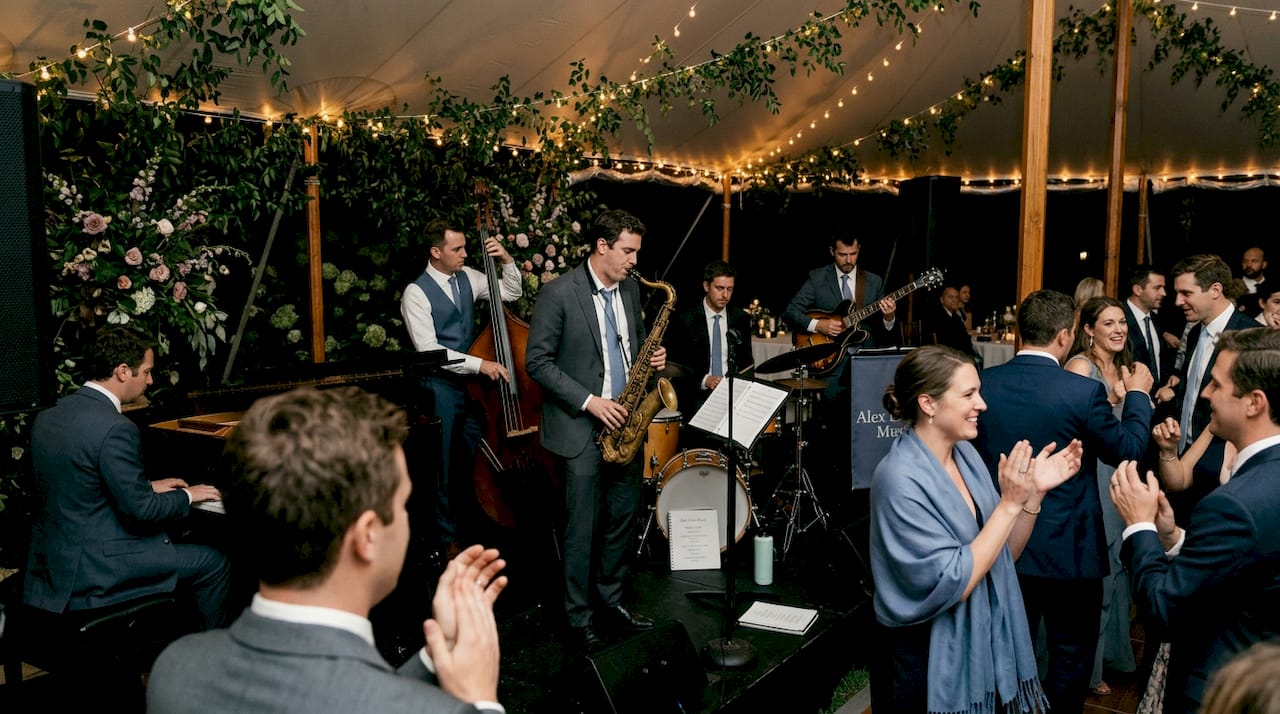
The smartest middle path for many couples is a hybrid approach. Combining a DJ with a live soloist or small ensemble gives you live music at the ceremony and cocktail hour, where guests are most attentive, while the DJ handles the reception when song variety and consistent energy matter most. This approach typically costs $2,500 to $4,500 total, which sits comfortably between a full band and a high-end DJ package.
For more on whether a DJ is right for your event format, the Alexlevinmusic blog covers why hire a DJ with specifics on what separates a great DJ experience from an average one.
Building your wedding music budget with room to breathe
Once you know the category you want, the next step is building a budget that does not collapse under the weight of the details you did not think about in advance.
Start by anchoring your music spend to your overall wedding budget using the 5–8% benchmark. Then run that number against the actual quote you receive and check whether the two are close. If your total wedding budget is $25,000, your music target is $1,250 to $2,000. A five-piece live band will blow past that. A skilled DJ or a soloist plus small ensemble will not.
After you have a vendor in mind, build your contingency. Reserve 5–10% of your entertainment budget specifically for overruns. Common unexpected expenses include:
- Overtime charges when the reception runs long
- Last-minute equipment rentals if your venue's system is inadequate
- Travel or parking fees not included in the initial quote
- Additional microphone setup for toasts or ceremony readings
Pro Tip: Ask every vendor to walk you through their overtime policy and travel fee structure before signing. Getting this in writing prevents budget surprises on the day itself.
Clear communication with your vendor up front is the single best cost-control tool available. Vendors who compare quotes using consistent criteria, the same number of hours, the same equipment, and the same band size, are vendors you can trust. If a quote leaves any of those items vague, ask before you commit.
To avoid the most common budget missteps couples make, the Alexlevinmusic blog covers wedding music planning mistakes in detail, with practical ways to stay on track.
My honest take on what couples get wrong
From my experience working with couples across the Philadelphia and New York area, the most consistent mistake I see is treating music as a line item to trim rather than a category to protect. I have watched couples cut their entertainment budget to save $500 and then watch their reception lose momentum at the exact moment it should peak. That $500 ends up being the most expensive cut they made.
What I have learned is that total music costs are almost always higher than the first quote suggests, not because vendors are hiding things, but because couples do not ask about production until it's too late. Sound systems, lighting upgrades, and overtime add up faster than anyone expects. When I talk to couples about live band impact on the atmosphere, I always tell them: budget for the full experience, not just the performers.
My strongest piece of advice is this. Decide early how important music is to your vision of the day, and budget accordingly. If it is central, protect that budget category first and trim elsewhere. If it is secondary, a great DJ or a well-chosen soloist can serve you beautifully without the full band price tag. What does not work is expecting a premium experience from a bargain budget.
— Alex
Bring your wedding music vision to life with Alexlevinmusic
Whether you are working with a tight budget or planning a full evening of live entertainment, Alexlevinmusic offers options that fit how you actually want your wedding to sound.
From soloists and small ensembles that bring elegance to your ceremony and cocktail hour, to full live bands and DJ services built for high-energy receptions, every offering is customizable to your event's scope and budget. The team specializes in jazz, swing, and sophisticated styles that work beautifully across all wedding formats. Browse the full range of wedding musicians for hire and reach out for a personalized quote based on your event's specific hours, format, and location. Getting a real number early makes budgeting the rest of your wedding significantly easier.
FAQ
What percentage of a wedding budget should go to music?
Most planning guides recommend allocating 5–8% of your total wedding budget to music and entertainment, which translates to $750 to $2,400 depending on your overall spend.
How much does a live wedding band cost on average?
Live bands typically cost between $4,000 and $5,000 for a wedding reception, with premium options and larger ensembles running well above that depending on band size, location, and production needs.
Is a DJ or live band a better value for weddings?
It depends on your priorities. A DJ offers more song flexibility at a lower average cost of around $1,800, while a live band creates a visual, dynamic experience averaging $4,500. Hybrid options combining both can deliver strong value in the $2,500 to $4,500 range.
What hidden costs should I budget for in wedding music?
Production elements like sound systems, lighting, overtime charges, and travel fees are the most commonly overlooked costs. Build in a 5–10% contingency buffer to cover these additions.
How do DJ costs vary for different parts of a wedding?
DJ pricing for ceremonies starts around $300 to $600 for a short set, while full-day premium DJ packages covering ceremony through reception can reach $2,500 to $4,000 or more depending on the market and package inclusions.
Recommended
- 5 Common Music Planning Mistakes Couples Make — and How to Avoid Them | Alex Levin Music | Live Wedding Music New York | Live Jazz Music New York
- Common Wedding Music Planning Mistakes and How to Avoid Them | Alex Levin Music | Live Wedding Band New York | Live Wedding Band Philadelphia
- Questions to Ask Before Booking Your Wedding Band — and What Their Answers Should Tell You | Alex Levin Music | Wedding Music New York | Wedding Music Philadelphia
- Creating Memorable Moments: The Impact of Personalized Jazz Music at Your Wedding | Alex Levin Music | Live Wedding Music Philadelphia | Live Event Music Philadelphia