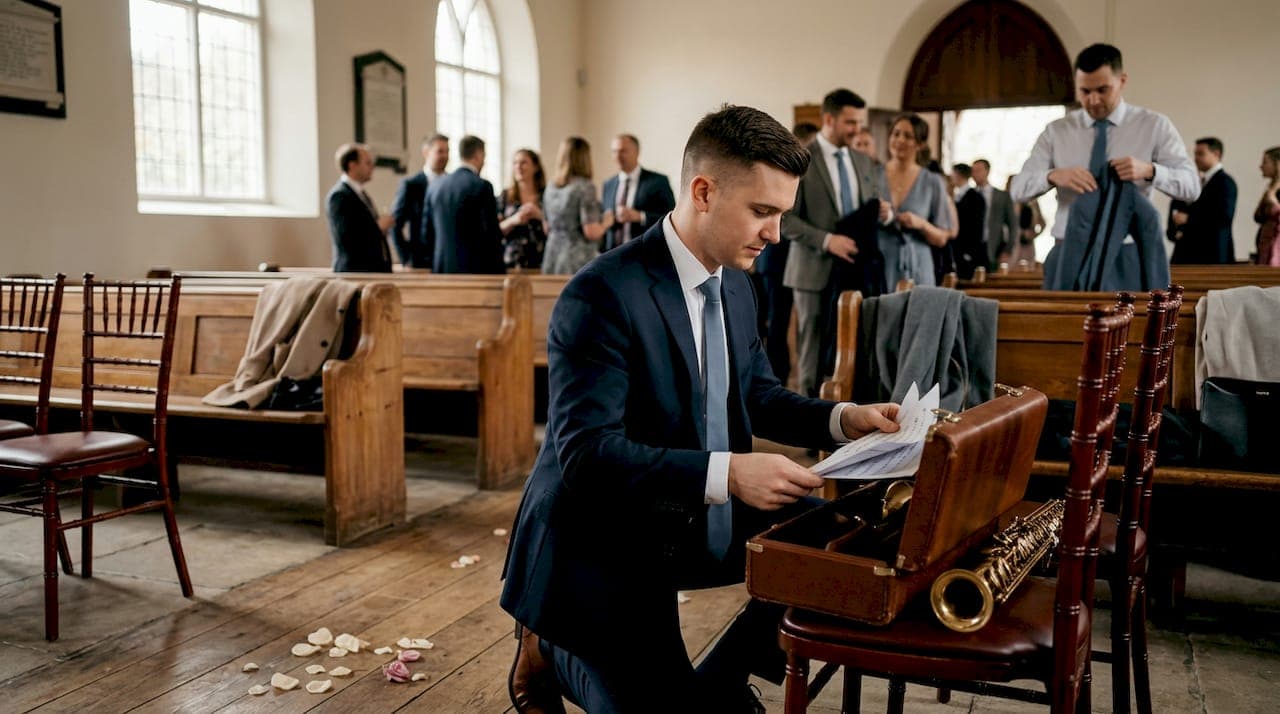
Most couples spend weeks agonizing over their processional song and then pick their recessional music in five minutes the night before the wedding. That's a mistake. The recessional music role in your wedding is arguably more powerful than any other song choice you'll make. It's the moment the ceremony ends, the doors fly open, and everyone in the room gets their cue: it's time to celebrate. Get it right, and your guests erupt. Get it wrong, and the whole mood deflates before the cocktail hour even starts.
Table of Contents
- Key Takeaways
- The recessional music role in a wedding ceremony
- What makes a great recessional song
- Genre options and how they play in the room
- Practical logistics for a smooth exit
- Making your recessional truly yours
- My honest take on what couples get wrong
- Let Alexlevinmusic handle your perfect exit
- FAQ
Key Takeaways
| Point | Details |
|---|---|
| Recessional sets the celebration tone | Your exit song signals the shift from ceremony solemnity to full-on party energy. |
| Song tempo matters more than title | Choose a track with an immediate hook, not a slow build, to keep momentum alive. |
| Cueing is everything | Music should start the moment the officiant makes the pronouncement, not after an awkward pause. |
| Exit order affects the experience | A planned exit sequence keeps the flow smooth for both guests and photographers. |
| Personalization is encouraged | Non-traditional recessional song choices that reflect your personality are trending and totally valid. |
The recessional music role in a wedding ceremony
The recessional is the moment the couple exits the ceremony as spouses for the first time, and the music playing in that moment carries enormous symbolic weight. Those first steps down the aisle together, surrounded by everyone you love, are charged with emotion. The right song amplifies that feeling. The wrong one leaves guests staring at each other awkwardly.
Think of the ceremony as holding its breath. The vows, the ring exchange, the kiss. All of it is beautiful and reverent, but it's also emotionally tense in the best possible way. The recessional is the exhale. It's the musical signal that says the serious part is over and the best part is just beginning.
"The recessional serves as a vital 'vibe shift' from the emotional solemnity of the ceremony to the high-energy celebration mood." — TheChichBride.com
That vibe shift is real, and it's powerful. Guests take their emotional cue directly from the music. A triumphant, joyful song gets people on their feet, clapping, cheering, and ready to celebrate. A slow or somber track keeps everyone seated and subdued, even if they don't consciously know why. The importance of recessional music goes well beyond filling silence. It's a psychological trigger that launches the entire reception energy.
What makes a great recessional song
Not every upbeat song works as a recessional. There are specific qualities that separate a great exit song from one that just happens to be playing while people shuffle out.
Here's what to look for when evaluating your recessional song choices:
- Immediate energy. The best songs for wedding recessional moments have an immediate hook or drop. Songs with long instrumental build-ups often kill the "just married" energy before it even gets started.
- Recognizable melody. Familiar songs get guests clapping and singing along. An obscure deep cut might mean something personal to you, but it won't move the room the same way.
- Joyful, crowd-appropriate lyrics. If you're using a song with lyrics, make sure they read as celebratory. Avoid anything with dark themes, even if the melody is upbeat.
- Appropriate length. Most recessional walks last between 90 seconds and three minutes. You don't need a six-minute epic. Pick a song that fills the exit without dragging.
- Stylistic match. A string quartet playing a jazz standard fits a black-tie ballroom. A live band rocking out to a pop hit fits a barn wedding. Match the music to the setting and the overall feel of your day.
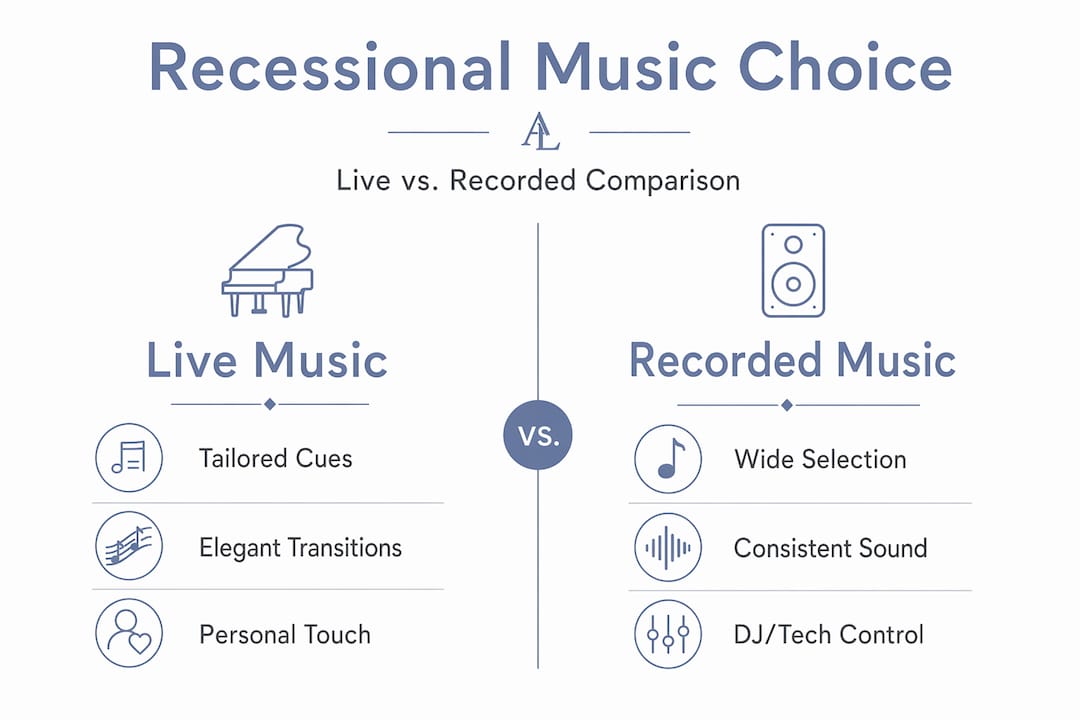
The live versus recorded debate matters here too. Live musicians offer tailored cues and elegant transitions, while DJs give you flexibility and volume control. Neither is wrong. The right choice depends on your venue, budget, and the atmosphere you want to create. A live jazz trio playing a swinging arrangement of a classic pop song, for example, can feel both personal and polished in a way that a recording simply cannot replicate.
Pro Tip: Talk to your officiant before the wedding day and agree on the exact cue for when the music starts. Most music professionals recommend starting the song at the moment of the pronouncement, not after the kiss ends, to avoid any awkward silence.
Genre options and how they play in the room
Choosing a genre is often the clearest way to narrow down your recessional song choices. Each genre brings a different energy and works better in certain settings.

| Genre | Vibe | Example Tracks | Best For |
|---|---|---|---|
| Classical/Orchestral | Timeless, elegant | Beethoven's "Ode to Joy," Handel's "Hornpipe" | Formal, traditional ceremonies |
| Pop/Contemporary | Fun, relatable | "Signed, Sealed, Delivered," "Can't Stop the Feeling" | Casual to semi-formal weddings |
| Jazz/Swing | Warm, charming | "It Don't Mean a Thing," "La Vie en Rose" | Cocktail-style, intimate venues |
| Rock/Country | Energetic, down-to-earth | "Here Comes the Sun," "Life is a Highway" | Outdoor, rustic, or barn weddings |
| Non-Traditional | Personal, unexpected | Movie themes, video game scores, mashups | Any couple willing to own their story |
Popular wedding exit music like "Signed, Sealed, Delivered I'm Yours" by Stevie Wonder and "This Will Be" by Natalie Cole work so well because they are instantly recognizable and irresistibly joyful. Guests don't need to think. They just feel it and start clapping.
Jazz and vintage classics deserve more credit in this conversation. A live jazz arrangement of a beloved standard brings warmth and sophistication that few other genres can match. It also photographs and films beautifully, which matters more than most couples realize until they see the video.
Non-traditional picks are having a real moment right now. 2026 trends favor authenticity over classical convention, and couples are choosing everything from Hans Zimmer film scores to Nintendo themes to indie folk covers of pop songs. The only rule: keep it celebratory. A song that makes you both grin ear to ear is the right song.
Practical logistics for a smooth exit
Even the best song falls flat if the execution is off. Here's how to plan the logistics so the recessional flows exactly as it should.
- Cue the music at the pronouncement. Music should start immediately after the officiant's final announcement, not after a pause or a beat of silence. Every second of quiet after "I now pronounce you" chips away at the energy you've built.
- Plan your exit order. The recommended recessional order is: newlyweds first, then the flower person and ring bearer, followed by the wedding party, persons of honor, parents, grandparents, and finally guests. This keeps the procession organized and gives photographers clean shots.
- Clear the exit path. Pre-planning exit flow greatly improves the experience for both the couple and guests. Congestion at the end of the aisle kills momentum and creates chaos in photos.
- Brief your musicians or DJ. Make sure whoever is handling the music knows the exact cue, the volume level, and whether to loop the song or fade it out. Don't assume they know your preferences without a conversation.
- Encourage the applause. Ask your officiant to invite guests to applaud as you exit. Most people want to cheer. They just need permission.
Pro Tip: Visit your venue before the wedding and test the sound system or acoustics in the ceremony space. Outdoor venues especially can have dead zones where music doesn't carry well. Knowing this in advance lets you adjust speaker placement or volume levels so the recessional lands the way you imagined.
Making your recessional truly yours
The most memorable wedding exits tend to share one quality: they feel unmistakably like the couple. Here's how to get there without overthinking it.
- Lean into your story. Did you two bond over a specific album, artist, or era of music? That's your starting point. A couple who fell in love at a jazz club should not feel pressured to walk out to a Top 40 hit just because it's popular.
- Consider a live cover or arrangement. A personalized jazz arrangement of a song you love can transform something familiar into something completely unique to your day.
- Mix cultural elements thoughtfully. If you want to honor a cultural tradition through music, the recessional is a great place to do it. A second-line jazz march, a traditional Irish reel, or a Bollywood-inspired arrangement can all work beautifully as fun recessional music ideas.
- Trust your gut over the trends. Wedding music suggestions from friends and family are well-meaning but often generic. You know what makes you both feel alive. Pick that.
- Avoid overthinking the "appropriateness." As long as the song is joyful and not offensive, it belongs. Couples who pick something unexpected and own it confidently always get the best reactions from their guests.
My honest take on what couples get wrong
In my experience playing weddings across Philadelphia, New York, and beyond, the recessional is the most underplanned moment in the entire ceremony. Couples will spend months choosing their first dance song and then treat the recessional like an afterthought. I've seen it deflate a room that was completely electric just 30 seconds earlier.
The most common mistake I see is choosing a song with a slow intro. You've just kissed, the officiant is beaming, and then... nothing happens musically for eight seconds while the song builds. That silence is brutal. It breaks the spell. I always tell couples: if the song doesn't hit within the first two seconds, find a different song or ask your musician to start from the chorus.
The second mistake is not briefing the musicians or DJ on the exact cue. I've watched officiant announcements end and musicians wait for eye contact, a nod, or some other signal that never comes clearly. The result is a gap in the energy that guests feel even if they can't name it. Avoid common music planning mistakes by having a direct, specific conversation with your music team before the ceremony.
My honest advice: treat the recessional like the opening song of a concert. Because that's exactly what it is. It's the moment the party officially starts, and the song you choose is the one that launches it.
— Alex
Let Alexlevinmusic handle your perfect exit
Planning a wedding exit that actually feels as good as it looks takes more than a great playlist. It takes musicians who understand ceremony flow, know how to read a room, and can execute a flawless cue at exactly the right moment.

At Alexlevinmusic, we specialize in live wedding ceremony music across Philadelphia, New York, and surrounding areas. Whether you want a jazz trio swinging you out the door, a string quartet playing a modern pop arrangement, or a DJ and hybrid music setup that gives you the best of both worlds, we've got the experience to make it work. Browse our wedding bands and soloists to find the right fit for your ceremony, and reach out early. The best ensembles book up fast, especially for spring and fall dates.
FAQ
What is recessional music at a wedding?
Recessional music is the song played as the newly married couple exits the ceremony venue after the vows and pronouncement. It signals the transition from the formal ceremony to the celebration.
When should the recessional music start?
The music should start at the moment the officiant makes the final pronouncement, not after a pause or at the end of the kiss. Starting immediately prevents awkward silence and keeps the celebratory energy high.
How long should a wedding recessional song be?
Most recessional walks last between 90 seconds and three minutes, so a standard song length works well. You can also ask your musician or DJ to fade the song out once the couple and wedding party have exited.
Can we choose a non-traditional song for our recessional?
Absolutely. Non-traditional recessional song choices are trending strongly, and any song that is joyful and celebratory works. The key is that it should feel like you, not like what you think a wedding is supposed to sound like.
What's the difference between the processional and recessional?
The processional is the music played as the wedding party and couple walk into the ceremony. The recessional is the music played as they walk out after the vows. They serve opposite emotional purposes: one builds anticipation, the other releases it.
Recommended
- Reception | Live Band for Wedding | Party Bands for Hire
- Creating Memorable Moments: The Impact of Personalized Jazz Music at Your Wedding | Alex Levin Music | Live Wedding Music Philadelphia | Live Event Music Philadelphia
- 5 Secret Moments Where Live Music Makes Your Reception Unforgettable | Alex Levin Music | Live Wedding Music New York | Live Wedding Music Philadelphia
- How to Build the Perfect Wedding Reception Music Playlist: 10 Tips to Keep the Party Going | Alex Levin Music | Live Wedding Music New York | Live Event Music Philadelphia