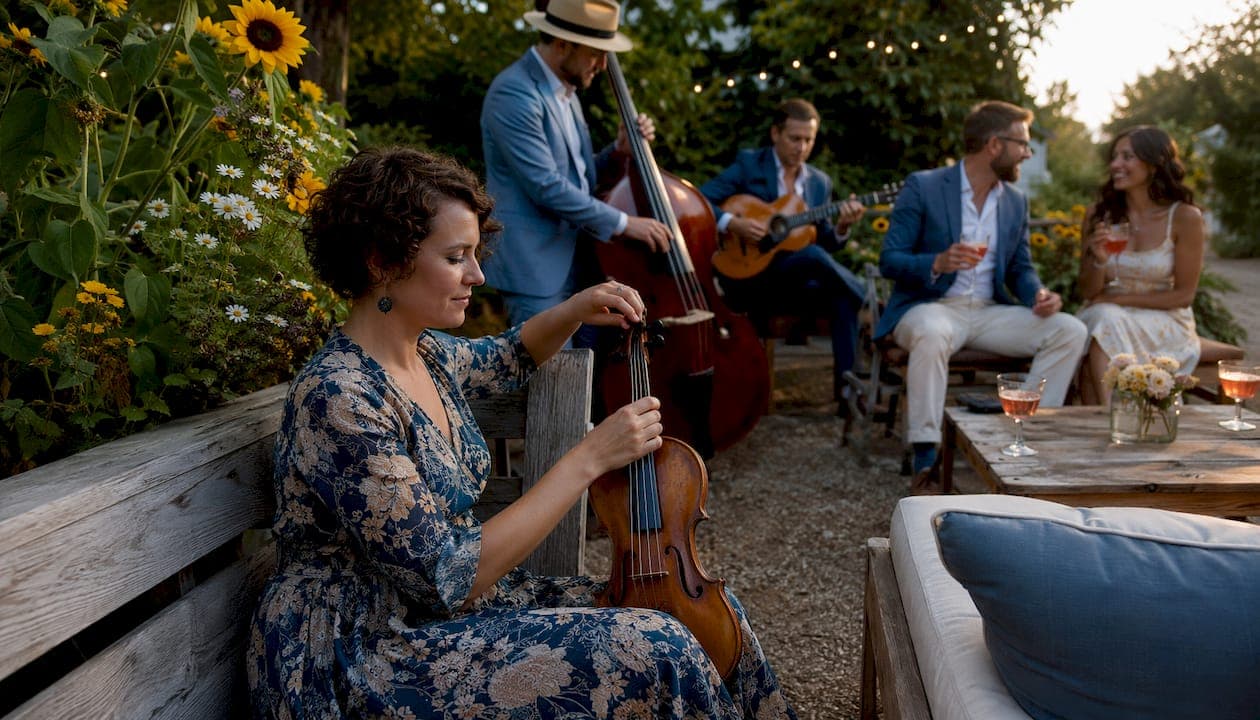
The best outdoor garden party music options combine live ensembles, portable speaker setups, and a phased playlist strategy that shifts with your event. Get the mix right and guests stay engaged from the first cocktail hour through the last dance. Here is what actually works in 2026.
Your planning checklist at a glance:
- Live formats: String quartets, jazz trios, roaming acoustic duos, DJ-sax combos
- DIY gear: Weather-resistant portable speakers like Sonos Move 2 or Marshall Emberton III
- Layering strategy: Low-key acoustic for arrivals, mid-energy jazz for dining, amplified or DJ-led sets after dark
- Acoustics: Speaker placement and volume control matter as much as song selection
- Regulations: Check local noise ordinances before booking anything amplified
What live music formats work best for garden parties?
Live music formats for garden parties range from formal to festival-ready, and the right choice depends almost entirely on your crowd and the time of day.
String quartets and trios are the classic anchor for elegant afternoon parties. They are naturally acoustic, which means no PA system, no cables snaking across the lawn, and almost no setup time. The sound carries beautifully in open air and sets a refined tone without overpowering conversation.
Jazz trios bring a warmer, more social energy. A piano-bass-drums or guitar-bass-vocals configuration works especially well during cocktail hour and dinner, where guests want something interesting to listen to without feeling like they are at a concert. If the keyboardist needs power, a single outdoor outlet or a generator handles it.
Roaming acoustic duos are one of the most crowd-pleasing formats for garden events. Wireless roaming bands move among guests and create an immersive, interactive feel that a stationary act simply cannot replicate. No stage, no barrier between musicians and guests.
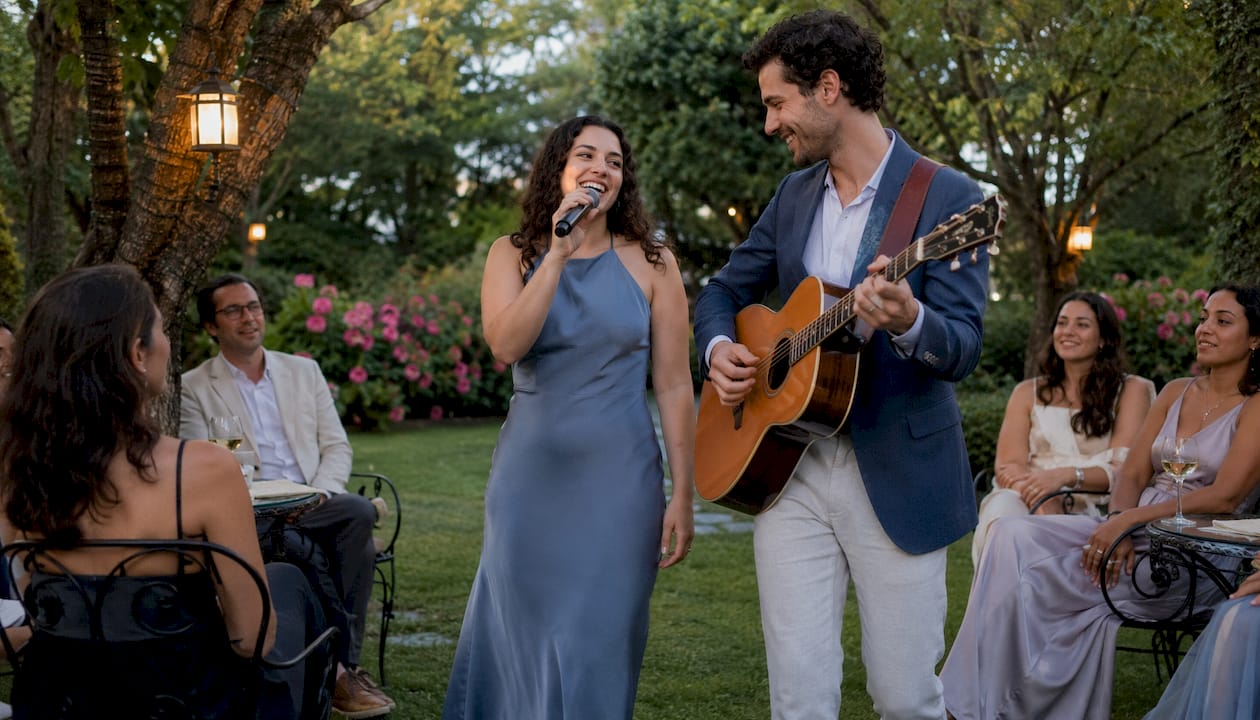
DJ-sax combos have become the go-to format for evening sets in 2026. A saxophonist improvising over a DJ's electronic or contemporary tracks delivers the energy of a club set with the warmth of a live instrument. It reads as sophisticated rather than loud.
Pro Tip: Book a roaming duo for arrivals and a jazz trio for dinner, then bring in a DJ-sax combo after sunset. Three formats, one cohesive arc.
How to set up DIY music for your garden without a live act
Not every garden party needs a live band, and a well-chosen portable speaker can carry the entire event. The key is water resistance and battery life — two specs that matter far more outdoors than they do in a living room.
- Sonos Move 2 is rated as the best outdoor speaker for gardens by Trusted Reviews. It weighs about 3 kg, so it stays put rather than traveling with you, but the sound quality and Wi-Fi connectivity make it ideal for a fixed garden setup.
- Marshall Emberton III earns its reputation on battery life. Up to 30-plus hours on a single charge means you can run music from noon through midnight without a recharge.
- Marshall Bromley 450 steps up for larger gatherings. Its IP55 rating handles splashes and light rain, and its 360-degree sound design covers a wide outdoor area without dead spots.
- JBL Xtreme 4 carries an IP67 rating, meaning it survives an accidental dip. The shoulder strap makes it easy to reposition as your party layout shifts.
For placement, set speakers at ear height when possible and angle them toward the center of the gathering rather than at a fence or wall. Outdoors, sound disperses fast. Two smaller speakers placed at opposite ends of the space usually outperform one large unit in the center.
Pro Tip: Run a curated garden party playlist between live sets to maintain atmosphere during breaks. Guests rarely notice the transition when the tempo and energy level stay consistent.
How to layer and plan music throughout your garden party
Music phasing is the single most underused tool in garden party planning. Most hosts pick one format and run it all day. The parties people actually remember use three distinct phases.
- Arrival and drinks (first 60–90 minutes): Keep volume low and energy gentle. A roaming acoustic duo or solo strings lets guests hear each other, find their footing, and settle in. This is not the moment for anything amplified.
- Meal service: Step up to a jazz trio or a small amplified ensemble. The energy lifts slightly, conversation continues, and the music becomes part of the dining experience rather than background noise. A good singer fronting the lineup adds a focal point without demanding attention.
- Golden hour and evening: This is where hybrid formats shine. A battery-powered amplified set during sunset, then a DJ-sax combo once the lights come on, keeps energy climbing without an abrupt shift. Guests who want to dance have a reason to stay; guests who want to talk can drift to the edges.
Volume should track the energy arc. Start at conversational level, raise it slightly during dinner, and push it up for the evening set only after most guests have finished eating. Abrupt volume jumps are jarring; gradual escalation feels natural.
For seamless music planning across all three phases, think in terms of transitions, not just formats. The handoff from acoustic to amplified, or from live to DJ, is where atmosphere either holds or breaks.
How do you choose the right music style and performers for your theme?
Matching music style to party theme is less about genre rules and more about emotional register. A coastal-inspired garden party with white linens and citrus cocktails calls for bossa nova guitar, light Latin percussion, or a jazzy ukulele duo. A formal evening garden dinner lands better with a string quartet or a classic jazz trio.
- Guest demographics matter. A crowd skewing 50-plus often responds better to jazz standards and classic pop than to contemporary DJ sets. A mixed-age group benefits from a versatile act that can shift between recognizable classics and current hits.
- Professional musicians offer customization that a playlist cannot. They read the room, adjust tempo, and take requests on the fly. Live musicians deliver a level of guest engagement and event prestige that pre-recorded music simply does not match.
- Interactive elements add texture. A mariachi band leading a "parade moment" across the lawn, or a jazz trio inviting guests to make requests, turns passive listening into participation.
- Versatility beats specialization for most garden parties. An act that plays jazz, pop, and soul covers serves a mixed crowd better than a single-genre specialist.
Knowing how to choose the right musician for your specific guest profile and party style is the difference between music that fits and music that defines the event.
What you need to know about outdoor acoustics and speaker placement
Open-air settings absorb and scatter sound in ways that indoor rooms do not. Hard surfaces like patios reflect sound; grass and garden beds absorb it. A speaker that sounds loud indoors may feel thin and distant once you move it outside.
Place speakers at or slightly above ear height, angled toward the main gathering area. Avoid pointing them at fences or walls, which creates echo rather than coverage. For larger gardens, two speakers in a stereo spread cover more ground than one speaker at full volume. Keep bass-heavy settings moderate outdoors; low frequencies travel far and are the most likely to bother neighbors.
Outdoor amplification also requires weather protection. Even on a clear day, morning dew or an unexpected drizzle can damage unprotected equipment. IP-rated speakers handle this; standard indoor Bluetooth speakers do not.
Why playlist curation matters as much as the music itself
A randomly shuffled playlist breaks atmosphere. A curated one builds it. The difference is sequencing: tracks should flow by tempo and mood, not just genre. Start with slower, warmer songs during arrivals, move to mid-tempo crowd-pleasers during dining, and save the upbeat anthems for the evening.
Classic garden party tracks like "Here Comes the Sun" by The Beatles, "Golden Hour" by Kacey Musgraves, and "Put Your Records On" by Corinne Bailey Rae work across age groups and party styles. Pair them with contemporary picks like Sabrina Carpenter's "Espresso" or Billie Eilish's "Birds of a Feather" for a playlist that feels current without alienating older guests.
Curated playlists that combine summer anthems and chill tunes complement live sets and maintain atmosphere during transitions. Build a "between-set" playlist specifically for the gaps when live musicians take breaks.
Managing noise levels and local regulations for outdoor music
Noise ordinances vary by city and neighborhood, but most U.S. municipalities enforce quiet hours between 10 PM and 7 AM. Some residential areas set limits as early as 9 PM on weeknights. Check your local ordinances before booking any amplified act or renting a PA system.
Balancing volume and local restrictions is one of the most practical steps in outdoor music planning. A few concrete ways to stay within limits: use directional speakers pointed away from neighboring properties, schedule amplified sets to end before quiet hours, and brief your performers on the cutoff time before the event starts.
Acoustic acts sidestep most noise concerns entirely. A string quartet or roaming acoustic duo rarely triggers a complaint, which is one practical reason they remain popular for residential garden parties.
Should you hire a DJ or a live band for your garden party?
The honest answer is that it depends on your budget, your space, and what you want guests to feel. A DJ offers flexibility, a wider song catalog, and typically a lower cost than a full live band. A live band delivers presence, spontaneity, and a visual focal point that a DJ booth cannot replicate.
For garden parties specifically, the hybrid format is increasingly the strongest choice. Outdoor events increasingly favor blending live musicians with DJ sets to maintain energy and appeal across extended celebrations. A live jazz trio for dinner followed by a DJ-sax combo for the evening covers both the sophistication and the energy without requiring a full band for the entire event.
Budget is the practical deciding factor. A solo DJ costs less than a quartet. A DJ-sax duo lands somewhere in between and often delivers more impact per dollar than either extreme.
Alexlevinmusic brings live elegance to your garden event
Live garden party music at a professional level is exactly what Alexlevinmusic specializes in, from intimate jazz trios and string quartets to solo piano and DJ-sax pairings. Based in Philadelphia and New York, Alexlevinmusic works with private clients to match the ensemble, repertoire, and energy level to the specific arc of your event.

Every booking includes detailed performance descriptions, video samples of past events, and direct consultation to align the music with your theme and guest profile. If you have been weighing the difference between a playlist and a live act, what makes live music special comes down to the moments a recording simply cannot create. Alexlevinmusic's ensembles and soloists page gives you a clear picture of every available format, with video samples to help you decide before you book.
Key takeaways
Live music phased across arrival, dining, and evening sets is the most effective approach to outdoor garden party atmosphere in 2026.
| Point | Details |
|---|---|
| Phase your music | Use acoustic acts for arrivals, jazz trios for dining, and DJ-sax combos for evening energy. |
| Choose weather-rated gear | Speakers like Sonos Move 2 and Marshall Emberton III handle outdoor conditions reliably. |
| Curate, don't shuffle | Sequence tracks by tempo and mood to hold atmosphere across the full event. |
| Check noise rules first | Most U.S. municipalities enforce quiet hours from 10 PM; confirm local limits before booking amplified acts. |
| Alexlevinmusic for live performance | Jazz trios, string quartets, and DJ-sax pairings available for garden events in Philadelphia, New York, and beyond. |