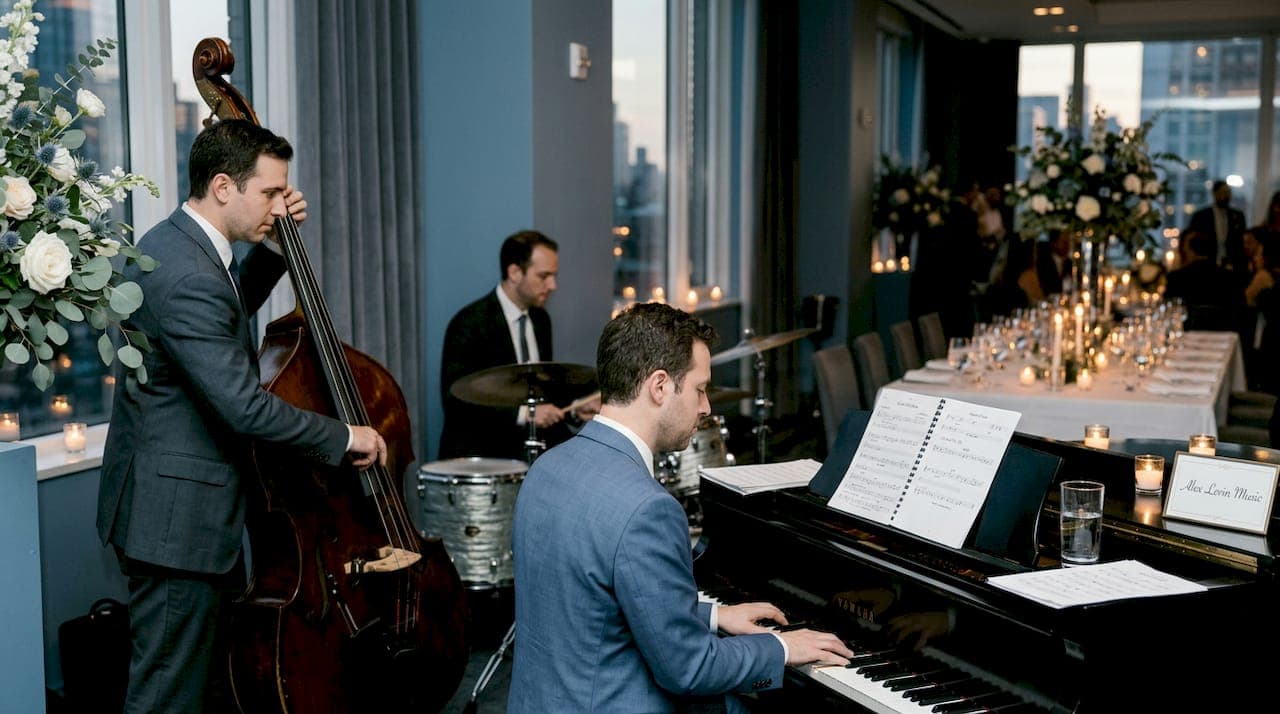
If you've been researching wedding entertainment, you've probably heard the term "jazz trio" thrown around without much explanation. The jazz trio wedding explained simply is this: three musicians playing jazz, swing, or related styles live at your event. But that definition undersells what actually happens in the room. A well-booked jazz trio does not just fill silence. It shapes the mood, controls the energy, and gives your wedding a personality that a DJ playlist simply cannot replicate. This guide covers everything from instrumentation to pricing to help you decide if a jazz trio belongs at your wedding.
Table of Contents
- Key takeaways
- Jazz trio wedding explained: what you're actually booking
- Why a jazz trio works so well at weddings
- Logistics and what to know before you book
- How a jazz trio compares to other wedding music options
- My honest take on jazz trios at weddings
- Book live jazz music for your wedding
- FAQ
Key takeaways
| Point | Details |
|---|---|
| Three instruments, one cohesive sound | A jazz trio typically features piano or guitar, double bass, and drums for a full yet intimate sound. |
| More than background music | Jazz trios actively shape wedding atmosphere during cocktail hours, receptions, and even ceremonies. |
| Budget range varies widely | Expect to pay between $1,000 and $3,000 depending on location, experience, and event length. |
| Size matters for fit | Jazz trios work best for intimate to mid-size weddings; larger events may need a quartet or full band. |
| Ask the right questions first | Confirm setup needs, repertoire flexibility, and wedding experience before signing any contract. |
Jazz trio wedding explained: what you're actually booking
A jazz trio is three musicians performing together as a single, coordinated unit. The most common configuration includes a pianist or guitarist, a double bass player, and a drummer. Each instrument covers a distinct role. The bass holds the harmonic foundation, the drums drive the rhythm, and the piano or guitar carries the melody and fills the harmonic space between them.
Common jazz trio instrumentation includes piano or guitar, double bass, and drums, though some trios swap drums for vibraphone when a softer, more ambient sound is needed. That flexibility is one of the reasons jazz trios translate so well across different wedding settings.
The repertoire a wedding jazz trio typically draws from includes:
- Jazz standards from the American Songbook (think Sinatra, Ella Fitzgerald, Cole Porter)
- Swing and big band arrangements scaled down for three players
- Bossa nova for a warm, Latin-influenced feel during cocktail hours
- Modern jazz interpretations of pop or R&B songs for a contemporary twist
- Instrumental versions of popular love songs for first dances or processionals
Compared to a full wedding jazz band with horns, vocalists, and rhythm section, a trio sounds more intimate and conversational. It fills a room without overwhelming it. That distinction matters enormously when you're planning a dinner reception in a boutique hotel ballroom versus an outdoor garden party.
Pro Tip: If your venue has hard floors and high ceilings, ask your trio about using brushes instead of drumsticks and an upright bass rather than an electric one. The acoustic difference in a reverberant space is significant.
Why a jazz trio works so well at weddings
The most underrated quality of a jazz trio is its ability to read the room and adjust in real time. A DJ works from a playlist. A jazz trio works from the energy of the people in front of them. That responsiveness is what separates live jazz music for weddings from every other entertainment option.
Jazz trios create ambient moods during cocktail hours and shift naturally into more upbeat sets as the reception picks up energy. You do not need to schedule a hard transition. The music evolves with your guests.
Here is where jazz trios shine at specific moments in your wedding:
- Ceremony: Instrumental versions of classical pieces or jazz standards work beautifully for processionals and recessionals without feeling stiff.
- Cocktail hour: This is the jazz trio's natural habitat. Small jazz ensembles during cocktail hour encourage guests to mingle while enjoying live, sophisticated music that does not demand attention.
- Dinner reception: Soft jazz during dinner keeps conversation flowing without competing with it. Guests can hear each other speak, which matters more than most couples realize.
- Dancing: A skilled trio can absolutely get people on the floor with swing standards, upbeat bossa nova, or jazz-inflected pop covers.
Couples are increasingly choosing jazz trio music for cocktail hours because it replaces rigid dinner structures with organic, flowing event energy that feels more like a night out than a formal banquet.
Jazz repertoire including swing and bossa nova blends naturally with a wide range of wedding themes, from vintage Art Deco to modern minimalist to garden-party romantic. The music does not fight your decor. It completes it.
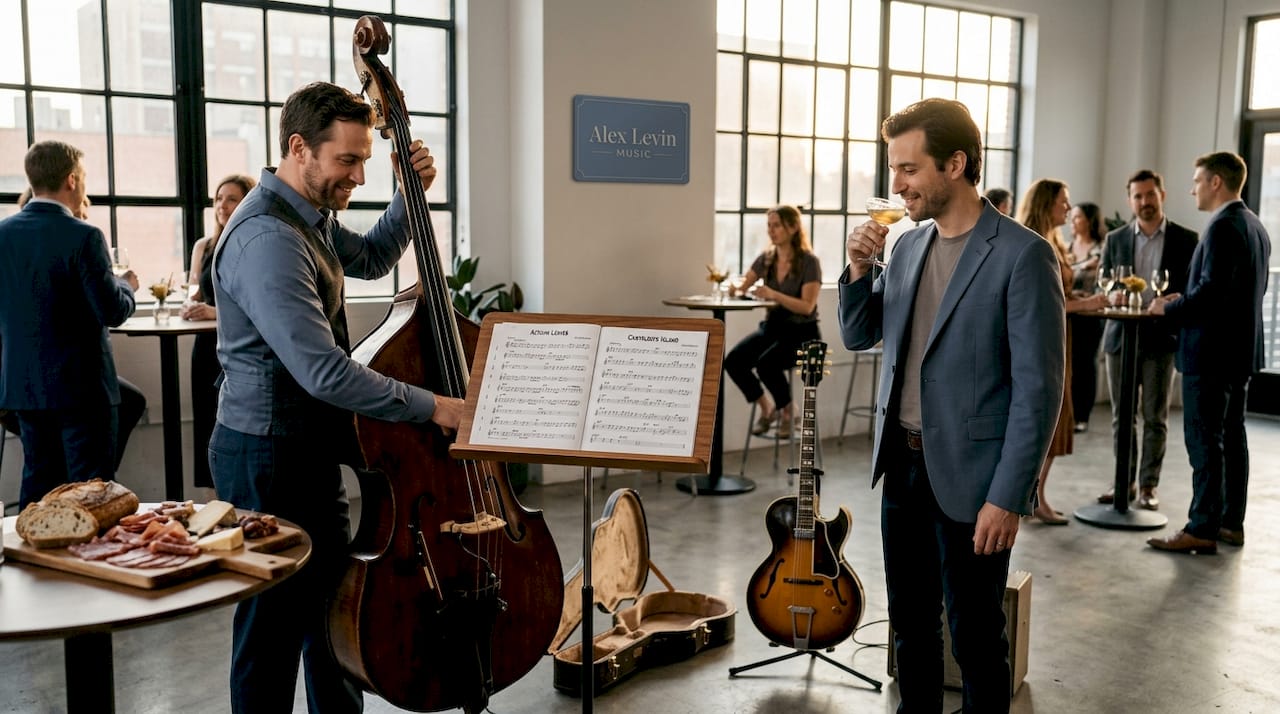
Pro Tip: If you want to incorporate a specific song for your first dance that is not traditionally a jazz standard, ask the trio in advance. Most experienced wedding jazz musicians can arrange almost any song in a jazz style given enough notice.
Logistics and what to know before you book
Knowing you want a jazz trio is one thing. Knowing how to hire one correctly is another. The logistics are manageable, but skipping any of them creates problems on the day itself.
Follow this process when booking your wedding jazz trio:
- Define your event timeline first. Know how long you need music for cocktail hour, dinner, and dancing separately. Most trios quote by the set or by the hour, and knowing your breakdown helps you get accurate pricing.
- Set your budget range. Typical pricing for jazz trios falls between $1,000 and $3,000 for weddings, with variation based on location, musician experience, and event length. Philadelphia and New York markets typically sit at the higher end of that range.
- Confirm venue requirements. Ask your venue whether live music is permitted, what the sound restrictions are, and whether there is a dedicated performance area. Some venues require the band to use in-house sound systems.
- Ask about setup time and space. A jazz trio needs roughly a 10x10 foot performance area at minimum, plus time to set up and sound check before guests arrive. Factor this into your vendor timeline.
- Review their wedding experience specifically. A trio that plays jazz clubs every weekend is not automatically the right fit for a wedding. Questions to ask before booking include their experience with wedding timelines, their process for learning your preferred songs, and how they handle requests on the day.
- Get everything in writing. Contract should specify set lengths, break schedule, attire, setup time, and what happens if a musician cancels.
Hiring considerations such as venue acoustics and coordination with your event timeline are the details that separate a smooth performance from a stressful one. Do not leave them to a verbal agreement.
For cocktail hour logistics specifically, pairing great music with thoughtful catering creates a complete sensory experience. Practical tips for cocktail party hosting can help you think through the full picture beyond just the music.
How a jazz trio compares to other wedding music options
Before you commit, it helps to see how a jazz trio stacks up against other common choices. Here is a direct comparison:
| Option | Best for | Sound volume | Cost range | Flexibility |
|---|---|---|---|---|
| Jazz duo | Very intimate weddings, small venues | Low | $600 to $1,500 | Moderate |
| Jazz trio | Intimate to mid-size weddings | Medium | $1,000 to $3,000 | High |
| Jazz quartet | Mid-size to larger weddings | Medium-high | $2,500 to $5,000 | High |
| Full wedding band | Large receptions, high-energy dancing | High | $4,000 to $15,000+ | Very high |
| DJ | Any size, maximum song variety | Adjustable | $1,000 to $3,500 | Very high |
Jazz trios are sufficient for intimate settings while larger events benefit from quartets or bigger ensembles. The key variable is not just guest count but room size and how much of the evening will involve dancing.
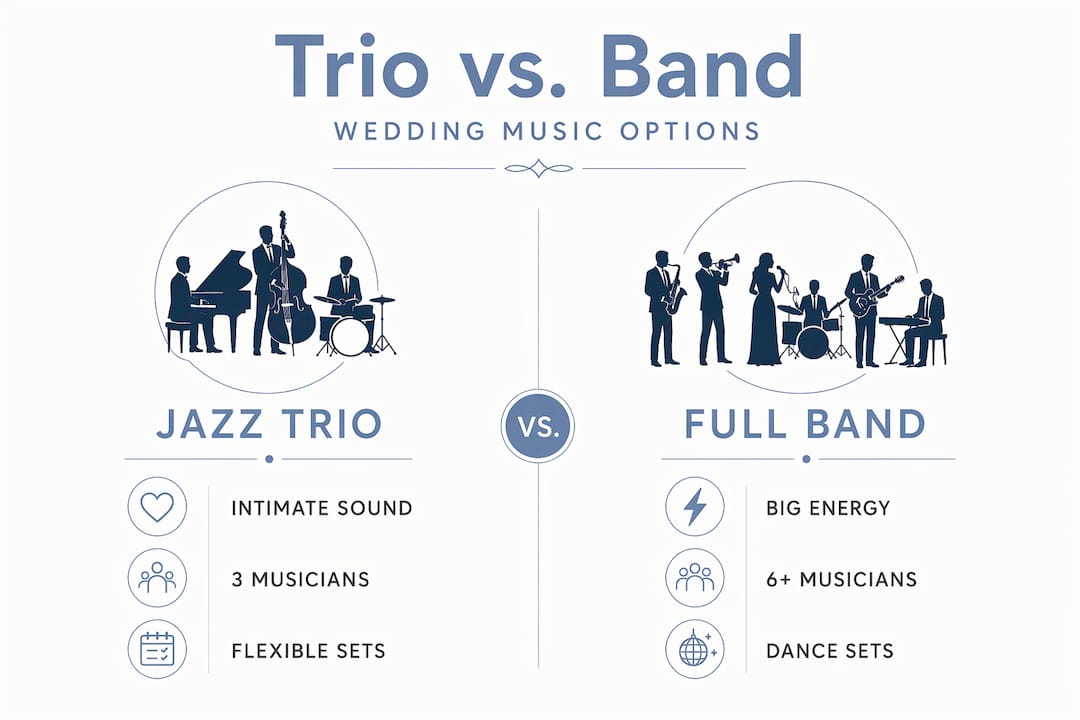
A jazz duo works when budget is tight or the venue is very small, but you lose rhythmic depth without a drummer. A quartet adds a horn player, typically a saxophonist or trumpeter, which gives you more volume and a fuller sound for dancing. The trio sits in the sweet spot for most weddings: enough presence to fill a room, enough restraint to let conversation breathe.
When a jazz trio is clearly the right call:
- Guest count between 50 and 150
- A venue with moderate natural acoustics
- A cocktail-forward or dinner-reception format
- A couple who values sophistication over high-energy dancing
- A budget that does not stretch to a full band but wants live music
When you should consider stepping up to a quartet or band: your guest count exceeds 150, you want extended dancing sets, or your venue is very large and open.
My honest take on jazz trios at weddings
I've performed at hundreds of weddings across Philadelphia and New York, and I can tell you that the couples who are happiest with their music choice are almost always the ones who thought carefully about what they wanted the room to feel like, not just what songs they wanted played.
A jazz trio creates something a DJ cannot manufacture: genuine musical conversation. When the pianist responds to what the bassist just played, and the drummer adjusts the tempo slightly to match the energy of the room, that is a living, breathing performance. Guests feel it even when they cannot articulate why.
What I've learned from working with couples is that the biggest mistake is treating the trio as a background element. The couples who get the most out of live jazz music for weddings are the ones who talk to their musicians in advance, share their story, and trust the performers to bring something personal to the music. Personalized jazz music at weddings creates moments guests remember for years. Generic playlist jazz does not.
My advice: book musicians who ask you questions, not just musicians who send you a song list.
— Alex
Book live jazz music for your wedding
If this article has helped clarify what a jazz trio can do for your wedding, the next step is seeing what professional jazz wedding entertainment actually looks like in practice.
At Alexlevinmusic, we specialize in live jazz music for weddings across Philadelphia, New York, and beyond. Whether you are looking for a jazz trio for your cocktail hour, a full band for your reception, or a solo pianist for your ceremony, every ensemble is built around your specific event. Browse the full range of ensembles and soloists available for your date, or explore live music services to understand how each option fits different wedding formats. Real performances, real musicians, and music that is shaped around your wedding day.
FAQ
What instruments are in a typical jazz trio for weddings?
A jazz trio typically includes piano or guitar, double bass, and drums. Some trios substitute vibraphone for drums when a softer sound is preferred.
How much does a jazz trio cost for a wedding?
Pricing generally ranges from $1,000 to $3,000 depending on location, musician experience, event length, and travel requirements.
Can a jazz trio play modern songs, not just jazz standards?
Yes. Experienced wedding jazz musicians regularly arrange pop, R&B, and contemporary songs in a jazz style. Give them your requests well in advance.
Is a jazz trio loud enough for a wedding reception?
A jazz trio produces a medium volume level that works well for intimate to mid-size venues. For larger rooms or high-energy dancing, a quartet or full band may serve you better.
When during a wedding should a jazz trio perform?
Jazz trios are most effective during cocktail hours and dinner receptions. They can also perform during ceremonies and early dancing sets, making them versatile across the full wedding timeline.
Recommended
- The Magic of Live Jazz at Your Wedding: Why It’s a Must-Have | Alex Levin Music | Live Wedding Music Philadelphia | Live Event Music Philadelphia
- Creating Memorable Moments: The Impact of Personalized Jazz Music at Your Wedding | Alex Levin Music | Live Wedding Music Philadelphia | Live Event Music Philadelphia
- Elevate Your Wedding Day with Enchanting Jazz: Why a Live Band is a Must-Have in NYC | Alex Levin Music | Live Wedding Music Philadelphia | Live Event Music Philadelphia
- Overcoming Event Planning Stress: The Benefits of Professional Jazz Musicians | Alex Levin Music | Live Wedding Music Philadelphia | Live Event Music Philadelphia