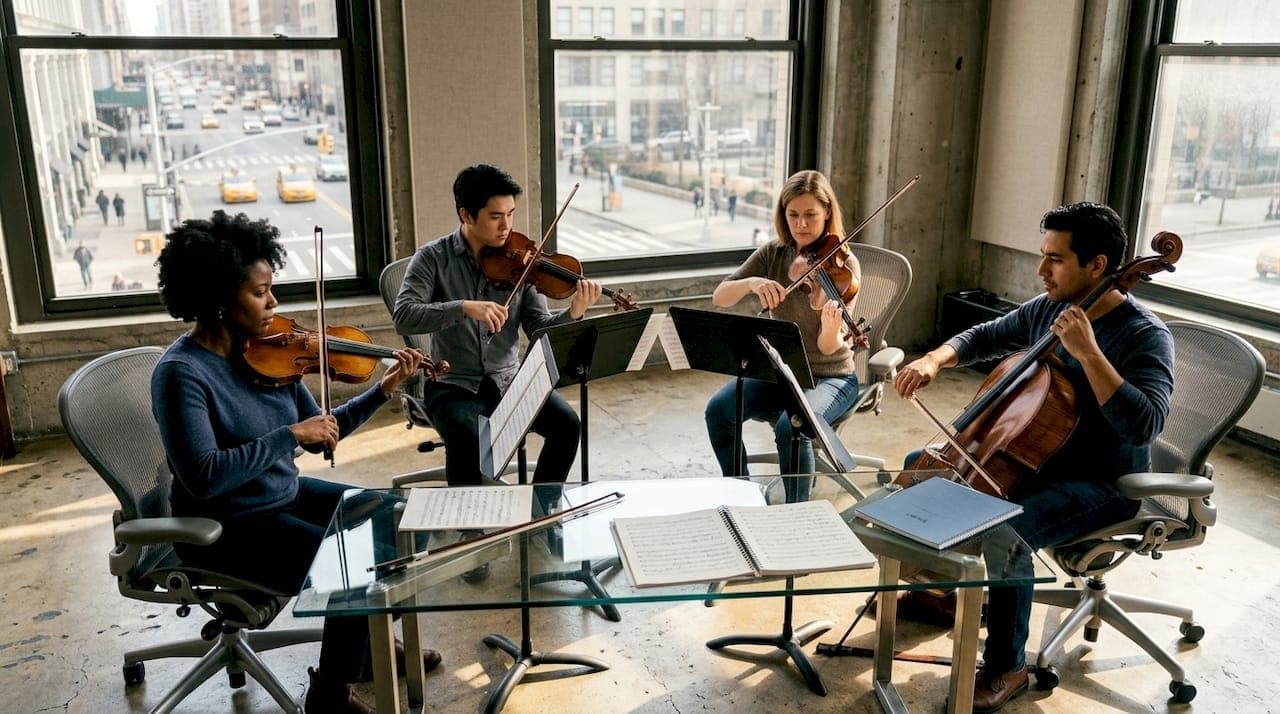
A string quartet is a chamber music ensemble of two violins, one viola, and one cello, performing pieces structured in four movements to create a rich, expressive musical experience. This format, established by Joseph Haydn in the Classical era, remains the most studied and performed configuration in chamber music. Understanding string quartets means understanding how four independent voices combine into something that sounds like a single, breathing instrument. This guide covers the structure, instrument roles, communication techniques, and performance nuances that make the string quartet one of the most demanding and rewarding formats in all of music.
How string quartets work explained: structure and form
Joseph Haydn established the standard four-movement structure that nearly every classical quartet follows. That structure gives composers a clear dramatic arc and gives listeners a satisfying sense of journey from tension to resolution. Each movement serves a distinct emotional and musical purpose.
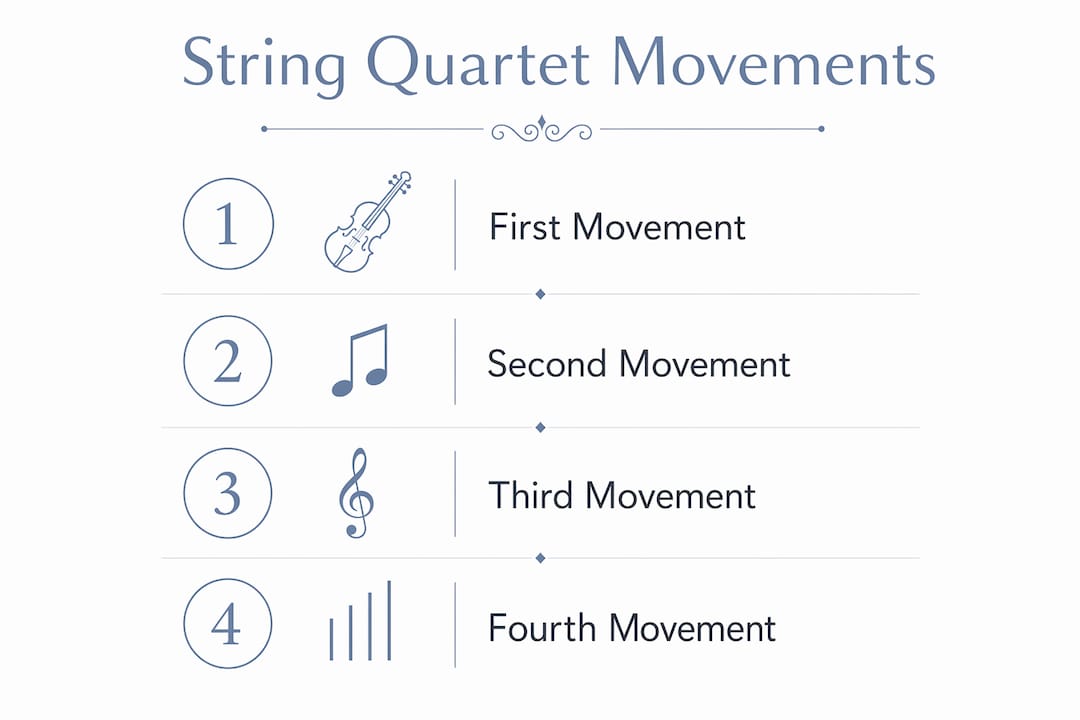
Here is how the four movements typically function:
- First movement (Allegro, sonata form): Opens in the tonic key with two contrasting themes. The exposition presents both themes, the development section pulls them apart, and the recapitulation restores order. This is the intellectual core of the quartet.
- Second movement (Adagio or Andante): Slower, more lyrical, often in a related key. This movement carries the emotional weight of the piece. Composers like Franz Schubert used this space for some of the most devastating music ever written for four strings.
- Third movement (Minuet or Scherzo): A dance-based movement in triple meter. Ludwig van Beethoven transformed the stately minuet into the explosive scherzo, injecting rhythmic surprise and humor into what had been a formal gesture.
- Fourth movement (Rondo or Sonata-Rondo): Fast, energetic, and designed to send the audience home satisfied. The rondo form returns to a main theme between contrasting episodes, creating a sense of momentum and finality.
The table below shows how each movement differs in tempo, form, and emotional character.
| Movement | Tempo | Form | Emotional character |
|---|---|---|---|
| First | Fast (Allegro) | Sonata form | Dramatic, intellectual |
| Second | Slow (Adagio) | Ternary or theme and variations | Lyrical, emotional |
| Third | Moderate (Minuet/Scherzo) | ABA or scherzo-trio | Playful, dance-like |
| Fourth | Fast (Rondo) | Rondo or sonata-rondo | Energetic, conclusive |
This four-movement architecture is not rigid. Beethoven's late quartets, particularly Op. 131, stretch to seven movements. But the classical template remains the standard reference point for understanding string quartet composition.
What role does each instrument play in a string quartet?
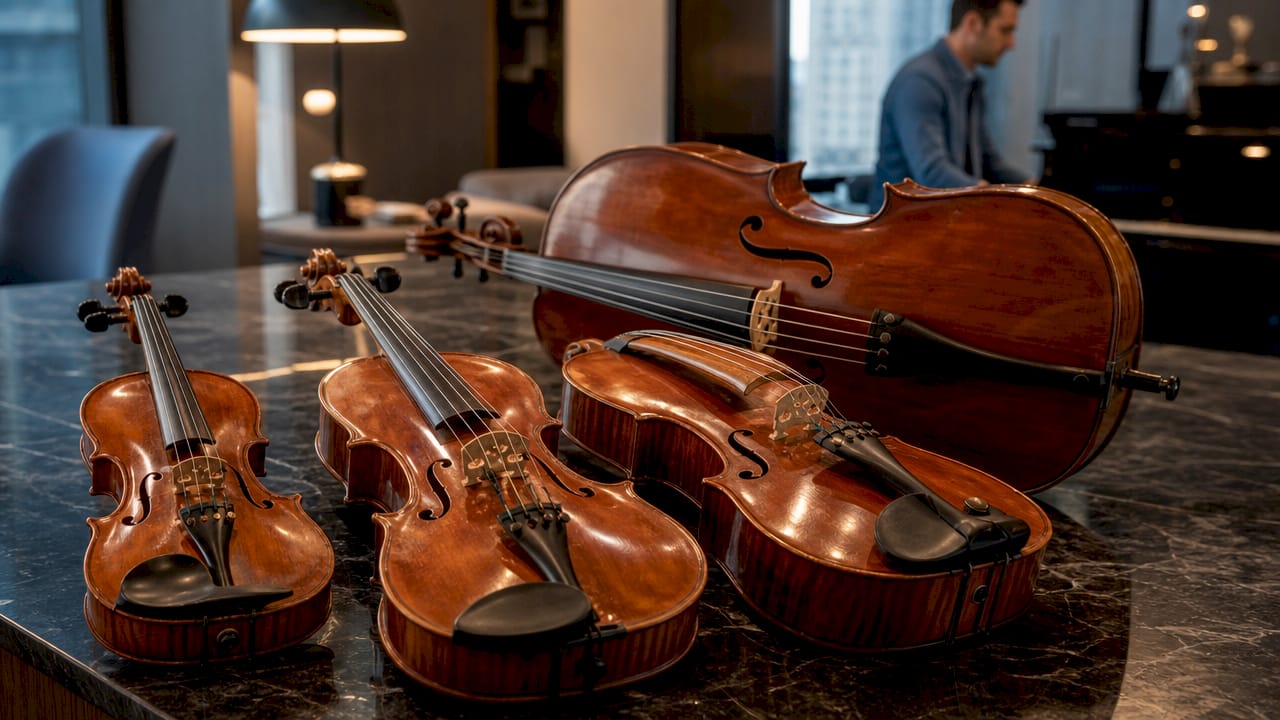
The four instruments in a string quartet divide the musical work in a way that mirrors a four-voice choir. Each player carries an independent line, and the balance between those lines defines the quartet's sound.
- First violin: Carries the primary melody in most passages. Plays in the highest register and often takes the most technically demanding passages. In quartets by Wolfgang Amadeus Mozart, the first violin frequently soars above the other three voices.
- Second violin: Supports the first violin with harmony and countermelody. The second violin rarely gets the spotlight, but removing it collapses the harmonic structure entirely. Think of it as the glue between melody and middle voices.
- Viola: Provides the middle voice and inner texture. The viola's warm, slightly nasal tone fills the harmonic space between the violins and cello. Without the viola, the sound thins dramatically.
- Cello: Anchors the ensemble with bass lines and rhythmic drive. The cello also takes melodic solos in many works, particularly in Romantic-era quartets by Schubert and Johannes Brahms.
Every individual part is exposed and independent, with no conductor and no orchestral mass to hide behind. That exposure is what makes the string quartet so demanding. A single player out of tune or out of rhythm is immediately audible to everyone in the room.
Pro Tip: If you are new to listening to string quartets, follow the cello line first. It anchors the harmony and rhythm, giving you a foundation to hear how the upper voices build on top of it.
The interaction between these four voices produces what musicians call texture. Sometimes all four play the same rhythm together (homophony). Other times each voice moves independently (polyphony). The shift between these textures is one of the quartet's most expressive tools.
How do string quartet players communicate without a conductor?
String quartet players coordinate entirely through nonverbal signals. There is no conductor, no click track, and no external guide. The ensemble must function as its own governing body in real time.
The most fundamental technique is ensemble breathing. The shared in-breath before a phrase synchronizes tempo, dynamics, and expression before a single note is played. One player initiates the breath and the others fill it, producing a unified tonal blend from the very first attack. This is coordination at a physical level, not just a musical one.
"Shared ensemble breathing is collaborative at a cellular level. One player initiates, the others fill it, and the result is a unified sound that no conductor's downbeat can fully replicate." — Ensemble Breathing For String Quartets, Kraftgeek
Eye contact reinforces what breathing starts. Players watch each other's bows, bodies, and faces for cues about phrasing, tempo shifts, and dynamic changes. Leadership in a quartet shifts dynamically depending on who carries the melody. The first violin leads in many passages, but the cello takes over when it drives the rhythm, and the viola leads when it carries a transitional phrase.
Pro Tip: For long sustained passages where players cannot breathe together, quartets use staggered breathing. Each player takes a breath at a slightly different moment so the sound never breaks. Wind players use this technique too, but string players adapted it for bow management.
Maintaining a collective rhythmic pulse without physical movement is another advanced skill. Players must internalize the tempo so deeply that they can hold it steady through silence, through slow passages, and through sudden dynamic shifts, all without a visible beat.
What are the advanced expressive techniques in quartet performance?
String quartet performance goes far beyond playing the right notes at the right time. The most demanding repertoire requires players to control sound at a level that most listeners never consciously notice but always feel.
- Arm weight for dynamic control: Using the natural weight of the bow arm allows players to drop into the string for sudden loud attacks or lift pressure instantly for soft passages. This technique is central to performing Beethoven quartets, where dynamic contrasts are extreme and abrupt.
- Tonal color and texture: Players chase perfect shades of sound, especially in soft dynamics, using bowing techniques like tremolo, sul ponticello (bowing near the bridge for a glassy tone), and col legno (using the wood of the bow). The Spektral Quartet, based in Chicago, has built an entire artistic identity around this kind of sonic exploration.
- Hiving-mind the pulse: In very slow tempos, players must maintain a collective rhythmic foundation with near-physical stillness. Any visible rushing or dragging breaks the ensemble's unity. This is one of the hardest skills to develop and one of the clearest signs of a mature quartet.
- Subtle collaborative adjustment: Tone and timing adjustments happen in real time, with each player responding to the others so quickly that the result sounds like a single instrument rather than four separate ones.
Schubert's late quartets, particularly the String Quartet No. 14 in D minor ("Death and the Maiden"), demand all of these skills simultaneously. The slow movement alone requires players to sustain a pianissimo for minutes at a time while maintaining perfect intonation and collective pulse.
Where and why are string quartets used in modern events?
String quartets function as a miniature orchestra covering the full harmonic range from the cello's bass notes to the first violin's highest register. That range, combined with a refined and intimate sound, makes the quartet ideal for smaller indoor settings where a full orchestra would overwhelm the room.
Common modern uses for string quartets include:
- Weddings: Ceremony processionals, cocktail hours, and receptions. The quartet's acoustic sound fills a venue without amplification.
- Private dinners and gallery openings: Background music that adds elegance without competing with conversation.
- Corporate events: Upscale gatherings where live music signals quality and attention to detail. For planning live music at private events, the quartet's flexibility in repertoire makes it a practical choice.
- Educational settings: String quartets are the primary training ground for chamber musicians. Playing in a quartet teaches active listening, independence, and real-time musical decision-making.
Quartet arrangements must work within four instruments' range, offering rhythmic drive and harmony but not the full orchestral sweep of a symphony. That constraint is also a strength. Arrangements of popular songs, film themes, and jazz standards for string quartet have expanded the format's reach well beyond the classical concert hall.
Key Takeaways
A string quartet works because four independent string voices, each fully exposed, combine through structured form, nonverbal communication, and advanced technique to produce a sound greater than the sum of its parts.
| Point | Details |
|---|---|
| Four-movement structure | Haydn's classical format moves from sonata form through slow movement, scherzo, and rondo finale. |
| Distinct instrument roles | First violin leads melody; second violin harmonizes; viola fills middle texture; cello anchors bass and rhythm. |
| Conductor-free coordination | Ensemble breathing and eye contact replace a conductor, with leadership shifting to whoever carries the melody. |
| Advanced expressive technique | Arm weight, tonal color, and collective pulse control define the difference between competent and great quartet playing. |
| Modern event versatility | Quartets suit weddings, private dinners, and corporate events because their acoustic range fills intimate spaces without amplification. |
What I have learned from years with string quartet music
The string quartet is the most honest format in classical music. There is nowhere to hide. Every player's intonation, timing, and tone is fully audible at every moment. That vulnerability is exactly what makes it so compelling to listen to and so difficult to perform well.
What strikes me most about great quartet playing is the listening. The best quartets I have heard, whether live or recorded, sound like four musicians in constant conversation. They are not just playing their parts. They are responding to each other in real time, adjusting tone and timing by fractions that no audience member can consciously measure but everyone can feel. That quality of attention is what separates a competent quartet from a great one.
For music students, playing in a string quartet is the fastest path to musical maturity I know. You cannot fake it. You cannot hide behind a section. Every choice you make is heard immediately by three other players who will respond to it. That accountability sharpens your ear faster than almost any other practice.
For listeners new to classical music, start with Haydn's Op. 76 quartets or Mozart's "Haydn" quartets. They are clear, elegant, and immediately satisfying. Once you hear how the four voices interact, you will never listen to a quartet the same way again.
— Alex
Live string quartet music for your next event
A string quartet brings something a playlist never can: a living, breathing ensemble that responds to the room, the moment, and the audience.

Alexlevinmusic offers professional string quartet performances for weddings, private dinners, and upscale gatherings in Philadelphia, New York, and beyond. The repertoire spans classical standards, jazz arrangements, and popular favorites, all performed with the kind of attention to detail this article describes. If you want to understand what live music adds to an event that no recording can replicate, the answer starts with four players, four instruments, and one shared breath. For a flawless music experience at your next event, Alexlevinmusic handles every detail from repertoire selection to performance logistics.
FAQ
What is a string quartet made of?
A string quartet consists of two violins, one viola, and one cello. This four-instrument configuration covers the full harmonic range from bass to soprano.
How many movements does a string quartet have?
The standard string quartet has four movements, a format established by Joseph Haydn. The movements progress from a fast sonata-form opening through a slow movement, a dance movement, and a lively finale.
How do string quartet players stay in sync without a conductor?
Players use ensemble breathing, eye contact, and body movement to coordinate tempo and dynamics. The melody-carrying instrument typically leads the breath cue, and leadership shifts throughout the piece.
What is the hardest part of playing in a string quartet?
Maintaining perfect intonation and collective pulse while every individual line is fully exposed is the central challenge. There is no orchestral mass to absorb small errors, so every player must listen and adjust constantly.
Can a string quartet play non-classical music?
String quartets regularly perform arrangements of popular songs, film scores, and jazz standards. Arrangements must fit within the four instruments' range, but the format is flexible enough to cover a wide variety of styles.