
Ceremony music selection is the structured process of matching specific songs to defined moments within an event to shape emotional tone, manage guest attention, and coordinate precise timing. Most couples think about music as a playlist, but professional musicians and event planners treat it as a script. Each segment of a ceremony, from the prelude through the recessional, carries a distinct emotional purpose and a set of practical requirements. Get this right, and your ceremony feels effortless. Get it wrong, and guests notice the silence, the rushed walk, or the jarring song choice before the vows.
How ceremony music selection works: the five core moments
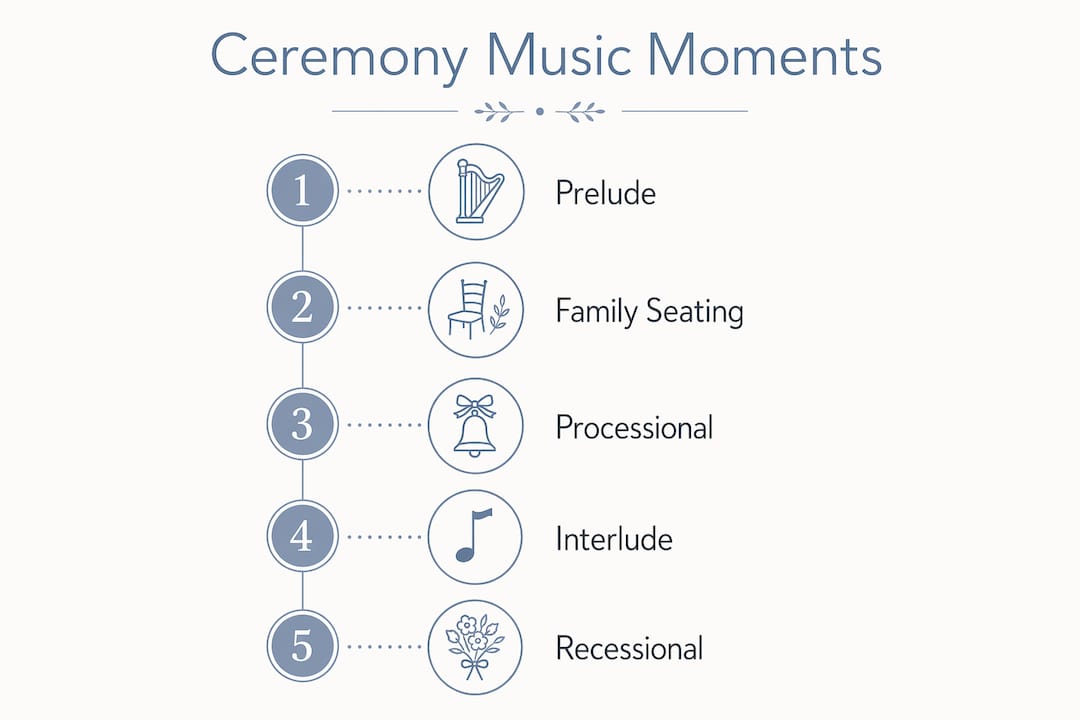
Ceremony music is structured into five main moments: the prelude, the seating of family, the bridal party processional, interludes (which include the ring exchange, readings, and unity moments), and the recessional. Each moment has a different emotional job, and selecting music without understanding that structure is the single most common planning mistake.
The prelude sets the room's mood before anything official begins. It typically runs 20 to 30 minutes and works best with mostly instrumental music. A playlist of roughly 8 to 12 instrumental pieces creates atmosphere without pulling guest attention away from conversation and arrival. Think of it as the warm-up act: present, pleasant, and undemanding. Classical standards like Pachelbel's Canon in D or jazz arrangements of familiar songs work well here. Vocal songs can appear sparingly if they carry personal meaning, but they should not dominate.
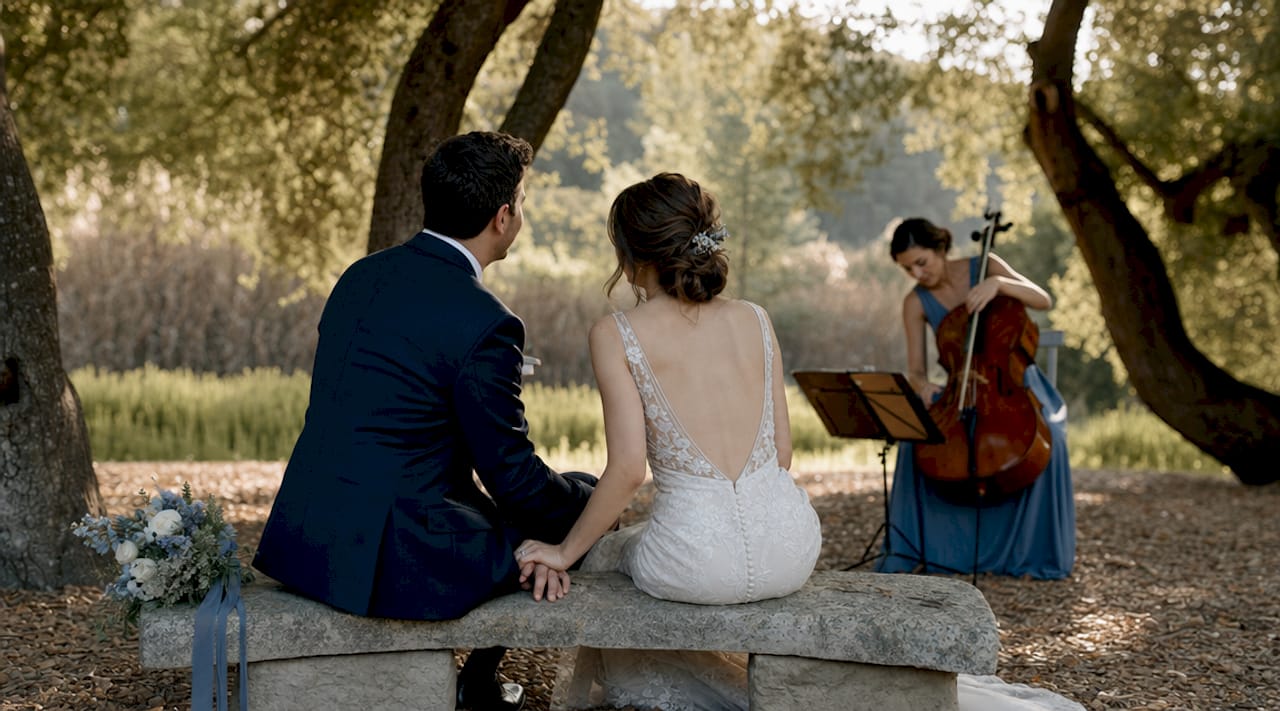
The seating of family is a brief but emotionally charged transition. This is when parents and grandparents walk to their seats, and the music should feel warm and slightly more intentional than the prelude background. A single, well-chosen piece signals to guests that the ceremony is about to begin.
The bridal party processional and the couple's entrance are the emotional peak of the ceremony. These two moments often use different songs to distinguish the supporting cast from the main event. The recessional closes the ceremony on a celebratory note, and it is the one moment where an upbeat, joyful song is not just appropriate but expected.
Pro Tip: Plan music for each of the five moments separately before you think about specific songs. Knowing the emotional job of each segment makes song selection far more focused and intentional.
What timing and choreography mean for your song choices
Timing is where ceremony music selection moves from art to logistics. A 60-foot aisle at a slow, measured pace takes roughly 45 to 60 seconds per person to walk. That means a bridal party of six people, each walking separately, could require four to six minutes of processional music before the couple even steps forward. Most couples underestimate this completely.
Here is the practical workflow for getting timing right:
- Measure your aisle length and walk it at the pace you plan to use on the day. Time yourself. Multiply by the number of people walking separately.
- Choose your song and identify the excerpt you actually want playing. A three-minute song may only contain 90 seconds of the melodic section ideal for walking. Specifying start points and fades prevents awkward mismatches between the music and the moment.
- Decide whether you need a loop or a transition. If your walk time exceeds your chosen excerpt, your musician or DJ needs to know whether to loop, fade, or transition to a second piece.
- Confirm the plan with your musician or DJ in writing. A cue sheet with exact song titles, start times, and transition instructions removes all ambiguity on the day.
Live musicians can adjust timing dynamically during a ceremony, stretching a phrase or adding a repeat if someone walks slower than expected. Recorded music cannot do that. If you are using a DJ or a playlist, your timing plan must be more precise because there is no flexibility once the track starts.
Pro Tip: Always add a 15-second buffer to your estimated walk time when planning song excerpts. People walk slower when nervous, and a little extra music is far less noticeable than an awkward silence.
What venue or religious restrictions affect music choice
The venue where you marry determines how much creative freedom you actually have. Religious and secular venues operate under very different rules, and understanding those rules early saves significant rework later.
| Venue type | Music restrictions | Selection flexibility |
|---|---|---|
| Catholic church | Sacred music lists required; secular or pop songs typically prohibited | Low. Work from approved repertoire only. |
| Protestant church | Varies by denomination; many allow contemporary Christian music | Moderate. Confirm with music director. |
| Synagogue | Traditional liturgical music preferred; restrictions vary by movement | Moderate to low. Consult the cantor. |
| Civil or secular venue | No formal restrictions on genre or content | High. Full creative freedom. |
| Historic or acoustic venue | No genre restrictions, but volume and amplification may be limited | High on repertoire, moderate on production. |
Religious venues often restrict music choices to pre-approved sacred lists, which means songs like Marry Me by Train or A Thousand Years by Christina Perri are off the table regardless of personal meaning. The process for navigating this is straightforward: contact the officiant or music director at least three months before the ceremony, ask for the approved music list, and build your selections from there. Many couples find that classical sacred pieces, such as Handel's Hallelujah Chorus or Bach's Jesu, Joy of Man's Desiring, are genuinely beautiful and fit the setting perfectly.
Secular venues offer full creative freedom, which is both an opportunity and a trap. Without restrictions, some couples choose songs that feel meaningful in isolation but create tonal whiplash when placed in sequence. A pop song with heavy bass during the ring exchange, for example, can undercut the intimacy of the moment. Freedom still requires intention.
Sound management in churches also involves objective SPL metering to balance audibility with venue acoustics. This means your musician or DJ needs to know the room's acoustic profile before the day, not during it.
How tempo, energy, and lyrics shape your selections
The emotional arc of a ceremony depends on more than song titles. Tempo, energy level, and lyrical content each play a specific role in how guests experience each moment.
For processionals, slower tempos in the 60 to 80 BPM range match a natural walking pace without forcing anyone to rush or drag. Songs above 100 BPM feel hurried in a processional context, even if they are personally meaningful. Below 50 BPM can feel funereal. The sweet spot is deliberate and dignified.
Instrumental or low-lyric music is the standard for interludes and signing moments. Lyrics compete directly with spoken vows and readings for cognitive attention. When guests are trying to listen to an officiant and process song lyrics simultaneously, both suffer. An instrumental cover of a meaningful song, played by a string quartet or solo piano, delivers emotional resonance without the distraction.
The recessional is the one moment where energy should spike. This is the celebration, the exhale, the moment guests feel permission to cheer. Songs like Signed, Sealed, Delivered by Stevie Wonder or a jazz arrangement of Happy Days Are Here Again work because they are unambiguously joyful. The tempo can jump to 120 BPM or above without any awkwardness.
Ceremony music attention is managed by tempo and emotional pacing rather than volume or quantity alone. The right sequence guides guests through the emotional journey of the ceremony without them ever consciously noticing the music is doing the work.
Common pitfalls in ceremony music selection
Most ceremony music problems are predictable and preventable. The mistakes below appear repeatedly, and each one has a straightforward fix.
- Choosing songs that are too short. A two-minute song for a six-person processional leaves everyone standing in silence. Always calculate total walk time before committing to a song.
- Forgetting interlude music entirely. Many couples underestimate processional song length and skip planning for the signing or unity candle moment. These silences feel much longer than they are.
- Failing to check venue restrictions early. Discovering that your chosen song is prohibited two weeks before the wedding forces rushed decisions under pressure.
- Not providing a cue sheet. Musicians and DJs need written instructions with exact song titles, start points, and transition cues. Verbal instructions given on the day are unreliable.
- Ignoring emotional pacing. Playing three slow, somber pieces in a row before the recessional flattens the emotional arc and leaves guests feeling subdued rather than celebratory.
Pro Tip: Build your cue sheet as a shared document with your musician or DJ at least four weeks before the ceremony. Review it together on a call so both sides can ask questions and confirm every transition.
Key takeaways
Ceremony music selection works by matching specific songs to defined moments, then validating those choices against timing, venue rules, tempo, and emotional arc.
| Point | Details |
|---|---|
| Five distinct moments | Plan music separately for prelude, family seating, processional, interludes, and recessional. |
| Timing validation is non-negotiable | Calculate walk time, identify the exact song excerpt needed, and confirm loops or transitions in writing. |
| Venue rules come first | Check religious or venue restrictions at least three months out before finalizing any song choices. |
| Lyrics distract during spoken moments | Use instrumental or low-lyric music for interludes and signing to keep focus on vows and readings. |
| Cue sheets prevent day-of chaos | Provide your musician or DJ with written instructions covering every song, start point, and transition. |
What I've learned after years of playing ceremonies
Most couples come to me focused on song titles. They want to know if I can play Canon in D or a jazz version of At Last. Those are fine questions, but they are the last question, not the first. The first question is always: what do you want each moment to feel like?
I have played ceremonies where the couple chose genuinely beautiful songs that landed wrong because nobody thought about sequence or tempo. A slow, introspective piece right before the recessional leaves guests unsure whether to clap or sit quietly. A pop song with dense lyrics during the ring exchange means half the guests are processing the chorus instead of watching the moment. The song itself was not the problem. The placement was.
What actually works is treating the ceremony like a short film with a score. The prelude is the opening credits, warm and welcoming. The processional is the scene where everything changes. The interludes are the quiet, intimate close-ups. The recessional is the credits rolling over something joyful. When you think about it that way, personalized live music stops being a decoration and becomes the structure of the experience itself.
The other thing I would tell every couple: work closely with your musician or DJ well before the day. Not a quick email exchange. A real conversation about timing, transitions, and what happens if someone walks faster or slower than planned. Live musicians can adapt in real time in ways that recorded music simply cannot. That flexibility is worth planning around.
— Alex
Let Alexlevinmusic handle your ceremony music
Alexlevinmusic specializes in exactly this kind of detailed, moment-by-moment ceremony music planning for weddings and private events across Philadelphia, New York, and beyond. From jazz trios and string quartets to solo piano, every ensemble is selected and prepared to match your ceremony's specific timing, venue, and emotional arc. The team coordinates cue sheets, confirms venue restrictions, and rehearses transitions so nothing is left to chance on the day. If you want live ceremony music that feels effortless for your guests and intentional for you, Alexlevinmusic is ready to help you build it. Explore why live music outperforms a playlist for ceremonies and find the right ensemble for your event.
FAQ
What are the five moments that need music in a ceremony?
The five moments are the prelude, seating of family, bridal party processional, interludes (ring exchange, readings, unity moments), and the recessional. Each requires a different emotional tone and song selection approach.
How long should processional music be?
Processional music length depends on aisle length and the number of people walking. A 60-foot aisle at a slow pace takes roughly 45 to 60 seconds per person, so a bridal party of six may need four to six minutes of music before the couple enters.
Can I use pop songs at a religious ceremony?
Most religious venues restrict music to pre-approved sacred lists, which typically exclude secular or pop songs. Confirm the approved repertoire with your officiant or music director at least three months before the ceremony.
Why is instrumental music recommended for interludes?
Lyrics compete with spoken vows and readings for guest attention. Instrumental music or vocal-free covers deliver emotional atmosphere without distracting guests from what is being said during the ceremony.
What is a cue sheet and do I really need one?
A cue sheet is a written document listing every song, its start point, and transition instructions for your musician or DJ. It is not optional. Verbal instructions given on the day are unreliable, and a detailed cue sheet is the single most effective way to prevent timing problems during the ceremony.