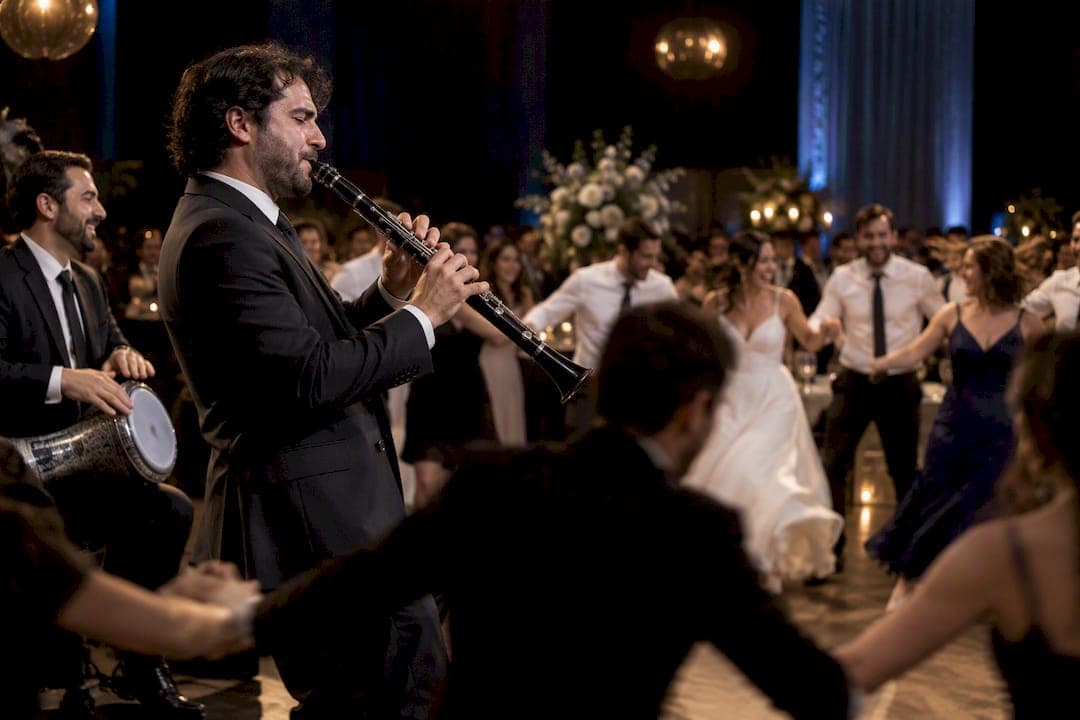
Play a medley, not a single track. The core rotation almost every Jewish wedding band or DJ pulls from includes Hava Nagila, Siman Tov U'Mazal Tov, Od Yishama, and Hevenu Shalom Aleichem, stitched together at an upbeat "freilich" tempo rather than looped one at a time. Tell your vendor which songs you want in the mix, confirm the tempo and cues ahead of time, and let the medley run three to six minutes before it rolls into the next set.
TL;DR:
- Most hora medleys start with Hava Nagila and include songs like Siman Tov U'Mazal Tov, Od Yishama, and Hevenu Shalom Aleichem, with arrangements tailored to tempo and version preferences.
- Vendors should be given a clear playlist, specific song order, and tempo instructions, with extra rehearsals recommended if they have not previously performed a hora.
- Traditional hora songs vary by community, with Ashkenazi, Sephardic, and Israeli styles influencing song choices and arrangements, while modern versions incorporate remixes and fusion styles for broader appeal.
- A well-structured hora medley builds energy with peaks at chair-raising moments, then eases into traditional or slower tunes for transition and wraps up smoothly before general dancing.
- Guests unfamiliar with hora dance steps should follow the circle, focus on inclusion over choreography, and participate by clapping, singing, or lifting chairs when appropriate.
Table of Contents
- What Are the Best Hora Songs for a Wedding Dance Circle?
- Modern Hora Songs and Remixes Worth Considering
- How to Build and Time a Hora Medley in Your Reception
- Working With Your Band or DJ: A Musician's Checklist
- Sample Hora Medley Templates to Send Your Vendor
- How Hora Songs and Traditions Vary Across Jewish Communities
- Tips for Guests Who Have Never Danced a Hora
- Common Customs and Rituals Tied to the Hora
- Balancing Tradition and Personalization
- How Alex Levin Music Helps You Get the Hora Right
- Sources
- FAQ
What Are the Best Hora Songs for a Wedding Dance Circle?
A hora medley works because it stacks familiar melodies back to back, so the energy never dips even as the songs change. Here's the core lineup most bands and DJs draw from, based on the staples cataloged by The Knot and JDate:
- Hava Nagila ("Let us rejoice") is the anthem almost every guest, Jewish or not, already knows. It usually opens or anchors the medley because it gets the whole room onto the floor fast.
- Siman Tov U'Mazal Tov ("A good sing and good luck") is the traditional song for celebratory announcements. It often follows Hava Nagila or marks a chair-raising moment.
- Od Yishama ("It will still be heard") comes from the Sheva Brachot blessings and carries a more devotional, joyous tone. It works well as a mid-medley breather before the tempo climbs again.
- Hevenu Shalom Aleichem ("We brought peace unto you") is a gentler, singable folk tune, often used to ease guests into the circle before the faster songs hit.
- Nigun Atik, sometimes listed as Nigun Atik (Ancient Melody), is an older wordless Israeli folk tune frequently used as an instrumental build or transition inside a medley, similar to Hora Hadera.
- Maaminim ("Believers") shows up in more contemporary, spiritually leaning medleys, often layered in by klezmer-influenced bands.
- Mazal Tov variations, distinct from Siman Tov, appear as short vocal shout sections that bandleaders use to punctuate a peak moment.
Ask your musicians which arrangement they play. Instrumental versions let a bandleader control tempo live, vocal versions bring guests in to sing, and remix versions suit a hybrid DJ set. There's no wrong answer, just a mismatch if nobody asks.
Modern Hora Songs and Remixes Worth Considering
Traditional does not mean rigid. Plenty of couples now request a hora that still feels communal but sounds fresher, especially when the guest list mixes generations or includes non-Jewish family and friends.
- Pop-influenced remixes of Hava Nagila, with a heavier beat or electronic layer, keep younger guests engaged without losing the melody older relatives recognize.
- Klezmer fusion sets blend clarinet and violin lines with modern rhythm sections, a good middle ground for couples who want tradition with more punch.
- Instrumental dance edits strip out vocals entirely, useful when a band wants full control over tempo changes and chair-raising cues.
- Pre-recorded medleys pulled from streaming playlists give DJs a reliable backbone, especially for smaller budgets or hybrid setups.
Choose a modern version when your guest list skews mixed or interfaith, and lean traditional when family expectations are strong. Either way, listen to the vocal language and structure before the wedding. Nothing derails a hora faster than a version nobody in the room can sing along to.
How to Build and Time a Hora Medley in Your Reception
A hora medley has a shape: it opens, peaks, and lands somewhere before guests need water and a seat. Experienced musicians plan tempo ramps and hand-clap cues rather than repeating one track on a loop, timing the build to match chair-raising moments and how much stamina the crowd has left, according to Forward's guide to hora bands.
- Open with a familiar anthem. Hava Nagila first brings in guests who don't know the other songs, especially at intergenerational or interfaith receptions, per The Knot.
- Build to the peak. Siman Tov U'Mazal Tov or a fast instrumental section is where the chair-raising usually happens.
- Ease into a slower or traditional tune. Od Yishama or Hevenu Shalom Aleichem gives guests a breath before the next surge.
- Close or transition. A short instrumental fade or a bandleader cue moves the room into general party music without an awkward stop.
Most receptions run the whole medley for a moderate duration typical for wedding dances, though some families stretch it longer out of tradition. Many planners suggest opening the reception with the hora right after introductions, or saving it for later to re-energize a tired room, per The Knot's timing advice.
Pro Tip: Ask your bandleader or DJ to plan the chair-raising cue at the medley's loudest point, not the start. Lifting the chairs too early kills momentum before the room is even warmed up.
Working With Your Band or DJ: A Musician's Checklist
Hand your vendor a plan, not a vibe. A clear list saves you from a hora that either drags or bulldozes past the moment you wanted it to hit.
- Confirm the exact song order for the medley, not just a genre or "Jewish wedding music."
- Specify a freilich tempo by name. It's shorthand experienced musicians immediately understand, and it removes any guesswork about pacing.
- Decide who calls the dance, whether that's your bandleader, a hired emcee, or the DJ on the mic.
- Check PA and microphone needs, especially if you're at an outdoor venue with tricky acoustics.
- Ask for a backup plan if the room layout changes last minute.
At the contract stage, ask vendors directly whether they've played horas before, and ask for a sample recording or video if they have one. A string quartet can sometimes adapt a hora with the right arrangement, while a hybrid DJ and live rhythm section setup reproduces medley energy without the cost of a full klezmer band. Send an annotated playlist with timestamps rather than a vague song list. It's the difference between a vendor guessing and a vendor executing. For more on vetting experience before you book, see questions to ask before booking your wedding band.
Pro Tip: If your vendor has never played a hora, ask for one extra rehearsal focused only on tempo transitions. It's a small ask that prevents the most common on-the-day mistake: a medley that never speeds up.
Sample Hora Medley Templates to Send Your Vendor
Copy-paste one of these into your vendor communication and adjust to taste.
- Traditional medley (about 4 minutes): Hava Nagila (instrumental intro, building tempo) → Siman Tov U'Mazal Tov (peak, chair-raising) → Od Yishama (wind-down).
- Mixed-tradition medley (about 5 minutes): Hevenu Shalom Aleichem (slow open) → Hava Nagila (build) → Nigun Atik (instrumental bridge) → Siman Tov U'Mazal Tov (peak with vocal shout lines).
- Modern crossover medley (about 4 minutes): Klezmer fusion intro → Hava Nagila remix (build) → instrumental dance edit (peak) → traditional fade-out.
- Short spotlight version (about 2 minutes): Hava Nagila only, full tempo throughout, best for tight reception timelines.
When you send these along, use streaming links or exact track IDs rather than song titles alone. Playlists like Wedding Hora Medley: Classic Jewish Songs give vendors a concrete reference. Naming specific versions removes ambiguity about tempo and arrangement, cutting down on day-of surprises.
How Hora Songs and Traditions Vary Across Jewish Communities
The hora itself traces back to Romanian and Israeli folk dance roots before it became a fixture of Jewish weddings, according to Wikipedia's entry on the dance). That mixed origin shows up in how different communities play it today.
Ashkenazi weddings, especially those with klezmer band traditions, tend to favor Hevenu Shalom Aleichem and Siman Tov U'Mazal Tov, often played with clarinet-heavy arrangements rooted in Eastern European folk style. Sephardic and Mizrahi communities sometimes bring in Middle Eastern rhythms and instruments, like the darbuka drum, layered under the same core melodies. Israeli and modern American receptions frequently lean harder into Hava Nagila and add contemporary Israeli pop songs into the rotation, especially at weddings with strong ties to Israel.
Reform and secular Jewish weddings often trim the medley down to the two or three most recognizable songs, prioritizing guest participation over liturgical completeness. Orthodox weddings, by contrast, may extend the hora considerably, sometimes running well past the typical three to six minute window, treating it as a genuine communal celebration rather than a reception highlight reel.
None of these approaches is more correct than another. The variation reflects family background, regional custom, and how large a role dance plays in that community's wedding culture. When in doubt, ask relatives what their own family's hora traditionally included, then hand that detail to your musicians.
Tips for Guests Who Have Never Danced a Hora
If you're a guest and this is your first hora, the good news is nobody expects you to know the steps. Just grab the hands on either side of you and follow the circle's direction. The basic movement is simple: step, step, step, kick, repeating around in a loop, usually counterclockwise, though bands sometimes reverse direction mid-song.
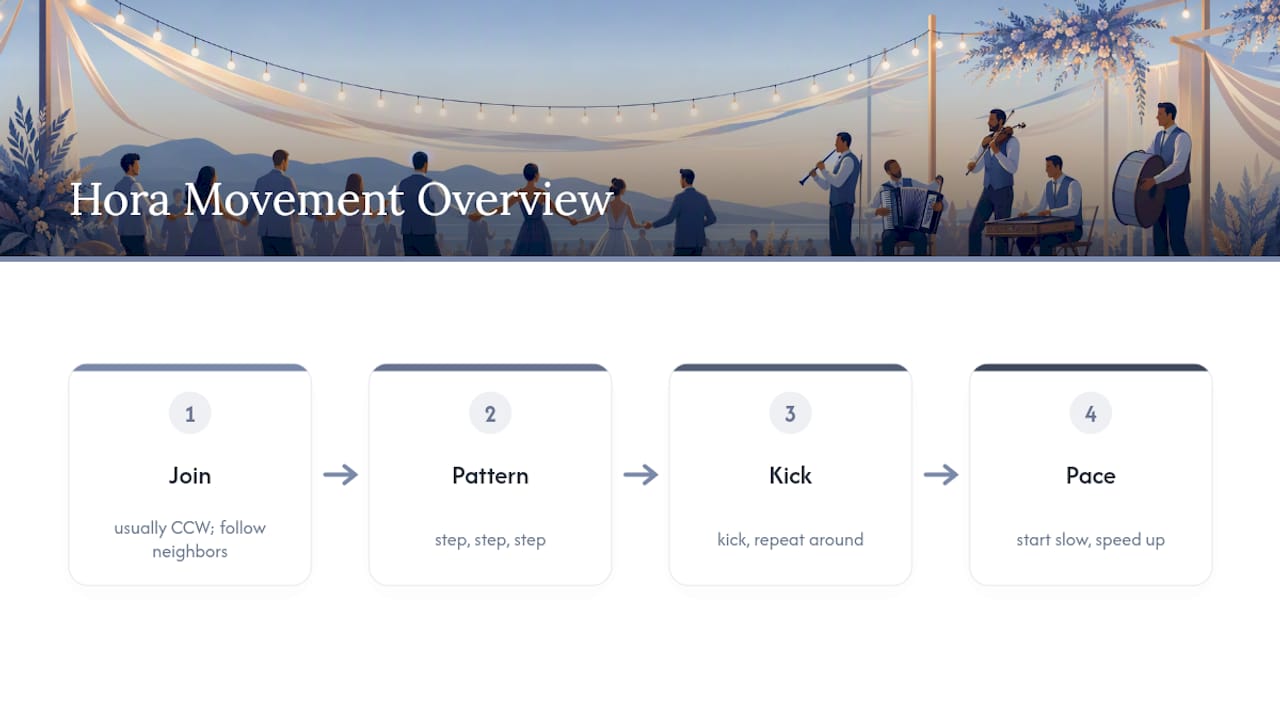
Watch the people directly ahead of you for the first ten seconds if you're unsure. The pace speeds up as the medley builds, so it's fine to start slow and pick up energy as the room does. Chair-raising for the couple is a highlight, not an obligation. If you're not comfortable lifting a chair, plenty of guests just clap, sing, or circle around the action instead.
Don't worry about knowing the words to Hava Nagila or Siman Tov U'Mazal Tov. Most guests hum along on the parts they know and stay quiet on the rest, and that's completely normal. The whole point of the hora is inclusion, not choreography. If you find yourself out of breath halfway through, step to the outer edge of the circle. Someone will happily take your spot, and you can rejoin when your legs recover.
Common Customs and Rituals Tied to the Hora
Chair-raising is the most recognized hora custom: the bride, groom, or both are lifted on chairs while guests circle and dance below them, a tradition tied to the dance's role as a celebration of the new couple, as noted in Wikipedia's overview of the hora. Some families extend the honor to parents or grandparents later in the reception, giving them a turn in the chair as a nod to their own place in the celebration.
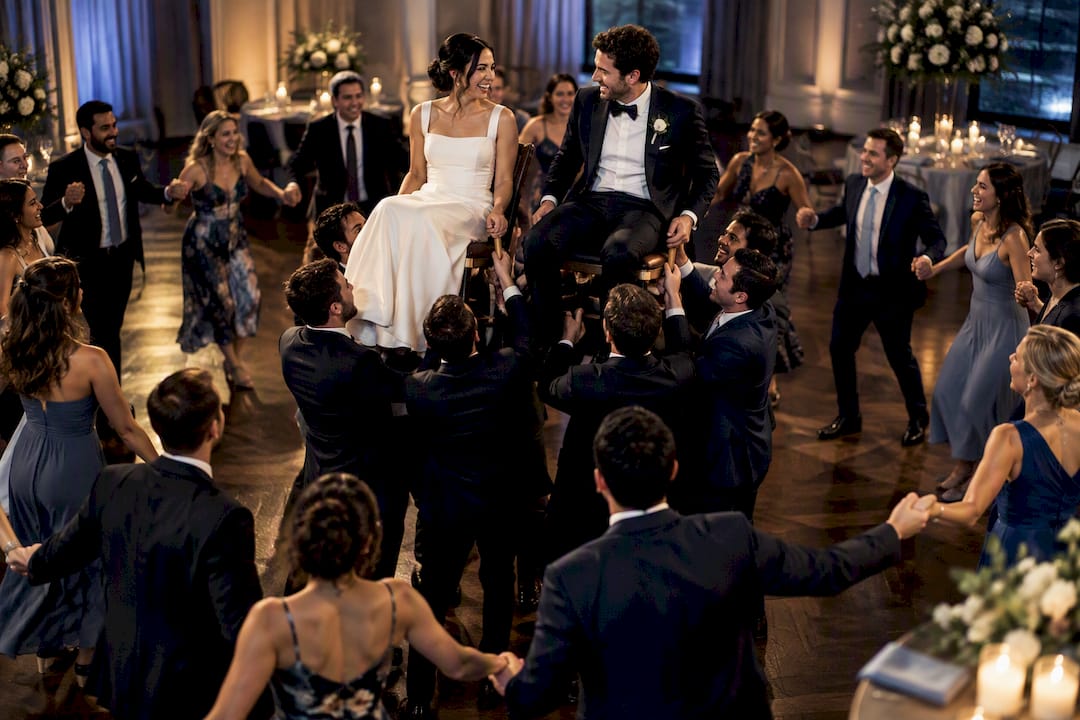
Many couples treat the hora as their unofficial announcement that the party has truly started, often placing it right after they're introduced as newlyweds. Others save it for later in the night, using it to pull tired guests back onto the floor. Neither timing is more traditional than the other. It comes down to family preference and how the rest of the reception is structured.
A napkin or handkerchief is sometimes used during the dance, held between the couple as a symbolic connection while they're lifted or spun. In some communities, the band or DJ pauses the medley briefly for a spontaneous speech, toast, or shoutout before diving back into the peak tempo. None of these customs are mandatory, but they're common enough that it's worth mentioning family expectations to your musicians ahead of time, echoing the advice that couples should walk vendors through the vibe and length they want rather than assuming everyone shares the same picture.
Balancing Tradition and Personalization
Clear medley plans and tempo guidance matter because a hora without direction either drags or overwhelms, and neither serves the room. A well-run hora set, built around a familiar anthem and a couple of well-placed peaks, tends to pull in even guests who arrived unsure what to expect. Tradition gives the dance its shape. Personalization, in the songs you add or the order you request, gives it your voice. Talk to your musicians directly about both.
— Alex
How Alex Levin Music Helps You Get the Hora Right
Alex Levin Music is the alternative to guessing whether your DJ or band has ever actually run a hora before. Rather than handing your reception music to a generalist and hoping the medley lands, you work with musicians who can build a customized set from reception music that adapts to your exact song order, tempo, and chair-raising cues.
If you're weighing a full live ensemble against something more budget-flexible, the DJ & hybrid music option combines a live rhythm section with backing tracks, so you get medley energy without the cost of a full band. Whichever route fits your reception, ask directly for hora medley examples, emcee responsibilities, and whether hybrid setups are available for your date. Reach out through the reception music page to start building a custom hora plan for your wedding.
Sources
- The Hora Dance: Your Ultimate Guide to This Jewish Tradition
- 13 Unforgettable Jewish Wedding Songs That Celebrate Love
- You don’t need a klezmer band for a rockin’ hora — Forward
FAQ
What Song Do You Dance the Hora To?
Most receptions dance the hora to a medley rather than one single song, typically opening with Hava Nagila and moving into Siman Tov U'Mazal Tov, Od Yishama, or Hevenu Shalom Aleichem. The exact lineup depends on family tradition, so it's worth confirming the song order with The Knot's guide as a starting reference.
Is the Hora the Same as Hava Nagila?
No. The hora is the circle dance itself, while Hava Nagila is just one of the songs commonly played during it, according to Wikipedia's entry on the dance. Hava Nagila is the most recognized hora song, but a proper medley usually includes several others.
How Long Should a Wedding Hora Last?
Most modern receptions run the hora medley for about three to six minutes, though some families extend it well beyond that out of tradition. Confirm your preferred length with your band or DJ ahead of time so the medley matches your reception's pacing.
What if My Band or DJ Has Never Played a Hora Before?
Ask for a sample recording or video of a past hora set before booking, and request an extra rehearsal focused on tempo transitions if needed. Sending an annotated playlist with timestamps, similar to the reception music approach, gives any vendor a clear roadmap to follow.
How Much Does It Cost to Book Live Music for a Hora?
Alex Levin Music's reception music packages start from 3000 $ one-off and can be built around a hora medley alongside the rest of your reception set, detailed on the reception music page. Pricing for other formats like ceremony or cocktail hour music is available on their respective service pages.