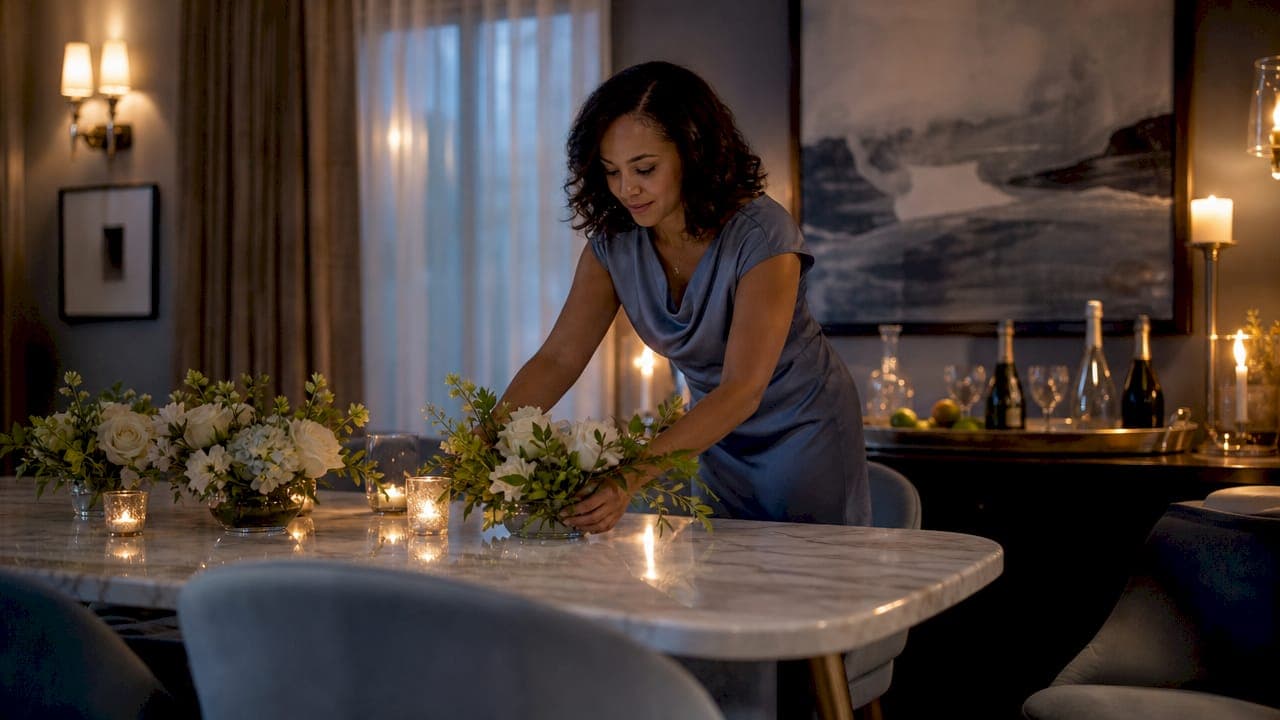
Cocktail party ambiance is defined as the combined effect of lighting, music, decor, and spatial design on how guests feel and interact. These elements work together to lower social anxiety and encourage mingling. Lighting and music account for 70% of a party's total atmosphere, with decor filling the remaining 30%. That ratio tells you exactly where to focus your energy as a host. The cocktail party ambiance tips in this guide cover every layer of that formula, from the first candle you light to the moment you signal the night is winding down.
1. How does lighting affect cocktail party atmosphere?
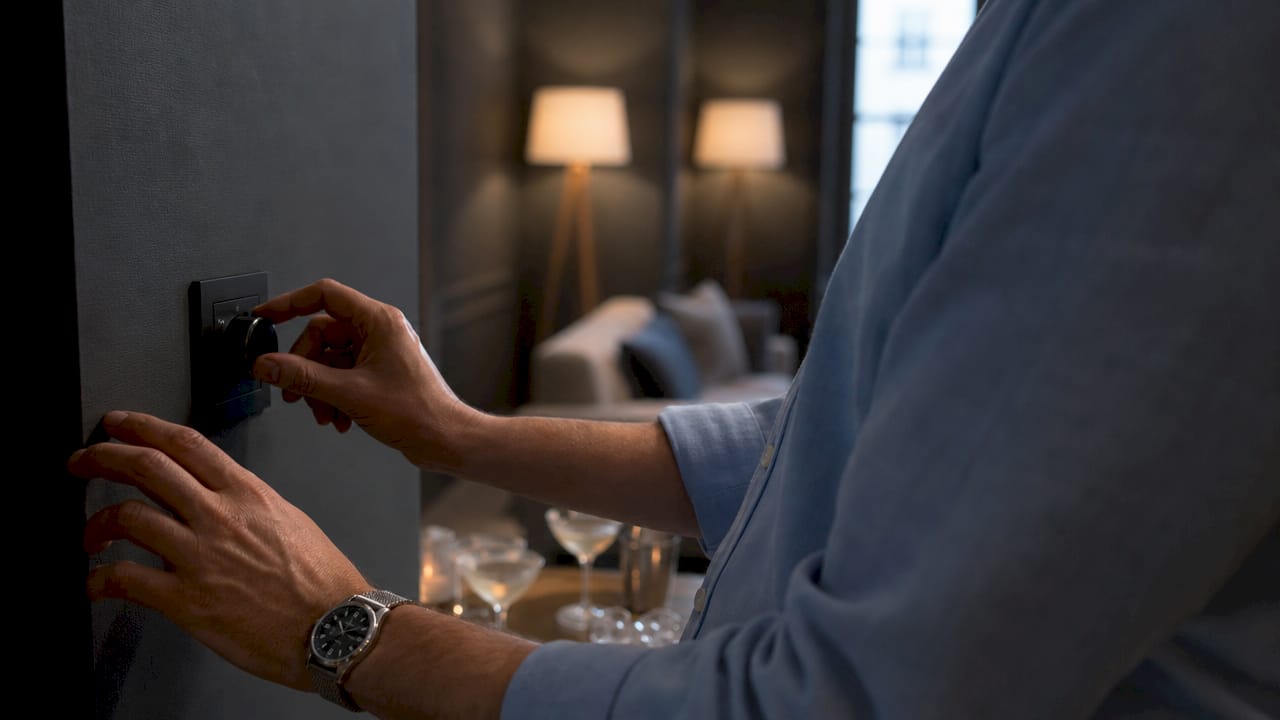
Lighting is the single fastest way to change how a room feels. Bright overhead fixtures create a clinical, tense environment. Warm, layered sources create comfort and ease.
Avoid bright overhead lighting and replace it with warm, localized sources. Warm light softens physical appearance, which reduces self-consciousness and makes guests feel more at ease. That psychological shift translates directly into more open, relaxed conversation.
The most effective lighting setup for a cocktail party uses three layers:
- Ambient light: Dimmable floor lamps or wall sconces set at 30–50% intensity create a warm base glow without harsh shadows.
- Accent light: Candles, tea lights, and votives placed on tables add flicker and intimacy at eye level.
- Decorative light: String lights draped along shelves or ceilings add depth and a festive quality without overwhelming the space.
Control matters as much as the sources themselves. Use a dimmer switch to lower intensity as the evening progresses. Brighter light works for the first 20 minutes when guests are arriving and orienting themselves. Softer light works better once conversations are flowing.
Pro Tip: Set your lighting before guests arrive and walk through the space yourself. If you squint or feel exposed, the lights are too bright.
2. What music strategies enhance cocktail party ambiance?
Music does two jobs at a cocktail party: it fills silence and it shapes social energy. Get both right, and the room feels alive without anyone noticing why.
Music volume should scale dynamically with crowd density. When the room is half empty, lower volume feels appropriate and intimate. As more guests arrive and conversation grows louder, the music needs to rise to stay present without competing. This is not a set-and-forget task.
A strong music strategy for a cocktail party follows this arc:
- Opening (0–30 minutes): Play mellow, familiar tracks at low volume. Think classic jazz standards, bossa nova, or acoustic soul. Guests need to hear each other as they settle in.
- Mid-party (30–90 minutes): Gradually increase tempo and volume. Upbeat swing, light funk, or contemporary jazz keeps energy climbing without pushing the room toward a dance floor vibe.
- Peak energy (90–120 minutes): Hold the energy steady. This is the social sweet spot. Avoid jarring genre shifts that break the mood.
- Wind-down (final 30 minutes): Drop the tempo back. Softer, slower tracks signal the natural end of the evening without any awkward announcements.
Dynamic music management sustains momentum, avoids fatigue, and lets you signal transitions without saying a word. A curated playlist works, but live music handles this arc automatically. Alexlevinmusic specializes in reading a room and adjusting energy in real time, which no playlist can replicate. You can read more about this approach to cocktail hour soundscapes on their site.
Pro Tip: Build a backup playlist at 10% lower volume than your main one. Switch to it if conversations get loud enough that guests start shouting over the music.
3. How to style cocktail party decor for elegance and flow
Decor contributes 30% of a party's atmosphere. That means restraint is a design choice, not a shortcut. Overcrowded tables and competing visual elements create noise, not elegance.
Decor experts advise a "less is more" approach for cocktail tables, with scale and visual breathing room as the primary goals. A single statement bloom in a low vase, a textured linen runner, and two or three votives create a polished surface without blocking sightlines or crowding drink space.
Key principles for cocktail party decor ideas that actually work:
- Keep centerpieces low. Anything above eye level when seated blocks conversation across the table.
- Use cut glass and metallic accents. These catch candlelight and add visual richness without adding bulk.
- Limit your color palette. Two or three colors across all surfaces create cohesion. More than that reads as chaotic.
- Leave surface space. Guests need room to set down drinks and plates. A beautiful table that has no usable space defeats its own purpose.
Floral choices deserve specific attention. Single stem arrangements in bud vases cost less than full arrangements and photograph better. White or cream flowers work with almost any color scheme and reflect candlelight effectively.
| Decor element | Best practice |
|---|---|
| Centerpiece height | Below eye level (under 12 inches) |
| Candle type | Votives or pillar candles in holders |
| Linen texture | Matte or subtly textured over glossy |
| Color palette | Two to three tones maximum |
4. What spatial and host management tactics create a comfortable environment?
Space design is the part of hosting most people ignore until something goes wrong. A bottleneck at the bar or a cluster of furniture along the walls kills social flow faster than bad music.
Creating separate zones prevents bottlenecks and accommodates different guest preferences. A lively central area for active conversation and a quieter corner with lower seating gives guests agency. People who feel trapped in one energy level leave earlier. People who can choose their comfort level stay longer.
Furniture arrangement follows one rule: face chairs and stools toward each other, not toward walls. Perimeter seating turns a party into a waiting room. Conversational clusters of three to five seats create natural groupings that make it easy for guests to join or exit conversations.
Practical spatial tactics that make a real difference:
- Set up two bar access points if your guest count exceeds 12. One bar creates a line, and lines kill momentum.
- Spread food stations across the room rather than concentrating everything in one area. Movement between stations generates organic mingling.
- Clear a central path. Guests need to circulate without squeezing past furniture or each other.
- Remove excess chairs. Cocktail parties work best when most guests are standing. Too many seats encourage static clusters.
Hosts should complete all setup at least 30 minutes before guests arrive. A host who is still arranging flowers when the first guest walks in sets an anxious tone. A host who is relaxed, drink in hand, and genuinely happy to see people sets a warm one.
Pro Tip: Do a full walkthrough of your space 45 minutes before the party. Walk the path a guest would take from the door to the bar to the food. Fix anything that slows you down.
5. What is the ideal guest count, party duration, and timing to maintain ambiance?
Party size and length are ambiance decisions, not just logistics. Too many guests and the room becomes loud and impersonal. Too few and the energy never builds. Too long and the vibe flatlines before anyone leaves.
An optimal cocktail party lasts 2 to 3 hours with 10 to 15 guests for the best social interaction. That size creates enough energy to feel lively while keeping conversations personal. That duration sustains momentum without exhausting guests or host.
Timing within the party matters just as much as total length. The first 45 minutes are critical for converting nervous energy into social momentum. Guests who arrive to warm lighting, good music, and a relaxed host settle in quickly. Guests who arrive to a quiet, half-lit room with a stressed host take much longer to open up, and some never do.
| Phase | Duration | Ambiance focus |
|---|---|---|
| Arrival | 0–45 minutes | Warm lighting, mellow music, host presence |
| Peak energy | 45–120 minutes | Upbeat music, active bar, food stations open |
| Wind-down | Final 30 minutes | Slower music, softer light, late snacks |
The wind-down phase deserves deliberate attention. Lowering music tempo, softening lighting, and serving late-night snacks help end a party naturally without guest awkwardness. Guests read these cues and begin wrapping up conversations on their own. You never have to say the party is over.
For seamless music planning across all three phases, working with a live musician who understands event pacing removes the guesswork entirely.
Key takeaways
The most effective cocktail party ambiance combines warm layered lighting, dynamically managed music, and intentional spatial design to keep guests comfortable and socially engaged throughout the event.
| Point | Details |
|---|---|
| Lighting dominates mood | Use warm, layered sources at 30–50% intensity and avoid bright overhead fixtures. |
| Music requires active management | Scale volume with crowd density and shift tempo to guide energy through each party phase. |
| Decor calls for restraint | Keep centerpieces low, limit your color palette, and leave surface space for drinks. |
| Space design drives flow | Use conversational clusters, multiple bar points, and spread food stations to encourage movement. |
| Timing shapes the whole experience | Keep the party to 2–3 hours with 10–15 guests and manage the arrival and wind-down phases deliberately. |
What I've learned about ambiance that most hosting guides get wrong
Most hosting advice focuses on what to buy. The right candles, the right playlist app, the right floral arrangement. After years of playing live music at private events, I've watched the same pattern repeat: the hosts who spend the most on decor often have the flattest parties, while the hosts who show up relaxed and prepared create the best rooms.
Successful ambiance relies more on invisible preparations than on extravagant decor. Ready glassware, warm lighting already set, a clear path through the room. These things cost almost nothing and do more work than a $200 centerpiece.
The other thing most guides miss is the host's own energy. The host's mindset strongly affects the party's energy. If you walk in tense and distracted, guests feel it. If you walk in genuinely glad to see people, the room opens up. Your presence is the most powerful ambiance tool you have. No lighting rig or playlist replaces it.
The practical takeaway: finish your setup early, pour yourself a drink, and stand at the door ready to welcome people. That single habit does more for your party's atmosphere than any decor decision you will make.
— Alex
Live music as a complete ambiance solution
Planning lighting, music, decor, and spatial flow simultaneously is a lot to manage. Live music from Alexlevinmusic removes the hardest variable from that list entirely.
A live jazz trio or solo pianist reads the room in real time, adjusting tempo and energy without any input from you. That means you stay present with your guests instead of monitoring a playlist or fussing with a speaker. Alexlevinmusic serves Philadelphia, New York, and beyond, with ensembles ranging from jazz trios to string quartets tailored to your event's tone and size. If you want to understand why live music outperforms a playlist at private gatherings, the case is clear. For hosts who want the full picture on what makes live music special, Alexlevinmusic's resources lay it out in detail.
FAQ
What contributes most to cocktail party ambiance?
Lighting and music together account for 70% of a party's atmosphere. Decor fills the remaining 30%, making sensory elements far more impactful than visual decoration alone.
How long should a cocktail party last?
The ideal duration is 2 to 3 hours. That window sustains social energy without exhausting guests or allowing the vibe to flatline.
What is the best lighting for a cocktail party?
Warm, layered sources at low intensity work best. Use dimmable floor lamps, candles, and string lights instead of bright overhead fixtures to create comfort and reduce self-consciousness.
How many guests is ideal for a cocktail party?
A guest count of 10 to 15 people creates the best balance of energy and intimacy. Fewer guests can feel flat; more guests can make personal conversation difficult.
Is live music better than a playlist for cocktail parties?
Live music adapts to the room in real time, scaling energy with crowd density in a way no static playlist can. For hosts who want to stay present with guests, live music removes the need to manage music manually throughout the event.