
Budget live music wedding tips are practical strategies that let couples book real performers without blowing their entertainment budget. Live music creates an atmosphere no playlist can replicate. The energy is immediate, personal, and impossible to fake. Sources like City Hall Wedding and Emily Young Weddings confirm that smart planning, not a bigger budget, is what separates couples who enjoy live music from those who skip it entirely. The key is knowing which choices drive costs up and which ones bring them down before you sign anything.
What are affordable live music options for budget weddings?
Live music for weddings spans a wide range of sizes, styles, and price points. Understanding the difference between ensemble types is the first step toward building a realistic budget.
Soloists charge $150–$400 per performance, while full 6-piece bands can run $3,000–$8,000. That gap is enormous, and most couples never need the top end of it. A skilled jazz pianist or acoustic guitarist can fill a ceremony space beautifully at a fraction of the cost.
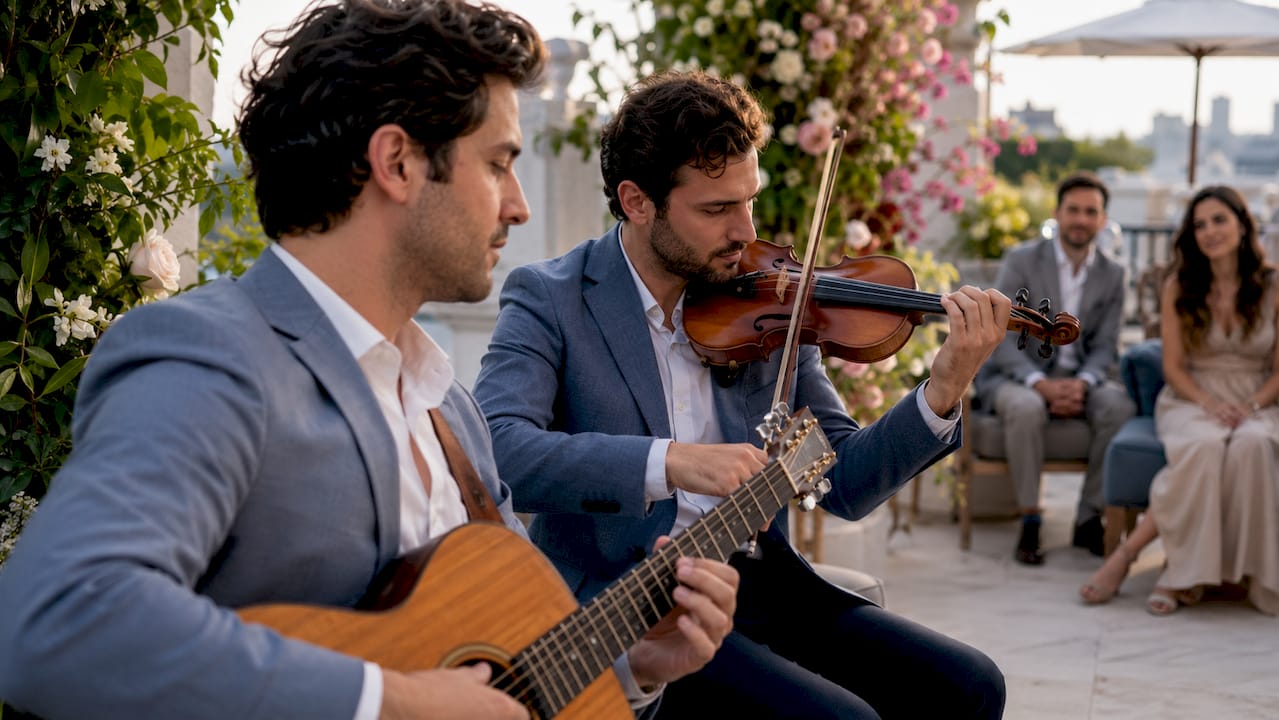
Smaller ensembles like duos or trios typically cost 40%–60% less than full bands. A jazz trio, for example, delivers genuine presence and musical depth without the overhead of a large group. For cocktail hours and ceremonies, a trio is often the perfect fit.
Hiring local musicians within 25 miles of your venue cuts travel and accommodation costs significantly. Local talent simplifies logistics and reduces the chance of last-minute cancellations due to travel issues.
| Ensemble Type | Typical Cost Range | Best For |
|---|---|---|
| Soloist | $150–$400 | Ceremony, intimate receptions |
| Duo or Trio | $400–$1,500 | Cocktail hour, small ceremonies |
| 4–5 Piece Band | $1,500–$3,000 | Dinner music, moderate receptions |
| Full 6+ Piece Band | $3,000–$8,000 | Large receptions, full evening coverage |
Pro Tip: If your budget limits full reception coverage, prioritize live performers for the ceremony and cocktail hour. These are the two moments guests remember most, and a soloist or trio handles both beautifully.
How does timing affect live music costs for weddings?
The date and time of your wedding directly affect what musicians charge. This is one of the most underused levers in wedding music planning.
Booking on an off-peak date can save couples 20%–40% on entertainment costs. That translates to real money. On a $2,000 music budget, that savings alone could cover a full cocktail hour with a live duo.
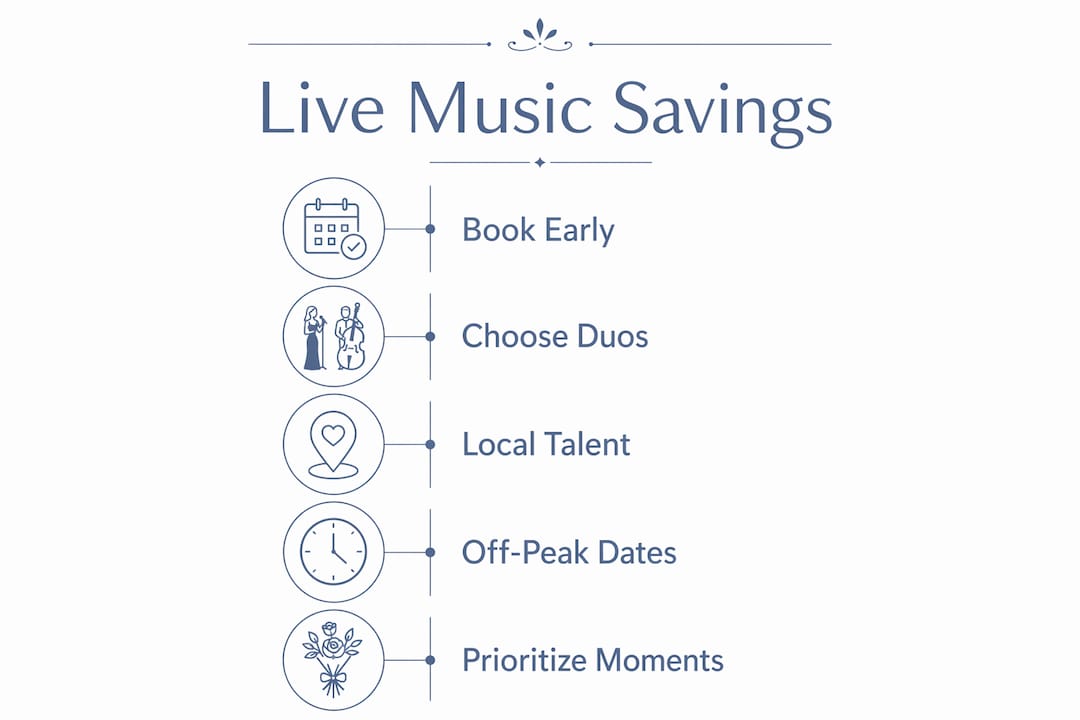
Saturday evenings in June, July, and August carry the highest demand and the highest prices. Friday evenings, Sunday afternoons, and weekday dates in January, February, or November consistently come in lower. Musicians have bills to pay during slow seasons, which gives you real negotiating room.
Most couples book live wedding musicians 12–18 months in advance, especially for peak summer dates. Booking early locks in better pricing before demand pushes rates up. It also gives you more time to negotiate extras like extended playtime or an additional set.
| Date/Time Category | Relative Cost | Notes |
|---|---|---|
| Saturday evening, peak season | Highest | June–August, limited availability |
| Friday evening, peak season | Moderate | 10%–20% less than Saturday |
| Sunday, any season | Lower | Good availability, flexible pricing |
| Weekday, off-season | Lowest | Best for negotiating extras |
| Off-season weekend | Moderate to low | November–February, strong discounts |
Pro Tip: If your venue has flexibility, ask musicians for their lowest-demand dates before you finalize your booking. You may discover a Friday in March costs half what a Saturday in July would.
What hidden costs should you watch for when booking live wedding music?
The base quote a musician gives you is rarely the final number. Live music quotes often exclude operational costs like PA systems, lighting, parking, and meals. These additions can run $200–$500 beyond the original figure. That is a significant surprise if you are working with a tight budget.
Before you agree to anything, ask every musician or band these questions directly:
- Is a PA system included? Some soloists and small groups bring their own. Others charge separately or expect the venue to provide one.
- Are travel fees included? Musicians outside your local area may charge per mile or require reimbursement for gas and tolls.
- Is parking covered? Venue parking fees for multiple band members add up fast, especially in urban settings like Philadelphia or New York.
- Are meals required? Many contracts include a meal clause for performances over four hours. Know this before you budget.
- What is the overtime rate? If your reception runs long, the cost per additional hour can be steep. Get the number in writing.
- What is the cancellation policy? Understand what you lose if you cancel and what happens if the musician cancels on you.
For detailed guidance on what answers to expect, the questions to ask your wedding band resource from Alexlevinmusic covers this thoroughly. Communicating song requests and set length in writing before the contract is signed also prevents misunderstandings on the day itself.
How should you plan your wedding day music flow on a budget?
A well-structured music timeline is the most cost-effective tool in wedding music planning. You do not need live music for every moment. You need it for the right moments.
The typical wedding music timeline covers four phases: ceremony, cocktail hour, dinner, and reception. Each phase has different acoustic needs and different budget implications. A string quartet for two hours costs far less than a full reception band for an entire evening. That math makes the hybrid approach the smartest move for budget-conscious couples.
Live musicians work best during the ceremony and cocktail hour. These are high-attention moments where guests are listening closely and the atmosphere matters most. A jazz trio or solo pianist during cocktail hour creates genuine warmth and energy that a Spotify playlist simply cannot match. You can explore why live music outperforms playlists at weddings if you want the full case made clearly.
For dinner and the main reception, a curated playlist or a DJ is a practical and affordable alternative. Volume control during dinner is critical. Background music should stay low enough for conversation and pause entirely for speeches. A DJ handles this transition well and costs significantly less than keeping a live band on the clock.
Experienced wedding musicians adjust in real time for timing changes during ceremonies. If a reading runs long or the processional starts late, a skilled live performer adapts without missing a beat. This flexibility is something a playlist cannot provide, which is exactly why live music earns its place at the ceremony even on a tight budget.
Pro Tip: Map out your music timeline before you contact any musicians. Knowing exactly which hours you need coverage for makes it much easier to compare quotes and avoid paying for time you do not need.
To avoid common planning errors that cost couples money, the wedding music planning mistakes guide from Alexlevinmusic is worth reading before you book anything.
Key takeaways
Affordable live music at your wedding comes down to three decisions: choosing the right ensemble size, booking at the right time, and asking the right questions before you sign.
| Point | Details |
|---|---|
| Choose smaller ensembles | Duos and trios cost 40%–60% less than full bands and still create strong atmosphere. |
| Book early and off-peak | Booking 12–18 months out and choosing off-peak dates saves 20%–40% on entertainment. |
| Ask about hidden costs | PA systems, travel, parking, and meals can add $200–$500 beyond the base quote. |
| Use a hybrid music approach | Live music for ceremony and cocktail hour, DJ or playlist for dinner and reception, cuts total costs significantly. |
| Hire local musicians | Local talent within 25 miles reduces travel fees and simplifies day-of logistics. |
What i have learned booking live music for weddings
Couples consistently overestimate what live music costs and underestimate what it delivers. The assumption that live music requires a massive budget is the single biggest reason couples skip it entirely. That is a mistake I have seen play out too many times.
The couples who get the most value are the ones who do their research early, think in terms of moments rather than hours, and ask detailed questions before committing. A well-placed jazz trio during cocktail hour does more for the atmosphere of a wedding than a full band playing background music all night.
Smaller ensembles are not a compromise. They are often the better choice. A solo pianist or a string duo brings focus and elegance that a large band cannot always deliver in a smaller venue. The experience is more intimate, and guests notice.
Flexibility in your date and your music timeline is not settling. It is smart planning. The couples who stay rigid on a Saturday in July and then cut live music entirely to save money end up with neither the date they wanted nor the atmosphere they imagined. Give yourself room to move, and the budget follows.
— Alex
Live wedding music that fits your budget
Alexlevinmusic specializes in exactly the kind of live music that works for budget-conscious couples. From solo piano and jazz trios to string quartets and full ensembles, the options are built to match different event sizes, styles, and budgets across Philadelphia, New York, and beyond.
Whether you want a single performer for your ceremony or a trio for cocktail hour, Alexlevinmusic offers customizable packages that let you get live music at your reception without overextending your budget. Every package is tailored to your timeline, your venue, and your musical preferences. Contact Alexlevinmusic to talk through your options and get a quote that reflects what you actually need.
FAQ
How much does live music for a wedding typically cost?
Live wedding music ranges from $150–$400 for a soloist to $3,000–$8,000 for a full band. Duos and trios fall in the $400–$1,500 range and offer the best balance of atmosphere and cost for most budgets.
Is live music worth it for a small or budget wedding?
Live music is worth it even on a tight budget when you focus it on high-impact moments like the ceremony and cocktail hour. A skilled soloist or trio at those two moments creates more atmosphere than a full band playing all evening.
When should i book live musicians for my wedding?
Book 12–18 months in advance for peak summer dates. Earlier booking improves availability and often locks in better pricing before demand increases.
Should i tip live wedding musicians?
Tipping wedding musicians 15%–20% of the total music cost is standard practice. Budget for this separately so it does not come as a surprise after the event.
What is the most cost-effective live music setup for a wedding?
A local jazz trio or acoustic duo for the ceremony and cocktail hour, combined with a curated playlist or DJ for dinner and dancing, delivers the best balance of live atmosphere and budget efficiency.